

How Henan Provincial People's Hospital Operates Its Massive Medical Consortium of 128 Partner Hospitals
By Bao Lei
In March, Zhengzhou was still chilly in spring, but the ice had melted, the spring breeze was blowing, and peach blossoms were blooming freely. Especially during this year's "Two Sessions," Premier Li Keqiang proposed that "pilot programs for tiered diagnosis and treatment and family contract services be expanded to more than 85% of prefecture-level cities." It is evident that the state's emphasis on the policy of tiered diagnosis and treatment is becoming increasingly apparent.
Under the guidance of the government’s top-level design, Henan Provincial People’s Hospital spent one year building an Internet-enabled smart tiered diagnosis and treatment platform. Through steady, step-by-step progress—from initial product development and framework structuring to network deployment, pilot implementation, and full-scale rollout—the hospital has realized a tiered care pathway characterized by “initial consultation at the primary care level, hospital-based treatment for serious conditions, and community-based rehabilitation,” thereby establishing itself as an industry benchmark.
Across China, other cities have also emerged with multiple benchmarks. For example, Shenzhen's Luohu Hospital and Renji Hospital, among others.
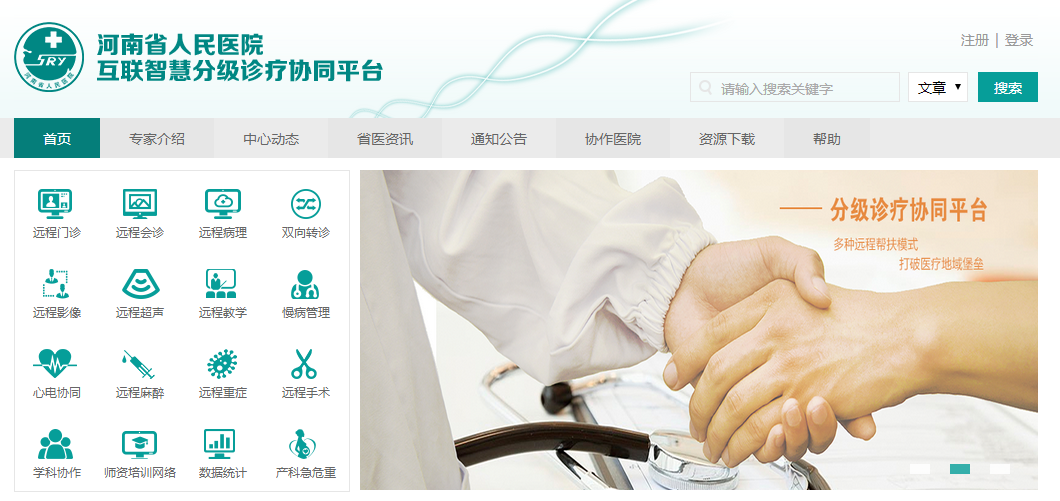
As of now, the Internet-based Smart Hierarchical Diagnosis and Treatment Platform of Henan Provincial People’s Hospital has established collaborative relationships with 17 municipal-level hospitals across 18 prefecture-level cities in Henan Province, as well as 111 county-level hospitals in 108 counties and districts. In 2016, the platform conducted 3,210 remote consultations, facilitated 1,739 patient referrals (both upward and downward), performed 11,430 remote electrocardiogram (ECG) diagnoses, completed 7,364 remote pathology diagnoses, provided free on-site clinical services to 30,650 patients, conducted 27,225 ward rounds, demonstrated 1,068 surgeries, held consultations for 7,570 cases of difficult and complicated diseases, organized 1,848 teaching and training sessions, and carried out off-site follow-ups for 128 patients.
Behind such impressive achievements, what are the core components of Henan Provincial People’s Hospital’s Smart Internet Triage Platform? What challenges were encountered during its implementation? For a large-scale, province-wide hierarchical diagnosis and treatment project, how was “execution effectiveness” ensured? What value-added services will the Smart Internet Triage Platform offer in the future?
Rome was not built in a day. During the one-year promotion of its Internet-enabled Smart Hierarchical Diagnosis and Treatment Project, Henan Provincial People’s Hospital overcame obstacles related to technology, implementation, and medical staff.
This is a process marked by both hardship and fulfillment. Recalling the experience, Li Gang, Director of the Information Center at Henan Provincial People’s Hospital, stated, “Although the implementation process was arduous, all the hardships pale in comparison to the benefits achieved: rational allocation of medical resources, guidance of common and frequently occurring diseases to primary care facilities and referral of complex and critical cases to higher-level hospitals, scientific and effective patient triage, and reduced time, effort, and financial burdens for patients.”
Hospitals excel in treating diseases and saving lives, whereas smart internet triage platforms rely more heavily on technology. Therefore, Henan Provincial People’s Hospital has partnered with Hangzhou Zhuojian Information Technology Co., Ltd. to effectively implement tiered diagnosis and treatment, thereby enhancing the medical expertise and clinical capabilities of primary care physicians.
Hangzhou Zhuojian Information Technology Co., Ltd. was established in February 2011. The company is primarily engaged in the development and operation of internet and mobile internet health and medical information software products, providing comprehensive smart healthcare solutions for patients.
According to Gan Zhongying, General Manager of Zhuojian’s Henan Office, “Over the course of one year, we visited grassroots institutions extensively to conduct on-site research, engage in communication, and drive implementation, ultimately achieving the expected outcomes across software, hardware, and platform development.”
Initially, 128 primary healthcare institutions across Henan Province, covering nearly every county and city, sought to establish collaborative partnerships with Henan Provincial People’s Hospital. After conducting on-site investigations, Zhuojian’s team found significant disparities in both medical standards and health informatization levels across different regions. Hardware upgrades and software application maintenance required the dispatch of technical personnel for on-site resolution.
Furthermore, in addition to providing entirely free assistance and capacity-building support, Henan Provincial People’s Hospital handles an average of 40–50 remote pathology consultation requests per day from primary care hospitals, as exemplified by its Department of Pathology. Medical staff must encroach upon their rest time to ensure that neither routine clinical duties are compromised nor the smooth operation of remote pathology consultations is disrupted.
After a year of dedicated efforts, Henan Provincial People’s Hospital has established private network connectivity with 112 collaborative hospitals. It is progressively integrating information systems such as the Hospital Information System (HIS), Laboratory Information System (LIS), Picture Archiving and Communication System (PACS), and Electronic Medical Record (EMR). Authorized senior specialists can directly access the ongoing medical records of specific patients at primary-care hospitals, enabling direct querying of medical data including physician orders, operative records, and progress notes.
So, what exactly does this smart internet triage platform include? Henan Provincial People’s Hospital examines tiered diagnosis and treatment from the patient’s perspective, grounding healthcare services in the “person.”
“Only by resolving patients’ suffering at primary care hospitals and ensuring they receive effective treatment can we reassure patients to stay within the primary care system, thereby improving the current situation where patients, regardless of the urgency or severity of their conditions, flock to tertiary Grade A hospitals.” remarked Kong Lingfei, Director of the Department of Pathology at Henan Provincial People’s Hospital.
Therefore, Henan Provincial People’s Hospital has integrated 12 core functionalities into its Internet-based Smart Tiered Diagnosis and Treatment Platform. These include remote consultations across various specialties—such as pathology, medical imaging, ultrasound, and electrocardiography—as well as remote video consultations, multidisciplinary team (MDT) consultations, remote surgical guidance, remote critical care emergency guidance, two-way patient referrals, and remote medical education, thereby meeting the diverse needs of multidisciplinary teams and various patient populations.
What are the application scenarios for these 12 basic functions?
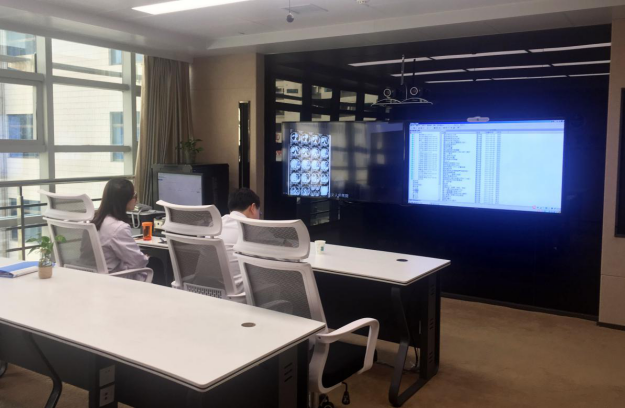
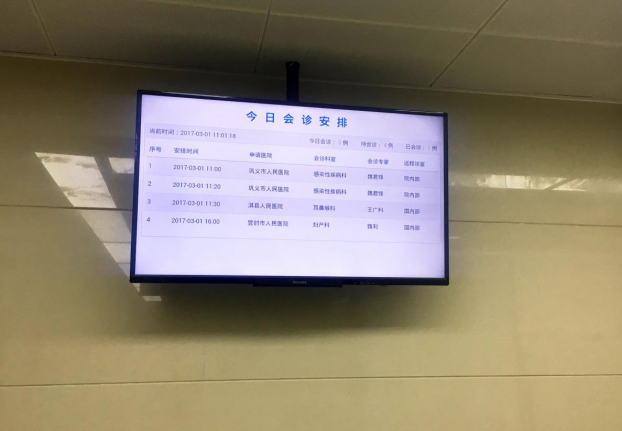
Take remote consultation as an example. When primary care hospitals encounter complex and difficult cases that they cannot resolve, they can apply through the Internet-based Smart Tiered Diagnosis and Treatment Platform for remote video consultations and telemedicine with experts from Henan Provincial People's Hospital. While communicating with the experts, healthcare providers can also upload pathological slides, medical images, electronic health records, and other relevant data to assist in diagnosis, thereby reducing the need for patients to travel extensively.
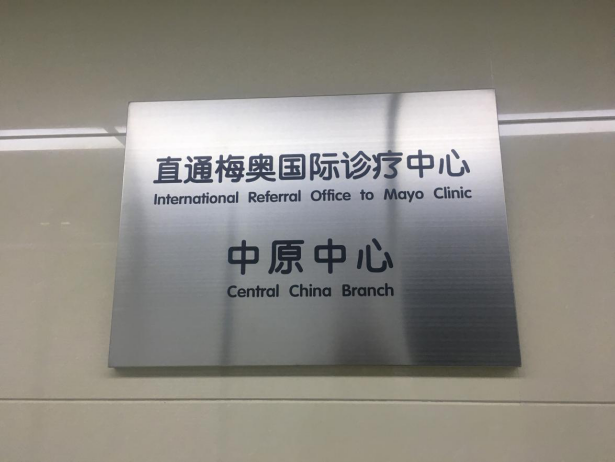
For consultation arrangements, in cases of difficult and rare diseases, local hospitals can apply through the platform to refer patients to Henan Provincial People's Hospital. The operational procedure is convenient, and the required documentation is streamlined. Additionally, through the International Department of the Internet-based Smart Triage Medical Center at Henan Provincial People's Hospital, direct remote consultations can be conducted with experts from international medical institutions such as the Mayo Clinic.
In addition, Henan Provincial People’s Hospital has established the International Department of its Interconnected Smart Triage Medical Center. Beyond leveraging internet technologies for online connectivity, offline assistance is being carried out simultaneously. According to Kong Lingfei, taking the pathology department as an example, offline support for primary-care hospitals is divided into long-term and short-term programs. Long-term support primarily involves assigning pathologists to be stationed at primary-care facilities for extended periods to guide local pathological diagnosis work, a model referred to as “stationed village assistance.” Short-term support entails the regular monthly dispatch of experts to primary-care hospitals for brief technical guidance; this is a mandatory requirement, with assisting experts required to spend at least one full day each month at their partner hospitals.
In Kong Lingfei’s view, supporting grassroots healthcare and channeling high-quality medical resources down to the primary care level requires more than superficial “blood transfusions.” To truly enhance the capabilities of grassroots hospitals, it is essential to help them develop their own “hematopoietic” capacity—a goal that is inextricably linked to talent development at these institutions.
Currently, Henan Provincial People’s Hospital provides completely free services to its collaborative primary-care hospitals, with dedicated staff on 24-hour standby. During teleconsultations, grassroots physicians’ diagnostic capabilities are enhanced through experts’ analysis of real-world cases. Furthermore, by integrating online and offline approaches, experts can deliver targeted, in-person guidance to address issues identified online, thereby genuinely strengthening the competencies of primary-care physicians.
Only when the talent in primary healthcare grows can primary hospitals operate with vitality, enabling patients to “have confidence” in seeking care at the primary level, “feel assured” in staying there, and “trust” the primary care system with their health.
So, how should the future “Henan Model” proceed?
From a technical perspective, Gan Zhongying, General Manager of Zhuojian Technology’s Henan Office, believes that building the platform is merely the foundation; the core to ensuring the platform’s practical utility and long-term sustainability lies in subsequent product refinement and service enhancement. In the later stages of platform operation and maintenance, the focus will be placed on technology. Only by optimizing platform products to the highest standard can labor costs be reduced, time and effort saved for users, and the beneficiary population expanded.
From the perspective of medical services, Kong Lingfei believes that improvements can be made in the following areas:
1. The separation of acute and chronic care also requires a tiered diagnosis and treatment system.For patients with cardiovascular and cerebrovascular diseases, such as stroke and myocardial infarction, life-saving efforts are a race against time. There is much that medical personnel can do during the journey from home to the hospital. Inside the ambulance, healthcare providers can perform emergency interventions, conduct tests, and transmit equipment data, ensuring that upon arrival at the hospital, patients are immediately triaged for subsequent resuscitation and treatment.
2. Call for interoperability and standardization across systems.Currently, the healthcare industry lacks unified information standards; without such standardization, medical data holds little practical value. Only by integrating medical information standardization into management frameworks—thereby achieving interoperability and mutual recognition of results across healthcare institutions—can patient referrals and communication be facilitated more effectively.
3. Leveraging big data to drive the shift from “treatment” to “prevention.”As the informatization of medical services advances to a certain stage, leveraging health big data for the preventive management of chronic diseases will become the future direction. Currently, patients are reluctant to spend money on health check-ups but are willing to pay for medications. In the latter phase of tiered diagnosis and treatment, health concepts will be disseminated to grassroots levels. Popularizing health knowledge in detail and through practical measures, strengthening pre-disease prevention, and integrating rehabilitation, elderly care, wellness, emergency response, chronic disease prevention and control, and health education will be systematically promoted.
4. Exploration of Value-Added Services.Director Kong Lingfei believes that remote consultation is merely one of the platforms’ carriers; only by excavating more value-added services on this carrier can the platform be utilized to its fullest potential. In the future, high-quality diagnostic methods will no longer be constrained by individual hospitals but will instead become a widely accessible resource, providing patients with deeper, broader, and higher-quality services that truly address their health issues and enhance patient retention.
In fact, in addition to the Henan Provincial People’s Hospital, there are numerous pilot programs across China. According to Li Gang, although these pilot initiatives and policies vary in name and conceptual framing, their implementation is highly consistent. They all strengthen communication mechanisms between healthcare institutions or between healthcare providers and patients, thereby delivering greater benefits and convenience to meet the public’s health needs and leveraging advanced technologies to safeguard people’s health.
While the Internet-based Smart Tiered Diagnosis and Treatment Platform of Henan Provincial People’s Hospital may not be the best in China, its establishment marks a fresh starting point. By integrating medical resources and ensuring continuity throughout the healthcare journey, the platform has revitalized and streamlined the healthcare delivery system for the population of this populous province, thereby establishing a “Henan Model” for tiered diagnosis and treatment that can serve as a reference for the rest of China.