

BGI Genomics Rushes Through IPO Process: What's in the Prospectus?
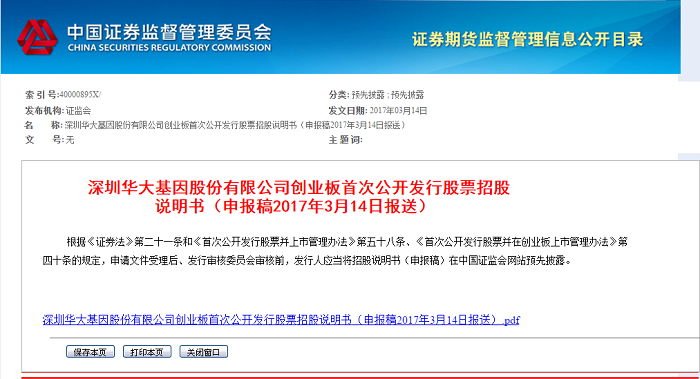
On March 14, the China Securities Regulatory Commission (CSRC) website disclosed BGI Genomics’ “Prospectus for Initial Public Offering on the ChiNext Board.” Following the news that its listing could occur as early as March, BGI remained highly active throughout the month, announcing partnerships with Foxconn, launching the Earth Genome Project, rolling out a complete clinical-grade whole human genome solution, and featuring research findings on the cover of Science. Meanwhile, BGI’s IPO process progressed smoothly: it entered the “Feedback Received” stage on March 11 and moved to the “Pre-disclosure” stage by March 14, completing both the “Meeting Session” and “Verification Inquiry” steps within just three days. This barrage of corporate announcements and the accelerated IPO timeline sent a clear message to China’s capital markets: “BGI has arrived!”
The prospectus shows that the total share capital of BGI before this issuance is 360,000,000 shares. It is expected that the number of shares to be issued in this offering will be no less than 40,000,000 shares, and the proportion of the issued shares to the company's total share capital after the issuance will be no less than 10%. If 40,000,000 new RMB ordinary shares are issued in this offering, the company's shareholding structure before and after the issuance will change as follows.
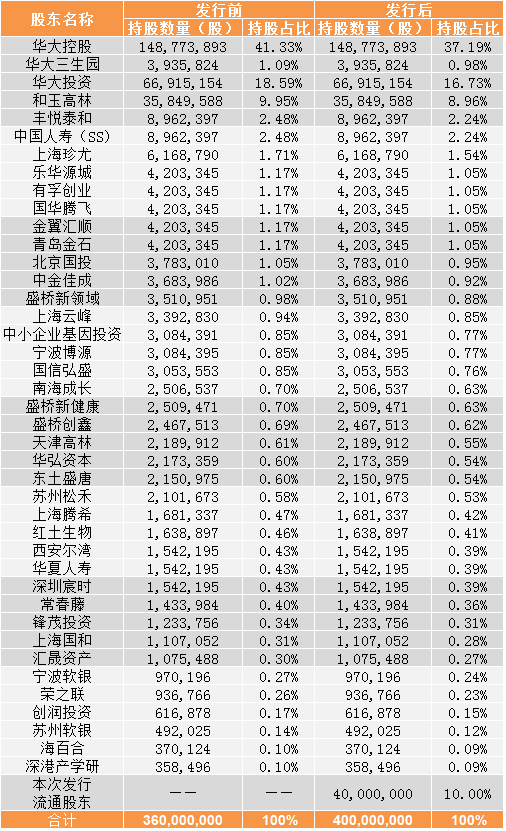
Note: Shareholding percentages are calculated based on rounding principles. To prevent the total from exceeding 100%, minor adjustments have been made to certain decimal places;SSRepresenting the state-owned equity shareholders.
Among the top ten shareholders of the company, there are no individual shareholders; all are corporate entities. The largest shareholder is BGI Holdings: BGI Holdings directly holds 41.33% of the shares in BGI Genomics and also holds 95% of the shares in BGI Sanshengyuan, which in turn holds 1.09% of the shares in BGI Genomics. Therefore, BGI Holdings’ total shareholding amounts to 42.42%. Additionally, the controlling individuals of BGI Holdings are Wang Jian, Wang Jun, and Yang Shuang, with respective shareholdings of 85.30%, 10%, and 4.20%.
The prospectus also disclosed a series of BGI’s subsidiaries and affiliated companies, totaling 44. Among them, there are 21 wholly-owned domestic subsidiaries, 11 overseas controlled subsidiaries, 8 controlled subsidiaries, and 4 affiliated companies. Currently, BGI has established its presence in multiple provinces and municipalities directly under the central government in China, including Guangdong, Anhui, Hubei, Shandong, Guizhou, Beijing, Tianjin, and Chongqing, while also having subsidiaries distributed across Europe, the Americas, and Hong Kong. It is impressive to note that from research institutions to industry, the BGI family has blossomed globally.
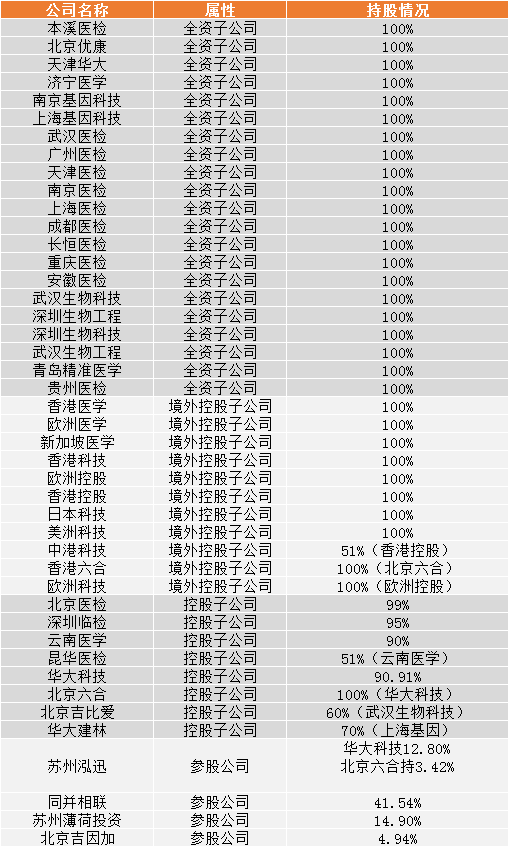
BGI Wholly-Owned, Holding, and Equity-Invested Companies
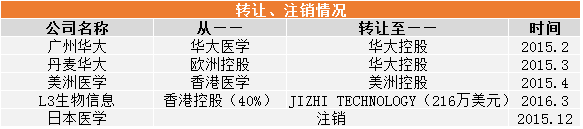
China’s capital markets missed out on Alibaba and Tencent, but this time, they will not miss BGI. Following the preliminary disclosure, BGI will still need to pass through the initial review meeting, the issuance review meeting, file sealing, and post-meeting matter review before finally proceeding to issuance and listing. Whether it can complete its listing in March is unpredictable for anyone, but one thing is certain: BGI’s listing is imminent.