

Shangyi Cloud's Cloud HIS Reduces Hospital IT Costs by 70% Compared to Traditional HIS: A Grassroots Healthcare Case Study
In 2017, VCBeat launched a case solicitation campaign themed “The Power of Downward Reach: Seeking Best Practices in China’s Primary Healthcare.” Starting on February 15, we invited submissions of practical cases in primary healthcare services from across the entire industry. We will explore development trends in the primary healthcare sector from perspectives including industrial policy, technological evolution, business models, and industry collaboration, and select for coverage those innovative healthcare enterprises that truly represent and are deeply rooted in primary care. Stay tuned.
ClickRegistration Address, go to the event introduction page.

Founded inShangyi Cloud, established in 2015, is a company specializing in cloud-based Hospital Information Systems (HIS). By leveraging public cloud HIS solutions, it enables private hospitals to achieve their initial digital transformation from scratch.
According to calculations by the Shangyi Cloud team,Compared with traditional HIS, Shangyi Cloud can save up to 70% of IT investment costs.. This is a staggering and enticing figure.
Private Healthcare Market
Non-public healthcare, also known as private healthcare, is the core market for Shangyi Cloud. In recent years, the state has successively introduced a series of policies to encourage and support private capital in providing medical services, while clearly curbing the expansion of public medical institutions. Therefore, Shangyi Cloud believes that in the future health industry, private forces will become the main players in the medical industry. By targeting the right direction and seizing the starting opportunity, it is possible to ride the wind and open up a new blue ocean in the field of medical informatization.
To meet the public’s substantial demand for healthcare services and address the severe imbalance in the distribution of medical resources—across urban and rural areas, between eastern and western regions, and within the public and private sectors—the country must inevitably rely on the development of private healthcare. This entails enhancing the quality of private medical services and increasing the supply to the healthcare market in both quantity and quality.
According to VCBeat, private capital’s entry into the healthcare market is still in its early stages. After decades of turbulence, driven by internal accumulation and the force of capital, the private healthcare market has begun to enterIn the integration phase of “bringing order out of chaos,” transitioning from being “short, poor, and unpolished” to “tall, rich, and handsome,” and from “low-end, fragmented, and disorganized” to “high-precision, sophisticated, and cutting-edge,” requires extensive HIS-specific professional services to enhance and ensure operational excellence.
Currently,Although private healthcare institutions have surpassed public ones in number, their level of medical informatization remains relatively low due to constraints in funding and talent.. Many primary healthcare institutions are still stuck in the era of manual and paper-based operations, with virtually no informatization to speak of. This poses a challenge to cloudThe Huge Market Demand for HIS Services.
On one hand, as universal health coverage is nearing completion, the designation of medical institutions for health insurance reimbursement is shifting from an approval-based system to a contract-based system. A large number of private medical institutions are expected to join the network of designated providers; otherwise, they will struggle to survive. Furthermore, health insurance settlements must be processed through standardized information systems, rather than manually or via simple web-based platforms, thereby creating demand forThe huge demand for HIS systems.
On the other hand, with the rapid development of private healthcare, there is an urgent need for a wave of information technology services“Consumption Upgrade.” Controllable procurement and costs, along with low dependence on specialized IT personnel, have become essential requirements for next-generation healthcare IT products. In simple terms, the goal is to “save money, effort, and worry.” Cloud-based Hospital Information Systems (Cloud HIS) are emerging as one of the key breakthroughs in this round of transformation and upgrading of the healthcare informatization industry.
In the healthcare IT market, cloud solutions with comprehensive functionality that support the core operations of fully digital hospitalsHIS products remain relatively scarce, which has become a key entry point for Shangyi Cloud into the private healthcare sector.
Core Demand for Low Cost
The demand for information technology products in the private healthcare sector is, in fact, no weaker than that in public hospitals. While large public hospitals certainly have the financial capacity to cover high IT costs, private healthcare providers often face significant budget constraints.
Private healthcare, driven by market-oriented operations, features streamlined processes and efficient decision-making, making it more conducive to commercial expansion than public healthcare. The high cost-performance ratio of Shangyi Cloud’s products aligns perfectly with the stringent cost-control requirements of private healthcare investors.
Shangyi Cloud viaThe SaaS model helps private healthcare providers control their IT costs while delivering high-quality products and services. Unlike traditional Hospital Information Systems (HIS), medical institutions no longer need to make substantial capital investments in hardware infrastructure such as server rooms and servers. Furthermore, with all core computing performed in the cloud, private hospitals are relieved of the burden of long-term system maintenance, thereby enabling clients to achieve IT development that is comprehensive, rapid, high-quality, and cost-effective.
Graded Localization
Shangyi Cloud, as a comprehensive digital hospital product, includes: outpatient services, inpatient care, pharmaceuticals, electronic medical records, and laboratory testingLIS, Imaging PACS, Medical Technology Examinations, Mobile Ward Rounds, Mobile Nursing, Clinical Pathways, Community Public Health Records, and other functions.
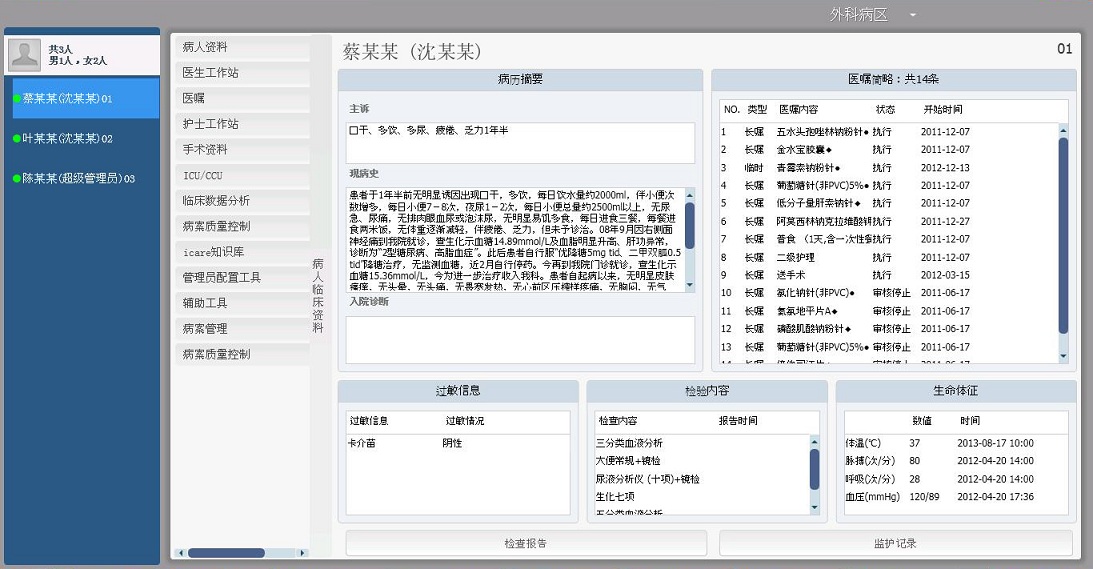
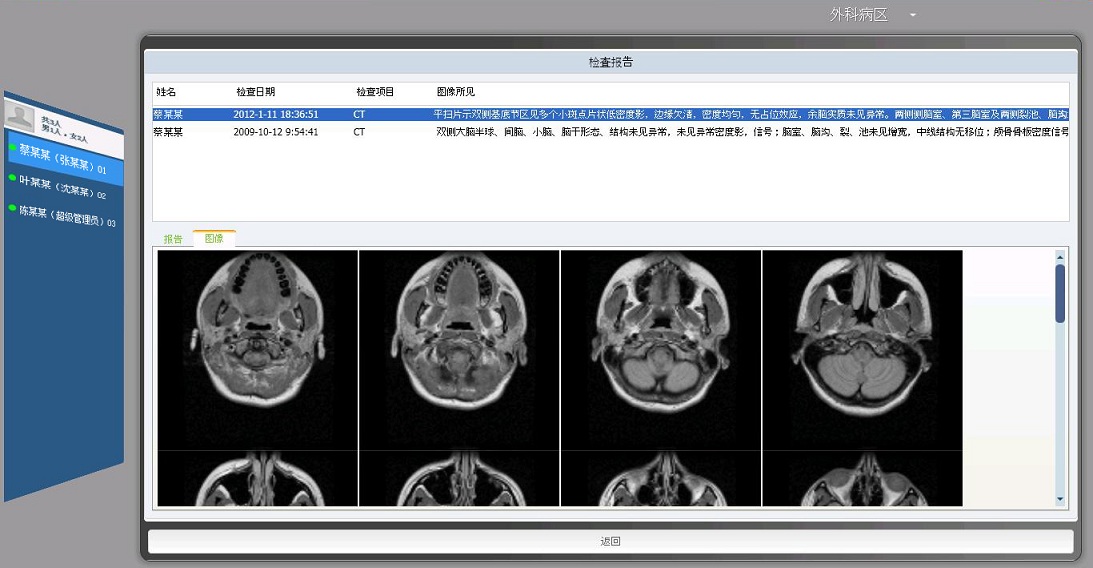
Shangyi Cloud Product Interface
To cater to different users and usage scenarios, Shangyi Cloud has launched three product versions: the Outpatient Clinic Edition, the Hospital Edition, and the Group Edition, representing three distinct market positionings. The Outpatient Clinic Edition primarily targets the vast number of clinics and outpatient departments, comprising four tiers: Free, Standard, Professional, and Flagship versions. Similarly structured, the Hospital Edition serves individual hospitals, while the Group Edition is designed for large-scale, chain-based medical groups. In terms of functional roles, the Outpatient Clinic Edition mainly drives user scale and traffic for Shangyi Cloud, whereas the Hospital and Group Editions generate cash flow.
Low Cost, Easy Deployment, End-to-End Process, Strong Scalability
Advantage 1: Low cost.Private medical institutions, by choosing cloudHIS: Obtain powerful products and continuous upgrade services at a lower cost, without the need to deploy professional IT personnel;
Advantage 2: Easy Deployment.Shangyi Cloud can be deployed instantly without the long wait for development and launch, ready to use upon deployment;
Advantage 3: Full-process coverage.Via CloudThe form of HIS realizes the full-process information service from registration, outpatient consultation, laboratory and imaging tests to hospitalization, as well as WeChat marketing;
Advantage 4: Strong Scalability.Shangyi CloudThe HIS system directly enables data sharing among medical institutions, providing unlimited potential for referrals, consultations, follow-ups, and queries of examination and test results.
Building an Ecosystem, Introducing Artificial Intelligence
Currently,Shangyi Cloud possessesOver 100 Medical Institution Users, primarily promoted through online channels. Meanwhile, the team is gradually strengthening its direct sales and channel promotion capabilities.
Although Shangyi Cloud’s current revenue model is relatively traditional, once its user base reaches a critical scale, it can build an ecosystem spanning the entire healthcare services industry and develop a big data industry, thereby unlocking significant potential for innovative business models through value-added services.
On January 19, 2017, Kanghua Hemodialysis Chain, a subsidiary of the Hong Kong-listed Kanghua Medical Group, officially signed an agreement with Shangyi Cloud. Kanghua Medical announced that all its hemodialysis centers under management would fully adopt the Shangyi Cloud information system for daily operations and clinical business management. This also signifies that Shangyi Cloud has successfully achieved a breakthrough in building its ecosystem.
According to VCBeat, Shangyi Cloud will gradually build and refine its own ecosystem, encompassing areas such as centralized drug procurement, financial services, insurance operations, and expert resources. Meanwhile,It will also incorporate artificial intelligence services, starting with intelligent diagnosis of diseases such as breast cancer., helping healthcare institutions improve the efficiency of medical services and achieve resource sharing.
Note: All data related to this enterprise in this article were provided and confirmed by the interviewee.