

WeDoctor Launches Taishan Internet Hospital with Remote Clinic at Summit of Mount Tai
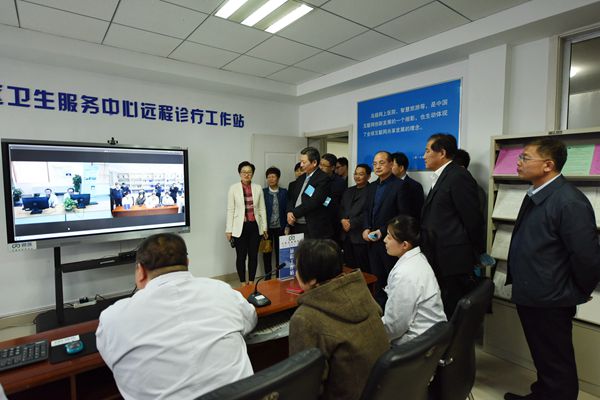
At an altitude of 1,545 meters, a tripartite remote consultation spanning Taian, Hangzhou, and Wuzhen was successfully conducted atop Mount Tai. Mr. Wang, an individual business owner in the Mount Tai scenic area, was diagnosed with hypertension last year and requires long-term medication. Due to the difficulties of traveling up and down the mountain, he learned about the newly established remote medical workstation at Nantianmen (South Gate to Heaven). The station’s physician accessed his electronic health records and successfully initiated a three-way consultation with experts from the Wuzhen Internet Hospital and the WeDoctor (Hangzhou) General Practice Center.
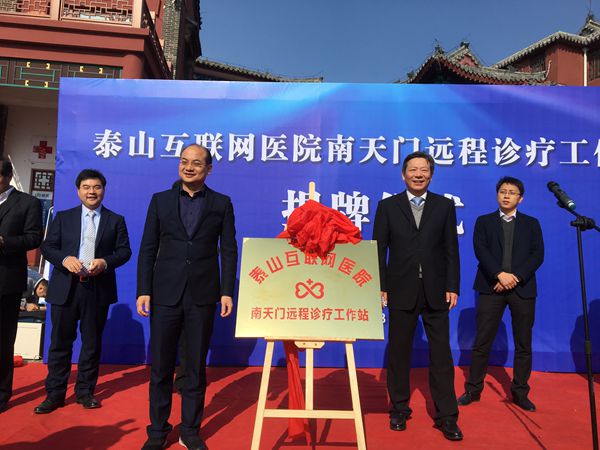
3On June 16, with the support of the Tai’an Municipal Government, the Taishan District Committee and Government, and the Mount Tai Scenic Area Management Committee, Wang Guangfeng, Deputy Secretary of the Party Working Committee and Director of the Management Committee of the Mount Tai Scenic Area, and Liao Jieyuan, Chairman and CEO of WeDoctor, unveiled the WeDoctor Nantianmen Remote Diagnosis and Treatment Workstation. The workstation will provide health management and remote consultation services to permanent residents near the Nantianmen Gate and to the more than 5 million tourists who visit annually. This consultation point is the 12,000th grassroots internet hospital consultation site established by WeDoctor nationwide.
“Internet hospitals must reach deep into the grassroots level, with the core mission of delivering three key capabilities to primary care settings: medical services, diagnostic testing and laboratory examinations, and standardized training.” Liao Jieyuan, Chairman and CEO of WeDoctor, told reporters. First, online consultations and remote case discussions should significantly enhance the clinical diagnostic capabilities of primary care physicians. Consultation points at the grassroots level provide direct access to specialists through dedicated referral channels. High-definition audio and video enable face-to-face consultations, transforming primary care institutions into “Internet Clinics of Renowned Experts” connected to top specialists across China.
Secondly, real-time data on 16 vital signs, including ECG, complete blood count, urinalysis, and respiratory waves, are acquired through all-in-one devices. Cloud-based laboratory and diagnostic services are provided to primary care institutions via third-party testing centers. All test results are compiled into electronic medical records for expert consultations. Furthermore, standardized training capabilities are offered. Through the WeDoctor Academy of General Practice, online and offline academic exchanges and technical training are provided to primary care physicians.
“The number and capabilities of medical personnel in the scenic area are limited, as we only ascend and descend the mountain once every few days. Internet hospitals have provided us with better means to serve the scenic area and tourists, enabling remote assistance from experts across China and achieving connectivity between online and offline services,” the doctor at the workstation told reporters. In underdeveloped grassroots areas with challenging conditions, internet hospitals hold significant value.
On that day, the construction of the Taishan Internet Hospital platform, jointly established by the Tai’an Municipal Government and WeDoctor, was also fully launched. In accordance with the requirements of the Tai’an Municipal Government, the Taishan Internet Hospital under construction will be based in Tai’an and serve southwestern Shandong Province, forming an internet hospital landscape characterized by “Wuzhen in the South and Taishan in the North.” According to the plan, the newly launched Taishan Internet Hospital will carry out its development and operations across four levels.
First, it serves as the Tai’an Smart Healthcare Platform. Under the guidance of the Tai’an Municipal Government, it integrates appointment slots from major hospitals upstream and connects with primary healthcare institutions downstream, providing residents with services such as appointment registration, online payment, health cloud cards, and online medical insurance settlement. Second, it functions as the Tai’an Family Doctor Contracting Service Platform, ensuring that every household in the city has access to proactive family doctor contracting services. Third, it establishes a Tai’an General Practice Center compliant with “4S” standards to undertake resident consultations and health management services. Finally, it operates as the Tai’an Regional Population Health Information Cloud Platform, supporting healthcare institutions in achieving capabilities in medical care, regulatory oversight, and emergency coordination.
To support the large-scale operation of its internet hospitals across 19 provinces and municipalities nationwide, as well as 12,000 primary care access points, Weiyi invested RMB 280 million in the independent development of an internet hospital platform. This platform integrates a remote consultation system, an electronic prescription and online medical order system, and an electronic medical record (EMR) system. It has successfully established connections with the Great Wall Station in Antarctica and Sansha City, China’s southernmost city. Through this platform, any remote consultation point can access the expertise of 260,000 specialists from 29 provinces and municipalities.
During the Two Sessions, Li Bin, Director of the National Health and Family Planning Commission, proposed that the state encourages localities to develop the “1+3 Project,” comprising telemedicine, medical consortia, medical communities, and specialty alliances, to promote the decentralization of high-quality medical resources and implement tiered diagnosis and treatment. The model established by Taishan Internet Hospital, featuring an “Internet Hospital + Medical Consortium, Medical Community, and Discipline Alliance” framework, will position Tai’an as a demonstration city for the national “1+3 Project.” By improving the grassroots healthcare service system, this initiative aims to truly enable residents to receive quality medical care without leaving their homes.