

Industry 'Cleansing' Underway: This Company Has Already Integrated Over 1,000 Pharmaceutical Pure-Sales Enterprises, Targeting 2,000
The transformative wave driven by the “VAT Reform, Circular No. 94, and the Two-Invoice System” has swept through the pharmaceutical industry like a storm, placing unprecedented pressure on more than 4,000 pharmaceutical manufacturers operating under an agency model and tens of thousands of pharmaceutical distribution companies. Practices such as invoice trading, pass-through invoicing, and affiliation-based operations will no longer have room to survive, leading to earth-shaking changes in the pharmaceutical distribution landscape. In this context, how industrial enterprises can ensure smooth channels to end-user demand, and how distribution companies can withstand policy pressures and successfully transform, have become urgent issues for the industry to address.
VCBeat (WeChat ID: vcbeat) recently conducted an exclusive interview with Shi Lichen, founder of Beijing Dingchen Pharmaceutical Consulting and the MaxKanglai third-party pharmaceutical service platform. By establishing a specialized marketing system for the pharmaceutical industry and integrating pure-sales pharmaceutical enterprises, the MaxKanglai platform provides a matchmaking interface for both pharmaceutical manufacturers and pure-sales companies. This helps them mitigate the impact and pressure arising from policy changes, thereby fostering a new ecosystem for pharmaceutical marketing and distribution.
As we understand, leveraging its deep-rooted expertise and resource aggregation advantages in the pharmaceutical industry, Maxconlay has integrated more than 1,000 pure-distribution pharmaceutical enterprises and established provincial branches and specialized teams across 21 provinces and municipalities. In the future, it is expected to integrate 2,000 pure-distribution pharmaceutical enterprises, connect with pharmaceutical companies of all scales, and bridge online and offline channels to create a synergistic B2B+O2O pharmaceutical distribution system.
Small-scale distribution enterprises will be gradually phased out.
According to Shi Lichen, the "Two-Invoice System" is currently being rolled out across China and is scheduled for full implementation starting in 2018. This has led to a gradual exit of numerous pharmaceutical commercial enterprises from the market, rendering the marketing structures of pharmaceutical companies reliant on the agency model unsustainable and exposing them to the risk of declining performance.
Meanwhile, the General Office of the State Council issued the “Several Opinions on Further Reforming and Improving Policies for Drug Production, Circulation, and Use,” which requires that food and drug regulatory authorities strengthen the management of medical representatives, establish a registration and filing system for medical representatives, and promptly disclose filed information. Medical representatives shall only engage in activities such as academic promotion and technical consultation, and shall not assume drug sales tasks; any acts of dishonesty shall be recorded in their personal credit records.
Currently, many pharmaceutical sales representatives do not hold degrees in medicine or pharmacy, rendering them fundamentally incapable of conducting academic marketing activities. Consequently, numerous representatives continue to rely on bribing physicians to drive drug sales, exposing both pharmaceutical companies with in-house sales teams and the representatives themselves to significant legal risks. Indeed, some pharmaceutical sales representatives and physicians have already been arrested for commercial bribery.
The implementation of national policies such as Document No. 94, the VAT reform, and the Golden Tax Phase III system has curbed many irregular practices in the pharmaceutical commercial sector. Although practices like affiliation and invoice passing still exist, along with drug sales by individuals, these activities now carry significant risks of regulatory investigation and penalties.
Current national policies aim to regulate the pharmaceutical distribution order and reduce intermediate channels. The implementation of the "Two-Invoice System" will cause short-term disruption in the structure of the pharmaceutical commercial sector. This creates a need for a platform that does not directly engage in pharmaceutical distribution but can facilitate channel integration between pharmaceutical manufacturers and distributors with pure sales capabilities, while also providing professional academic marketing support.
Shi Lichen stated that with the implementation of policies such as the Two-Invoice System, the VAT reform, and the 13th Five-Year Plan for Pharmaceutical Distribution, the pharmaceutical distribution landscape will undergo a fundamental transformation. Industry consolidation is an irreversible trend; small-scale distributors and trading companies that fail to successfully transform will be gradually phased out.
The Industry Will Experience Short-Term Growing Pains
Shi Lichen believes that the elimination process for small-scale pharmaceutical pure-sales enterprises will be brutal.
On one hand, the Two-Invoice System has caused a large number of pharmaceutical distribution companies to lose their original business. While they can survive in the short term by relying on virtual commercial services, there is no foundation for long-term viability. On the other hand, the state’s crackdown on affiliation, invoice passing, and drug sales by individuals has curbed non-compliant business practices within the pharmaceutical distribution sector.
The outcome has been that a large number of pharmaceutical commercial companies have either shut down voluntarily—for instance, Erkang Pharmaceutical Co., Ltd., the largest pharmaceutical distributor in the Yingde region of Guangdong Province, went bankrupt and owed tens of millions of yuan in outstanding payments to manufacturers—or have been investigated for historical non-compliant practices. For example, Fujian Zhongyuan Pharmaceutical Co., Ltd. had its Good Supply Practice (GSP) certificate revoked and was placed under investigation for serious alleged violations, including invoice laundering and affiliation-based operations.
Commercial enterprises that secure regional distribution rights may survive for the next three to five years, but their long-term viability beyond this period remains uncertain. This is because third-party logistics providers, such as SF Express, have already begun to establish a presence in the pharmaceutical distribution sector. Leveraging their extensive express delivery networks, these third-party logistics companies benefit from lower distribution costs and highly developed logistics systems, positioning them to easily capture market share from traditional pharmaceutical distributors in the future.
Third-Party Pharmaceutical Service Platforms Are the Way Forward
According to Shi Lichen, who has long been engaged in pharmaceutical consulting, he has observed the industry’s pain points and opportunities for transformation during this process. In the early stages of founding Maxconlay, extensive research and field visits were conducted, involving observational scans of various types of pharmaceutical manufacturers and commercial enterprises.
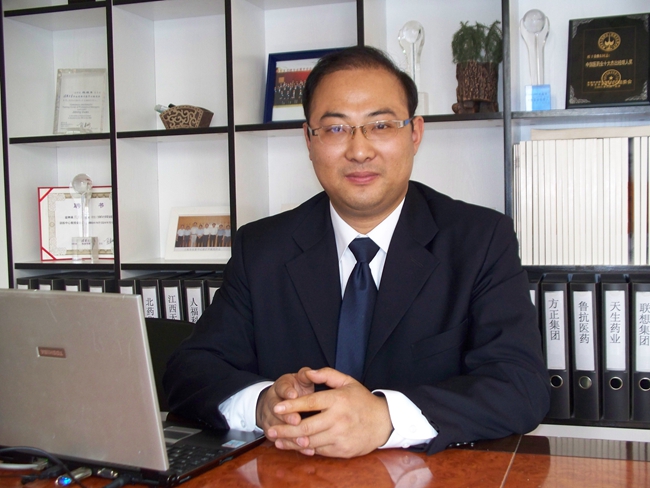
Shi Lichen, Founder of Beijing Dingchen Management Consulting & MaxCare
Pain Points for Medium and Large-Sized Pharmaceutical Companies with In-House Sales Teams: A Scarcity of Medical Affairs Talent, Prohibitively High Costs in Building Academic Teams, and Challenges in Sustaining Compliance
Pain Points of Small and Medium-Sized Pharmaceutical Companies Dominated by the Agency Model: Disordered Existing Commercial Structures, Unclaimed Performance Targets, Increased Accounts Receivable Risks, Unsustainable Traditional Investment Promotion, and Ultimately Declining Performance.
Pain Points of Commercial Distribution Enterprises: Although they have obtained distribution qualifications, their profit margins are thin. Despite handling a wide range of clinical products, they lack specialized marketing teams to conduct compliant academic promotion, making it difficult to scale up product sales. Pharmaceutical manufacturers are reluctant to collaborate with them on core products, exposing these distributors to the risk of being replaced by third-party logistics providers.
Pain Points of Small and Medium-Sized Commercial Enterprises: Lack of distribution qualifications, significant decline in business, difficulty in obtaining regional sales rights for high-quality products from pharmaceutical manufacturers, absence of academic marketing capabilities, capital shortages, and immense survival pressure.
To address the pain points of these enterprises, Dingchen Consulting and the Pharmaceutical Professionals Club have decided to jointly establish Maxkanglai. Positioned as a pure third-party pharmaceutical service system, Maxkanglai is dedicated to resolving development and transformation challenges for all companies in the pharmaceutical industry.
Shi Lichen stated to VCBeat (WeChat ID: vcbeat) that, for distribution agents, establishing an in-house marketing system poses a challenge in the short term.
He believes that commercial enterprises in distribution and agency have relied for years on development models such as allocation, delivery, affiliation, and invoice pass-through, resulting in weak market-based academic capabilities. Moreover, professional market-based academic expertise cannot be acquired through short-term recruitment; it requires long-term accumulation.
Furthermore, the product itself poses a challenge. Most pharmaceutical distributors and commercial enterprises hold few products that require academic marketing. Moreover, there is a significant difference between the academic marketing practices of commercial entities and those of pharmaceutical manufacturers. Commercial enterprises cannot conduct academic marketing for individual products, as the associated costs would be unsustainable; instead, they must implement academic marketing at the product portfolio level. However, most pharmaceutical commercial enterprises currently lack the capability to execute academic marketing for product portfolios.
As planned, Maxconlai provides comprehensive assistance and support to pharmaceutical commercial enterprises with pure sales functions, offering them products, management, market academic, and financial support. This approach not only addresses the pain points of distribution enterprises but also resolves the core issues hindering their long-term development.
At the product level, Maisikanglai signs long-term cooperation agreements with distribution enterprises on a county and district basis, subsequently providing them with a continuous supply of high-quality pharmaceuticals and medical devices under exclusive regional distribution rights.
At the management level, Maisconlai has integrated the business of Dingchen Consulting, a pharmaceutical management consulting firm, to provide these distribution enterprises with professional services in internal corporate management and external market management.
At the academic level of the market, Masconlay provides these distributors with product planning, academic marketing support for product portfolios, and other market assistance, thereby eliminating the need for them to develop their own in-house academic marketing capabilities.
At the funding level, Maxconlay has established partnerships with multiple financial institutions to provide financial support to upstream pharmaceutical manufacturers, downstream distributors, and chain pharmacies.
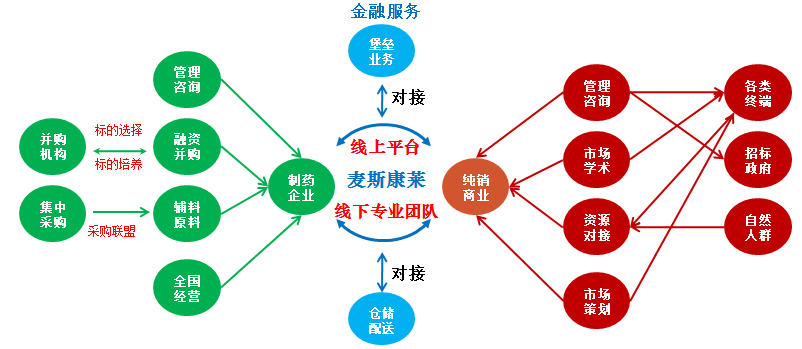
Masconlai Service System
Shi Lichen summarized that Maikanglai is essentially an integrated online-to-offline platform and channel, combining B2B and O2O models. Products from pharmaceutical companies, medical device manufacturers, and health supplement enterprises can conduct compliant transactions with commercial clients through its e-commerce platform. These commercial clients then sell the purchased products directly to various end-points, thereby eliminating the need for multi-tiered distribution recruitment.
Regarding implementation, according to Shi Lichen, Maxconlay has established 21 provincially registered branch companies. Each branch has an average of 50 shareholders, bringing the total number of Maxconlay shareholders across China to over 1,000. The company also employs more than 1,000 academic professionals specializing in market development, resulting in a nationwide workforce of over 2,000 employees.
Integration, Not Reconstruction
According to VCBeat, a key feature of Maskanglai is that it has retained the original pharmaceutical distribution structure to some extent. So where do the profits come from for the distributors partnering with Maskanglai? If pharmaceutical companies still bear these costs, will the previous issues of invoice fraud and illicit ticket resurfacing reemerge? Shi Lichen provided answers to these questions.
Shi Lichen stated that the traditional pharmaceutical commercial ecosystem is difficult to change in the short term. It is impossible for Maxconlay to completely dismantle and rebuild it from scratch. Therefore, the company has retained the most valuable segment of the pharmaceutical commercial value chain, namely, pure sales. The pure sales segment holds an irreplaceable position within the pharmaceutical commercial ecosystem. In the future, Maxconlay aims to expand its pure sales operations and develop collaboratively with commercial enterprises that possess pure sales capabilities.
Meanwhile, distribution enterprises with pure sales capabilities that join the Maxconlay system will obtain reasonable sales margins from product pricing, as well as benefits from market activities and market research, thereby supporting Maxconlay’s compliant market operations.
In this way, distributors no longer need to resort to non-compliant practices such as affiliation, invoice laundering, and unauthorized transfers to generate revenue. Meanwhile, Masconlai’s provincial branches leverage their local networks and terminal resources to help distributors extensively integrate individual agents and terminal resources within the region into their operations. These individuals are incorporated into the distribution business system as bona fide employees of the distributors, thereby contributing to the growth and expansion of the distribution enterprises.
From the perspective of the overall market environment, pharmaceutical distributors are currently expanding their presence into grassroots-level markets. Major players such as Sinopharm, Shanghai Pharmaceuticals, and Chongqing Pharmaceutical are actively establishing outlets at the primary care level. Consequently, how Maxcare penetrates this grassroots market has also become a key focus of our attention.
Shi Lichen stated that Maxconlai’s physically registered branch offices in various provinces each comprise five major business divisions, namely the Clinical Division, the OTC Division, the Primary Healthcare Division, the Medical Devices Division, and the General Health Division.
Each business unit of Maxconlai signs service cooperation agreements with commercial clients suited to its operations within regional markets, helping pharmaceutical companies establish distribution channels by connecting their products tailored for the primary healthcare market with commercial clients proficient in serving this sector.
Shi Lichen stated that there is also potential for cooperation with distributors such as Sinopharm and Shanghai Pharma. He explained that although companies like Sinopharm, Shanghai Pharma, and Chongqing Pharmaceutical are indeed deploying resources in the primary healthcare market, certain pharmaceutical products still require medical marketing and academic promotion in this sector—an area where these distribution-focused enterprises lack expertise. Maxconlay can provide these distributors with professional support in medical marketing and academic promotion.