

AliveCor Secures $30M Funding Led by Omron and Mayo Clinic, Launches AI-Powered Kardia Pro Platform for Clinicians
Smartphone ECG CompaniesAliveCor announced yesterday a new $30 million financing round, led by the globally renowned electronic equipment manufacturer Omron and the Mayo Clinic. Coinciding with the financing announcement, the company also launchedNew ProductsKardia Pro, this is its first ECG panel designed for healthcare providers, incorporating artificial intelligence technology to assist cardiologistsScreen for useful patient information.
“In the past, whenever we spoke with physicians using AliveCor products and asked for their feedback, one question consistently came up: ‘Your product is great for patients, but it’s not quite perfect for us doctors,’” said CEO Vic Gundotra in an interview.
AliveCor stated that previously, when patients used the Kardia Mobile device, physicians would receive the patients’ single-lead ECG strips via their email inboxes. Compounding the confusion, doctors often struggled to match each ECG strip to the correct patient, which prevented them from uploading the data into the patients’ electronic health records (EHRs). In some cases, concerns also arose regarding liability associated with the use of such data.
Therefore, AliveCor devised a solution by establishing a new platform to address all these challenges. Instead of receiving patients’ electrocardiograms (ECGs) via email, physicians now utilize a more advanced mobile application. A standout feature is the app’s use of artificial intelligence to flag patients requiring prioritized attention while identifying healthy individuals with no issues who can be safely ignored. Moreover, the new Kardia Pro addresses a practical concern: it integrates seamlessly with healthcare systems, enabling reimbursement for services and significantly enhancing the overall workflow efficiency.
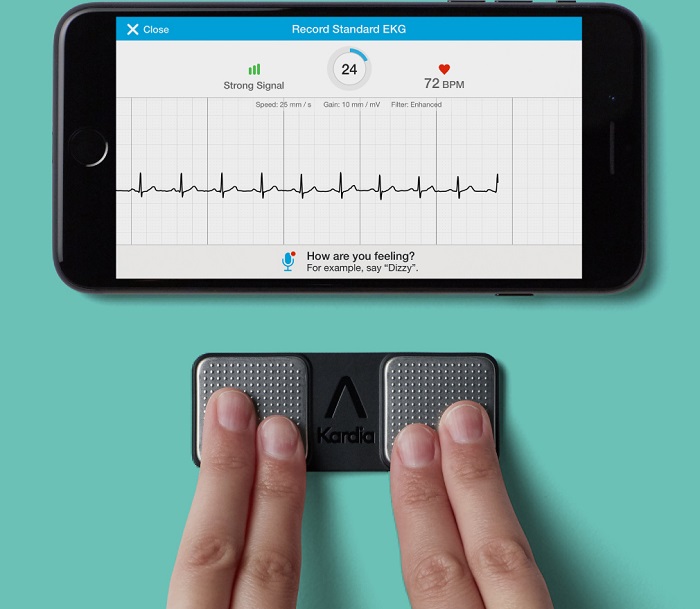
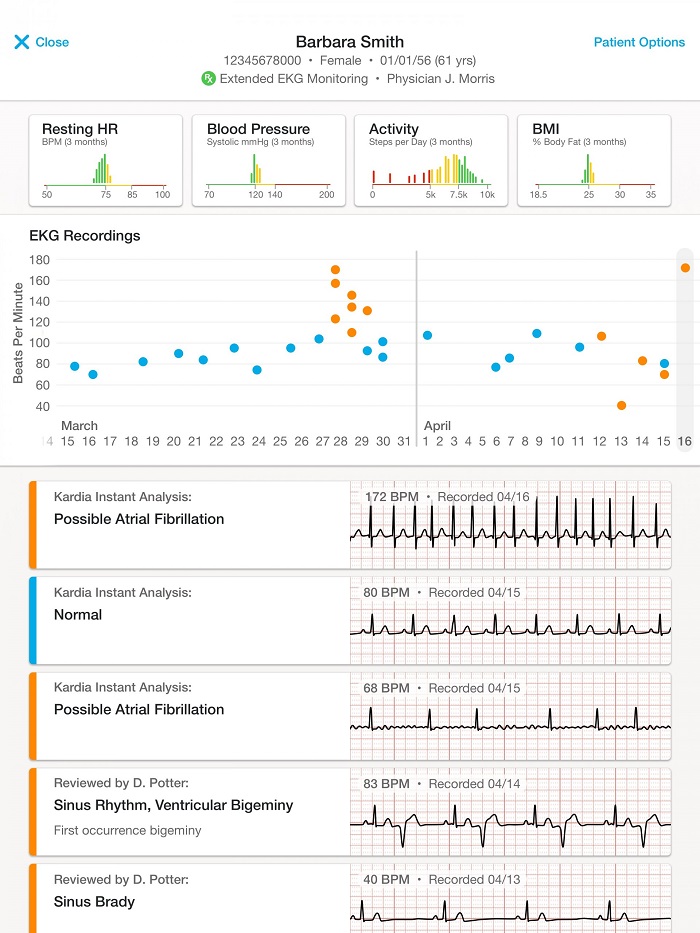
AliveCor Products and the Newly Released Kardia Pro Multi-Function Panel
The biggest selling point of Kardia Pro is its convenience and ease of use, developed by former designers of Gmail and Google Maps. Furthermore, it leverages electrocardiogram (ECG) data as its foundation while enabling patients to track blood pressure, weight, and physical activity levels, with all data integrated into a single dashboard for comprehensive comparison. This innovative concept emerged when AliveCor was seeking investment from Omron.
“Conditions such as hypertension and arrhythmia are highly correlated with electrocardiogram (ECG) findings, and most physicians prefer that patients have multiple metrics measured simultaneously.” This is the reason why AliveCor sought investment and close collaboration from Omron. As a major corporation specializing in automation control and electronic devices, Omron can leverage its technology to support AliveCor in the diversified acquisition of physiological metrics.
Ultimately, the new product Kardia Pro builds upon AliveCor’s FDA-cleared algorithms and integrates deep learning neural network technology to create a personalized “cardiac profile” for each patient. During the first month of use, AliveCor prompts users to verify their identity to ensure that the device is being used by the intended individual. Once the cardiac profile is established, if an uploaded electrocardiogram (ECG) deviates from the patient’s typical pattern, AliveCor intelligently issues an alert. If the patient confirms that the ECG is indeed theirs, the system notifies the healthcare provider that the tracing is inconsistent with the patient’s historical ECG data.
“In the future, these tools will become indispensable to all cardiologists,” said Gundotra. “AI seamlessly augments physicians’ services, delivering truly high-quality care to patients.”
On the previous Kardia Mobile system, users recorded an astonishing average of 20 electrocardiograms (ECGs) per month, whereas the standard frequency for most individuals is only two to three ECGs per year. This high volume of data collection is highly valuable for cardiac research, as ECGs contain a wealth of diagnostic information. AliveCor has now partnered with the Mayo Clinic to study blood potassium levels. The Mayo Clinic’s investment in the company further underscores its confidence in the scientific validity of AliveCor’s products.
The CEO believes that AliveCor’s strategy—starting with consumer-facing tools and then providing high-quality technical capabilities to healthcare providers—has given it a competitive edge in both the B2C and B2B markets. The company will continue to uphold “patient-centricity” as its core corporate value, while placing greater emphasis on collaboration between physicians and patients in healthcare delivery.
“The new product enhances physician-facing features, which in turn significantly expands AliveCor’s user base,” Gundotra noted. Previously, many physicians praised the product for its ease of use but abandoned it due to poor integration with existing healthcare systems. Now, AliveCor’s product not only facilitates clinical workflows but also addresses insurance reimbursement issues, leading more physicians to encourage their patients to install its app.