

WeDoctor's Sole Physical Entity: The Story Behind Ningxia Internet Hospital

On December 8, 2016, the Ningxia Internet Hospital was officially launched and went online at the High-Level Forum on Promoting China’s Healthcare Reform through Internet Hospitals and the Signing Ceremony for the Ningxia Internet Hospital, marking its formal establishment in Yinchuan. The Ningxia Internet Hospital is the 17th provincial-level internet hospital deployed by Weiyi across China, following the Wuzhen Internet Hospital.
On March 12, 2017, the Ningxia Internet Hospital, jointly established by WeDoctor and the General Hospital of Ningxia Medical University and covering an area of over 1,400 square meters, officially opened at the intersection of Helan Mountain Road and Hongqiao Road in Helan County, Yinchuan City, Ningxia Hui Autonomous Region.
With the collective signing of 15 internet hospitals on March 19, Yinchuan has formed an industrial cluster comprising 17 internet hospitals. However, according to information obtained by VCBeat, among these numerous internet hospital platforms, Weiyi is the only one that holds a registered license, relies on local large offline hospitals, and has established physical facilities for operational launch. From its strategic deployment in late 2016 to its opening in the first quarter of 2017, if you want to know the story behind Ningxia’s internet hospital and understand how it operates and was conceived, VCBeat will provide an in-depth analysis below.
As is well known, Ningxia, located in the inland northwest of China, has a relatively insufficient supply of high-quality medical resources. In areas such as Xihaigu, poverty caused or exacerbated by illness remains a persistent issue. Taking Helan County in Yinchuan City as an example, the county’s population of 260,000 is served by only slightly more than 1,100 medical professionals, among whom fewer than 30 hold the title of associate chief physician or higher. To address this situation, Ningxia has leveraged the dividends of “Internet Plus” to explore “Internet Plus Healthcare,” promote the implementation of tiered diagnosis and treatment, and alleviate the difficulties and high costs associated with accessing medical care.
In February 2015, the General Office of the National Development and Reform Commission and the General Office of the National Health and Family Planning Commission issued the "Notice on Approving Pilot Policy Initiatives for Telemedicine in Five Provinces and Autonomous Regions Including Ningxia and Yunnan." The notice required these regions to fully leverage information technology to promote the vertical flow of high-quality medical resources. Ningxia will establish a five-tier hierarchical telemedicine service system covering the entire autonomous region, structured as "National–Autonomous Region–City–County–Township."
During the 13th Five-Year Plan period, Ningxia explicitly committed to establishing a regional population health information platform, enabling open sharing of healthcare service information, and improving the telemedicine network system. In November 2016, Li Yuhua, a member of the Standing Committee of the Yinchuan Municipal Party Committee and Secretary of the Helan County Party Committee, led a delegation to Wuzhen, the National Internet Innovation Development Pilot Zone, to inspect the Wuzhen Internet Hospital. After gaining an understanding of its service model, he expressed the hope to implement the Wuzhen Internet Hospital model in Ningxia, thereby creating an internet hospital development pattern characterized by “Wuzhen in the East and Helan in the West.”
Against this backdrop, on December 8, 2016, in the lead-up to the Ningxia Hui Autonomous Region Health and Wellness Conference, WeDoctor and General Hospital of Ningxia Medical University, a leading Grade A tertiary hospital in Northwest China, jointly established the Ningxia Internet Hospital. This initiative integrated the online and offline strengths of both WeDoctor and General Hospital of Ningxia Medical University, with initial implementation prioritized in Helan County.
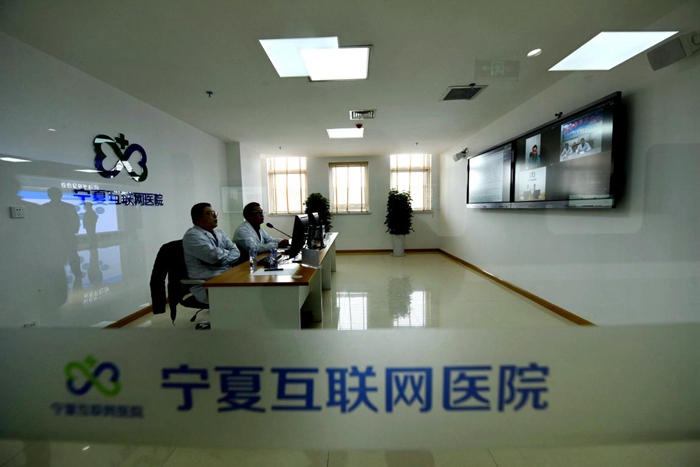
Unlike other purely online virtual hospitals, Ningxia Internet Hospital has a physical presence. In fact, all 18 internet hospitals already established by WeDoctor are built in reliance on physical hospitals. Located at the intersection of Helan Mountain Road and Hongqiao Road in Helan County, Yinchuan City, Ningxia Hui Autonomous Region, Ningxia Internet Hospital covers an area of over 1,400 square meters, with functional layouts and equipment investments similar to those of the Wuzhen Internet Hospital. To date, WeDoctor has established 19 internet hospitals across China, with the basic platform costing RMB 280 million. Among them, the cost for building the regional medical consortium internet hospital in Ningxia alone reached RMB 120–150 million.
Why Must There Be Physical Hospitals for Implementation? WeDoctor Provides Three ReasonsThe first reason is legal and regulatory compliance: To provide online diagnosis and treatment services, internet healthcare providers must possess medical qualifications and be equipped with necessary facilities, beds, equipment, and medical personnel in accordance with relevant requirements. The second reason is medical necessity: Medical services encompass various components, including diagnosis, examinations, treatment, and surgery. Certain medical services, such as initial consultations, diagnostic tests, and surgical procedures, must be conducted offline. The third reason is patient demand: A fragmented healthcare service model that separates online and offline care does not align with patients’ pursuit of convenience, efficiency, and affordability, making it difficult to gain user acceptance.
To ensure service quality and medical safety, WeDoctor Internet Hospital not only relies on offline physical hospitals but also invites medical experts or administrators from renowned Grade A tertiary hospitals to serve as deans. At the opening press conference of Ningxia Internet Hospital, Zhang Leqin, Vice Chairwoman of the Ningxia Hui Autonomous Regional Committee of the Chinese People’s Political Consultative Conference, presented Yang Yinxue, President of the General Hospital of Ningxia Medical University, with the appointment letter for the position of Dean of Ningxia Internet Hospital on behalf of the autonomous region. Yang Yinxue has officially assumed the role of Dean of Ningxia Internet Hospital.
General Hospital of Ningxia Medical University is the largest comprehensive Grade A tertiary hospital in Ningxia, boasting robust medical service capabilities, with over 3,700 open beds and more than 2 million patient visits in 2015. According to Yang Yinxue from the General Hospital of Ningxia Medical University, the Ningxia Internet Hospital leverages the General Hospital of Ningxia Medical University as a hub to integrate WeDoctor’s online network of 260,000 physicians and 7,200 expert teams, thereby introducing high-quality medical resources from across China into Ningxia, with priority implementation in Helan County, Yinchuan.
According to VCBeat, the General Hospital of Ningxia Medical University is also leading the development of the Ningxia Healthcare Big Data Operations Platform. Once completed, all hospitals in Ningxia will be able to meet their informatization needs through a single network connection. Patients seeking medical care in Ningxia will no longer need to register repeatedly, and test and examination results will be mutually recognized across institutions. Yang Yinxue stated that by leveraging provincial resources to establish a healthcare big data platform, Ningxia’s internet hospitals have the potential to become national leaders in this field.
With the accumulation of vast amounts of medical data, security assurance for internet hospital platforms has become particularly critical. To mitigate operational risks and ensure the safety of daily business operations, WeDoctor implements dual identity verification—combining hospital credentials and bank card authentication—for physicians practicing on its internet hospital platform. The scope of services is limited to consultations, follow-up visits, and services for health insurance members. The platform has developed a Pharmacy Benefit Management (PBM) system to review electronic prescriptions. Furthermore, its technical infrastructure has obtained Level 3 Certification from the Public Security Bureau’s Cyber Security Division and is subject to on-site regulatory supervision.
I. Physician Qualifications
For physicians issuing online prescriptions and diagnoses, verify whether they have registered for multi-site practice at your medical institution. All online physicians are certified by public hospitals. WeDoctor guarantees that 100% of its 280,000 physicians have been approved, signed, and stamped by hospital outpatient departments. Passwords, accounts, and cryptographic keys are all managed by the outpatient department, which then issues them to the physicians. (Real-name authentication for Alipay and WeChat Pay is verified through banks.)Regarding the replacement of physicians by assistants in clinical practice, there are nationalCACertification, national-levelCA. NationalCAThere are established standards, as well as a comprehensive set of laws and regulations. When physiciansCAThe key was given to the assistant (equivalent to signing for consent), and all liability remains with the physician;
II. Scope of Business
Internet hospitals are limited to three services: consultations (with the attending physician bearing primary responsibility), follow-up visits (for patients with an established offline doctor-patient relationship), and health insurance (for member users);
III. Prescription Review
Electronic prescriptions issued by physicians must undergo third-party prescription review by senior clinical pharmacists. The reason why Pharmacy Benefit Managers (PBMs) perform so well abroad is that prescriptions are reviewed by PBMs after being covered by medical insurance. WeDoctor has partnered with professional institutions to establish its own PBM prescription review platform.
IV. System Security
Technical security, certified at Level 3 by the Public Security Cyber Police. In China, only two enterprises are subject to on-site supervision by cyber police: one is Alipay, and the other is WeDoctor.
Benefiting from government support, Ningxia Internet Hospital has obtained both its business license and medical institution practice license. The entire process—from contract signing, approval, renovation, implementation, acceptance, and commissioning to official opening—took only50working days, with remarkably high speed and efficiency. Leveraging WeDoctor’s mature platform technology, Ningxia Internet Hospital has established an online-offline integrated medical consortium, adhering to the mission of “being rooted in Ningxia and serving the entire Northwest region.” According to VCBeat, Ningxia Internet Hospital will also provide the following five levels of services:
Level 1: A Convenient Medical Care Platform for the Entire Autonomous Region.Ningxia Internet Hospital is gradually migrating the service counters of hospitals in Yinchuan and across Ningxia to online platforms, providing residents in Ningxia and Northwest China with services such as appointment registration, online payment, sharing of examination and test reports, and Health Cloud Card services. Soon, residents throughout the autonomous region will be able to complete appointment registrations at various hospitals via the WeDoctor APP or ningxia.guahao.com.
Second Layer: The Tiered Diagnosis and Treatment Platform in Northwest China.Leveraging central hospitals in the Northwest region, such as the General Hospital of Ningxia Medical University, Ningxia Internet Hospital will fully harness the connectivity capabilities of the internet to build a tiered diagnosis and treatment platform for the Northwest region;
Level 3: A physician collaboration platform based in Ningxia, covering the entire region, and connecting with Beijing and international medical professionals.WeDoctor’s main platform is currently the world’s largest physician collaboration platform. Leveraging this platform, Ningxia Internet Hospital channels expert expertise down to the grassroots level, helping to enhance the professional capabilities of primary-care physicians. Currently, more than 40 multidisciplinary expert teams led by specialists from the General Hospital of Ningxia Medical University have joined Ningxia Internet Hospital, providing team-based medical services to residents in Ningxia and facilitating the implementation of tiered diagnosis and treatment.
Level 4: Internet-Based Multidisciplinary Consultation Center.Wuzhen Internet Hospital has successfully established ten interdisciplinary consultation centers led by academicians. These ten centers have been directly replicated at Ningxia Internet Hospital, providing efficient consultation services for complex and rare diseases to residents across the region and Northwest China.
Level 5: Gradually drive the agglomeration of the pharmaceutical, medical, and insurance industry chain.On the afternoon of the opening day of Ningxia Internet Hospital, “Ningxia Health Valley” will be unveiled in Helan. Ningxia Internet Hospital will facilitate the phased settlement of upstream and downstream industry chain enterprises into “Ningxia Health Valley,” leveraging Ningxia’s policy advantages to establish a health industry hub in Northwest China.
On March 11, the press conference of the National People’s Congress invited leaders from the National Health and Family Planning Commission (NHFPC) and the State Council’s Office of Healthcare Reform to answer reporters’ questions. Li Bin, Director of the NHFPC, emphasized that medical consortiums are a key instrument for establishing a tiered diagnosis and treatment system, and that efforts should be made to strengthen the development of medical consortiums so that the public can access quality healthcare services close to home. On March 12, the Ningxia Internet Hospital, a district-level internet-based medical consortium, commenced operations and successfully conducted its first three-party remote consultation within the consortium, aligning closely with the approach underscored by Director Li Bin.
On its opening day, Ningxia Internet Hospital released its construction and operational plans for the upcoming phase, proposing the goal of building five major platforms across the autonomous region based on an internet-enabled medical consortium model. The establishment of Ningxia Internet Hospital is the result of years of exploration and development in telemedicine, particularly in medical consortia, making it an integrator of the achievements of healthcare system reform in the autonomous region and a model for provincial-level internet-based medical consortia.
Leveraging the internet, Ningxia Internet Hospital will evolve into a medical consortium covering the entire autonomous region. In 2012, the General Hospital of Ningxia Medical University led the establishment of the General Hospital Group of Ningxia Medical University, which currently comprises approximately 40 member institutions and has become the leading entity in the region’s offline medical consortiums. Building upon its connection with the medical consortium led by the General Hospital of Ningxia Medical University, Ningxia Internet Hospital will further link central hospitals at all levels across Northwest China. By fully leveraging the connectivity capabilities of the internet, it will achieve deep integration and data interoperability among medical institutions and experts at various levels, thereby becoming a tiered diagnosis and treatment platform for Northwest China.
Through cross-regional collaborative discipline development, Ningxia Internet Hospital has established an “Discipline Alliance” that integrates online and offline services, creating an internet-based multidisciplinary consultation center for Northwest China. Statistics show that Wuzhen Internet Hospital has successfully established 10 interdisciplinary consultation centers led by academicians. These 10 centers have been directly replicated at Ningxia Internet Hospital, providing efficient consultation services for complex and refractory diseases to residents across the autonomous region and Northwest China.
President Yang Yin stated that if a hospital is a steed, the internet is its wings; once equipped with wings, the steed becomes a Pegasus. Traditional medical consortia, when empowered by the internet, will evolve into internet-based medical consortia, resulting in a geometric increase in their service capabilities.
By leveraging medical consortiums in various forms, the currently relatively rigid structure is interconnected vertically and horizontally to create a rational layout, thereby addressing the public’s difficulties in accessing medical care. Relying on the “3+1” medical consortium model of Ningxia Internet Hospital, online and offline services achieve closed-loop integration, primary care institutions and tertiary Grade A hospitals realize seamless collaboration, and general practice and specialty care are effectively linked. In the future, through the integration of healthcare resource providers and payers, along with the launch of health insurance products, Ningxia will establish a truly closed-loop health management system.
In the field of internet hospitals, WeDoctor is an undisputed leader. From proposing the concept of internet hospitals to setting standards and implementing them, it has currently expanded across China.18Implemented across provinces and municipalities, with service coverage now extending to29provinces, and2400Information systems of multiple key hospitals have been interconnected, with over1.5hundreds of millions of real-name registered users and26Tens of thousands of experts from key hospitals, with cumulative patient visits exceeding8.5100 million.
A true internet hospital must possess not only “upward” capabilities—online connectivity and services—but also “downward” capabilities—offline patient reception and support for primary care institutions. WeDoctor’s internet hospital is exploring a development model that integrates online and offline operations, fosters collaboration between general practitioners and specialists, and promotes partnerships between tertiary hospitals and primary healthcare facilities. This approach aims to channel high-quality medical resources down to the grassroots level, enhancing the accessibility of healthcare services; facilitate collaboration among physicians to improve the overall service capacity of primary care; and support family doctor contracting and training, thereby advancing the transition from “passive medical treatment” to “proactive health management.”
WeDoctor currently maintains a comprehensive layout across the entire “healthcare, pharmaceuticals, and insurance” industry chain. Its core business spans internet hospitals, specialized medicine, health consumption, health finance, membership services, and family doctor services. In 2016, WeDoctor’s revenue exceeded RMB 1.2 billion, with its three primary segments—healthcare, insurance, and pharmaceuticals—achieving overall profitability, making it the first internet healthcare company in China to attain scaled revenue.