

Sexual Health Clinics Thrive in Europe and the US—Will China Embrace This Model?
In the UK, where publicly funded free healthcare is the envy of people worldwide, a multinational chain of sexual health testing companies has emerged in less than a decade. Even within the context of capitalist sexual liberation culture, there is still room for such businesses to thrive. After all, it’s just about sex—do foreigners also feel shy? This is indeed somewhat surprising.

Unlike the previous online-only boom in internet healthcare, establishing hospitals, clinics, and ambulatory surgery centers has become a new trend. However, whether initiated by individual physicians, physician groups, or cross-industry capital investors, the startup phase is considerably challenging. Industry insiders reveal that a shortage of patients is nearly ubiquitous; some clinics have undergone repeated renovations shortly after opening, and there are even reports of facilities relocating midway through renovation.
Once, one-minute clinics in the United States drew significant attention in China. Riding this wave of clinic fever, let’s take another look at a different business today: After China’s private healthcare sector relied on posting small advertisements on utility poles to achieve its initial capital accumulation, it has yet to undergo a satisfactory transformation. In contrast, some companies abroad have managed this business quite successfully, with some even starting relatively late.
Better2Know: Operations Span 8 Countries
Founded in 2008, Better2Know is now the largest private sexual health service provider in the UK, specializing in the testing and treatment of STIs (Sexually Transmitted Infections) and STDs (Sexually Transmitted Diseases).
In less than a decade, it has achieved rapid year-on-year growth within the UK’s comprehensive primary healthcare system. Currently, it operates more than 120 clinics across the UK alone, with a presence in London, Manchester, Birmingham, Edinburgh, Glasgow, and other regions. It claims that by simply entering a postcode, users can easily locate a nearby clinic.
Just in the UK? You read that right. Better2Know has expanded its business to seven other countries, including Ireland, Spain, South Africa, Italy, India, Switzerland, and the United Arab Emirates. It claims to be the largest private provider of sexual health testing in South Africa, India, and the Middle East, or a leader in this industry within those countries.
Why Choose Better2Know? Give Us a Reason!
The company listed several reasons, with “Always 100% Confidential” topping the list on its UK website. Customers can access testing services without providing their real names—indeed, a thorough confidentiality measure. However, the fact that no identification is required seems inconsistent with China’s national context. The company explained that it manages customer information through a unique PIN code system. Better2Know does not require customers to provide the name of their personal physician, nor does it share test results with any third party. This means that information regarding test results remains confidential even between customers and clinicians.
Other advantages include:
Results can be generated quickly, typically within 1–5 days, depending on the specific test and region;
Unmatched Convenience: The company operates numerous clinics across the UK, eliminating the need for patients to travel long distances. Additionally, qualified nurses can be arranged for home visits at an extra cost (£40 from 9:00 AM to 5:00 PM, Monday to Friday; £100 outside these hours; and £150 on weekends and bank holidays). In the UK and Ireland, the company also offers a home sample collection service, where items such as urine collection containers can be sent via standard packaging, and test results are accessible online.
The clinic environment is clean, equipped with advanced facilities, and the laboratory has obtained professional certification.
Non-discriminatory attitude: Inform patients that there is no need to feel embarrassed; medical staff will be highly courteous, and personal space will be respected during consultations.
Furthermore, Better2Know has a partnership with the Terrence Higgins Trust, a leading UK sexual health charity, and can provide referral services to clients who test positive for HIV.
The Terrence Higgins Trust, established in 1982, is the first charity in the United Kingdom dedicated exclusively to HIV and AIDS. It aims to reduce the transmission of HIV, promote good sexual health, and provide services for people living with HIV and those at high risk of infection. The charity is named after Terrence Higgins, the first person in the UK to die from an AIDS-related illness, who passed away in a London hospital on July 4, 1982. AIDS had only been officially identified and named the previous year, in 1981.
Whether clients are concerned about recent unsafe sexual encounters or simply seeking peace of mind; whether they require a comprehensive screening package or individual tests—the medical team will provide tailored recommendations, and reliable test results along with any necessary treatment support can be obtained at Better2Know clinics.
The testing items listed on the website include: Chlamydia, Gonorrhea, Herpes, HIV/AIDS, HPV (Genital Warts), Cervical Cancer, Hepatitis A, Hepatitis B, Hepatitis C, Syphilis, Mycoplasma, Ureaplasma/NSU (Non-Specific Urethritis), and Thrush, among others.
Better2Know also offers vaccination services. Its website lists the price of the HPV cervical cancer vaccine at £195 per dose (approximately RMB 1,674), with a total of £565 for three doses (approximately RMB 4,850). This price is significantly higher than in Hong Kong, where each dose costs around HKD 1,200, totaling approximately HKD 3,000 for three doses.
Better2Know operates 120 clinics in the United Kingdom and over 300 in India. While specific clinic numbers for other countries have not been disclosed, it is roughly estimated that the company may operate more than 1,000 clinics across eight countries in total.
STDcheck: Over 4,000 Testing Centers Across North America
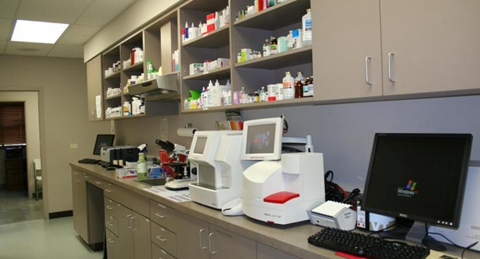
In the United States, there is a similar sexual health testing service provider, STDcheck. However, its scale is much larger than that of Better2Know—STDcheck operates more than 4,000 testing laboratories across the U.S. and completes 19 million tests annually, making it the largest sexually transmitted disease (STD) testing service provider in the country.
Surprisingly, the company’s website prominently highlights one key feature above all others: 100% confidentiality. Furthermore, no appointment is needed; testing typically takes only five minutes, with results available within one to two days, and all test panels are FDA-approved. Customers also have the option of using online services by mailing in samples and receiving their test reports via phone or the internet. In short, it claims to provide rapid, private, and affordable STD testing.
Like STDcheck, Better2Know also offers prescription services in addition to testing. STDcheck’s hotline is available seven days a week, and it explicitly states that physician consultations based on test results are free of charge, such as interpretation of normal results or discussion of treatment plans.
On the website Trustpilot, STDcheck has received 1,510 reviews, with a five-star rating rate of 91%. The majority of these reviews highly praise its privacy, comfort, pricing, and convenience. Four-star ratings account for an additional 7%. Therefore, the overall customer satisfaction rate is very high.
Following the 2016 Rio Olympics, STDcheck also provided free STD testing services to U.S. Olympic athletes.
STDcheck CEO Fiyyaz Pirani stated, “We know that 450,000 condoms were distributed during the Rio Olympics, and a total of 9 million condoms were distributed across the entire city of Rio. However, we also recognize that people sometimes forgo condom use, and even when condoms are used, they do not provide complete protection against sexually transmitted infections.”
In other words, the athletes’ original intention was to win gold and silver medals in Rio, but what they might bring back could be gonorrhea and syphilis...
STDcheck’s complimentary 10-panel STD test and HIV RNA early detection package, valued at $349, includes screening for the following ten sexually transmitted infections: chlamydia, gonorrhea, herpes simplex virus type 1 (HSV-1), herpes simplex virus type 2 (HSV-2), HIV-1, HIV-2, hepatitis A, hepatitis B, hepatitis C, and syphilis. The window period for HIV RNA early detection is approximately 9–11 days. The company encourages athletes returning from the Olympic Village to undergo testing once the viral incubation period has elapsed to ensure accurate results.
STDcheck also runs large-scale outdoor advertising campaigns. In 2014, the company’s CEO, Fiyyaz Pirani, announced a direct-sales-style affiliate program that allows individuals to sell STDcheck’s testing products through their own websites or blogs, earning sales commissions for every service purchased. Currently, the homepage of its official website still features an entry point for joining the affiliate program.
The Spread of Sexually Transmitted Diseases: United States, United Kingdom, China...
Behind STDcheck’s booming business lies the worrying deterioration of sexual health.
According to data from the U.S. Centers for Disease Control and Prevention (CDC), the number of sexually transmitted diseases (STDs) in the United States consecutively reached record highs in 2014 and 2015, the highest levels since 1941. Chlamydia had the highest number of cases, exceeding 1.5 million in 2015, a 5.9% year-over-year increase; syphilis showed the highest growth rate, with a 19% year-over-year increase, bringing the total number of cases to 24,000 in 2015. The number of gonorrhea cases rose by 12.8%, reaching approximately 400,000.
Moreover, as resistance to the primary treatment—antibiotics—continues to intensify, these three sexually transmitted diseases, which previously required only a single course of antibiotic therapy, are at risk of evolving into long-term health problems if not treated promptly.
It is worth noting that only three sexually transmitted diseases—chlamydia, gonorrhea, and syphilis—are required to be reported to the Centers for Disease Control and Prevention (CDC). Therefore, industry estimates suggest that the actual situation is more severe. Jonathan Mermin, director of the CDC’s National Center for HIV/AIDS, Viral Hepatitis, STD, and TB Prevention, warned that the United States is at a critically dangerous juncture: while the number of sexually transmitted infections continues to rise, many STD prevention systems across the country are being shut down.
The U.S. Centers for Disease Control and Prevention (CDC) also revealed that Americans most affected by sexually transmitted infections (STIs) are predominantly young people, gay men, and bisexual men. Two-thirds of chlamydia cases and half of gonorrhea cases occur in individuals aged 15 to 24 years.
In the UK, according to a report by the Daily Mail, the British medical community believes that the rise of mobile dating apps is driving an increase in sexually transmitted infection (STI) rates. Peter Greenhouse of the British Association for Sexual Health and HIV stated that these apps have made casual sex more accessible. You can find interested partners nearby, and it may take only five minutes to contract chlamydia.
According to official UK data, the incidence of gonorrhea in England rose by 15% from 2012 to 2013, increasing from 25,577 cases to 29,291 cases. Meanwhile, the incidence of syphilis increased by 9%, rising from 2,981 cases to 3,249 cases.
In recent years, the epidemiological trends of sexually transmitted diseases (STDs) and HIV have remained equally grim. The term “casual sexual encounters” has gained considerable popularity in China, reflecting a potential worsening of incidence rates driven by the sexually active population.
As of September 2016, China reported 654,000 living cases of HIV-infected individuals and AIDS patients, with a cumulative total of 201,000 deaths. In terms of absolute numbers of infections, this figure is among the highest worldwide. Furthermore, according to Jiang Tianjun, Deputy Director of the Center for Diagnosis and Treatment of Infectious Diseases at the PLA No. 302 Hospital, an estimated 32.1% of infected individuals may remain undiagnosed. These “hidden” cases, unable to receive timely and effective treatment, experience ongoing disease progression, leading to concerning prognoses; they also pose a risk as ongoing sources of transmission to others.
Additional data show that the number of newly reported syphilis cases continued to rise in 2014 and 2015, reaching 419,091 and 461,144 cases, respectively, representing a 10.03% increase in 2015 compared with 2014. In 2015, China reported a total of 103,247 gonorrhea cases, reflecting an 8.14% increase in incidence compared with 2014.
Liu Jinliang, Deputy Director of the Sexually Transmitted Diseases Professional Committee of the Chinese Medical Research Association, once stated that over the past decade or so, the incidence of sexually transmitted diseases in China has been increasing at an annual rate of 20% to 30%.
It is widely acknowledged within the industry that reproductive health for both men and women has long been a key focus area for private healthcare providers, although their business models have been subject to widespread criticism.
Recently, Jin Yuqing, founder of Jiuzhentong, stated on his WeChat Moments that after a conversation with a highly respected expert who has worked in settings ranging from small clinics in remote mountainous townships and county hospitals to municipal hospitals, Shanghai’s top-tier tertiary hospitals, and leading medical institutions in the United States, he has become even more convinced of a long-held judgment:
The healthcare market is undergoing “industrial upgrading.” This upgrade is not driven by technology, but rather by the enhanced capabilities of industry operators. Looking back over the past few decades, apart from the state, who else has been establishing hospitals?
First Generation: Farmers from a certain village in a certain city captured half of the private market. What was their secret? It was their boldness and low ethical standards.
Second Generation: Medical device manufacturers and pharmaceutical distributors, who rely on initial capital accumulation and localized networking resources.
Third Generation: Mid-to-large-scale capitalists (real estate and financial sector tycoons), who rely on heavy capital, government connections, and policy dividends.
So, who will be the fourth generation? Who will step up to restore an industry that relies on professional expertise as its fundamental quality assurance to what it should truly be?
"How about having a key operator shake up the sexual health sector? What kind of revolution could be sparked?"