

New iPad Launch Could Accelerate Apple's Expansion into the $3 Trillion Healthcare Market
Rumors suggest that Apple will hold a press event in March to officially unveil a range of new products, including a new iPad and iPhone models in new color options. Typically, Apple sends media invitations 12 days in advance; however, as of today, March 21, no announcement has been made.
However, not long ago, Apple’s newly updated system status page indicated that its online store would undergo offline maintenance from 3:00 a.m. to 8:30 a.m. Eastern Time on March 21 (corresponding to 3:00 p.m. to 8:30 p.m. Beijing Time on the same day). Consequently, foreign media have speculated that Apple may directly launch new products during this window and announce the release via press announcements.
Reportedly, the new lineup includes at least three all-new iPad Pro models, and may also feature an iPhone 7 in Chinese Red.
What you may not realize is that Apple’s new products are not purchased solely by ordinary consumers—large hospitals and healthcare systems using iOS may also buy these tablets in bulk. For Apple, the $3 trillion healthcare market holds significant potential for driving iPad sales growth.
Dr. Shaun Miller of Cedars-Sinai Medical Center in Los Angeles stated, “We currently have hundreds of iPads available for patient use.” He is utilizing a medical app compliant with iPhone standards to communicate with other healthcare providers. “The number of wards is still increasing, and the hospital may eventually have thousands of iPads in simultaneous use.”
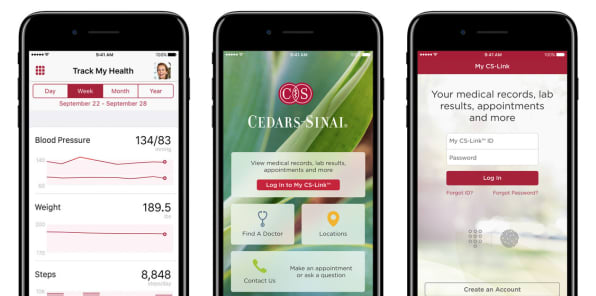
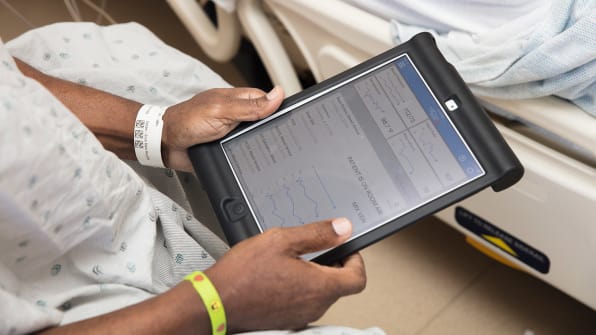
Cedars-Sinai Medical Center has hundreds of iPads available for patient use
Healthcare “Mobility”: A Tough-to-Crack Potential Market
In the internet age, the iPad is no longer a revolutionary product, but it represents a significant advancement for the medical community, enabling patients to access their digital health information with just a tap of their fingers. In 2009, the HITECH Act allocated $35 billion in federal funding to kickstart the digitization of medical data; yet even eight years later, many patients and healthcare providers still rely on USB drives or CDs to store and retrieve medical records. For them, shifting data to mobile platforms is truly a cutting-edge development.
The primary reason why healthcare “mobility” is more challenging than in other industries is that many institutions still rely on internally deployed, on-premise enterprise software. According to the CEO of Tonic Health, a company that has developed gamified medical information forms, healthcare applications represent the last domain with substantial room for significant improvement in design and user experience.
iPhone and iPad have actually been in use in some hospitals for over five years, but Apple has only recently expressed its interest in the healthcare industry publicly. “Inside and outside hospitals, Apple products have transformed many advanced medical institutions and systems, with influence spanning every aspect,” said an Apple spokesperson. He also emphasized that the key factor behind Apple’s popularity among hospitals in the fields of inpatient care and telemedicine is “Confidentiality and Security Performance of the iOS System”。
At Apple,Healthcare is one of the largest divisions in its corporate strategic planning.. It is not just Apple that is doing this; competitors such as Samsung and Alphabet, Google’s parent company, have also recognized that bringing mobile technology to doctors and patients represents a market with significant potential. However, some industry analysts point out that many issues surrounding new technologies remain unresolved, such as the lack of integration with health insurance systems and physicians’ reluctance to adopt these tools due to unfamiliarity.
“Venturing into Healthcare Is ‘By No Means a Whim’”
Many tech companies have chosen to keep their distance from the healthcare sector due to its complexity and regulatory constraints. Thus, when Apple initially demonstrated interest in healthcare, some outside observers expressed surprise.
Healthcare is a sensitive topic and is largely not consumer-oriented. Providing mobile health services is far from being as simple as obtaining approval from the Federal Communications Commission (FCC); it also involves numerous regulatory protocols, including those of the Food and Drug Administration (FDA). Since Steve Jobs was diagnosed with cancer, he suddenly realized that many medical processes were “fragmented,” resulting in poor user experience.
After consulting dozens of experts and establishing its own medical team, Apple ultimately chose “Positioning Oneself as a Platform“—Rather than developing its own apps or operating hospitals, it partners with leading health and medical app developers. To aggregate fragmented data such as step counts, sleep patterns, and heart rate, Apple developed CareKit, ResearchKit, and HealthKit: one designed for app developers, one for research institutions such as hospitals and universities, and one for sharing patient–provider data in chronic disease management.”
Through advancements in these areas, Apple has made significant progress in three foundational domains: hospital care, home care, and medical research. This approach clearly differs from that of Alphabet, Google’s parent company, which attempted to build its own personal health record system, Google Health. Google ultimately failed in this endeavor because it did not establish strong connections with traditional healthcare providers. Another factor giving Apple an edge over Google is its collaboration with numerous major electronic health record (EHR) companies—including Epic Systems, the largest EHR provider in the United States—as well as mobile app developers. Google later acknowledged that it failed to reach actual patients in hospitals, instead limiting its healthcare business to fitness enthusiasts who are tech-savvy.
Despite the myriad complexities of healthcare, insiders have stated that Apple has treated it as a long-term endeavor. “Apple will bring its own distinctive style to healthcare; it is by no means a passing whim.”
iOS Entered the “Hospital” Seven Years Ago: Healthcare Makes Apple More Open
Many app developers within the iOS ecosystem have long been betting on Apple’s entry into the healthcare sector, as they have been selling their apps to hospitals since seven years ago. However, they have only recently witnessed a significant surge in sales.
The earliest adopter of the iOS app was Pueblo Hospital in Colorado, which used the Patient Safe Solutions application to help nurses manage patients’ bedside medications. This app enables verification that patients receive the correct medications at scheduled times, ensures that blood transfusions are compatible with the patient’s blood type, and facilitates voice and text communication among nurses, physicians, and pharmacists.
Cedars-Sinai Medical Center, mentioned at the beginning of this article, has been utilizing HealthKit and other iOS products for quite some time. Just this week, patients at the center have gained the ability to log into their medical chart interface, download their medical records, and import them into their mobile phones. This enables patients to share their medical records with other physicians even after being discharged from the hospital.
Darren Dworkin, Chief Information Officer at Cedars-Sinai, stated that while this approach may seem straightforward, it is already “cutting-edge” in the healthcare sector. This is because, until recently, patients could only retain their medical records using USB flash drives and optical disc drives. The reason lies in the fact that medical records have historically been designed for billing purposes rather than for data sharing.
Another hospital that has embraced sophisticated digital packaging is the Ochsner Medical Center in New Orleans, which boasts aImitating Apple Retail Stores’ “O Bar” Store. The store sells a variety of physician-recommended health and medical products, including iPads, activity trackers, digital scales, and blood pressure monitors, for patients to choose from. The purpose of offering these products is to enable patients to integrate data generated outside the hospital (such as step count and sleep duration) into their electronic health records, thereby facilitating physicians’ understanding of patients’ post-discharge conditions.
The hospital also urged its electronic health record vendor, Epic, to implement a feature that instantly alerts physicians via Apple Watch when patient test results are available. Often, doctors are too busy to check test results on their computers. A simple notification feature can sometimes even save lives.
For hospital IT administrators, one drawback of Apple’s iOS ecosystem is that not all patients are keen on using its devices to address their healthcare needs; another issue is that iOS is a closed ecosystem, incompatible with devices running other operating systems (although software services such as HealthKit are developed using open-source frameworks).
Nevertheless, executives at these hospitals have stated that their relationship with Apple is stronger than that with other technology companies engaged in similar businesses. This is because Apple’s ResearchKit, developed through its collaborations, has already been adopted by numerous developers; moreover, in recent years, Apple appears to be driven by a desire to facilitate more frequent data exchange within the healthcare industry.Breaking with the tradition of strict confidentiality, and has established strong relationships with many leading medical software vendors.
Original article link:https://www.fastcompany.com/3068773/ipads-in-every-hospital-apples-plan-to-crack-the-3-trillion-health-care-se