

Consensus Among Hundreds of Investors: Robotics and Artificial Intelligence Will Lead the Next Medical Industry Revolution
On March 19, 2017, the “Robotics Lecture Hall • Angel Club Gusu Summit on Innovation and Entrepreneurship,” co-hosted by Soochow University Tiangong, Yarui Capital, and Lide Gongchuang, was held in Suzhou. Attendees from across China with interests in the robotics and artificial intelligence industries participated in the conference and evaluated the related roadshow projects.
It is worth mentioning that in the morning, byThe “Roundtable Forum” session, moderated by Professor Wang Tianmiao of Beihang University, a Changjiang Scholar, and Senior Technology Advisor at Yarui Capital, Wang Tianmiao posed sharp and practical questions to the experts present on innovation and entrepreneurship. Here are two examples shared with everyone:
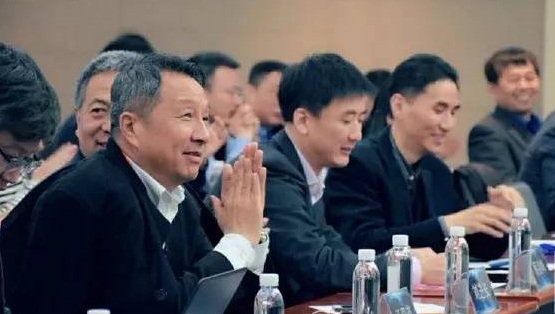
Prof. Wang Tianmiao
1. What are the major hotspots in robotics and artificial intelligence?
2. How Can Startups Master the Pace of Fundraising and Valuation?
Addressing the first question, Mr. Li Jianwei from ZhenFund stated that in the robotics sector, the primary focus areas are 3C electronics, healthcare, logistics, and food processing. Service robots are transitioning from business-to-business (B2B) to business-to-consumer (B2C) models, with B2B applications potentially requiring ongoing services. In the field of artificial intelligence, significant opportunities exist across finance, healthcare, retail, security, and even entertainment.
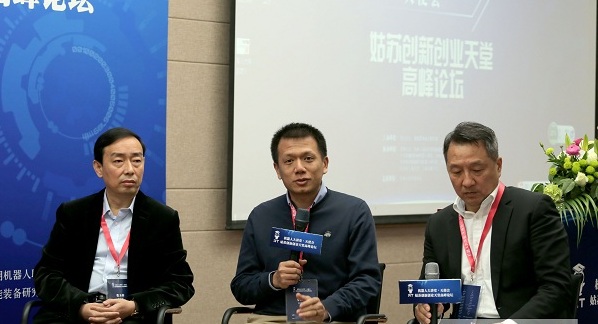
Regarding the issue of financing, Li Jianwei stated,Enterprises must align with their current development status and avoid excessive valuation, as overvaluation can sow the seeds of future difficulties; strategic decisions should be guided by the pace of their own market development., From the perspective of future development, entrepreneurship is an arduous path. The majority of startups will fail, while only a small fraction will go public. Entrepreneurs must recognize that perseverance and persistence are essential on this journey.
Zhang Quanling’s New Concept of “Five Types of Companies”
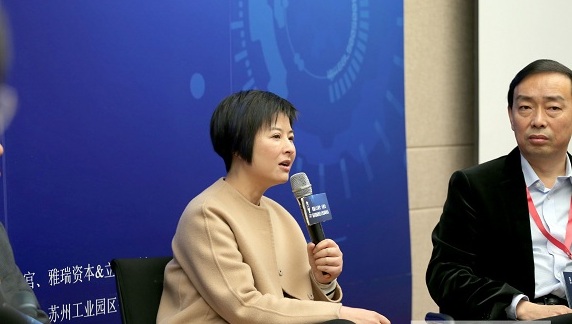
Zhang Quanling
In addition, the new concept of “Five Types of Companies” proposed by Zhang Quanling of Ziniu Capital has also sparked heated discussion. VCBeat has compiled a summary based on Zhang Quanling’s sharing without altering the original meaning:
First: Great companies do not go bankrupt or decline over time. For example, in the retail industry, people always need to conduct transactions; regardless of how times change, the retail industry will always exist.
Second: IPO benchmark companies. Such companies have a specific time window for opportunity. Take the currently popular “cloud services” sector as an example. Cloud technology is highly advanced by today’s standards, but whether new technologies will emerge in the coming decades or even centuries remains uncertain. Nevertheless, it suffices that cloud computing companies can generate profits for industry participants during this period.
Third: Technology companies. Many technology companies generate returns through acquisitions. For instance, before being acquired by Google, DeepMind was not highly profitable; however, post-acquisition, it was better able to realize its value.
Fourth: Business-oriented companies. Such enterprises can perform well within a certain region and timeframe; even without strong competitive moats, they can still survive effectively and generate profits.
Fifth: Story-driven companies. This is the type investors encounter most often. As you know, no comment will be made on such companies!
In addition to the incisive insights shared by the aforementioned guests, VCBeat has also compiled the healthcare projects presented during the roadshows, with the expectation that they will grow into the next batch of unicorns in the healthcare industry.
Rayal Medical: Rayal Oncology Radiotherapy Software System
Jiangsu Real Medical Technology Co., Ltd. was founded by a team of experts from the national “Thousand Talents Plan” and overseas-returnee PhDs. Located in Wuxi, a picturesque water town in the Jiangnan region, the company is dedicated to the research and development, production, and sales of proprietary image-guided localization and tracking technologies and equipment for precise tumor radiotherapy.
The Company has successfully developed an image-guided positioning system and an image-guided motion tracking system. Its flagship product, the iSCOUT Image-Guided Positioning System, has obtained a Class III medical device registration certificate approved by the National Medical Products Administration (NMPA). It is indicated for image-guided setup verification both between and within radiotherapy fractions, and can be integrated with various models of radiotherapy equipment, including electronic linear accelerators, body and head Gamma Knife systems, and proton/heavy ion accelerators.
Sun Xiaoguang of Yari Capital told VCBeat,The investment in Ruier Medical is primarily driven by confidence in the company’s team and the vast market potential ahead. Additionally, Ruier Medical’s products have obtained Class III medical device registration certificates, and sales performance has been encouraging.。
Yarui Capital focuses on strategic emerging industries both domestically and internationally, primarily concentrating on three key investment sectors: healthcare and wellness, artificial intelligence and robotics, and intelligent manufacturing. On one hand, it leverages Qianzhan Capital’s professional investment capabilities across the full ecosystem—from angel and venture capital to private equity mergers and acquisitions, as well as IPO advisory—along with a capital management scale exceeding RMB 10 billion. On the other hand, drawing on Bochuang Technology’s decade-plus of successful experience in technological innovation and startup incubation, Yarui Capital possesses unique expertise in identifying strategic high-tech trends and mentoring core entrepreneurial teams. In collaboration with renowned domestic funds, it has invested in nearly 30 high-end hard technology projects.
In the healthcare and wellness sector, Yarui Capital’s portfolio also includes Remebot neurosurgical robots, TiRobot orthopedic robots by Tinavi, Peking University’s intelligent prosthetics and rehabilitation initiatives, Tsinghua Bo’ao Genomic Medicine, and the internet hospital group Yi Liu Zhushou.
Dikai Medical: Navigation System for Assisted Dental Implant Surgery
Suzhou Dikai Medical Technology Co., Ltd. was incorporated in November 2010 and is located in the BioNano Park of Suzhou Industrial Park, Jiangsu Province. It is a company specializing in the technical development and sales of computer software and hardware, surgical navigation equipment, and related products in the medical field. It is also one of the few companies in China capable of independently developing and selling medical navigation system software. The company is dedicated to the research and development and design of related software and hardware products in the medical field, with the goal of enabling physicians to achieve greater visibility, finer precision, and more convenient operation during diagnosis and treatment.
The company’s current core R&D products include a computer-assisted navigation system for dental implant surgery, a real-time dental training and assessment system, and specialized surgical guides for dental implants. This product series effectively enhances the precision of implant placement in complex cases—such as edentulous jaws, multiple tooth loss, and anterior maxillary implants—thereby significantly improving the long-term success rate of dental implants.
This product can be widely applied in hospitals of all levels and types, helping to improve the accuracy of physicians’ diagnoses and the quality of surgical procedures. Meanwhile, the precision and modernization of surgery will facilitate the establishment of rational, evidence-based clinical treatment protocols, which is of great significance for reducing clinical adverse events and alleviating doctor–patient conflicts and disputes.
Kangduo Robot: Laparoscopic Minimally Invasive Robot
Suzhou Kangduo Robotics Co., Ltd. was established in 2013 and is located in the Medical Device Technology Industrial Park in Suzhou High-Tech Zone. Kangduo is dedicated to the research and development of high-end medical robotics equipment and is currently a high-tech enterprise in China specializing in the R&D of medical robot systems and their ancillary products. The company boasts a team of professional technical personnel with many years of experience in medical robotics R&D, along with specialized clinical experts; its R&D team consists primarily of individuals holding doctoral and master’s degrees.
The company has maintained long-term collaborations with numerous domestic research institutes and hospitals in the field of medical equipment, establishing a solid research foundation and a robust platform for interdisciplinary cooperation between medicine and engineering. Additionally, the Suzhou Branch of the Medical Robot Standardization Committee is hosted jointly by the company and Soochow University. The company is currently working with the Suzhou New District to establish a testing and inspection platform for medical robots. Guided by the concept of integrating medicine and engineering, this platform will consolidate standards, testing, experimentation, training, and service functions related to medical robots and medical equipment at the technical level. It aims to provide services for high-end medical equipment projects and facilitate the industrialization of advanced medical technologies.
Suzhou Weiqing: Novel Laser Ophthalmic Devices
MicroClear Medical is dedicated to the research and development, industrialization, and related services of biomedical imaging and ophthalmic diagnostic and therapeutic equipment. Its R&D team masters multiple internationally advanced core technologies in interdisciplinary fields, including optomechanical design, signal analysis, and image processing.
The company’s ophthalmic optical scanners, handheld fundus cameras, and other product series have obtained National Class III and Class II Medical Device Manufacturing Licenses and Product Registration Certificates. Applications for overseas certifications such as CE and FDA have been submitted to actively expand into international markets. Weiqing Medical is committed to becoming one of the leading global suppliers of ophthalmic diagnostic and treatment equipment, while striving to be the most competitive enterprise in this niche sector within China.
The company's core products and services include color fundus cameras, confocal laser scanning ophthalmoscopes, handheld fundus cameras, handheld anterior segment imagers, handheld ENT and dermatology imagers, and optical coherence tomography (OCT) for the retina.
This project was also recommended by Yarui Capital, which primarily valued the fact that Weiqing Medical’s products had already taken shape and obtained medical device registration certificates.
The venue remained packed until the very end of the conference, a rarity for typical forums. This underscores the high regard industry professionals hold for robotics and artificial intelligence (AI). During discussions, there was a consensus that “Robotics + AI” will inevitably spearhead a new era of industrial revolution.