

Good Dentist Files IPO Prospectus After Two Rounds of Investment from Matrix Partners and Four Strategic Pivots, Aiming for Deep Offline Clinic Management
Good Dentist has spent three years navigating the uncharted waters of the “Internet + Oral Care” sector. It has now identified a development path well-suited to its strengths, secured two rounds of financing from Matrix Partners China, Guijing Capital, and Qianshi Capital, and has currently initiated its third round of fundraising.
“Good Dentist” aims to manage 100 clinics nationwide, sign contracts with 800–1,000 outstanding dentists, and achieve one million appointment bookings this year. In the field of dentistry, “Good Dentist” has undoubtedly become a star.
Three Resignations and Cross-Industry Pivots, with a Dream of Going Public
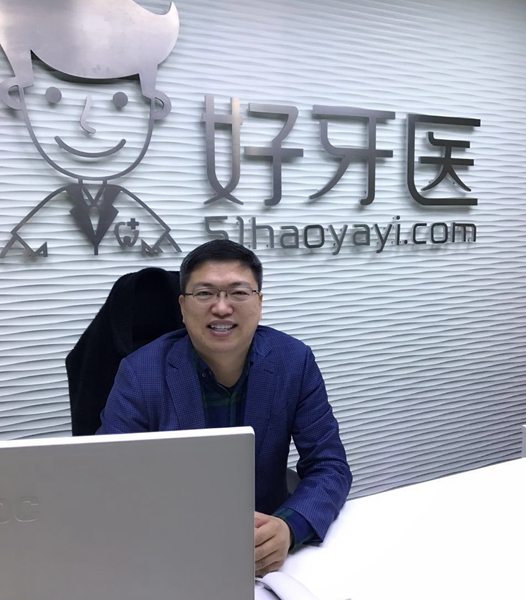
Sun Guangfeng, Founder/CEO of Haoya Yi
Born in the 1970s, I stay busy until 1–2 a.m. before going to bed, wake up at 5–6 a.m. for some exercise, and arrive at the office by 7-something a.m.
Sun Guangfeng, founder of Hao Yayi, has maintained this lifestyle for many years. Before entering the dental field, he had already accumulated extensive experience, making him a low-key yet highly capable professional.
A top student in communications, Sun Guangfeng earned both his bachelor’s and master’s degrees in the field. After completing his master’s, he worked on military projects at the Ministry of Aerospace Industry before joining Hughes Network Systems, a U.S. satellite communications giant, as a sales representative. Finding the role unchallenging after a few years, he made the bold decision to resign and take a break abroad, spending three years studying in Canada.
In 2002, Sun Guangfeng returned to China and joined the newly established Shuangwei Education Group, where he worked in remote education. Starting as a department manager, he was promoted to Senior Vice President and CEO in his fifth year, overseeing the marketing and technology departments. In his sixth year, Sun Guangfeng resigned once again.
By 2008, Chinese internet companies had begun to take shape, evolving from their nascent stage into a period of wild, turbulent growth. The online gaming market was fiercely competitive, with players constantly rising and falling. In other internet subsectors—such as online travel, e-commerce, search engines, web portals, and instant messaging—competitors were eager to break in and claim a share of the industry’s lucrative pie.
“At that time, my good friend Zhang Haijun, who was primarily responsible for internet product design at 360, approached me one day and asked if I was interested in working in the internet sector. He briefed me on the situation at Kuxun.com. Sensing certain shifts in the internet landscape, I felt it presented a timely opportunity,” Sun Guangfeng told reporters, noting that this marked his first exposure to the internet industry.
At that time, Kuxun.com was in a difficult situation: its USD-denominated venture capital funding was nearly exhausted, and its two founders, who later gained considerable prominence, departed one after another. Chen Hua went on to found Changba, while Wu Shichun became an angel investor with Meihua Venture Capital.
Driven by a dream and an intense curiosity about the internet, Sun Guangfeng resigned from his job for the third time. This time, however, the stakes were higher: he had already risen to the position of a senior executive at a publicly listed company, while Kuxun.com was facing a perilous situation on all sides. “Regardless, we had invested considerable effort back then, fueled by the dream of taking Kuxun.com public.”
As with the stories of fierce competition, transformation, and mergers and acquisitions that characterize most internet companies, Kuxun.com streamlined its business lines to focus on online travel, competing directly with Qunar.com. Later, Expedia, then the world’s largest online travel company (which owns TripAdvisor), sought to enter the Chinese market. After numerous setbacks, it acquired Kuxun.com in a full buyout.
The battle is over. From then on, the dream of taking Kuxun.com public was gone. But Sun Guangfeng was unwilling to give up!
Entering Jiamei Dental: Uncovering Contradictions in the Oral Care Sector
“In my conversation with Sun Guangfeng, I could sense that internet entrepreneurs of that era were incredibly driven.”
In 2010, another opportunity arose. The investors who had backed Kuxun also invested in Jiamei Dental, then the largest dental chain in China. Through capital-driven mergers and acquisitions, the company experienced rapid growth for several years. However, operational issues emerged following the clinic acquisitions. In short, once doctors left, the clinics became mere shells.
“They need an operations general manager. During my time in the education sector, I acquired what was then China’s largest chain of spoken-language training institutions and managed more than 30 outlets, so I have experience in this area,” Sun Guangfeng told the reporter. In 2010, Sun Guangfeng gave up his high salary and stock options at TripAdvisor to officially join Jiamei, stepping into the role during a crisis. He acknowledged that this move represented a complete career shift.
Must Only Dental Professionals Work in the Oral Health Field?
Sun Guangfeng refused to believe in such fallacies. At the time, Jiamei Dental had 40 clinics in Beijing and nearly 200 to 300 dentists. When he first joined Jiamei, he indeed lacked medical knowledge, knowing nothing about dentistry. Unable to communicate effectively with others, he spent his days working and inspecting clinics, while at night, Sun Guangfeng studied basic dental textbooks in his office, reading numerous professional books.
“After just six weeks of intensive catch-up learning, I was able to communicate with dentists and grasp professional knowledge in areas such as dental implants, orthodontics, and even oral mucosa.” Sun Guangfeng has long since mastered this kind of accelerated learning.
By 2011, Sun Guangfeng had gained an in-depth understanding of the dental industry.
Among all medical sectors in China, dentistry is the most market-oriented, with nearly 80,000 to 90,000 private clinics. Many professionals from public hospitals, including Peking University School of Stomatology and West China School of Stomatology, have left to establish their own clinics.
A Persistent Industry Challenge: Low Patient Acquisition Rates in Private Dental Practices. “Although public acceptance of private dental care is steadily increasing, a look at the reality reveals that many dentists in private practices have light schedules and few patients from Monday to Friday. In contrast, Peking University School of Stomatology and West China School of Stomatology remain bustling with patients every day.”
In fact, many dentists who open private clinics are highly skilled professionals, including outstanding practitioners from Peking University School of Stomatology and West China School of Stomatology, who may be practicing right in your neighborhood. However, consumers are often unaware of this. When dental issues arise, they still attempt to book appointments at public stomatological hospitals, only to find no availability. Even if they manage to secure an appointment, the consultation typically lasts a mere 10 minutes before concluding.
“This industry is rather distorted.” Sun Guangfeng revealed his concerns about the sector. On one hand, clinics opened by doctors near residential areas suffer from a lack of patients because consumers are unaware of them and worry about opaque pricing and overtreatment. On the other hand, it is difficult to secure an appointment at public dental hospitals due to long waiting lists.
This contradiction stems from information asymmetry.
Building a Patient Appointment Platform for Reliable Dentists, Modeled After Zocdoc
Sun Guangfeng had long been pondering a persistent thought: China’s oral healthcare sector needed a platform to gather the nation’s top dentists. In addition to the platform’s own vetting of practitioners, patients would also be able to rate them, enabling individuals seeking dental care to directly find reliable dentists on the platform. Thus, Sun Guangfeng set his sights on creating a “dentist platform.”
The platform was originally designed to help doctors address the issue of insufficient patient volume while assisting patients in finding high-quality physicians; additionally, as an intermediary platform, it provides credit guarantees for patients.
Sun Guangfeng studied a successful overseas business model. Zocdoc, a U.S.-based physician appointment platform currently valued at $1.8 billion, also originated in the dental sector. Users can search for suitable physicians based on criteria such as specialty, location, and insurance coverage. Using the policy number, Zocdoc directly matches patients with the nearest available physicians and charges physicians for this service.
“Doctors in the United States also face a shortage of patients, just like us. Although the healthcare systems in China and the United States differ—with the U.S. having a well-developed commercial insurance market while China relies primarily on basic medical insurance—the private dental sector has been able to grow because public medical insurance provides limited coverage for dental services. In this regard, public dental hospitals and private dental clinics are in the same position.”
Having established its presence in dentistry, Zocdoc has since expanded to offer appointment services for over 50 specialties, including general practice, pediatrics, obstetrics and gynecology, primary care, and dermatology, serving as a cautionary tale.
“Coincidentally, Sun Guangfeng told reporters that in 2014, former employees of Kuxun.com who had joined Baidu wanted to leave the company to start their own business. ‘They asked me which sector they should enter. By then, I had already been thinking about it for a long time, so I said, “Why don’t you just focus on dentistry?”’”
With favorable timing, location, and human resources all in place, the “Hao Yayi” dentist appointment platform was launched in October 2014, enabling users to quickly book appointments with suitable dentists via WeChat or its mobile app.
To help this team of internet-savvy professionals gain a more tangible understanding of dental care, Sun Guangfeng required each member to first experience services at Jiamei Dental, including dental cleaning and observing surgical procedures. He even brought Jiamei’s dentists online to facilitate patient referrals, continuously exploring strategies for traffic acquisition and promotion.
2014 was also a noteworthy milestone, regarded as the inaugural year of internet healthcare. A large number of internet healthcare companies emerged during this period, with a significant proportion focusing on physician appointment services. However, competition in the dental sector was not yet intense, as those well-versed in the internet lacked expertise in dentistry, while dental professionals lacked understanding of the internet.
That same year, Sun Guangfeng and Zhang Haijun, former CEO of Kuxun.com, jointly invested RMB 1.9 million in the angel round of “Hao Yayi.”
Subsequently, the team contacted approximately 20 clinics in Beijing and, through rigorous screening criteria—such as holding at least a bachelor’s degree and possessing 5–10 years of clinical experience—signed contracts with over 100 outstanding dentists to join the platform and practice at multiple sites. Among them were dentists from the Peking University School of Stomatology.
Three Stages of Development for Haoya Yi: Navigating Numerous Pitfalls
At the end of 2014, “Hao Yayi” sought financing and wished to meet with investors.
“At that time, four firms were willing to invest in Haoyaishi, and Matrix Partners China was also interested, but on one condition: Sun Guangfeng had to step in as CEO to lead the company before they would commit,” recalled Sun Guangfeng, reflecting on the investors’ initial demands. Indeed, this aligns with a common saying in the venture capital industry: VCs bet on the team and on industry trends.
Sun Guangfeng did not hesitate much to accept this request. First, he was very familiar with the field of dentistry; second, internet healthcare was booming and flourishing everywhere, and there was an urgent need in the dental sector to build a platform connecting doctors and patients. Thus, Sun Guangfeng resigned from Jiamei Dental and became the CEO of Haoyayi.
In May 2015, Haoya Yi secured $4.5 million in Series A financing from Matrix Partners China.
The development of Haoya Yi has roughly gone through three stages. The first stage began with its launch in 2014, focusing on patient referral for dentists by matching patients through offline lectures and online advertising campaigns. “At that time, everyone in the internet industry wanted to do this. We operated for about three to four months and invested over RMB 1 million, only to discover that the biggest problem was patient complaints. The reasons were straightforward: the quality of dentists was inconsistent. Some patients complained about poor service attitudes, excessive fees, or unsatisfactory treatment outcomes, while others reported unfavorable clinic environments.”
Although the Haoya Yi platform had no shortage of excellent dentists from Peking University School of Stomatology, Jia Mei Dental, and Arrail Dental at that time, simply listing a group of doctors for patients to match with would not bring value to patients and would be meaningless.
Therefore, in March 2015, after the Spring Festival, Haoyayi initiated the second phase of its transformation, dedicating all efforts to securing the most core resource in the dental field: dentists. “Since we could not directly refer patients to dentists, we opted to facilitate indirect referrals by enhancing practice management and improving efficiency,” said Sun Guangfeng’s team. They developed the “Dentist Assistant” APP, positioning it as a “community + tools + platform” for dental professionals.
What Problems Does the Dental Assistant App Solve? Public information indicates that once patients scan the QR code for the app, a contact named “Good Dentist Dr. [Name]” will appear in their WeChat friends list. The dentist can then access the app to view the patient’s electronic medical records. Patients can also schedule appointments with the doctor via WeChat and review his professional background, appointment availability, and patient reviews. In addition, the platform offers video courses for dentists’ continuing education and regularly invites experts to conduct lectures.
Sun Guangfeng shared an interesting detail with reporters: in the private dental sector, approximately 10%–15% of dentists achieve a monthly revenue of RMB 200,000–300,000 (with the majority accruing to the dental clinics or hospitals). These practitioners excel at managing their existing patient base. Each maintains a roster of 200–300 long-term patients who, once a friendship is established, frequently refer new patients, resulting in an overwhelmingly busy schedule for these dentists each month.
Clearly, "Dental Assistant" aims to help dentists manage existing patients, handle appointment scheduling, and study various exemplary cases, ultimately forming the largest dental community in China.
At that time, approximately seven regional offices were established across China. Through ground promotion and door-to-door visits to clinics, the company secured its initial base of installations. The internet team then employed various incentive strategies, including WeChat groups, to attract dentists to install the app. According to Sun Guangfeng, around 30,000 dentists had installed Dental Assistant in 2015, with another 30,000 added in 2016, bringing the total number of dentist users to nearly 70,000.
In 2016, Haoya Yi began exploring monetization strategies, having already established traditional advertising revenue streams. The lesson learned in 2014 was that merely connecting patients with dentists without controlling the service chain would lead to failure. It is essential to penetrate deep into clinic operations and implement Haoya Yi’s service protocols to ensure patient satisfaction with treatment outcomes upon their visit.
The Phase III model of the Alliance Clinic emerged as the times required. In 2016, the team spent six months leveraging various internet-based tools and methods to develop the “Good Dentist Clinic Service SOP,” namely the standard operating procedures for internal clinic services. This covered processes such as front-desk registration and appointment file creation, extending to on-site patient registration, consultations, and electronic medical records.
As early as 2015, Haoya Yi acquired “Ya Boshi,” a clinic management software company that had been operating in China for 14 years. Building on its existing software, Haoya Yi leveraged internet technology to transform it into a SaaS platform. The original software covered 10,000 clinics; after the SaaS transformation, it reached nearly 7,000 additional clinics. Currently, the platform covers nearly 20,000 clinics.
Thus, for Haoya Yi, the dentist-facing side features both a “Dentist Assistant” and SaaS solutions. Logically, the implementation of alliance clinics should be relatively straightforward.
As a result, the SOP was implemented across more than 300 alliance clinics under nationwide contracts. These clinics uniformly adopted the “Good Dentist” brand and underwent standardized staff training. The platform facilitated patient referrals and dentist matching for these clinics. However, an issue emerged: order bypassing. This occurred because when patients initially selected and paid for dental services online, the “Good Dentist” platform charged a 20% commission on the transaction volume. For subsequent visits, patients could bypass the platform entirely. Given that dental care typically involves a prolonged process with multiple consultations, stakeholders questioned why the platform should collect a commission on every visit.
In 2016, Haoya Yi fell into many more pitfalls.
Deeply Managed Clinics Go Offline
At the end of 2016, Haoyayi decided to implement in-depth management control over dental clinics. Private clinics suffering from poor operational performance and low cash flow were placed under Haoyayi’s trusteeship, with guaranteed profits and medical disputes assumed by the platform. Sun Guangfeng revealed that the current focus is primarily on small-scale clinics equipped with 4–6 dental chairs, rather than large dental chain organizations.
However, during the custodial arrangement, the clinic must entrust both management authority and personnel authority to Haoyaoyi. To provide consumers with the best experience, nurses and front-desk staff who do not comply with Haoyaoyi’s procedural standards will be adjusted; those who fail training assessments will strictly not be retained. With management authority in place, services delivered to patients or doctors at alliance clinics remain controllable.
How does the managed practice model work? Haoyayi signs management agreements, renovates clinics to adopt a unified aesthetic, and standardizes all operational processes. VCBeat has learned that Haoyayi has upgraded its Standard Operating Procedures (SOPs) to version 3.0, facilitating service delivery across entire hospitals and for patients. “I encourage dentists from Peking University School of Stomatology, West China School of Stomatology, or other hospitals to practice at multiple locations within our managed clinics.” Regarding revenue distribution, the Haoyayi platform takes a small commission, the majority goes to the dentists, and the remainder is allocated to the clinics.

Clinics with Unified Decorative Style, Managed by Hao Yayi
Managed Clinics: Good Dentists Have an Inherent Advantage. The “Dentist Assistant” APP Achieves Approximately 50,000 Monthly Appointments. Ya Boshi SaaS Software Enables Functions Such as Patient Appointment Scheduling, Billing, Electronic Medical Records (EMR), Follow-up Visit Management, and Operational Data Analysis, Thereby Enhancing Secondary Patient Conversion.
Next, we embarked on a path of cautious exploration. In the future, we will expand our presence to cities including Beijing, Dalian, Shanghai, Chengdu, and Shenzhen, establishing a nationwide footprint across China.
Sun Guangfeng said, “Hao Yayi has already taken over the management of more than ten clinics. Our strategy for 2017 is straightforward: to extensively expand our clinic management services. We aim to manage 100 clinics this year.”
Currently, the Haoyayi team has nearly 70 members at its headquarters, with 30 responsible for internet operations and 40 for offline operations, including market promotion, medical management, and clinical teams. After several years of team integration, the group has become highly proficient in both the internet and dental sectors. “In terms of our team, I am not afraid of competition from any new entrants,” said Sun Guangfeng. In the future, the platform may offer financial services to build an ecosystem encompassing “patients + doctors + clinics + consumables and equipment.”
Sun Guangfeng takes great delight in growing through trial and error, leveraging Internet thinking to transform healthcare processes and drive industry change.
Note: The relevant data in this article were provided by the interviewees.