

Professor Meng Gang on Breaking Bottlenecks in Hospital Pathology Departments: Supply-Side Structural Reform as the Key
By Chen Xi
In the medical community, pathology is known as "the foundation of medicine."
This is a department that has almost no direct contact with patients, and the public knows little about it. Yet every result issued here can be a watershed moment in a patient’s life. Nevertheless, such a critical department is increasingly being relegated to an undervalued “ancillary department” in China.
In late 2016, the National Health and Family Planning Commission successively issued basic standards and management specifications for four categories of independently established medical institutions, providing interpretations on issues of public concern. This has led to a sustained increase in capital market attention toward independently established medical institutions such as pathology diagnostic centers and imaging centers.
As a “bridge discipline” between basic medicine and clinical medicine, pathology plays a pivotal role in guiding clinicians’ diagnostic and therapeutic decisions. In essence, the diagnostic accuracy of the pathology department determines the overall quality of diagnosis and treatment at a hospital. Why, then, has the field of pathology in China encountered developmental bottlenecks? And how can China’s pathology sector overcome these challenges?
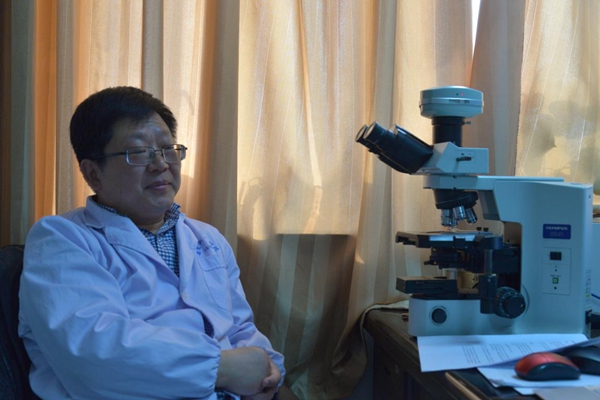
Meng Gang: Professor, Department of Pathology, Anhui Medical University; Director, Teaching and Research Section of Pathology, Anhui Medical University; Master’s Supervisor; Executive Deputy Director, Institute of Pathology and Forensic Medicine, Anhui Medical University; Editor-in-Chief, Chinese Journal of Clinical and Experimental Pathology.
In Professor Meng’s view, the key focal point of “supply-side structural reform” in China’s pathology sector should lie in structural configuration, and it must be initiated from regional centers and expanded outward, thereby achieving the liberation and optimized reallocation of medical resources (the following is a verbatim transcript of an interview with Professor Meng Gang).
Where Are the Bottlenecks in the Development of Pathology in China?
• The Chinese-Style Dilemma in the Development of Pathology Departments
The development of pathology in China is characterized by small scale, weakness, and fragmentation. The most direct cause is the "arbitrariness" in the establishment of pathology departments:
I. China’s pathology discipline model is structured according to the former Soviet Union model, whereas clinical practice is managed following the European and American models;
2. China's hospital administrative structure comprises four levels—community, county, prefecture-level city, and provincial—but fails to achieve coordinated resource allocation across these tiers;
III. During the hospital grading process, the state requires that hospitals at Level II Grade A and above must have a pathology department.
This series of issues has led to numerous awkward challenges for the development of pathology departments in China.
• From the “Essence of Medicine” to the “Ends of the Department”
Pathology in China gradually became a marginalized discipline, beginning in the late 1980s. Swept up by the tide of the market economy, most sectors, including hospitals and medical schools, prioritized economic benefits above all else.
However, the primary tool used in pathology is an inexpensive microscope, and the costs of pathology slides, staining, and consumables are relatively low compared to many large-scale medical devices. Pathologists work diligently to make a pathological diagnosis, for which the national average fee in China is around RMB 100. This price has remained virtually unchanged for over two decades since the late 1980s.
Consequently, hospitals are now eager to offer PET-CT scans. The high cost of the equipment itself drives up the price of the reports, which are straightforward and easy to interpret while entailing relatively low liability. As a result, many medical institutions are competing to provide this service.
• Dilemmas in the Development of Pathologists for Non-Invasive Biopsy
According to statistics, there are only slightly over 9,000 licensed pathologists in China. Based on the staffing ratio of one to two pathologists per 100 hospital beds, the shortage ranges from 40,000 to 90,000 professionals.
Consequently, in recent years, media outlets have frequently engaged in excessive interpretation, portraying high risk, low income, labor shortages, and a lack of skilled practitioners as the current state of pathology development in China.
In reality, as a hospital department that does not directly interact with patients and their families, the pathology department faces nearly zero risk compared to clinical, surgical, and nursing departments. The primary reason for the shortage of pathologists is their relatively low status within hospitals.
On one hand, the Department of Pathology can be said to have virtually no "gray income" compared to other departments. In recent years, clinical departments, surgery, and laboratory medicine—some of the most popular specialties in hospitals—have garnered increasing attention, while pathology has gradually fallen into neglect. This lack of institutional prioritization has led to a series of problems, including uneven staffing quality, personnel shortages, outdated equipment, and overly simplified workspaces.
On the other hand, collaboration between clinical departments and pathology departments is increasingly lacking. Clinicians are more interested in performing surgeries; for instance, a physician at a well-known cancer hospital in China performs 700 to 800 surgeries per year. He has no time to review pathological images and lacks communication with the pathology department. Over time, this hinders the development of the pathology department.
How Can China’s Pathology Sector Navigate Out of Its Current Challenges?
Currently, the state of pathology in China is far from optimistic. One reason is the arbitrariness of the discipline resulting from its academic structure; another is the marginalization of clinical subspecialties driven by economic considerations. However, as healthcare reform policies continue to advance, these challenges and difficulties will be readily resolved.
• Implementing supply-side reform is key
Pathology has long been associated with redundant medical services and the wasteful use of healthcare resources. Structural issues on the supply side of pathology services remain prominent. These are primarily manifested in an inadequately organized service system, insufficient and poorly allocated high-quality medical resources, relative scarcity of resources in primary healthcare institutions, and a need to enhance their service capabilities.
As the “gold standard” of medical diagnosis, pathological diagnosis cannot be accepted as readily as laboratory tests, which are machine-based (provided the machines have received practical accreditation from the laboratory and pre-operation validations comply with regulations). As the definitive diagnostic outcome, pathology directly influences disease treatment plans. The key priority is to progressively promote mutual recognition of examination and test results between healthcare institutions and pathological diagnosis centers, based on robust quality control.
Against the backdrop of the era’s push for further rational allocation of medical resources, establishing more refined, comprehensive, and specialized regional pathology centers has become a key measure to address the rational distribution of healthcare resources. Indeed, this aligns with the original intent behind the National Health and Family Planning Commission’s issuance of the “Basic Standards and Management Regulations for Pathology Diagnostic Centers as Independently Established Medical Institutions.”
In recent years, various regions have actively established pathology subspecialties. The development of these subspecialties helps pathologists develop their professional expertise more efficiently and effectively. By aligning the individual interests of visiting physicians with the practical needs of their home institutions, and leveraging consultations, online teaching platforms, and medical collaboration networks, they can engage in mentorship, clarification of doubts, and academic exchange with experts in relevant fields. This approach enables pathologists to achieve a high level of precision, specialization, and proficiency within their chosen pathology subspecialties.
• Emphasize the cultivation of disciplinary talent
Traditional pathological diagnosis primarily relies on microscopy to assess morphological changes in diseased tissue cells. However, like other disciplines, it has inherent subjective and objective limitations. Diseases manifest in highly variable ways across patients of different ages and sexes, even among different sites within the same patient; consequently, a definitive diagnosis may not be achievable for some complex cases at the time of initial examination. Pathology slides and paraffin blocks are required to be archived in the pathology department for at least fifteen years. With advances in medicine and the increasing clinical application of molecular diagnostic techniques, pathological diagnoses made solely by microscopic examination a decade ago may now be deemed incorrect when re-evaluated using immunohistochemistry or genetic testing.
Therefore, the Department of Pathology maintains stringent standards for rigorous work practices. Pathologists must strive to minimize diagnostic errors, making the accumulation of experience particularly crucial for them. Compared with physicians in other clinical specialties, pathologists require a significantly longer period to reach professional maturity.
To fundamentally resolve the dilemmas facing pathology, in addition to intensifying efforts in building talent training bases, centralized pathology service centers should be established in urban areas to meet the diagnostic needs of primary-care hospitals. Furthermore, greater emphasis should be placed on subspecialty pathology, molecular pathology, pathological research, and knowledge updating, so as to attract young students to pursue careers in pathology, continuously expand the workforce of pathology professionals, and promote the healthy and sustainable development of China’s pathology enterprise.
For example, in recent years, Anhui Province has attached great importance to the role and status of pathology in healthcare, increased investment in pathological research, actively promoted the development of pathology subspecialties, and collaborated with Zhuojian Technology to establish a regional pathology medical consortium platform—the Anhui Clinical Pathology Specialty Medical Consortium—in 2016. This platform supports subspecialty-based consultations, teaching, quality control, and collaborative clinical diagnosis.
To date, over 100 historical member units of medical consortia have been developed in Anhui Province. Remote pathological diagnosis and consultation guidance for complex cases are being carried out across the province, along with the promotion of new pathological technologies, centralization of sample resources, and establishment of a molecular pathology testing platform, thereby forming an “Internet + Pathology” closed-loop system. In just one year, the comprehensive capabilities of pathology in Anhui Province have made significant progress and development through the use of the Internet.