

Ruibo Medical, a Specialist Ophthalmology Alliance for County and City Hospitals, Completes Series A Funding Round
Sleeping only three to four hours a day, pursuing his doctoral studies at Johns Hopkins University—the top-ranked university in North America for healthcare management research for 24 consecutive years—and immersing himself in the most advanced healthcare management models at leading U.S. hospitals, Zhu Gaoming was too busy during this year’s Spring Festival to notice anything beyond his entrepreneurial and medical endeavors. Eager to move forward, he is determined to lead his team at Risbo to provide clearer vision to tens of millions of ophthalmic patients in China.
Leveraging the brand authority of top-tier tertiary hospitals and a leading ophthalmologist group in the field of ophthalmology, we provide comprehensive solutions tailored to specialty development for under-resourced departments in county- and city-level primary hospitals across China. Since its establishment in November 2015, Risebo Medical has signed cooperative agreements with 11 hospitals, established specialized ophthalmology departments in five primary care hospitals, and consistently facilitated the downward flow of premium medical resources from authoritative sources in ophthalmology. These efforts have enhanced the clinical capabilities of ophthalmology departments in primary hospitals, making it easier for local residents to access eye care services. For instance, through collaboration with Risebo Medical, a hospital in Enyang, Sichuan Province, progressed from having no foundational capacity in ophthalmic treatment to performing over 50 eye surgeries in a single month within just a few months.
While helping grassroots citizens cut through the “fog” to gain a clearer view of the world, Resibo has also clarified its own development path by leveraging the momentum of China’s healthcare reforms. In December 2015, Resibo secured angel-round investment from Zhonglu Capital. Now, once again favored by investors, the company recently announced the completion of its Series A financing round, raising tens of millions of RMB. The round was led by K2VC, with follow-on investment from Zhonglu Capital, and China Renaissance ZhenLu served as the exclusive financial advisor.
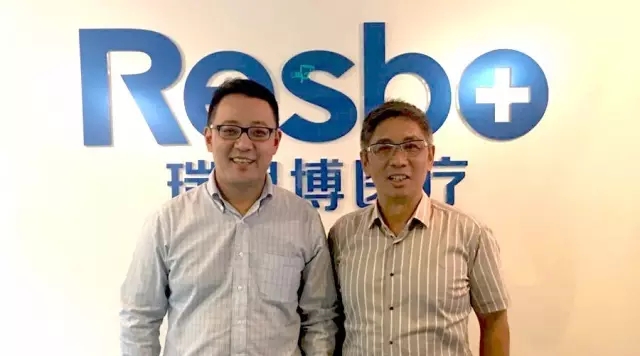
Zhu Gaoming (left), CEO of Risbo Medical, and Chen Rong (right), Chairman of Zhonglu Group
Seek a 1-kilometer width and achieve a 500-kilometer depth.
In Zhu Gaoming’s view, the two most critical elements for entrepreneurship are: identifying an external market that is underserved, has rigid demand, and offers scalability; and simultaneously building an optimal internal founding team.
Prior to founding Resbo Medical, Zhu Gaoming accumulated over a decade of local and global sales experience in multinational medical companies, along with expertise in marketing management, strategic management, and hospital investment. In 2014, he ventured into entrepreneurship in the field of cardiovascular mobile healthcare and participated in the investment and operation of specialized ophthalmic hospitals as a shareholder. These experiences enabled him to quickly grasp the direction of healthcare reform while accumulating comprehensive, hands-on entrepreneurial experience.
“When we were developing mobile healthcare solutions for cardiovascular diseases, we found that the consumer-end patients tended to be older. Mobile healthcare required re-educating these patients on their consumption habits, a process with a very long cycle. At the same time, the lack of a clear payer for online medical services in China is a problem difficult to resolve in the short term. China’s healthcare reform is a massive systemic engineering project, presenting numerous opportunities as well as challenges. Entrepreneurs need to think deeply to identify their own ‘one kilometer of width’ and then cultivate ‘500 kilometers of depth’ in order to realize value.” Consequently, the ophthalmology specialist medical consortium became the target area for Zhu Gaoming’s second entrepreneurial venture.
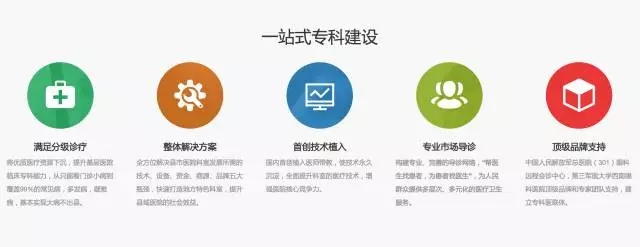
Risbo Medical One-Stop Specialty Department Development Process
Chinese patients account for one-sixth of the global total of those with eye diseases, yet the corresponding diagnosis and treatment rates remain low. The primary reason for this low rate is the regional gap between healthcare demand and physician supply: only 17% of China’s population resides in municipalities directly under the central government and provincial capitals, while 83% is distributed across vast grassroots areas. Ophthalmology expertise is concentrated in major cities, making it difficult for grassroots patients to access these high-quality medical resources. This mismatch between the distribution of medical resources and the patient population has left the healthcare needs of grassroots patients unmet, resulting in a pronounced trend of patients traveling long distances for care rather than seeking nearby treatment.
To address the challenges of ophthalmic treatment in primary care hospitals, Zhu Gaoming believes that efforts should be directed along two pathways: online and offline. For ophthalmic surgeries, enhancing the professional capabilities of primary care ophthalmologists is difficult to achieve through online channels alone. It requires experienced experts to bring high-quality medical resources to the grassroots level. Risbo has pioneered a model of embedded physician mentorship and established an ophthalmologist group. Leveraging the policy openness toward multi-site practice, this approach enables experts to guide the work of primary care hospitals within a legal and compliant framework.
Regarding the online component, Resbo has also established its own mechanism. “Ophthalmic diseases have a distinct characteristic: their diagnosis relies primarily on a combination of imaging and expert judgment, such as Optical Coherence Tomography (OCT), A/B-scan ultrasonography, and fundus angiography. After images are captured at the primary care level, they can be transmitted online, allowing specialists to assist primary care physicians with diagnosis and discussion via digital networks. This approach significantly improves efficiency and serves more primary care patients without increasing the number of specialists.” According to Zhu Gaoming, this model has effectively helped primary care hospitals overcome the technical challenges of asynchronous remote knowledge transfer.
While facilitating expert practice at grassroots hospitals, Resbo also assists physicians from these institutions in pursuing advanced training at tertiary Grade A hospitals, thereby fundamentally enhancing local healthcare standards.
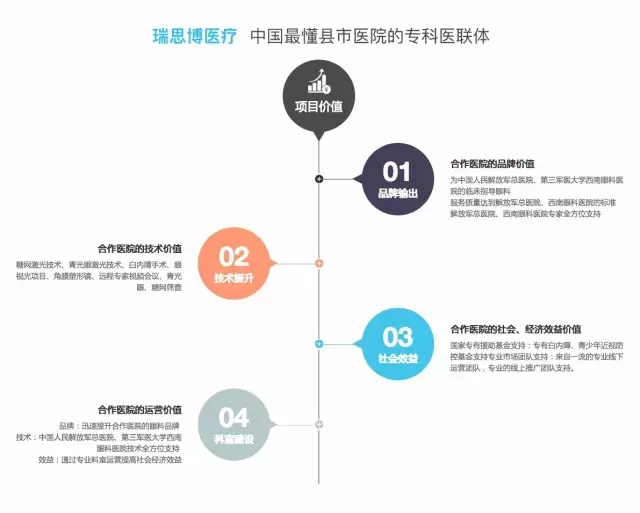
Services Provided by Resbo Medical to Partner Hospitals
Let Professionals Handle Professional Matters
“Stones from other hills may serve to polish the jade.” In Zhu Gaoming’s view, entrepreneurship in the healthcare sector should, against the backdrop of China’s deepening healthcare reforms, continuously draw on advanced global innovations and management practices in healthcare, while integrating these with the realities of China’s own healthcare system to identify points of innovation and breakthrough. As a student in the joint MD-PhD program in Healthcare Management offered by Tsinghua University and Johns Hopkins Medicine, Zhu Gaoming has gained valuable insights from studying U.S. hospital management models. “If we look at some U.S. hospitals or chained physician groups, their healthcare governance structure typically features two key leadership roles: one responsible for clinical pathways and technical standards, and the other—often held by individuals with backgrounds in healthcare marketing or operations—in charge of patient services.”
Therefore, in terms of operational model, Risebo has also chosen to be guided by industry professionals. Sang Shujun, the Operations Director, previously served as Vice President of a public hospital and later joined a private ophthalmic hospital as Marketing Director, accumulating comprehensive and in-depth experience in ophthalmic operations management. Under his leadership, Risebo has gradually established a professional triage network, integrating internal and external operations to form a sustainable patient referral system, while simultaneously enhancing the technical capabilities of ophthalmic treatment at primary care hospitals. “Internal operations focus on building technical systems, standard operating procedures (SOPs), and medical quality risk management processes, whereas external operations handle marketing. The primary objective is to provide better services with a patient-centric approach, ensuring that patients can not only receive treatment close to home but also achieve successful clinical outcomes.”
With the addition of Zhang Xinyu as Supply Chain Director, Resbo has gained a competitive edge in expanding its supply chain, thereby enhancing the availability of ophthalmic treatment equipment at primary-care hospitals. Leveraging each team member’s deep expertise accumulated over more than a decade in their respective fields, Resbo was able to rapidly identify and address the core elements required for departmental development at county- and city-level hospitals. To date, Resbo has provided partner primary-care hospitals with relatively comprehensive, end-to-end solutions, established integrated competitive barriers, validated its business model, and achieved profitability.
Startup pacing is critical; avoid actions that are fast but not effective.
In the past two years, as healthcare reform has deepened, many innovative models and physician groups have emerged. Zhu Gaoming believes that steady, methodical progress is what healthcare startups should adhere to most. “The healthcare industry is relatively conservative because safety and quality are at its core. Only on this foundation should we discuss innovation and the pace of development. Risebo’s strategy is ‘first do it well, then do it fast, and ultimately achieve both high quality and high speed.’ In the initial stage, it is essential to explore a viable basic model that aligns with the characteristics of healthcare as well as commercial logic, addressing the most fundamental business issues first before tackling subsequent supply-side challenges.”
Following this round of financing, Resibo will primarily focus on expanding its network of partner hospitals across key regions nationwide, while also exploring a self-built model beyond collaborative partnerships. “As a specialized medical consortium, our strategic path begins with collaboration. Moving forward, Resibo will explore self-built facilities and public-private partnership (PPP) models. This trajectory clearly mirrors the healthcare ecosystems observed in the United States and Taiwan, indicating that such development will undoubtedly become a prevailing trend in China.”
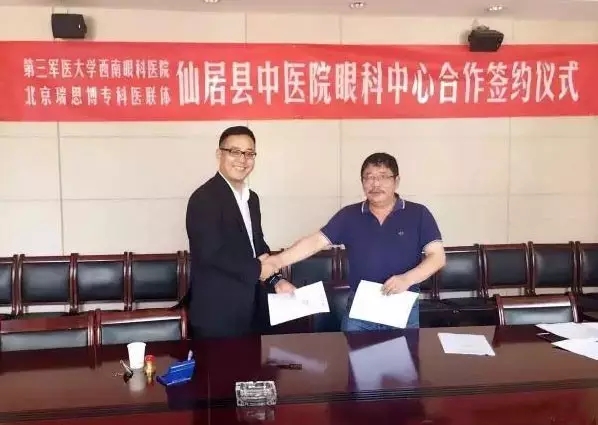
Resibo Medical Partners with the Ophthalmology Center of Xianju County Hospital of Traditional Chinese Medicine
Sun Meng, Vice President of K2VC Changqing, stated:Demographic shifts will define the trend in China over the next two decades, signaling substantial opportunities for the healthcare industry. In primary care, where medical services have long been scarce, the establishment of rural health insurance has spurred greater patient demand for high-quality care. Resibo has keenly capitalized on this shift by leveraging internet and telemedicine technologies, along with technical support from top-tier tertiary hospitals, to successfully implement a medical consortium operational model in grassroots hospitals. This approach integrates three key elements: medical equipment, clinical expertise, and operational capabilities. Conditions such as cataracts, which previously required patients to seek treatment in first- or second-tier cities, can now be effectively managed at county-level hospitals. Meanwhile, founder Zhu Gaoming’s diverse background—spanning key account sales, early-stage internet investment, hospital management, and education from a top business school—makes him a rare multidisciplinary talent in this sector.
Li Hao, Head of the Healthcare Sector at Huaxing Zhulu, believes:Since last year, two major trends have emerged in the healthcare talent sector: “return” and “downward mobility.” On one hand, the booming development of China’s healthcare industry, coupled with policy-driven initiatives to replace imported products with domestically produced ones, has led an increasing number of multinational corporation (MNC) executives and high-caliber overseas talents to return to China for entrepreneurship or to leave MNCs and join local enterprises. On the other hand, the state is vigorously developing primary healthcare, making every effort to channel high-quality medical resources down to the grassroots level to better serve local communities. The Risebo Ophthalmology Specialist Medical Consortium is a prime example combining these two trends. Over the past few years, Mr. Zhu has integrated his work experience at MNCs and academic training from top-tier international institutions with local practices, effectively addressing challenges in primary healthcare and improving medical access for residents in county-level areas. This is a highly meaningful endeavor and a microcosm of our times.
From a senior executive at a multinational corporation to leading a team in entrepreneurship, Zhu Gaoming has gained profound insights through his evolving roles: “I believe that entrepreneurship is a perilous journey with slim odds of survival. While the entry barriers for startups in China continue to lower, the intensifying competition has made achieving success increasingly difficult. As a core founder, no matter how impressive your accumulated industry, management, product, and market experience may be from operating in relatively predictable business environments, it falls far short of the comprehensive capabilities required to lead a company’s rapid growth amid the high uncertainty inherent in entrepreneurship. Therefore, while the founding core team must possess strong execution capabilities, they must also engage in continuous learning, deep thinking, and ongoing reflection and summarization to consistently lead their team to victory. Entrepreneurship is, to some extent, counter-intuitive; it demands resilience under pressure during the most brutal adversities, while maintaining an optimistic and proactive mindset, constantly drawing lessons and fostering personal growth.”
In Zhu Gaoming’s view, Risbo has already established certain competitive advantages. The next step is to continue optimizing its current model and persist in undertaking difficult yet correct and valuable endeavors. Against the backdrop of healthcare reform, Risbo’s mission is to work alongside numerous industry practitioners to “make accessing medical care no longer difficult,” relying on professionalism and dedication to withstand the test of time.