

Wearable Minimally Invasive Surgical Robot with Haptic Feedback and Hand-Machine Synchronization: Can It Surpass the da Vinci System?
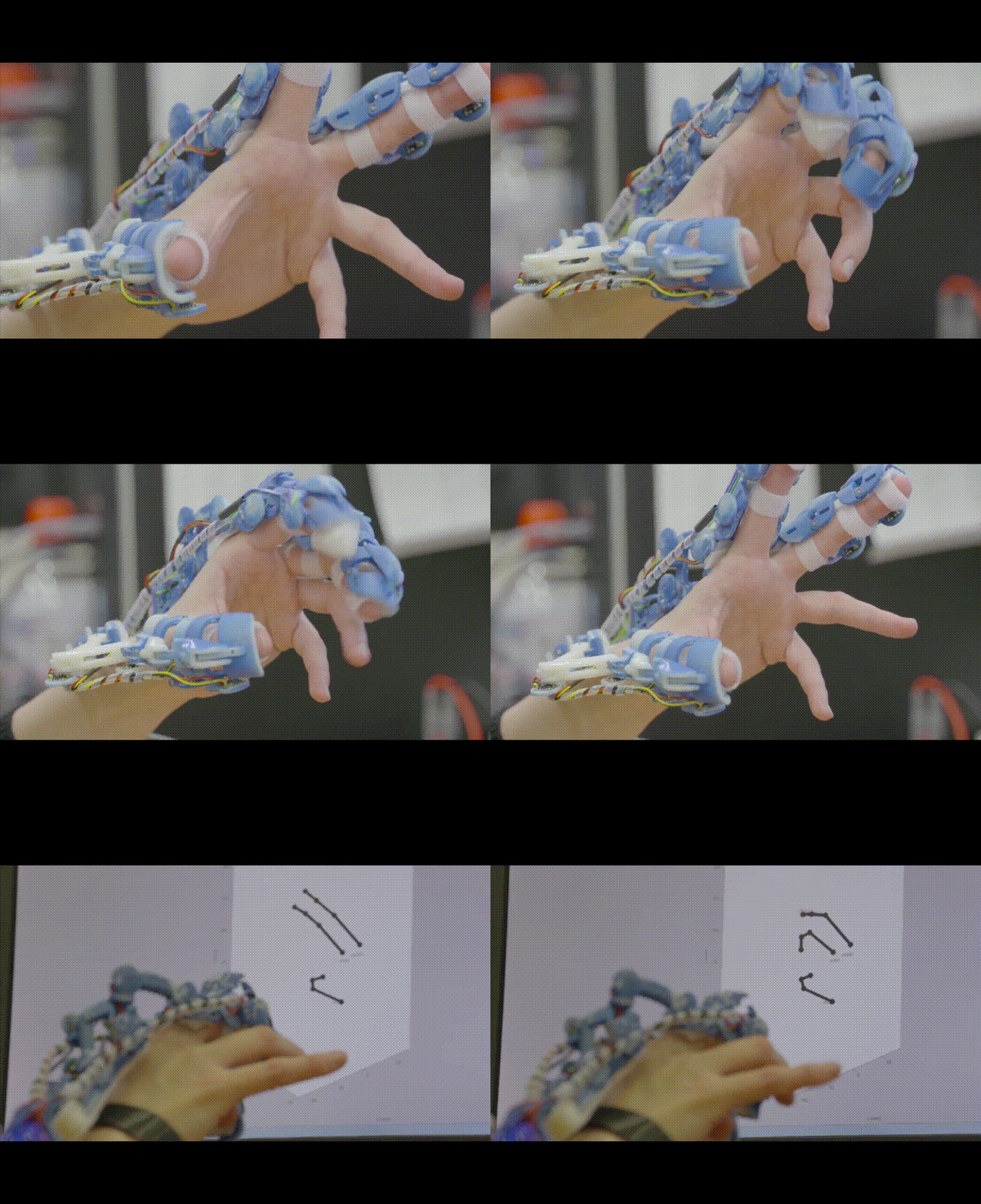
This video showcases a wearable robotic system for minimally invasive surgery (SMARTsurg), developed by researchers at the University of the West of England (UWE Bristol).Physicians can not only achieve synchronization between the machine and robotic arms but also receive haptic feedback from the robot. The system is also equipped with an imaging device similar to Google Glass, allowing physicians to view surgical footage through research applications.
With the advancement of technology, some minimally invasive surgeries are gradually replacing traditional open surgeries. VCBeat has learned that in 2016, the number of da Vinci robotic surgeries performed in China exceeded 15,000. Due to their minimal trauma, reduced blood loss, lower risk of infection, and faster recovery, surgical robots are increasingly being accepted by patients. If these minimally invasive surgical systems can be integrated with improved visual systems, while enhancing precision and ergonomic performance, they are expected to replace laparoscopy in minimally invasive procedures across several clinical fields.
Researchers developed the SMARTsurg system by mimicking complex human dexterity and haptic feedback. This surgical robotic system consists of four main components:
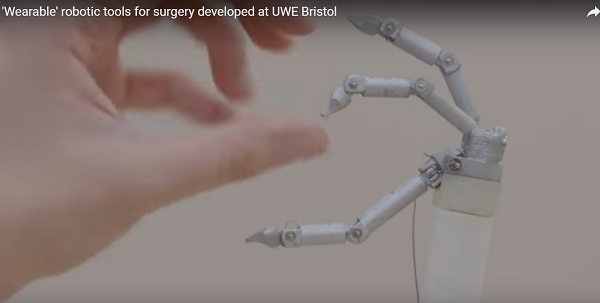
1、 Novel Surgical Robotic Manipulator for Intracorporeal Procedures, it is incorporated into three fingers and was developed by simulating the thumb and two fingers;
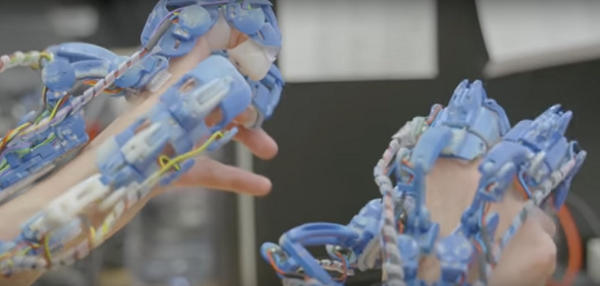
2. Exoskeleton devices worn on surgeons' hands,Used to synchronize the movements of the robotic arm and the surgeon's hands, enabling physicians to use the robot without additional training, just as they perform conventional open surgeries;
3. A feedback system that allows surgeons to “feel” tissues and organs within the body, just as they do during conventional surgery. Currently,The haptic feedback of this system is dual., current research mainly focuses on the user's arm/forearm. The system developed by this project will focus on haptic feedback on the surgeon's fingers;
4、 Researchers Develop Smart Glasses, providing real-time feedback on the intraoperative status to the physician.

The design process of this surgical robot is doctor-centric, enabling the robot to adapt to surgeries across more departments., during the R&D process, researchers continuously engaged surgeons for testing and used their feedback to inform the design of the next phase.
The imaging system is provided by the French company Optinvent and is expected to be initially applied inUrology, Cardiovascular, and OrthopedicsField.
Of course, this project cannot be completed by a single team alone,The European Commission granted €4 million in funding to this project under the Horizon 2020 programme.。
VCBeat learned that the three-year research project commenced in January 2017, when the research team established the REACH (Robotics Engineering and Computation for Healthcare) consortium at the Bristol Robotics Laboratory.
This alliance has 10 members, including:
Bristol Robotics Laboratory (BRL) - University of the West of England
University of Bristol (UoB) - Translational Biomedical Research Centre (TBRC)
North Bristol NHS Trust (NBT) – Bristol Urological Institute (BUI)
Center for Research and Technology Hellas (CERTH) – Information Technologies Institute (ITI)
Milan (Politecnico di Milano)
European Institute of Oncology (IEO)
Center for Orthopedics (TheMIS)
Cybernetix
Optinvent
Hypertech Innovations
This article is sourced from the internet and has been translated and compiled by VCBeat. Original link: http://info.uwe.ac.uk/news/UWENews/news.aspx?id=3571