

Laobaixing Pharmacy Reports Record Revenue of RMB 6.094 Billion and Net Profit of RMB 297 Million in 2016 Annual Report
VCBeat (WeChat ID: vcbeat) reported on March 24 that on the evening of the previous day, LBX Group (603883.SH), a listed pharmaceutical retail chain company, disclosed its 2016 annual report. During the reporting period, the company achieved revenue of RMB 6.094 billion, representing a year-on-year increase of 33.4%, and net profit of RMB 297 million, representing a year-on-year increase of 23.49%.
This is the second “high-quality” performance report delivered by Laobaixing since its IPO in 2015. Historical data shows that Laobaixing’s revenue and net profit have grown for three consecutive years.
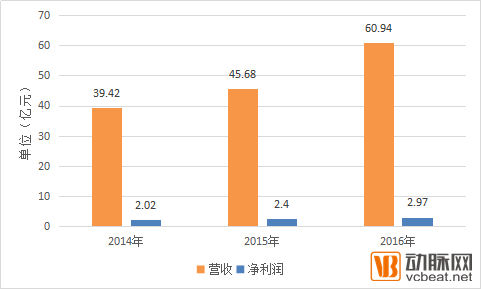
LBX’s annual report stated that the primary drivers of revenue growth were year-over-year growth at existing stores and contributions from newly opened and acquired stores. In terms of acquisitions, LBX completed six major acquisitions last year, namely:
1. In November 2015, the Company entered into an agreement with the original shareholders of Lanzhou Huirentang to acquire their 65% equity interest in Lanzhou Huirentang for a consideration of RMB 348.4 million; the transaction was completed in May 2016;
2. In March 2016, the Hubei Company entered into an agreement with Hubei Renxin to acquire the business operations and related assets of its 11 stores for a purchase price of RMB 13.5 million; the transaction was completed in March 2016;
3. In April 2016, Hubei Company entered into an agreement with Wuhan Nanfang to acquire the business operations and related assets of its 22 stores, at an acquisition cost of RMB 45.73 million;
4. In May 2016, the Company entered into an agreement with the original shareholders of Yangzhou Baixinyuan to acquire a 65% equity interest in Yangzhou Baixinyuan for a consideration of RMB 130 million. The transaction was completed in June 2016;
5. In May 2016, Henan Company purchased a 49% equity interest from minority shareholder Henan Provincial Yichao for a consideration of RMB 54.3 million, with the transaction closed prior to June 2016.
6. From August to September 2016, the Company purchased a 49% equity interest in each of Tianjin Company, Guangxi Company, and Chenzhou Company from minority shareholders, at acquisition costs of RMB 1,606,600,000, RMB 277,700,900, and RMB 157,627,800, respectively. The closing of these acquisitions was fully completed by November 2016.
These six transactions totaled RMB 2.634 billion, resulting in approximately RMB 470 million in newly recognized goodwill from business combinations in the consolidated financial statements. At the end of the reporting period, Laobaixing’s remaining goodwill stood at RMB 1.221 billion.
According to the annual report, by the end of 2016, Laobaixing’s business network covered 16 provincial and municipal markets and more than 80 cities across China, with a total of1,838 stores. In China, there are16 Tiered Distribution Centers, with a warehousing area exceeding 80,000 square meters, of which more than 25% is self-owned.
In terms of membership management, Laobaixing describes its members as active.Membership exceeds 9 millionMember sales accounted for 72% of the total, while member visits represented 41%. A Customer Service Center was established to specialize in membership management and customer service, leveraging in-depth analysis of member big data. By utilizing a CRM membership management system and integrating insights on member consumption habits and product categories, the company implemented precision marketing strategies. Furthermore, eight free services—tea beverages, blood pressure monitoring, blood glucose testing, powder grinding, herbal decoction, gelatin boiling, oxygen inhalation, and medication delivery—were provided with standardized protocols to enhance customer satisfaction.
Notably, a video inspection system has been implemented for store management. According to Laobaixing’s annual report, the application of this system strengthens control over retail outlets by enabling visualization, real-time monitoring, and traceability. It facilitates inspections of corporate requirements and their implementation at the store level, thereby promoting greater standardization and compliance. During the reporting period, the video inspection system covered more than 60% of the company’s stores. VCBeat has learned that the system is provided by Suzhou Wandianzhang Network Technology, a leading provider of in-store supervision systems in the industry.
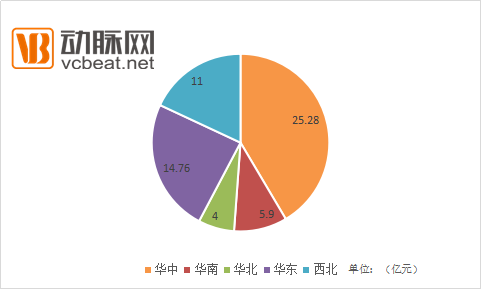
From the perspective of regional business data, Central China is a “key stronghold” for Laobaixing’s performance, accounting for more than one-third of the Group’s total revenue. This is closely related to Laobaixing’s origins in Hunan Province and its active expansion into neighboring regions such as Hubei Province.
From the perspective of gross profit margin, Laobaixing's pharmaceutical retail business recorded a gross profit margin of 38.01%. By product category, the gross profit margin for Chinese and Western patent medicines was 30.54%; that for traditional Chinese medicine (TCM) decoction pieces was 52.34%; and that for non-pharmaceutical products was 44.81%. Compared with industry peers, Laobaixing's overall gross profit margin exceeds the industry average, reflecting enhanced cost control capabilities driven by economies of scale and robust management and operational efficiency.
Analysis suggests that the pharmaceutical retail industry is developing rapidly, with continuous improvements in industry concentration and chain operation levels. Regional pharmacy chains are expanding nationwide, while national chains are scaling up. Driven by new healthcare reforms, favorable policies such as the separation of prescribing and dispensing, tiered diagnosis and treatment, and the outflow of prescriptions have been frequently introduced, laying a solid foundation for the future development of retail pharmacies. The implementation of the new Good Supply Practice (GSP) has raised entry barriers for retail pharmacies and strengthened regulatory oversight to standardize industry practices. Following a round of consolidation, industry concentration has increased, and retail pharmacy chains are poised to become the leading forces in industry integration.
Currently listed chain pharmacy companies in China include Yixintang, Laobaixing, Yifeng, Jiashitang, Shuyu Pingmin, and Guoda Drugstore. The chain penetration rate and level of asset securitization in the pharmacy sector remain relatively low, leaving substantial opportunities for mergers, acquisitions, and integration for regional leaders such as Laobaixing.
Xie Zilong, Chairman of Laobaixing Pharmacy, is well known for his remarks on pharmaceutical e-commerce, and Laobaixing is also actively embracing this sector. The annual report stated that the company will vigorously develop O2O e-commerce while actively exploring businesses such as traditional Chinese medicine clinics and DTP (Direct-to-Patient) specialty pharmacies.
Previously, Xie Zilong stated at the Two Sessions: “The O2O model is the most suitable approach for our enterprise in pharmaceutical e-commerce. To this end, we have established a dedicated Digital Operations Center within the company, aiming to integrate online and offline operations and better leverage the advantages of our brick-and-mortar stores to enhance our e-commerce performance.”