

Diaan Diagnostics Reports 2016 Annual Results with Revenue Surging 105.79% to RMB 3.824 Billion
On March 28, Dian Diagnostics, a publicly listed company providing outsourced medical diagnostic services, released its 2016 annual report. The report showed that Dian Diagnostics achieved an operating revenue of RMB 3.824 billion in 2016, representing a year-on-year increase of 105.79% compared to 2015; it recorded a net profit of RMB 338 million, up 89.03% from 2015; and the net profit attributable to shareholders of the listed company amounted to RMB 263 million, a 50.33% increase over 2015. On the same day, the stock opened at RMB 31.48 (-0.22%), and was down slightly by 0.63% in early trading as of press time.
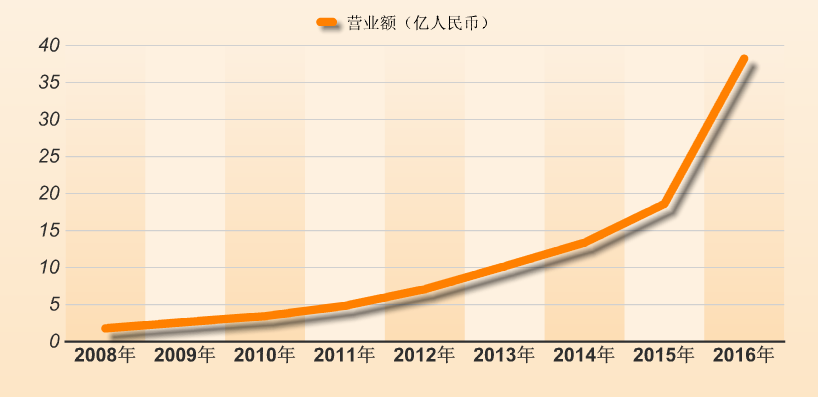
Dian Diagnostics was established in 2001 and listed on the Shenzhen Stock Exchange in 2011. Its business spans diagnostic services, product sales, R&D and manufacturing, cold-chain logistics, forensic appraisal, health management, and CRT. By effectively integrating resources both vertically and horizontally, the company has built a competitive advantage in integrated marketing, enabling the expansion of its public monitoring platform into multiple service areas and pursuing an integrated development strategy across the upstream and downstream industry chain.

Data Source: Dian Diagnostics 2016 Annual Report
According to VCBeat, Dian Diagnostics’ core business is divided into four segments: diagnostic services, diagnostic products, cold-chain logistics, and health checkups. Among these, diagnostic products account for the largest share of sales, with operating revenue reaching RMB 2.355 billion. This is followed by diagnostic services, which generated RMB 1.42 billion in operating revenue.
Dian Diagnostics’ diagnostic service revenue reached RMB 1.42 billion, with its medical diagnostic services business growing by 32.04% year-on-year; all chain laboratories achieved varying degrees of growth, while mature laboratories and those in the incubation phase turned profitable or reduced losses in line with scale expansion as expected. The company will continue to maintain strong endogenous growth momentum.
In terms of operating profit, diagnostic services achieved the highest gross profit margin at 43.9%. Therefore, although their revenue was lower than that of diagnostic products, they contributed the highest operating profit to the company. As cold-chain logistics is a relatively new service offering by Dian Diagnostics, it significantly boosted the company’s revenue in 2016.
In 2016, Dian Diagnostics accelerated the nationwide expansion of its third-party laboratory chain, with a growth rate far exceeding that of previous years. During this reporting period, Dian Diagnostics added ten new laboratories through investment in new construction, joint ventures, or mergers and acquisitions, gradually establishing a presence in previously unserved provinces such as Sichuan, Jiangxi, Fujian, Inner Mongolia, Xinjiang, Jilin, Qinghai, and Ningxia. By the end of the period, the company had 31 chain laboratories either completed or under construction, and it is expected to complete the first round of nationwide market coverage by 2017, achieving full laboratory network coverage in all provincial capital cities. Meanwhile, mature laboratories have entered the second stage of development, with upgrades, renovations, or relocations initiated during the reporting period. The newly completed Hangzhou headquarters laboratory will become the largest single-site comprehensive laboratory in Asia in terms of area and scope of services. Its advanced technology, intelligent systems, and excellent operational management capabilities will significantly lead the industry standard.
Dian Diagnostics believes that in 2016, with the implementation of the Healthy China strategy, the big health industry became a new engine for economic development and entered a period of vigorous growth. The execution of key healthcare reforms—such as tiered diagnosis and treatment, the coordinated development of medical care, health insurance, and pharmaceuticals, the integration of three basic medical insurance schemes, and the two-invoice system—accelerated industry transformation and resource restructuring. Policies have spurred the establishment of regional medical consortia and regional medical centers, as well as the decentralization of high-quality medical resources, making the third-party medical diagnostics service industry a beneficiary of this new round of healthcare reform.
Currently, approximately two-thirds of global medical decisions are based on diagnostic information, yet diagnostic expenditures account for only about 1% of total healthcare spending. Further advancing diagnostic technologies and methods, and increasing diagnostic spending, can provide a more scientific basis for decision-making in disease prevention, diagnosis, and treatment, representing a key direction for future development. Modern medicine has entered the "4P" model—Predictive, Preventive, Personalized, and Participatory—with the rapid development of in vitro diagnostics (IVD) serving as a core driver of this paradigm. In particular, emerging technologies such as molecular diagnostics, mass spectrometry, and image recognition are being increasingly widely applied in clinical diagnostics, offering solutions with higher sensitivity, better specificity, greater diagnostic efficiency, and lower costs for early disease screening, definitive diagnosis, treatment planning, and efficacy evaluation. In vitro diagnostics have become an increasingly vital component of human disease prevention, diagnosis, and treatment, playing a crucial role in safeguarding public health and building a harmonious society. Technological advancements in the IVD industry are providing stronger momentum for the growth of the third-party diagnostic services sector.