

Fujian Province's 2016 Healthcare Insurance System Reform: Achieving 'Three-in-One' Integration and Independent Unified Platform Management | A National Benchmark for Medical Reform
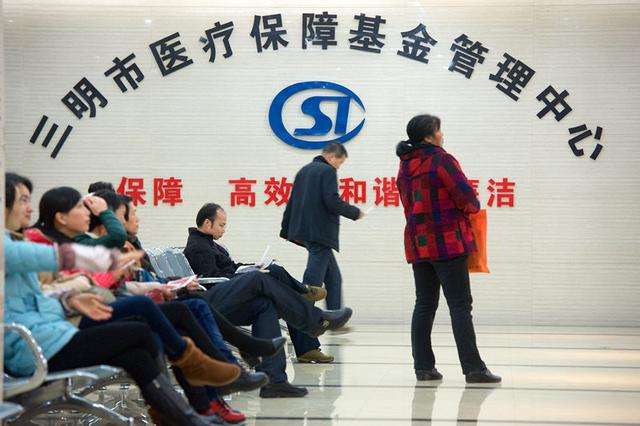
The “Sanming Healthcare Reform” has long been in the spotlight, causing a significant stir amid the nationwide wave of healthcare reform in China.
The Sanming healthcare reform model involves formulating and issuing opinions on deepening the reform of the medical insurance payment system, with the global budget prepayment system being fully implemented across the province. The most significant highlight is the large-scale promotion of the “Sanming Model” throughout Fujian Province, meaning Sanming will no longer remain an “isolated island.”
According to VCBeat, on March 28, a national teleconference on healthcare reform was held in Beijing, where Liu Yandong, Vice Premier of the State Council and Head of the State Council Leading Group for Healthcare Reform, delivered an important speech. Li Bin, Director of the National Health and Family Planning Commission and Deputy Head of the State Council Leading Group for Healthcare Reform, attended the meeting and briefed attendees on the progress of healthcare reform in 2016 as well as key priorities for 2017. Li Hong, Vice Chairperson of the Fujian Provincial Committee of the Chinese People's Political Consultative Conference and Deputy Head of the Fujian Provincial Leading Group for Healthcare Reform, also shared insights on reforms to the medical insurance system.
What measures has Fujian Province taken in the process of reforming its medical insurance system? What difficulties in accessing medical care have been addressed? What results have been achieved?
At the national teleconference on healthcare reform held in Beijing, Li Hong addressed these concerns. In his view, the achievements made in Fujian Province’s medical insurance system reform can be attributed to several key factors:
Medical insurance is the foundation of the basic healthcare system, the core and key to healthcare reform, and the critical lever driving the coordinated development of medical care, health insurance, and pharmaceuticals (the “Three Medicals”). Drawing on the experience of Sanming’s healthcare reform in our province, it is essential to shift from fragmented to centralized management across drug procurement, prescription, and payment processes. This integration enables the savings generated from curbing inflated prices for drugs and medical consumables, as well as cost-containment measures in hospitals, to be redirected toward raising service fees, increasing physician compensation, optimizing hospital revenue structures, and fostering sustainable, healthy development.
Therefore, healthcare reform must begin with the medical insurance system by establishing an independently operated medical insurance agency. This ensures that those who pay the bills manage the ordering of services, and those who manage the funds oversee medical practices. To this end, our province’s medical insurance system reform primarily focuses on addressing institutional fragmentation. Through integration, we aim to consolidate all medical insurance-related functions under a single agency, balance the interests of all stakeholders within a unified framework, and connect the pharmaceutical funding chain on a single platform.
Our province initiated the healthcare insurance system reform in the second half of 2016, primarily adopting three measures:
First, consolidate and restructure to optimize functions. Building on the integration of the three basic medical insurance schemes, further merge related functions from various departments—such as maternity insurance under the human resources and social security department, medical assistance under the civil affairs department, and pharmaceutical distribution under the commerce department—thereby transforming the fragmented, multi-agency management landscape of medical insurance.
More importantly, integrating the drug procurement functions of the health and family planning departments and the medical price management functions of the price control authorities into the medical insurance system has centralized the three key drivers of public hospital economic operations—“drugs, prices, and insurance”—thereby strengthening the constraints and incentives on medical practices.
Second, a model of relatively independent operation is implemented. A Provincial Healthcare Security Administration Committee has been established, comprising 13 departments, with the Vice Governor in charge serving as its director. Under the committee, a Healthcare Security Office has been set up; currently affiliated with the Provincial Department of Finance, it operates with relative independence.
Finally, the medical insurance systems at the municipal and county levels were streamlined. Each prefecture-level city established a Municipal Medical Security Administration, affiliated with the Municipal Finance Bureau, following the provincial model for integrating medical insurance agencies, thereby forming a unified provincial medical insurance management system. Currently, the integration of medical insurance agencies at both the provincial and municipal levels in our province has been fully completed.
(1) Establish a new compensation mechanism for public hospitals by linking drug procurement, pricing, and medical insurance.In the second half of 2016, leveraging the cost space freed up by drug procurement bidding, hospital cost-containment measures, and the increased surplus pool resulting from the consolidation of various medical insurance schemes, three rounds of adjustments to medical service prices were implemented for 15 provincial-level hospitals. The total adjustment amount exceeded RMB 200 million. Reimbursement by medical insurance was adjusted proportionally, ensuring no additional fiscal investment was required and no increased financial burden was placed on patients.
(2) Reform the drug procurement system based on the medical insurance payment settlement price.The medical insurance authorities are advancing drug procurement reform by implementing a dual-pricing mechanism based on "two identities."
1. The Provincial Medical Insurance Office will take the lead in formulating the payment and settlement prices for medical insurance.For approximately 80% of therapeutic medications, the medical insurance system designates a representative drug for each category as the basis for reimbursement, with its payment standard serving as the settlement price for all drugs in that category. Hospitals bear the cost of any amount exceeding this standard, while they retain any savings generated below it. This approach leverages the strategic role of medical insurance to stimulate hospitals’ intrinsic motivation to reduce drug prices and control expenditures, thereby facilitating the transformation of individual illicit income into transparent institutional revenue. For auxiliary and nutritional drugs, which account for only about 20% of the market and are prone to misuse, medical insurance adopts a fixed-payment model. Under this model, the medical insurance settlement price for the same drug category serves as the fixed quota, with patients responsible for any costs exceeding this amount. This reform replaces the previous practice of reimbursing auxiliary and nutritional drugs at the same proportion as therapeutic drugs, guiding rational consumption and safeguarding the equity of the basic medical insurance system.
Second, by employing market-based mechanisms,Taking into account drug-related pricing information, determine the maximum retail price for pharmaceuticals sold in Fujian Province to fulfill the government’s responsibility of safeguarding consumer rights and interests.
(3) Promote the reform of medical service pricing by implementing diagnosis-related group (DRG) based payment.Following the reform of the medical insurance system, to address the issues arising from fee-for-service payment models in hospitals, our province simultaneously launched reforms for diagnosis-related group (DRG) pricing and payment covering 100 disease types at the end of last year. The Provincial Medical Insurance Office negotiated with hospitals to establish standardized charges for these conditions, ensuring transparent costs for patients and curbing arbitrary hospital billing practices.
In that year, the scope of diseases subject to case-based pricing and payment in our province will be expanded to more than 600 categories. (IV) Strengthen whole-process supervision to constrain and standardize medical practices.
Following the integration of medical insurance, the Provincial Medical Insurance Office has been entrusted with four major regulatory responsibilities—overseeing hospitals, physicians, pharmaceutical distribution and services, and pricing—thereby forming a synergistic regulatory force.
First, strengthen the supervision of fund security.Implement measures to crack down on fraud involving medical insurance funds and violations of patients’ rights, and include non-compliant enterprises, medical institutions, and individuals in the provincial “blacklist” within the healthcare security administration system.
Second, implement transparent price-capped procurement for pharmaceuticals.Publicize the drug formulary selection process and responsible personnel, and disclose the entire drug procurement process.
Third, strengthen the supervision of medical practices.Implement the management of medical insurance physician codes, establish a unified provincial database of medical insurance physician codes, and conduct full-process management of physicians' medical practices. Fourth, strengthen information-based supervision. Establish a medical security service management platform to provide technical support for medical insurance supervision.