

Zhejiang's 2016 Healthcare Reform Focus: Strengthening Primary Care and Achieving an Average County-Level Treatment Rate of 85%
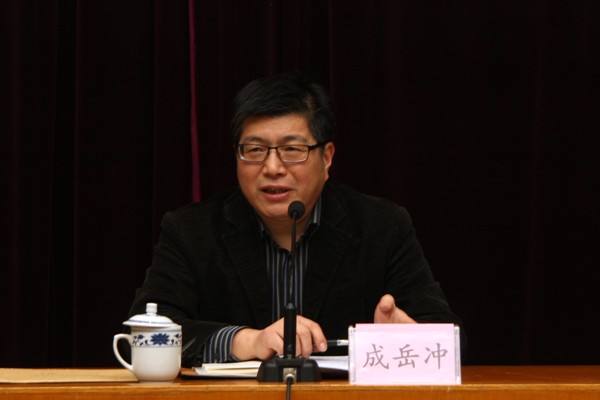
According to VCBeat, at the national teleconference on healthcare reform held in Beijing on March 28, Cheng Yuechong, Vice Governor of Zhejiang Provincial People's Government, became the focal point of the conference for achieving an average county-level hospital visitation rate of around 85% through advancing comprehensive reforms of urban public hospitals and implementing the “Double Sinking, Two Improvements” initiative.
Also attending the meeting were Liu Yandong, Vice Premier of the State Council and Head of the Leading Group for Healthcare Reform under the State Council; Li Bin, Director of the National Health and Family Planning Commission and Deputy Head of the Leading Group for Healthcare Reform under the State Council; as well as leaders from Fujian Province, Zhejiang Province, Sichuan Province, Shenzhen City of Guangdong Province, and Tianchang City of Anhui Province.
What measures has Zhejiang Province taken in the process of implementing tiered diagnosis and treatment? Which challenges in accessing medical care have been addressed? What outcomes have been achieved?
Cheng Yuechong addressed these concerns at the national teleconference on healthcare reform held in Beijing. In his view, the achievements made by Zhejiang Province in implementing tiered diagnosis and treatment can be attributed to the following factors:
From Cheng Yuechong’s perspective, the focus is on activating institutional mechanisms to comprehensively deepen the comprehensive reform of urban public hospitals and accelerate the establishment of a modern hospital management system. As early as 2011, the comprehensive reform of county-level public hospitals was launched with “zero mark-up on drug prices” as the entry point; subsequently, the comprehensive reform of municipal- and provincial-level public hospitals was gradually advanced.
In April 2014, all public hospitals across the province completely abolished drug markups, while simultaneously implementing systemic reforms in service pricing, medical insurance, fiscal support, and management. The implementation primarily focused on the following aspects:
First, improve the management system of public hospitals. With the goal of establishing a modern hospital management system, encourage localities to explore and summarize various forms of corporate governance structure models for promotion. Integrate resources to improve the comprehensive supervision platform and effectively strengthen hospital supervision. Formulate assessment methods and indicator systems for the operational target responsibility system of provincial-level public hospitals, and strengthen the assessment and evaluation of hospital directors and hospitals. Strictly control unreasonable growth in medical expenses, with the growth indicators of medical expenses in public hospitals remaining below the national average for consecutive years.
Second, improve the operational mechanisms of public hospitals.Following the fundamental approach of “creating fiscal space, optimizing structure, and ensuring continuity,” medical service prices have been gradually rationalized. To address the shortcomings in pediatric medical services, further adjustments were made to outpatient fees, inpatient consultation fees, and bed charges, building on the price reforms implemented in previous years. The adjusted medical service prices have been incorporated into the scope of medical insurance coverage, thereby avoiding any additional financial burden on patients.
Guided by the new mechanism for classified drug procurement, implement the "two-invoice system" requirements and advance the construction of a provincial integrated platform for pharmaceutical and medical device procurement that consolidates product flow, information flow, and capital flow. All public hospital drug procurement will be incorporated into the operation and management of this new platform. Accelerate the reform of the medical insurance payment system; while improving global budget prepayment management, expand pilot programs for diagnosis-related group (DRG) payments, capitation-based outpatient payments, and lump-sum medical insurance reimbursements for contracted family physicians in primary care settings.
Third, implement the operational management autonomy of public hospitals.Transform government functions, reduce medical-related approval items, and promote the implementation of hospital autonomy in internal personnel management, organizational structure, income distribution, and annual budget execution.
Fourth, establish a flexible personnel management mechanism and comprehensively launch pilot reforms of the staff quota filing system in public hospitals.For scarce professional and technical personnel or high-level talents, hospitals are authorized to conduct independent recruitment in accordance with relevant regulations. As a pilot province for comprehensive medical system reform, the province is formulating a plan for reforming the compensation system of public hospitals in line with national requirements.
The most critical objective of healthcare reform is to enhance public satisfaction. With this essence clearly understood, the comprehensive deepening of the “Two Descents and Two Improvements” initiative—actively promoting the extension of high-quality urban medical resources to the grassroots level—has proceeded smoothly in Zhejiang Province.
“We adhere to coordinated efforts across provincial, municipal, county, and township levels, comprehensively promote the decentralization of high-quality urban medical resources and healthcare personnel, and strive to enhance grassroots capacity and public satisfaction,” said Cheng Yuechong.
First, strictly control the expansion of urban public hospitals.Formulate and strictly implement the plan for the medical service system, clarifying the period of the "13th Five-Year Plan"The number of provincial-level hospitals is only decreasing, not increasing, and the number of hospital beds per 1,000 people has been reduced from 0.47 to 0.45.Municipal governments of cities with districts shall, in principle, no longer independently establish new urban general hospitals. While strictly controlling the expansion of individual public urban hospitals, high-quality resources should be guided to extend their reach to the grassroots level.
Second, promote the vertical integration of urban medical resources.The provincial government has issued policy documents to increase support through fiscal incentives, talent development, health insurance payment mechanisms, and performance evaluation systems, thereby encouraging urban hospitals to collaborate with county-level hospitals in establishing vertically integrated healthcare consortia.
As of now, 15 provincial-level hospitals and 39 municipal-level hospitals in Zhejiang Province have partnered with 122 county-level hospitals to jointly operate medical facilities, achieving full coverage of urban medical resources at the county level. Significant efforts have been made to promote the establishment of asset-linked medical groups or medical consortia between urban and county-level hospitals. Seven provincial-level hospitals have collaborated with eight county (city) governments to co-establish 11 specialized disease centers, with a total investment of RMB 300 million from provincial-level hospitals.
Third, a pattern of tiered downward referral from county-level hospitals is gradually taking shape.In recent years, Zhejiang Province has focused on leveraging leading county-level hospitals to promote the establishment of shared centers for medical imaging, clinical laboratory testing, electrocardiogram (ECG) examinations, and chronic disease management within county jurisdictions.
On this basis, while receiving support from provincial and municipal hospitals, county-level hospitals have proactively extended their reach downward by dispatching medical personnel to be stationed at the grassroots level, establishing inpatient branches at the primary care level, arranging for experts to conduct regular teaching rounds at the grassroots level, and forming medical service collaborations and consortia with township health centers and community health service centers. They are actively exploring models such as “county-managed, township-utilized” and “township-managed, village-utilized” for grassroots health technical personnel, thereby establishing a flexible talent mobility mechanism.In 2016, 47 county-level hospitals under the trusteeship of provincial hospitals collaborated with 296 township medical institutions.
Through concerted efforts, the “Double Sinking and Two Improvements” initiative has yielded positive results. Assessments indicate that county-level hospitals collaborating with urban tertiary hospitals have seen annual outpatient visits increase by over 20%, discharges rise by 30%, and Category III and above surgeries grow by nearly 25%, while the proportion of pharmaceutical costs has decreased by an average of 9 percentage points. Last year, the average rate of medical consultations within county-level jurisdictions in Zhejiang Province reached approximately 85%.