

Shenzhen's 2016 Healthcare Reform Focuses on 'Three-pronged' Supervision Model, Imposes Over RMB 13.6 Million in Fines on Medical Institutions
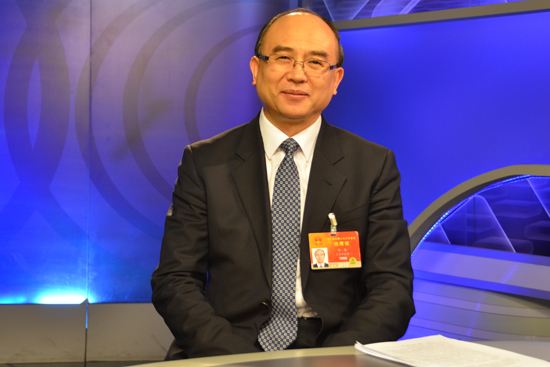
Xu Qin, Member of the Standing Committee of the Guangdong Provincial Committee of the Communist Party of China, Secretary of the Shenzhen Municipal Committee of the Communist Party of China, and Mayor of Shenzhen
Since the launch of healthcare reform, Shenzhen’s initiatives have remained under intense scrutiny, yielding numerous widely recognized benchmark projects. Notable examples include Luohu Hospital and the “Luohu Model,” as well as the emergence of JiuYi160, the first publicly listed company in China’s mobile health sector.
Whether from traditional medical institutions, internet-based healthcare providers, or healthcare innovation and entrepreneurship ventures, the degree of openness to healthcare reform in Shenzhen is higher than that in other cities. While other regions across China were hesitant and undecided, Shenzhen took the lead by enabling online medical insurance payment functions.
In May 2016, the Shenzhen Municipal Human Resources and Social Security Bureau formally signed a cooperation agreement with Ping An One Wallet. Together, they launched a social security wallet plugin that enables real-time mobile payment for medical insurance. With this plugin, residents can not only register for appointments and pay medical fees via their smartphones but also resolve the challenge of real-time reimbursement of medical insurance expenses.
At that time, the entire country was debating whether to open up reimbursement channels for health insurance? Should online payments via health insurance be permitted?
Although Shenzhen’s healthcare reform has many highlights, VCBeat learned that at the national teleconference on healthcare reform held in Beijing on March 28, Xu Qin, a member of the Standing Committee of the Guangdong Provincial Party Committee and Secretary of the Shenzhen Municipal Party Committee and Mayor, chose to present how they regulate reforms in medical institutions.
Also attending the meeting were Liu Yandong, Vice Premier of the State Council and Head of the State Council Leading Group for Healthcare Reform; Li Bin, Director of the National Health and Family Planning Commission and Deputy Head of the State Council Leading Group for Healthcare Reform; as well as leaders from Fujian Province, Zhejiang Province, Sichuan Province, Shenzhen City of Guangdong Province, and Tianchang City of Anhui Province.
What Innovative Measures Has Shenzhen Implemented in the Supervision of Medical and Health Institutions, and What Results Have Been Achieved?
At the 2017 National Teleconference on Healthcare Reform, Xu Qin stated directly, “Our approach to comprehensive supervision of medical and health services in Shenzhen mainly consists of two steps: first, establishing a sound regulatory system, and second, enhancing regulatory effectiveness.”
It is not difficult to establish a regulatory framework; the challenge lies in its implementation. In Xu Qin’s view,
First, we must “separate administration from operation” and strengthen government oversight.
Shenzhen took the lead nationwide in establishing a “super-ministry” structure for health and family planning, striving to build an integrated public health and holistic healthcare service system. It advanced the separation of regulation from operation in public hospitals by establishing a Municipal Public Hospital Management Center, thereby disentangling health administrative authorities from the micro-management of public hospitals and emphasizing their regulatory functions across the entire industry, including sectoral planning, market access, and standard-setting. Second, it deepened reforms to streamline administration, delegate powers, and improve services, while strengthening industry self-regulation.
In recent years, a total of 34 administrative functions related to healthcare have been canceled, transferred, or delegated. Industry organizations are encouraged to take over government functions that have been transferred, and legislation has been enacted to explicitly assign responsibilities such as practice registration and physician assessment to the Chinese Medical Doctor Association. Third-party institutions, including the Institute of Medical Information at the Chinese Academy of Medical Sciences, have been introduced to conduct comprehensive evaluations of public hospitals, thereby guiding the standardized development of the industry through a more objective and scientific evaluation system.
Next, comprehensively enhance information disclosure and strengthen social oversight.
Comprehensively disclose information on medical institutions’ service items, fee schedules, and health supervision and law enforcement results; establish a reward system for reporting illegal activities such as unlicensed medical practice and illegal blood collection and supply, thereby enhancing public participation in oversight.
Meanwhile, regulatory efficacy must be enhanced by establishing a standardized, informatized, and normalized “three-pronged” regulatory model.
In this way, the following functions can be achieved.
First, establish the “Shenzhen Standard” for industry regulation.
We are committed to guiding the standardized development of the industry through standards, taking the lead in establishing setting standards for traditional Chinese medicine (TCM) clinics and remote medical imaging diagnostic centers. We have compiled 13 TCM standards, among which seven have been approved as ISO standard projects and three have become national standards. We have issued evaluation standards for the quality of medical services and public health services, conducting regular assessments annually. Additionally, we have formulated rules for discretionary administrative penalties in health matters to regulate administrative law enforcement practices.
Second, establish an information-based regulatory network.
Promote the interconnectivity, openness, and sharing of information among regulatory authorities overseeing healthcare services, health insurance, and pharmaceuticals. Establish a basic medical insurance intelligent audit system covering all public hospitals to implement full-process intelligent monitoring of clinical services, cost control, medical advertising, and other activities. Develop an informatization-based regulatory platform for public hospitals to achieve real-time supervision and management of the “five powers”: decision-making, human resources, finance, procurement, and equipment management.
Third, improve the normalized regulatory mechanism.
Strengthen coordination and collaboration among market regulation, health, and other relevant departments to enhance dynamic oversight of registration, practice licensing, and daily operations. Advance the development of an industry-wide credit system by implementing a demerit-point management system for improper professional conduct by medical institutions and physicians, as well as a “blacklist” mechanism. Implement quantitative, tiered supervision to prevent and control key risk points within the industry.
Xu Qin believes that regulation is a critical aspect of healthcare reform that cannot be overlooked. Therefore, Shenzhen has not only strengthened the three pillars of legislation, institutional frameworks, and law enforcement, but also worked to solidify its regulatory foundation, achieving notable results and gaining recognition from medical institutions. What issues should be paid attention to during implementation?
First, prioritize legislation.Leveraging the special economic zone’s legislative authority, China’s first local comprehensive medical regulation was enacted, establishing clear provisions on practice management, dispute resolution, and medical oversight. Meanwhile, regulations such as the Ordinance on Human Organ Donation and Transplantation and the Tobacco Control Ordinance have been successively formulated. Legislation on pre-hospital emergency care, health promotion, and public hospital management is being accelerated, with a focus on promoting the healthy development of the healthcare industry through legislative measures.
Secondly, emphasize institutional constraints.Implement comprehensive measures to curb excessive medical practices, such as overprescribing and unnecessary examinations. Strictly enforce systems including prescription reviews and the registration and reporting of transparent medication usage information. Establish a regular mechanism for notifying medical expenses to guide hospitals in proactively standardizing diagnosis and treatment while controlling costs. Launch pilot reforms for third-party group procurement of pharmaceuticals to actively reduce drug prices.
Finally, highlight law enforcement support.Shift the focus of law enforcement to lower levels, strengthen "grid-based" supervision, and implement the "double random, one public" system for law enforcement.
In 2016, Shenzhen imposed a total of 898 administrative penalties on medical and health institutions, levied fines amounting to more than RMB 13.6 million, shut down over 470 unlicensed medical practice sites, investigated and dealt with more than 50 cases of illegal medical advertising, and assigned demerit points for improper professional conduct to 259 physicians.