

Tianchang City, Anhui Province Achieves 92.24% In-County Healthcare Utilization Through County-Level Medical Consortium Established in 2016
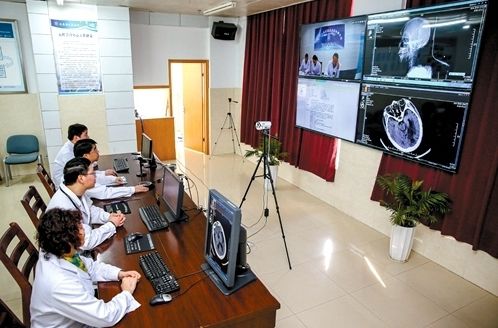
Tianchang City Medical Community, Anhui Province
"Keep minor illnesses at the primary care level, and manage major illnesses within the county." In 2016, Tianchang City in Anhui Province prioritized strengthening primary healthcare by establishing a county-level medical consortium, raising the local healthcare utilization rate to 92.24%.
According to VCBeat, at the national teleconference on healthcare reform held in Beijing on March 28, Jin Weijia, Vice Chairman of the Chuzhou Municipal Committee of the Chinese People's Political Consultative Conference and Secretary of the Tianchang Municipal Party Committee, provided a detailed introduction on how to develop county-level medical consortia.
Also attending the meeting were Liu Yandong, Vice Premier of the State Council and Head of the State Council Leading Group for Healthcare Reform; Li Bin, Director of the National Health and Family Planning Commission and Deputy Head of the State Council Leading Group for Healthcare Reform; as well as leaders from Fujian Province, Zhejiang Province, Sichuan Province, Shenzhen City in Guangdong Province, and Tianchang City in Anhui Province.
So, how did Anhui Province establish county-level medical communities? How did medical institutions participate? What results have been achieved?
"Healthcare Institutions: One Family from Top to Bottom"
At the 2017 National Teleconference on Healthcare Reform, Jin Weijia preliminarily established a tiered diagnosis and treatment model aligned with rural realities by forming county-level medical consortia. His primary approach involved designating three county-level hospitals to lead the initiative, which then engaged in mutual selection and voluntary pairing with 14 township health centers and two community health service centers across the city, thereby establishing three county-level medical consortia.
Within the medical consortium, hospitals of all sizes form a “unified family,” transforming the relationship among city hospitals, township health centers, and village clinics from a 1:1:1 competitive dynamic into a 1+1+1 collaborative partnership. A definitive list of treatable conditions was established, comprising 122 diseases for county-level hospitals and 50 for township health centers. Additionally, clear guidelines were set for downward referrals, specifying 41 conditions for general transfer and 15 conditions for transfer during the rehabilitation phase, thereby building a community of shared responsibility.
In this way, the medical consortium implements a system of initial diagnosis at primary care facilities and two-way referrals, establishing a green channel for referral services. Meanwhile, differentiated health insurance reimbursement policies are implemented to appropriately increase reimbursement rates for medical services within the county and at the primary care level, thereby rationally guiding patient flow.
Villages and towns refer patients with conditions beyond their treatment capacity upward, while city hospitals refer patients who can be managed at the primary care level downward. This has resolved the previous issues of overcrowding and bed shortages in large hospitals, as well as underutilization of resources and patient reluctance to stay in township health centers.
Furthermore, medical resources at the county and township levels are integrated into a “unified strategic framework,” wherein each component plays its distinct role. We are actively building a community for healthcare service and development to facilitate the downward allocation of resources. For instance, large-scale medical equipment is shared within the Medical Community (Yi Gong Ti). Patients requiring examinations using such equipment can have test orders issued by township health centers, undergo the examinations at county-level hospitals, and have the results transmitted back to the township health centers in real time.
Talent Flow to Lower-Tier Markets: Encouraging Physicians to Practice at Multiple Sites
The key lies in facilitating the downward flow of medical talent. Within medical consortia, multi-site practice for physicians is promoted, and a “dual dispatch” system for personnel is implemented: county-level hospitals reserve 3% of their positions to send physicians to lower-level institutions for teaching and mentorship, while primary healthcare institutions reserve 5% of their positions to send physicians to higher-level institutions for training. A total of 396 “1+1+1” mentor-mentee relationships have been established among county-level hospitals, township health centers, and village clinics. Lead hospitals dispatch experts to station at township health centers, regularly providing services such as expert outpatient consultations, ward rounds with teaching, and surgical consultations.
"To ensure that all parties involved in healthcare services are 'of one mind,' their interests must be aligned."
For example, the New Rural Cooperative Medical Scheme (NRCMS) fund implements a capitation-based global budget prepayment system for medical consortia, which is managed centrally by the lead hospital. Any deficit is borne by the county-level hospital, while any surplus is distributed among the county-level hospital, township health centers, and village clinics in a 6:3:1 ratio, thereby creating a community of shared interests. This mechanism transforms the medical insurance funds that hospitals previously sought to maximize from “revenue” into “costs.” Every extra dollar spent comes out of their own pockets, including costs incurred for patients referred outside the consortium. This exerts pressure on all medical institutions within the consortium to proactively control costs, implement appropriate upward and downward referrals, engage in health management, and strive to minimize resident morbidity and external patient referrals.
Cost Control and Quality Improvement: A Dual Approach. Implementing the “dual synchronization” of clinical pathway management and diagnosis-related group (DRG) payment, this strategy both curbs waste and ensures that medical quality is not compromised. To date, 393 clinical pathways have been implemented; the number of diseases covered by DRG payment stands at 220 for the City People’s Hospital and 146 for the Traditional Chinese Medicine Hospital.
Integration of Medical Care and Prevention.County-level public hospitals have established health management centers to carry out health promotion activities and implement the "dual prescription" system, issuing both medication prescriptions and personalized health prescriptions for patients, covering 276 disease types. In rural areas, family doctor contract services are provided to enable residents to prevent diseases before they occur and to ensure early detection and treatment when illnesses arise.
Meanwhile, health information is also beginning to establish a “One Network Connect.”Leveraging information platforms for hospital management, medical imaging, laboratory testing, electrocardiography (ECG), and pathology, the initiative enables seamless information exchange and mutual recognition of test results between the lead hospitals of medical consortia and central township health centers. Telemedicine services have been expanded to cover selected township health centers and village clinics, with specialists from the lead hospitals providing diagnostic interpretation of medical images, multidisciplinary discussions on complex cases, and teleconsultation guidance.
Achievements: The county-level consultation rate reached 92.24%
In Jin Weijia’s view, the measures mentioned above have yielded satisfactory results, achieving the following objectives:
First, major illnesses are treated within the county.Currently, county-level hospitals in Tianchang City are capable of treating 2,254 types of diseases, an increase of 357 since 2012, with seven new key specialties at or above the provincial level established. The rate of medical visits within the county has reached 92.24%, which is 22.6 percentage points higher than the provincial average.
Second, minor illnesses are managed at the primary care level.Last year, outpatient visits to township health centers accounted for 52.7% of the city’s total outpatient volume, while inpatient admissions at these facilities increased by 17.3% year over year. Within the medical consortium, downward referrals significantly exceeded upward referrals, with 8,037 patients referred downward and 3,319 patients referred upward.
Third, grassroots development.Township health centers are now capable of treating 90 types of diseases, an increase of 40 compared to 2012. With the assistance of medical consortia, these health centers have established three specialized departments and introduced one new technology. Fourth, the public has reaped tangible benefits. In 2016, the growth rate of medical expenses was 5.8% at the Municipal People’s Hospital and 7% at the Traditional Chinese Medicine Hospital, representing year-on-year decreases of 4.7 percentage points and 3.8 percentage points, respectively. The actual reimbursement rate under the New Rural Cooperative Medical Scheme reached 70%, reducing the out-of-pocket expense ratio for individuals to 30%.