

17 Promising Healthcare Startups from YC’s Spring 2017 Demo Day: Potential Unicorns and Investment Opportunities

Spring 2017 YC Demo Day Has Arrived (the 24th Batch), Serving as a Bellwether for the Startup Ecosystem; Companies Like Airbnb and Dropbox Were Among the First to Be Incubated by YC. This Year, a Total of 103 Startups Participated—Which Ones Emerged as Trendsetters, and Which Became Mere Drops in the Ocean Amid the Relentless Waves of Entrepreneurship? Regardless, the Direction of the Tide Remains Thrilling.
This year’s YC cohort features a more international backdrop than in previous years, with outstanding startups from numerous countries and regions around the world. VCBeat (WeChat: vcbeat) has specially compiled and organized the following list and profiles of key healthcare startups presenting at the demo day. With no shortage of imaginative ideas and feasible products, some of these companies may well become the unicorns of tomorrow.
1.MDalgorithms
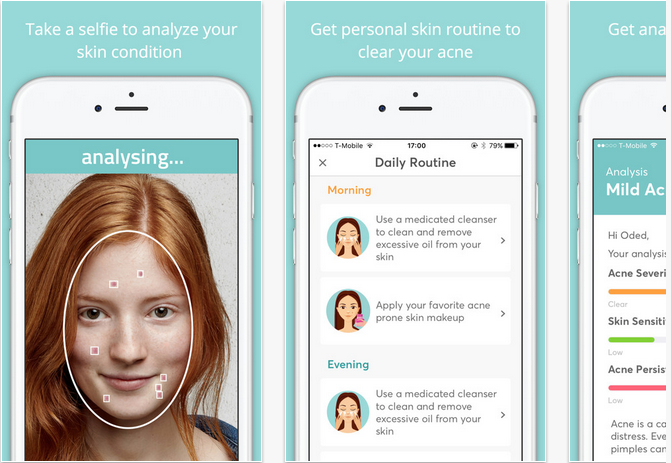
This is a mobile health platform based in Israel. Founded on the principle of disrupting the physician-centric healthcare system, it places patients at the center. The company leverages smart algorithms and computer vision to provide real-time mobile tools for individuals with health impairments.
The platform’s inaugural product is MDAcne, a mobile application for the prevention and treatment of acne, offering immediate self-diagnosis and personalized treatment plans to patients. By simply taking a photo, users can have their acne condition analyzed by MDAcne, which then provides tailored treatment recommendations, answers from professional dermatologists, and access to its “Skin Care Academy,” which guides users in selecting ingredients, skincare products, and cosmetics suited to their skin type, helping them achieve clear and healthy skin with ease. MDAcne is the world’s first mobile application to employ real-time computer vision technology and medically validated algorithms for acne analysis. Within two months of its launch, the app attracted 50,000 registered users. It remains unclear how many of these users will subscribe to the service at a monthly fee of $13.
2.The Mednet

The Mednet is a startup based in New York. Its knowledge-sharing platform, as simple and user-friendly as Quora, provides the latest expert answers in medical research. Strictly speaking, the platform has so far focused primarily on cancer-related Q&A. Due to dual safeguards for medical information sharing and patient privacy, The Mednet cannot publish actual cases online. Therefore, questions on the platform are adapted from real cases into specific scenarios, and physicians are prohibited from disclosing any patient information privately, not even a blurred photograph.
The Mednet, a new member of the Y Combinator accelerator cohort, has officially launched its knowledge Q&A platform. According to co-founder and radiation oncologist Nadine Housri and her brother, CEO Samir Housri, The Mednet has secured both grant funding and equity financing to date, with investors including YC and The Hope Foundation. The company has recently recognized the platform’s revenue-generating potential, aiming to profit by assisting enterprises in recruiting patients for clinical trials.
Furthermore, the platform can aggregate authoritative answers from experts and integrate them into automated clinical decision support systems. In other words, once it identifies viable monetization pathways, The Mednet can compete with platforms such as Figure 1 or UpToDate for the limited pool of online physician resources.
In the medical field, there are few platform tools on the market to help users access high-quality, real-time updated information. This demonstrates that The Mednet holds significant potential.
3.Volt Health

Volt Health is a medical device company based in Mountain View, California, that develops electrical stimulation devices for the treatment of conditions such as urinary incontinence. Urinary incontinence affects 25 million people and represents a $25 billion market. The device stimulates muscles to provide recipients with appropriate feedback, thereby alleviating the burdens faced by patients with urinary incontinence. In addition, Volt Health has developed devices targeting other medical conditions, incorporating proprietary technologies for applications such as migraine relief. Its founders have brought six medical devices to market, including products with sales reaching billions of dollars.
Its founder, Scott Wolf, previously led the company to win the “Palo Alto Longevity Prize.” Dr. Scott Wolf is a highly accomplished medical device inventor and entrepreneur. Over the past two decades, Scott has founded numerous successful medical device companies across many therapeutic areas and has filed dozens of patents. Scott’s primary interest lies in studying how aging affects the physiology and physical function of the aging body, and in developing therapies for diseases resulting from these age-related changes.
4.Qurasense

Qurasense is a Silicon Valley-based startup that offers non-invasive, menstruation-focused blood testing services to track women’s health. The company has developed a microbial sensor that can be embedded in the bottom layer of feminine hygiene pads. By analyzing menstrual blood, users can view health assessments and receive actionable wellness recommendations on their smartphones.
Sara Naseri is a co-founder and the current CEO. With a strong medical background and rich imagination, she has serially founded multiple enterprises. She leads her team in conducting medical research and related business activities in the Department of Gynecology at Stanford Hospital. Søren Therkelsen is the other founder and currently serves as COO. With professional expertise in business, marketing, and sales, he has established multiple companies and is primarily responsible for the development and sales of software and hardware.
5.HelixNano

This company operates at the intersection of software engineering and biopharmaceutical engineering, with its technologies encompassing DNA nanotechnology, software technology, and DNA sequencing. In simple terms, it focuses on programmable deoxyribonucleic acid (DNA). Currently, the company remains in “stealth” mode, disclosing very little information.
It is worth noting that the company has previously secured investment support from Janssen Innovation. Janssen Innovation openly stated, “Supporting entrepreneurs and transformative life science solutions is a key mission of Janssen Innovation. We are delighted to partner with HelixNano to accelerate the pace of drug discovery.”
6.Synvivia
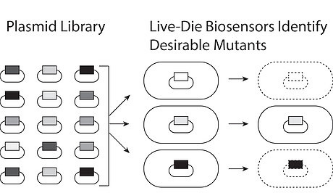
This is a company primarily focused on bioengineering. Its core technology involves using engineered small molecules to activate or inhibit the function of specific proteins in certain organs, and then utilizing biosensors to enhance and determine the activity of selected enzymes, induce customized expression, and facilitate microbial growth to meet specific requirements. This can be achieved within defined temporal and spatial parameters.
This technology was developed at the University of California, Berkeley, with funding from the NSF and DARPA. The research findings were published in ACS Synthetic Biology and selected as an Editor’s Choice by Science magazine.
Synvivia has developed programmable, self-replicating tools for synthetic biological activities, applicable to the pharmaceutical and industrial biotechnology sectors. It is important to recognize that a single microorganism with programming and self-replication capabilities has the potential to transform the entire planet. Leveraging this potential, Synvivia has created tools for engineering synthetic biological activity, thereby strengthening comprehensive control over innovation.
Meanwhile, the efficient production of payload molecules using engineered organisms requires enzyme engineering to create molecules not found in nature. Synvivia’s genetically encoded biosensor technology eliminates the bottleneck of screening large libraries of variants to identify desired functions. Additionally, their genetically encoded biocontainment technology ensures the development of safer live biotherapeutic products.
7.Lively

Disrupting the current operation of Health Savings Accounts, Lively’s online platform maximizes healthcare cost savings for businesses and individuals, optimizes spending choices, and cultivates users’ awareness and capabilities in managing health-related investments. The comprehensive system is simple and user-friendly; it synchronizes with payroll systems on the enterprise side and with retirement account systems on the individual side, thereby streamlining the entire health insurance administration process.
On its modern Health Savings Account (HSA) platform, users can easily access their bank accounts. By establishing appropriate banking permissions, Lively enables users to withdraw funds when needed. Currently, Lively is building a healthcare marketplace. The Health Savings Account (HSA) is a savings vehicle with triple tax advantages, and the market is projected to reach $43.5 billion in the future.
8.Collectly
Collectly is an AI-powered platform that helps physicians collect patient debt. By seamlessly integrating to gather customer information, accurately predicting outcomes, and proactively contacting patients regarding overdue bills, Collectly enables doctors to recover more than twice the amount of debt compared to traditional methods. Typically, out of $280 billion in outstanding medical debt, collection agencies only recover 20%. The founder of Collectly previously served as the CEO of a debt collection agency, where he successfully recovered over $100 million in debt.
Collectly enables debtors to easily pay outstanding bills through online payments and payment plans. Currently, 14 physicians have signed up on the platform, which charges a 15% fee. To date, the startup has collected $65,000.
9.Cowlar

This wearable smart collar device is designed for cattle, enabling 24/7 year-round monitoring of dairy cows. It tracks data on body temperature, rumination, activity levels, and other behaviors, allowing it to detect infections through changes in gait and identify whether a cow is pregnant and will eventually produce milk. By processing this information with intelligent algorithms, the device provides high-precision estrus detection alerts and offers recommendations for farm operations. Notably, each missed pregnancy results in a 21-day loss in milk production and delays the birth of a calf.
Cowlar is priced at $69, with an additional monthly service fee of $3. Currently, the platform has 600 cattle enrolled. The collected bovine data is processed by machine learning algorithms, which incorporate an expert knowledge base and years of relevant experience.
10.AlemHealth
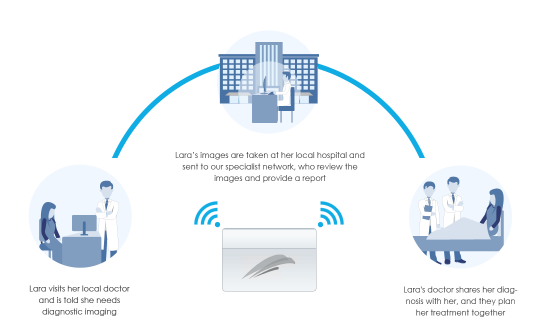
Amidst a medical crisis, every passing second signifies the loss of precious lives. Developing countries are grappling with severe healthcare crises, lacking access to cutting-edge medical equipment, personnel, and professional expertise. AlemHealth, a remote diagnostic healthcare service provider based in Dubai, is striving to improve this situation. AlemHealth aims to address this challenge through machine learning.
AlemHealth is currently collecting CT data from Nigeria and distributing the scans to radiologists around the world. The company charges $1 per scan and is simultaneously expanding its own database. AlemHealth’s mission is to provide diagnostic services to frontline healthcare workers globally. Aschkan Abdul Malek, Co-founder and CEO of AlemHealth, stated, “Computed tomography images, X-rays, and clinical data are critical foundations for patient treatment. We enable physicians everywhere to access the specific information they require.”
AlemHealth does not operate its own clinics; instead, it has built a global network of radiologists who interpret X-ray, magnetic resonance imaging (MRI), and computed tomography (CT) scan data, as well as specialists in fields such as mammography. In addition to digital imaging, pathology, and laboratory services, AlemHealth provides ultrasound and women’s health services to women in remote areas who are in urgent need of care, and plans to expand the reach of its AlemBox to regions including the Middle East, Sub-Saharan Africa, and Southeast Asia in the future.
11.Clipboard Health

This is a company dedicated to helping nurses find the best jobs, established on January 29, 2017. Its partner enterprises include well-known hospitals and medical companies such as MD Anderson and Harris Health Systems, as well as universities. It provides free job information for nurses, including positions, training hours, nurse-to-patient ratios, hourly wages, experience requirements, etc. The operation is extremely simple; users can search by selecting departments and locations. The company can also better understand users through web cookies and browsing history, tailoring more personalized job-seeking solutions for them.
12.Simple Habit

Data shows that Americans spent $1 billion on meditation in 2015, a figure that rose to $2 billion in 2016. This trend spurred the emergence of Simple Habit. Yunha Kim, the founder of Simple Habit, observed that most meditation apps merely offered a limited selection of guided sessions or instructors. Consequently, she left Stanford Graduate School of Business to establish Simple Habit, an app featuring 60 instructors and 1,000 topics.
In this way, users can leverage specially designed content to aid sleep, alleviate stress, or prepare for public speaking. Since its launch six months ago, its recurring revenue has grown to $600,000 annually. Yoga evolved from a niche activity into a massive commercial industry within just a few years, and meditation is now following the same trajectory.
13.Kangpe

The challenges of difficult and expensive access to medical care have placed health insurance beyond the affordability of most people in Africa. Kangpe integrates telemedicine with health insurance, making coverage more affordable. If users suspect they are ill, they can consult doctors through the Kangpe app. As a result, 70% of individuals ultimately do not need to visit hospitals, and 30% of medical services are covered by health insurance.
Kangpe has already implemented a telemedicine program and is building an interactive network with local clinics. As large insurance companies have been slow to adapt to telemedicine, Kangpe is well-positioned to capture significant market share in Africa’s $5 billion annual health insurance market, with the capacity to serve a market that could grow to $20 billion.
14.DELEE

Cancer is one of the leading causes of death in the United States. DELEE aims to combat cancer through a blood-testing device capable of isolating tumor cells. This patent-pending device seeks to enable personalized cancer treatment via a novel approach. The founding team of DELEE hails from Stanford University and the Rochester Institute of Technology, bringing extensive experience in biomedical engineering. The company has already conducted a successful clinical trial, in which tumor cells were successfully isolated in 13 out of 15 participants.
15.Indee
Indee offers a novel approach to editing cell genomes using CRISPR. While current gene-editing methods rely on viral vectors or electroporation, Indee employs microturbulence to deliver molecules into cells. The company is currently targeting a $1.5 billion immunotherapy market, which is projected to expand to $9 billion as the market matures.
16.InnaMed

One in four patients discharged after heart failure treatment is readmitted within 30 days. This solution helps physicians monitor patients’ health status by connecting to blood testing devices and providing precise data, significantly reducing hospital readmission rates and avoiding unnecessary healthcare costs.
VCBeat has learned that the company has successfully secured hundreds of thousands in funding, with investor meetings fully booked for the coming weeks. Dozens of institutional and individual investors have expressed interest in investing. By automating and expanding hospital practice experiences, the company aims to enter a market valued at $17 billion.
17.DocTalk

In India, patients cannot quickly get answers to their questions because doctors do not want to respond without being paid. DocTalk provides a way for doctors to earn money by answering these questions and charges 50% of all their income as a service fee. Currently, the company can collect $720 per doctor each month, but the cost of acquiring these doctor users is only $40.