

Huiying Medical Imaging Files for IPO: Empowering Primary Healthcare with AI-Driven Radiology Solutions
On March 25, VCBeat attended the “Smart Future: Frontier Summit on Medical Artificial Intelligence,” hosted by Huiyi Huiying, an intelligent medical imaging platform, and co-hosted by Intel, China Telecom, BlueRun Ventures, and others.
Distinguished guests attending the summit included Zhao Zilin, President of the China Association of Medical Equipment and former Director of the Department of Planning and Finance under the Ministry of Health; Li Yadong, General Manager of Intel’s Healthcare and Life Sciences Division for Asia-Pacific; Chai Xiangfei and Guo Na, Founders of Huiyi Huiying; Chen Weiguang, Partner at BlueRun Ventures; Xing Lei, Tenured Professor at the Stanford Center for Medical Physics; Zhang Qin, Academician of the International Academy of Nuclear Energy; Wang Xi, Director of the Big Data Center at Tsinghua University’s Strait Research Institute; Heng Fanxiu, Head of the Information Department at Peking University Cancer Hospital; and Wang Xinjun, Party Secretary of the Fifth Affiliated Hospital of Zhengzhou University. These esteemed participants gathered to jointly explore the integration methods and pathways for cutting-edge artificial intelligence technologies within the healthcare industry.
From its founding by two venture capitalists to its current presence in over 400 hospitals, Huiyi Huiying has been dedicated to unlocking the value of medical imaging data. By integrating artificial intelligence, cloud computing, and big data processing, the company has built an intelligent medical imaging platform and a tumor radiotherapy platform. It has developed an AI-powered intelligent imaging screening system, a missed-diagnosis prevention system, and AI-assisted diagnosis and treatment systems that deeply apply imaging technologies to specific diseases such as cancer and cardiovascular conditions. Clearly, Huiyi Huiying is playing a long game.
According to reporters, Chai Xiangfei, founder of Huiyi Huiying, studied under Professor Xing Lei, the chief expert in medical physics at Stanford University. Professor Xing has made numerous breakthrough contributions in the fields of radiotherapy planning and image recognition. During this period, Professor Xing led Chai Xiangfei and the development team in building an imaging cloud platform and a radiotherapy cloud platform for remote collaboration and big data analytics. Furthermore, Chai Xiangfei possesses R&D experience in automatic segmentation and registration of brain MRI, as well as image-guided adaptive radiotherapy systems, and has conducted extensive research on cutting-edge image recognition technologies based on neural network deep learning methods.
Chen Weiguang, a partner at BlueRun Ventures, told the reporter: “In investing in Huiyi Huiying, beyond recognizing its potential to be the first to achieve breakthroughs in medical imaging within the business models of medical big data and artificial intelligence, our decision was primarily based on our confidence in the company’s two founders.”
Aging Population and Chronic Disease Challenges: New Technologies and Platforms Are Needed for Medical Big Data Processing
Since the establishment of the modern medical system in the 19th century, medicine has entered a fast lane of development. The growth of the healthcare industry has always been closely intertwined with advancements in technology and cognitive understanding, never experiencing decline. Every revolutionary breakthrough in foundational technology has led to the reallocation of essential resources, reshaped the doctor-patient relationship, and improved efficiency. Clearly, artificial intelligence holds immense potential in this regard.
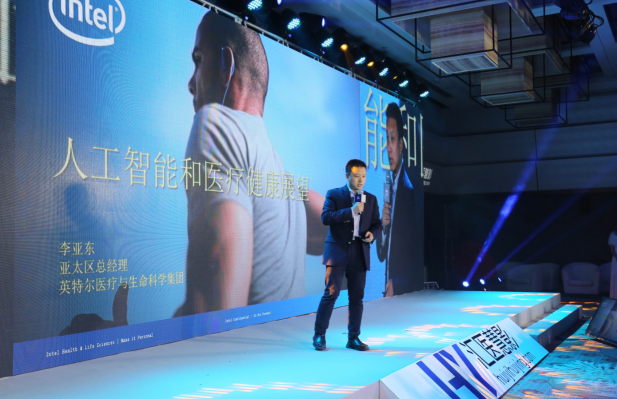
Li Yadong, General Manager of Intel’s Healthcare and Life Sciences Group for the Asia-Pacific region, pointed out that against the backdrop of a sharp rise in demand for healthcare services coupled with severe supply shortages, prominent doctor-patient conflicts, poor working conditions for physicians, declining willingness to practice medicine, and significant waste of medical resources, the integration of technologies such as artificial intelligence into the healthcare industry is being driven forward to reconstruct the supply chain of medical resources.
This is primarily attributable to two factors. First, the accelerating pace of population aging. Globally, individuals aged 65 and above account for 30% of healthcare resource utilization, while those aged 55 and above consume more than 50%. Such demographic shifts have driven a sharp rise in demand for artificial intelligence. In China, specifically, the proportion of the population aged 65 and older was projected to reach 20% by 2020. Second, chronic diseases necessitate a reallocation of healthcare resources. China faces one of the most severe chronic disease burdens worldwide. Addressing the rapid growth of the chronic disease population in China constitutes a major challenge both currently and in the future.
Li Yadong believes that technological innovation is the only way out to solve problems. “Innovation is needed to address these inherent existing stock issues and the new incremental problems that are intensifying. Simply following traditional methods of the past, such as merely increasing supply or restricting demand to solve problems, is not viable.” Artificial intelligence has opened a window for the healthcare industry.
According to statistical data, more than 30 listed companies have currently established a presence in the artificial intelligence (AI) industry chain, primarily covering core software algorithm systems, image and speech recognition technologies, computer vision and sensors, as well as AI applications in finance, security, and other sectors.
It is understood that each internet user generates 1.5 GB of data traffic per day, while a smart hospital generates 3,000 GB. This massive data deluge has expanded the application scope of artificial intelligence (AI), which has long remained in the exploratory laboratory phase, necessitating the full utilization of AI technologies to better mine and analyze the data collected in the healthcare sector.
“Intel has always advocated for the inclusive adoption of artificial intelligence, which has been our longstanding vision. Building on this foundation, Intel has introduced a series of solutions. First and foremost, as a brand provider, we do not handle data; data belongs to its users, not to Intel, with clear ownership rights. Our focus is on delivering the best computing platforms to maximize algorithm optimization. Therefore, in addition to providing top-tier hardware and multi-threaded platforms, Intel has developed specific SDKs tailored for big data applications, ensuring they achieve maximum convenience and efficiency on our platforms,” said Li Yadong.
Empowering Primary Care Physicians and Hospitals: The Aspiration of Artificial Intelligence
Of course, there are still some challenges that need to be addressed regarding how artificial intelligence can better serve healthcare. For example, AI must be integrated with clinical data, and the most important aspect of clinical data is improving its quality. The data needs to be structured, and having a larger volume of data is not necessarily better—it depends on the specific conditions of patients and the quality of the data.
The concept of artificial intelligence was proposed as early as the 1950s. It was not until the advent of deep learning technology, which resolved many previously intractable problems, that medical AI reached a new peak. In China, medical AI still faces a most pressing practical challenge: how to serve the vast grassroots healthcare sector.
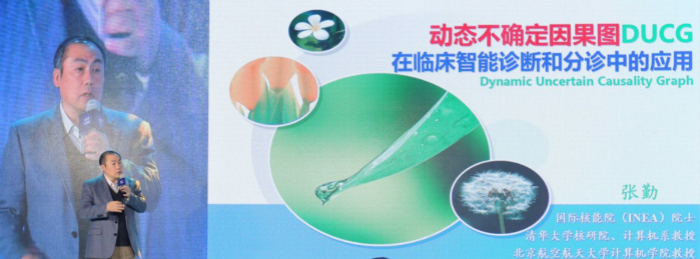
Addressing the current dilemma in medical resource allocation and the opportunities for AI application, Zhang Qin, an Academician of the International Nuclear Energy Academy (INEA) and a Professor at both the Institute of Nuclear and New Energy Technology and the Department of Computer Science and Technology at Tsinghua University, pointed out that the key issue lies in human resources: while primary-care hospitals have many vacant beds, tertiary Grade-A hospitals face severe bed shortages. “Although primary healthcare institutions are equipped with advanced facilities, these resources remain underutilized due to inaccurate diagnoses.” In 2015, the early framework of healthcare reform was introduced, advocating for initial consultations at the primary level, two-way referrals, differentiated management of acute and chronic conditions, and coordinated care across different tiers of the healthcare system. The current goal is to achieve a 90% treatment rate within county-level jurisdictions, ensuring that major diseases can be managed without patients needing to leave their counties. However, achieving this target remains highly challenging, primarily because high-quality physicians are reluctant to work at the grassroots level.
If doctors from tertiary hospitals conduct outpatient visits, patients still cannot receive care at these institutions because physicians’ time is limited. As for the expectation that telemedicine will address regional disparities in healthcare access, it likewise consumes physicians’ time. Therefore, the core issue is an insufficient supply of high-quality physicians.
Professor Zhang Qin pointed out that the siphoning effect of large hospitals is a natural and inevitable phenomenon. The core solution to the shortage of primary healthcare resources lies in “empowering” primary medical institutions by leveraging artificial intelligence to equip primary care physicians with “academician-level diagnostic capabilities.” Embedding an academician’s clinical expertise into a laptop and bringing it to primary care hospitals represents both the ultimate goal of our AI endeavors and the practical problem we aim to solve.
Medical Imaging Is Poised to Lead the Breakthrough in the Commercial Deployment of AI
# Why Is Artificial Intelligence Considered a Promising Direction in Medical Imaging?Chai Xiangfei stated that, first, hospitals possess an extensive volume of medical imaging data, which constitutes the largest proportion of healthcare data, and these data are standardized. From a machine perspective, such data are readily interpretable by algorithms. The role of artificial intelligence in assisting diagnosis is unquestionable and represents an inevitable future direction.
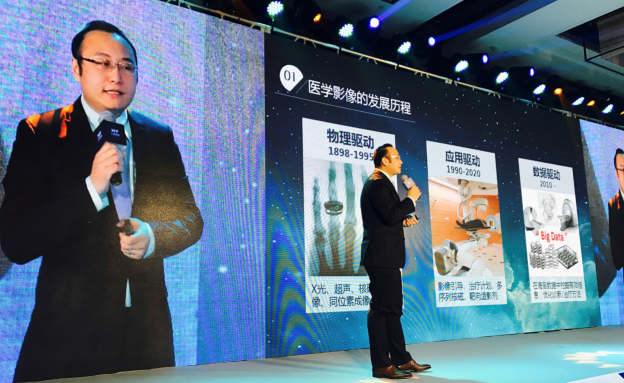
Historically, the development of medical imaging has spanned over a century and can be broadly divided into three stages: physics-driven, application-driven, and data-driven. The physics-driven phase encompassed modalities ranging from X-ray, ultrasound, and Hertzian waves to thermal imaging and isotope imaging. Beginning in the 1990s, the field entered the application-driven era, where imaging was no longer used solely for diagnosis but also for applications such as radiotherapy guidance and surgical planning. Building on the foundations laid by these two preceding stages, a vast amount of empirical data has been accumulated. Leveraging AI technologies to re-mine this accumulated big data has clearly become the most significant growth driver at present.
Chai Xiangfei, CEO of Huiyi Huiying, stated at the conference: “Unlike ‘Internet Plus,’ AI’s transformation of the healthcare sector is disruptive. It is not merely a technological innovation but also drives change in productivity within the traditional healthcare industry. In addition to improving physicians’ work efficiency, AI serves as an auxiliary tool that significantly enhances diagnostic efficiency and accuracy, making precision medicine possible. This will create a substantial incremental market, potentially giving rise to numerous unicorn companies. The market potential for AI-enabled medical imaging diagnosis is immense.”
This also aligns with our expectations: within the broader fields of medical artificial intelligence and medical big data, medical imaging will inevitably take the lead. Indeed, medical imaging has become one of the most prominent areas for AI applications in healthcare. Since 2016, nearly 20 companies specializing in “AI + medical imaging” have secured investment.
According to Chai Xiangfei, medical imaging is characterized by the “4Vs” (Volume, Variety, Velocity, and Veracity). Huiyi Huiying aims to pool physicians’ expertise and aggregate medical imaging data. He believes that “medical imaging is inherently suited for Internet+, big data, and artificial intelligence.” In terms of volume, more than 80% of healthcare data originates from medical imaging. Variety refers to the diverse types of data, including multimodal imaging, pathology, laboratory tests, genomics, and follow-up information. High-performance computing–based multilayer neural network models can be applied to imaging data, as well as to the digitization of images and the structuring of post-report data, to ensure that the data are as authentic and usable as possible.
“We have found in practice that the accumulation of high-quality, large-scale data; a high-performance computing environment; and optimized deep learning methods—when these three resources are combined, they enable the construction of state models that continuously improve. This is precisely the allure of artificial intelligence. Leveraging the interplay among these three elements significantly enhances the efficiency of medical diagnosis and treatment, thereby achieving precision medicine,” said Chai Xiangfei. Huiyi Huiying is currently using hierarchical networks to simulate the human brain’s process of image recognition. Since the human brain processes images through five distinct aspects, such as color, shape, and abstract identification, the algorithms simulating this cognitive process vary across different regions.
VCBeat has learned that although Huiyi Huiying has been in operation for just over two years, it already serves more than 400 hospitals, including 20 Grade-A tertiary hospitals, and maintains research collaborations with eight such institutions. Additionally, Huiyi Huiying and its partners have jointly secured funding for two projects under the National Natural Science Foundation of China, two provincial-level natural science foundations, and two key special projects on novel digital medical instruments from the Ministry of Science and Technology.
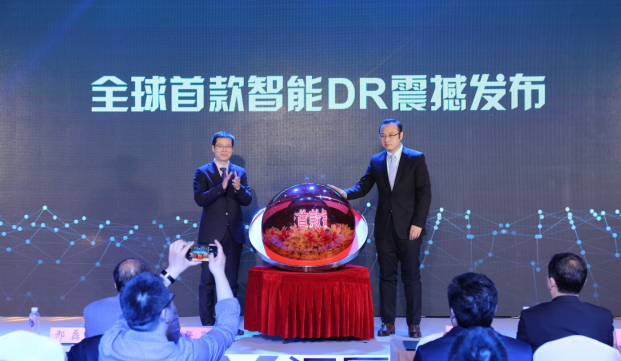
Furthermore, at this summit, Huiyi Huiying joined forces with Qixi Medical to launch the world’s first intelligent DR system. Regarding this collaboration, Huang Huaping, General Manager of Qixi Medical, stated, “The intelligent DR jointly developed by Huiyi Huiying and Qixi Medical aims to address the primary challenge for artificial intelligence: how to obtain a diagnostically acceptable image under conditions of lower radiation dose and optimized parameters. Once a qualified image is acquired, there is significant potential for medical AI to assist physicians in making better judgments and diagnoses.”