

Former Illumina Scientist Launches Genomic Data Access Platform Repositive, Partners with AstraZeneca and Files IPO
Imagine being able to search and access global genomic data on a single platform—could this help researchers easily overcome data retrieval challenges, thereby accelerating the overall pace of genomics research?
Repositive, based in Cambridge, UK, is one such free online platform. Repositive aggregates genomic data resources from around the world, enabling users to search and access these data assets through its platform.
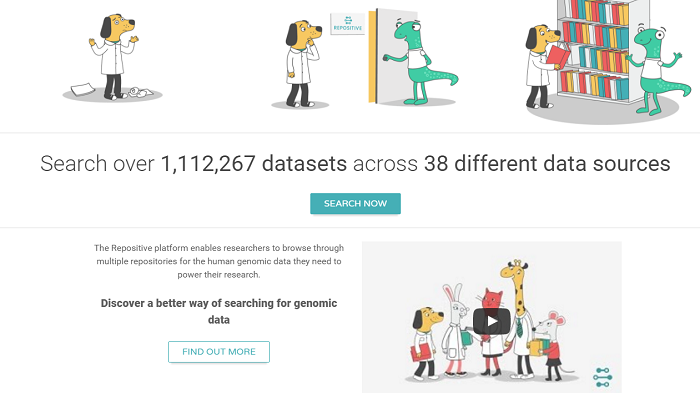
Such a user-friendly and easy-to-operate platform can help researchers more effectively locate reliable data, not only saving them considerable time in data mining but also maximizing the value of these data.
Repositive’s founder and CEO, Fiona Nielsen, a graduate of the University of Southern Denmark and former bioinformatics scientist at Illumina, believes that the success of precision medicine ultimately hinges on the value of data. Therefore, she contends that Repositive’s data mining efforts have the potential to transform the current landscape of genomics research.
Challenge: Data Access Is the Primary Bottleneck
In the biopharmaceutical industry, assessing drug risks and development value through genomics data is an essential step for both large enterprises and small companies. In this process, genomics data serves as the foundation, necessitating the aggregation of extensive genomics datasets for statistical analysis. For these companies, securing timely and effective data resources is of critical importance.
However, for genomics researchers, locating and accessing these data remains a significant challenge. While countless genomics studies have been conducted worldwide, accumulating rich data resources on one hand, this abundance also poses challenges for information retrieval on the other: How can these resources be accessed? And once access is obtained, how can researchers efficiently locate the specific information they need from the vast sea of data?
Undoubtedly, under this model, information retrieval is a highly cumbersome and time-consuming task.
Nielsen has engaged in various academic and commercial research endeavors, during which she encountered such frustrating experiences on numerous occasions. After several years of research, she realized that the bottleneck in the clinical interpretation of genomics lay not in analytical algorithms or instrumentation, but rather in the lack of a truly accurate and reliable data resource and retrieval solution.

Repositive Founder and CEO Fiona Nielsen
In December 2013, Nielsen made the decision to resign from Illumina and established the charitable organization DNAdigest. Reproductive is a product of DNAdigest, aiming to accelerate genomics research by helping researchers easily locate and access genomic data.
“I am not a successful researcher,” Nielsen admitted. “But I think I can do something else to help capable researchers perform better.”
Solution: Data Resource Integration
Many people wonder how research institutions accessed resources before the establishment of such a data resource integration platform. In reality, scientific research is not as glamorous as it appears in movies; it mostly consists of day-to-day experiments, documentation, and repetition. Data search and access are particularly tedious and cumbersome chores.
In fact, the data standards currently vary across different providers. To utilize these data, the first step is resource integration to unify these disparate standards, which entails a substantial workload. Furthermore, given the vast number of data repositories worldwide, conducting individual searches is extremely cumbersome. Even scientists from leading research institutions such as HGNC, OMIM, and UniProt would likely find it daunting to comprehensively mine all available databases.
This has led to two phenomena: first, data search and access consume a significant amount of researchers' time and energy; second, although information is ubiquitous, much of it remains underutilized.
Repositive can resolve these issues once and for all. Through Repositive, users gain access to multiple renowned genetic databases, including globally recognized resources such as the 1000 Genomes Project and the Genome Expression Atlas; lesser-known data sources like the Estonian Biocentre and GenomeAsia 100K; and even corporate datasets such as InSilico DB and Xpressomics.
Currently, the Reprositive platform has aggregated over one million datasets from around the world, with data volume expanding every month. Nielsen revealed that their goal is not limited to public data resources; they also aim to incorporate data from large databases, research institutions, companies, and public welfare projects worldwide.
It is understood that Repositive has partnered with pharmaceutical giants and biotech companies such as AstraZeneca, Merck, and Weiyin Bio to jointly establish a collaborative database supporting oncology research. The purpose of this collaboration is to provide a gateway for data discovery and access in oncology research, ranging from patient-derived xenograft (PDX) models to specific contextual studies.
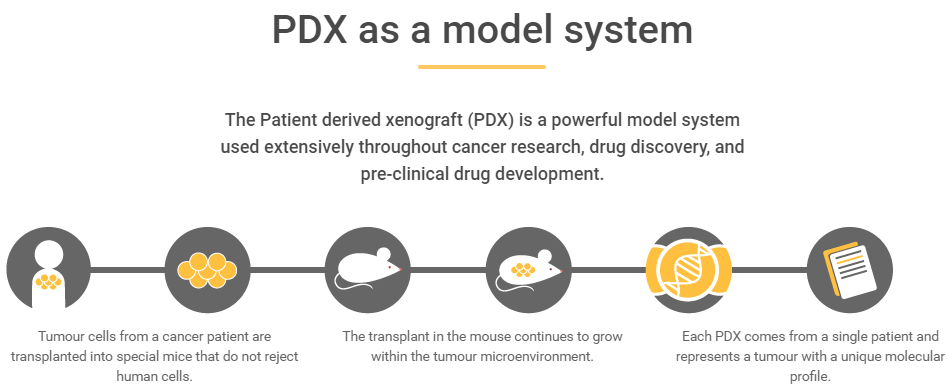
(PDX Model: Patient-Derived Xenograft is a powerful cancer research model widely used in drug discovery and clinical drug development)
Precision Medicine Is the Biggest Beneficiary
Through such a data platform, the field of precision medicine stands to benefit the most. Precision medicine seeks to identify suitable treatments based on an individual’s genetic background, with a fundamental understanding of diseases at the genetic level serving as its foundation. Achieving this genetic-level understanding of diseases is impossible without robust and reliable genomic data resources.
In addition to benefiting genomics researchers worldwide, Reproductive will also bring benefits to data providers. Through Reproductive, they can expand the influence of their data resources while gaining access to more resources to advance scientific research.
While safeguarding the rights and interests of patients and data donors, Reposition aims to provide data access solutions to a broader range of researchers, thereby maximizing the value of this information.
Next, Repositive also aims to provide researchers with more data featuring demographic diversity to ensure the accuracy and comprehensiveness of research findings. As of 2016, Repositive had secured a total of $12 million in funding.