

Kangkang Blood Pressure Leverages Million-Patient Chronic Disease Big Data to Advance Healthy Guiyang Initiative under the 13th Five-Year Plan Key Project
VCBeat News: On March 30, the “Launch Ceremony for Building a Multi-Dimensional Prevention and Control System for Chronic Diseases, Creating a Healthy Guiyang, and Implementing the National 13th Five-Year Key R&D Program Special Project,” hosted by the Chinese Hypertension League and the Guiyang Municipal Health and Family Planning Commission, and organized by the National 13th Five-Year Key Special Project Research Group and Guiyang Kangkang Internet Hospital for Chronic Diseases, was held at the Guiyang Conference Center. Liu Lisheng, Former President of the World Hypertension League and Lifetime Honorary Chairman of the Chinese Hypertension League; Kong Lingzhi, Former Deputy Director of the Bureau of Disease Control and Prevention under the National Health and Family Planning Commission and Vice President of the Chinese Preventive Medicine Association; and Liu Yuhai, Deputy Mayor of the Guiyang Municipal People’s Government, attended the event and delivered speeches.
This project will develop smart hardware with unified standards and a “Chronic Disease Management Cloud Platform” to implement a blood pressure management model combining “remote monitoring” with “new media-based patient education” for the enrolled population, thereby achieving the goal of “comprehensive screening and whole-process management” within the jurisdiction. Compared with traditional models, this approach will improve and enhance awareness rates, treatment rates, control target achievement rates, medication adherence, patient education levels, and medical cost containment in blood pressure management.
The results of this study will leverage summarized key technologies and solutions, utilizing internet-enabled devices and technological infrastructure to accumulate big data for the precise management of hypertensive patients and the enhancement of doctor-patient connectivity. By improving the efficiency of remote blood pressure management through informatization and developing artificial intelligence technologies based on big data, the study aims to increase the control rate of risk factors, reduce morbidity and mortality, and obtain evidence-based medical evidence for the primary prevention of cardiovascular diseases through economic value assessment.
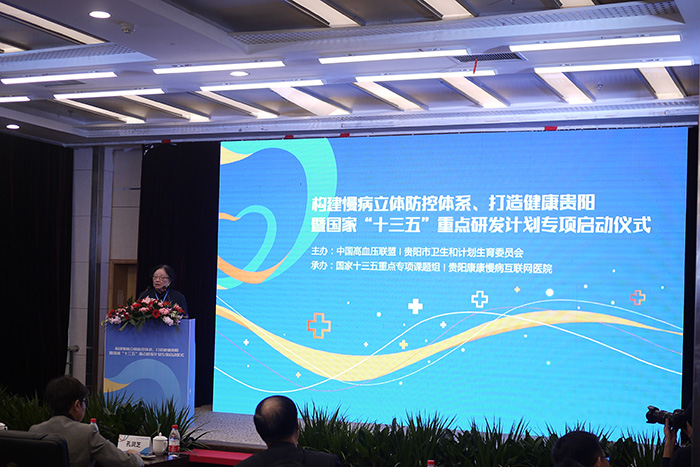
91-year-old Liu Lisheng, Former President of the World Hypertension League and Lifetime Honorary Chairman of the Chinese Hypertension League, Delivers a Speech
Distinguished experts Liu Lisheng and Kong Lingzhi delivered keynote addresses on “Strategies for the Prevention and Control of Cardiovascular Diseases in the Context of Healthy China.” In his opening remarks, Deputy Mayor Liu Yuhai pointed out that Guiyang City will build upon the comprehensive rollout of family doctor contract services and leverage the National 13th Five-Year Plan’s Major Special Project on Chronic Disease Management. The city will prioritize the promotion of personalized contract service projects targeted at key populations with chronic diseases, aiming to establish a grassroots chronic disease prevention and control system characterized by “comprehensive screening and whole-process management” to safeguard citizens’ health.
“Million Hypertension Dual Management Action Plan” Launches
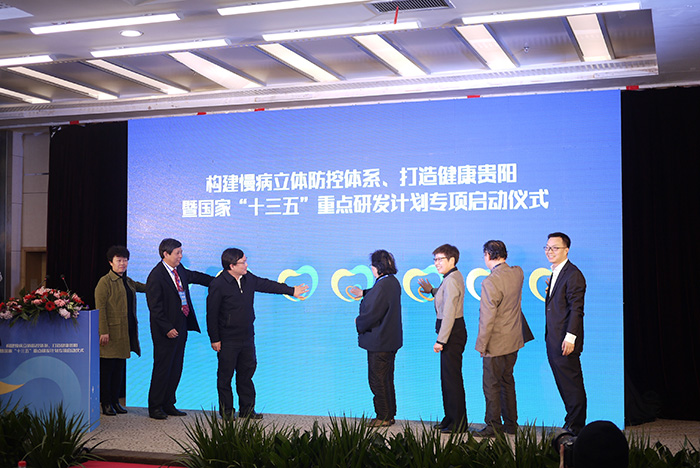
At the launch ceremony, Liu Yuhai, Deputy Mayor of Guiyang; Kong Lingzhi, former Deputy Director of the Bureau of Disease Control and Prevention under the National Health and Family Planning Commission; Liu Lisheng, President of the World Hypertension League; Chen Fei, Director of the Guiyang Municipal Health and Family Planning Commission; Luo Xiaogang, Chairman of the Guizhou Provincial Big Health and Pharmaceutical Industry Alliance; Zhou Xianliang, Principal Investigator of a Major Project under the National 13th Five-Year Plan; and Zeng Mingfa, Chairman of Kangkang Blood Pressure, a key undertaking unit for the National 13th Five-Year Plan projects, attended the event and jointly launched the “Guiyang One Million Hypertension Comprehensive Management Action Plan.” The initiation of this plan signals that Guiyang will establish a multidimensional system for the prevention, control, management, and treatment of hypertension as a chronic disease, aiming to comprehensively enhance the capacity for chronic disease management at the grassroots level in Guiyang. Based on this all-encompassing, full-cycle support system, one million hypertensive patients with chronic conditions in Guiyang will benefit.
Pioneering the Integration Model of “Internet Hospitals and Primary Care Institutions”
The Shuangquan Initiative integrates the Guiyang Kangkang Internet Hospital for Chronic Diseases with traditional primary healthcare institutions. Leveraging the Guiyang Population Health Information Cloud Platform, it utilizes big data in healthcare to define precise pathways for chronic disease management and establishes an innovative model for chronic disease management under big data conditions. This initiative pioneeringly achieves customized solutions for the precise screening of hypertensive patients based on their individualized needs, including 5-minute health risk assessments, precise health risk screening, 24-hour ambulatory blood pressure monitoring, and complication risk detection.
According to Zhou Heng, Chairman of the Big Data Committee for the National 13th Five-Year Plan Key Special Project on Chronic Diseases and head of the research team, “Family contract doctors can integrate wearable devices, the ‘1+4’ contracted service model, remote risk monitoring and early warning systems, and comprehensive health intervention management. By leveraging users’ blood pressure monitoring data, they provide online services such as follow-up consultations and treatment plan adjustments to help patients manage their blood pressure more effectively and scientifically. Furthermore, blockchain technology is used to establish a blockchain-based medical consortium linking community hospitals, Guiyang Kangkang Internet Hospital for Chronic Diseases, and Guiyang Baiyun Cardiovascular Hospital. This ultimately constructs a multidimensional system for the ‘prevention, control, management, and treatment’ of chronic diseases in Guiyang City, comprehensively enhancing primary care capacity for chronic disease management through big data analytics.”
According to Pan Ge, a representative of the “Shuangquan Initiative” project team, the initiative has carried out pilot programs in eight districts and counties and at 26 primary healthcare institutions. To date, it has enrolled 6,145 patients under contract and uploaded more than 20,000 data entries. It is expected that by the end of May, patient enrollment will reach 30,000, with 150,000 effective patient interactions achieved.
Dozens of Experts Offer Advice and Suggestions for Healthy Guiyang
Dozens of top-tier experts, including Wu Zhaosu, Chairman of the Chinese Hypertension League; Zhou Xianliang, Professor at Fuwai Hospital and National Center for Cardiovascular Diseases, and Principal Investigator of a Key Special Project under the National 13th Five-Year Plan for Research and Development; Zhang Yuqing, Associate Professor at Fuwai Hospital, Chinese Academy of Medical Sciences, and Secretary-General of the Beijing Hypertension Prevention and Control Association; Professor Hu Aihua from the Chinese Hypertension League; and Zhu Dingliang, Director of the Community Prevention and Control Center at Shanghai Institute of Hypertension and Vice Chairman of the Chinese Hypertension League, attended the panel discussion titled “Building a Multi-Dimensional Prevention and Control System for Chronic Diseases to Create a Healthy Guiyang.” The participating experts shared insights on the objectives, significance, and methodologies of key national research initiatives on chronic diseases under the 13th Five-Year Plan, as well as on leveraging big data to promote comprehensive health and support Guiyang in establishing a chronic disease prevention and control system, thereby contributing to the development of a multi-dimensional prevention and control framework for chronic diseases and the creation of a Healthy Guiyang.
Concurrently, a training and exchange meeting on “Building a Multi-tiered Prevention and Control System for Chronic Diseases and the Pilot Program of the ‘Shuangquan Plan’” was held. Attendees included Professor Pan Changyu, Chief Physician and Doctoral Supervisor at the Chinese PLA General Hospital; Wang Wen, Expert Committee Member of the National Center for Cardiovascular Diseases and Vice Chairman and Secretary-General of the Chinese Hypertension League; Huang Jianfeng, Executive Director of the Functional Testing Center and Director of the Education Department at Fuwai Hospital, Chinese Academy of Medical Sciences; Pan Ge, representative of the Shuangquan Plan Project Team; and representatives from multiple pilot institutions of the Shuangquan Plan. The participating experts shared insights on topics such as research methodologies and implementation plans for key national chronic disease projects under the 13th Five-Year Plan, the significance of ambulatory blood pressure monitoring and its promotion at the primary care level, and practical experiences from the Shuangquan Plan pilots, offering recommendations to advance Healthy Guiyang.
Kangkang Blood Pressure Explains the “Dual-Complete Plan” in Detail
After the conference, Zeng Mingfa, Chairman of Beijing Kangkang Shengshi Information Technology Co., Ltd., accepted an exclusive interview with VCBeat, providing a detailed introduction to the “National Key Special Project of the 13th Five-Year Plan” and the “Shuangquan Plan.”
The goal of Kangkang Chronic Disease Internet Hospital is to establish a “hospital without walls” and, on this basis, build the Kangkang Chronic Disease Management Cloud Platform. As a key support platform for the 13th Five-Year Plan special projects, the platform leverages wearable ambulatory blood pressure monitoring devices to transform users’ monitoring data from single-point measurements into continuous data streams for statistical analysis. By integrating cloud-based artificial intelligence to analyze data trends and match them with extensive relevant features, the platform identifies patterns in users’ physiological fluctuations. Ultimately, based on these data, it achieves a multidimensional prevention and control system for chronic diseases through retrospective analytical studies and prospective diagnostic and therapeutic exploration.
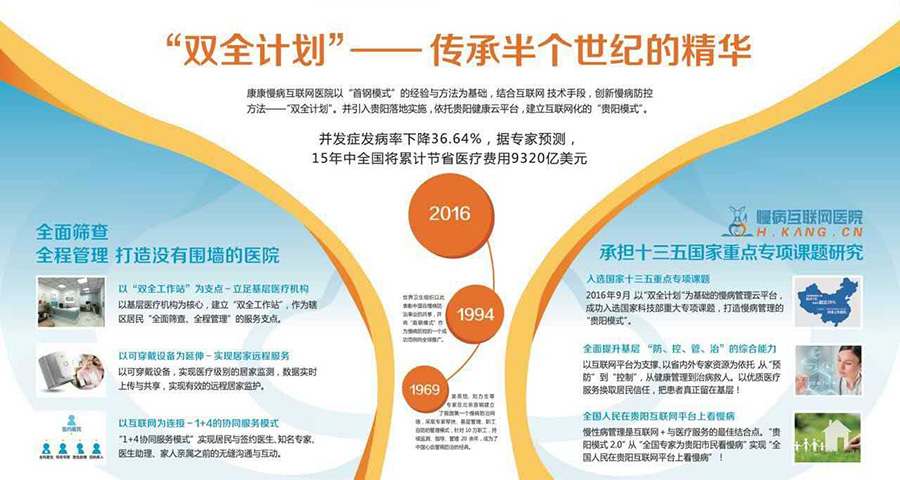
The theme of this project is the “Double-Comprehensive Initiative,” which encompasses comprehensive screening and whole-course management, representing a system and methodology for the prevention and control of chronic diseases, exemplified by hypertension and diabetes. Building upon the experience of the “Shougang Model”—China’s first chronic disease prevention and control network established in 1969 by experts such as Wu Yingkai and Liu Lisheng at Beijing Shougang—the “Double-Comprehensive Initiative” has been optimized through new technological means in the internet era.
The “Shuangquan Initiative” was ultimately implemented in Guiyang with the support of the Guiyang Municipal Government and the Guiyang Health and Family Planning Commission. Currently, Kangkang Blood Pressure has launched pilot programs with 26 primary healthcare institutions in Guiyang. It aims to manage hypertension among 30,000 to 50,000 patients in the first half of 2017, reaching a scale of 100,000 patients by the end of the year.
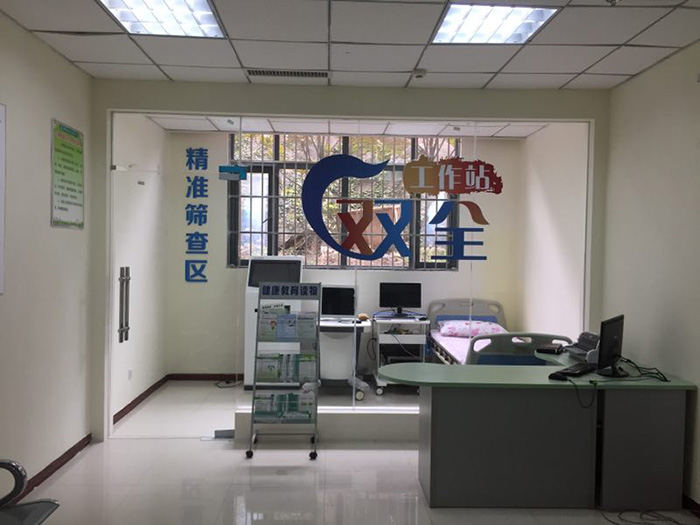
The “Shuangquan Initiative” integrates Guiyang Kangkang Internet Hospital for Chronic Diseases with traditional primary healthcare institutions, establishing Shuangquan Workstations centered on primary care facilities. As physical service outlets for chronic disease prevention and control management, these workstations comprise two components: a Professional Precision Screening Center and an Expert Remote Consultation Center. Leveraging the ambulatory blood pressure monitoring solutions provided by Kangkang Blood Pressure, family doctors deliver remote home-based chronic disease management services to enrolled patients within their jurisdiction, significantly enhancing management efficiency. Enrolled residents can achieve medical-grade home monitoring through smart hardware devices and benefit from a “1+4” collaborative care model involving their contracted physician, renowned specialists, physician assistants, and family members.
The Shuangquan Workstation connects with top-tier expert service resources across China. It not only provides remote management tools for family doctors but also offers a learning platform for them. Its Expert Teleconsultation Center links specialists from major Grade A tertiary hospitals, such as Fuwai Hospital, Anzhen Hospital, and the 301 Hospital (PLA General Hospital), to provide one-on-one online guidance. Additionally, it invites experts to deliver lectures to help enhance the professional competence of primary care physicians.
“The implementation of the ‘Shuangquan Plan’ will ultimately achieve effective chronic disease management, extend patients’ healthy life expectancy, and simultaneously control health insurance expenditures,” said Zeng Mingfa.