

Carbon Health Secures $6.5M Seed Funding to Build Digital Patient-Physician Communication Platform
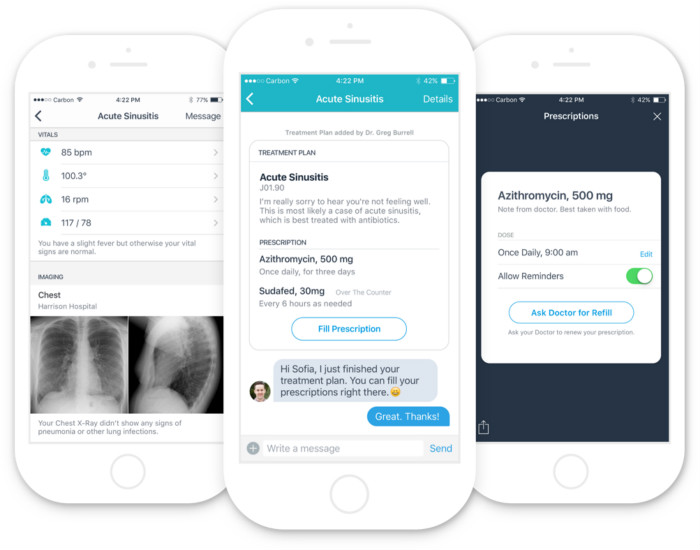
VCBeat has learned that Carbon Health recently secured $6.5 million in seed funding, led by Builders VC, with participation from six other institutions including Javelin Venture Partners, Sigma Investments, and Bullpen Capital. Headquartered in San Francisco and founded in 2015, the company will use the proceeds to further develop its digital platform and deepen collaboration with its provider network in Northern California.
Serving Primary Care Clinics: Building a Nursing Coordination Platform
Carbon Health aims to pursue multiple initiatives. First, it serves primary care clinics, but this primarily lays the foundation for its broader ambition: to become the largest virtual health system by providing all backend technology for healthcare services through network providers, payers, pharmacies, and laboratories. With a mobile-first approach, it will ultimately serve as a care coordination platform that fully safeguards network or payer information.
Small private clinics are the first customers Carbon Health is targeting, but its goal is to build a vast network across the entire healthcare system. The company’s platform integrates existing technologies and partnerships, with its primary revenue stream derived from billing for clinical services.
“Following our financing round, we are preparing to officially launch a service that has undergone internal testing with approximately 750 patients and several vendor partners,” said Eren Bali, CEO and founder of Carbon Health. “The stakes are very high. As we deploy the system across 20 to 30 clinics in our Northern California practices, we project that more than 100,000 patients will be using the system by the end of 2017.”
The application will connect patients covered by several major insurance plans—including UnitedHealthcare, Humana, Blue Cross Blue Shield, and Aetna, but excluding Medicaid—facilitating virtual visits with Carbon Health’s primary care physicians.
How exactly do users utilize the service? First, they must scan their insurance card via the user-facing app, complete the application form, and provide emergency contact information before selecting a physician. After the provider side presents a series of automated questions, a licensed physician will intervene in the treatment plan (which may sometimes include an in-person visit to a Carbon Health clinic in San Francisco).
Most of the work involves connecting patients with specialized care, followed by arranging subsequent laboratory tests and prescribing medications (Carbon Health enables these functions through partnerships with Quest Diagnostics, LabCorp, Surescripts, and the prescription delivery service ScriptDash). The company has not yet established partnerships with medical imaging companies or connected devices but plans to introduce these capabilities in the future.
Building a Professional Doctor-Patient Communication Platform in the Future
Improving patient care may be a substantial business, but the primary focus is on physicians. Through an open API toolkit spanning EHRs and specialist referrals to billing and e-prescribing, Carbon Health’s platform aims to create a hub where doctors and patients can find the resources they need.
“We hope to make it easier for doctors to collaborate with one another,” Bali said, “viewing this as an EHR transformation that replaces many of the standalone, fragmented software services that might otherwise be used.”
Primary care has long been the main focus for several startups in this sector, which aim to penetrate healthcare services by leveraging technology and integrated care models—examples include Iora Health, One Medical, and Forward, a company that recently opened clinics focused on AI and gadgets. However, Carbon Health has identified greater demand for medical assistance in specialty care and urgent medical services, making the expansion of its service network a key priority.
“We are reaching out to every small clinic that has not integrated such extensive technology into its services, resulting in inefficiencies,” said Dr. Greg Burrell, Medical Director and Founding Physician at Carbon Health. “They are patient-centric, and we can provide software to help them automate workflows and achieve interoperability.”