

How a Tiny Capsule Conquered the Global Stage: Anheng Medical and Chairman Ji Pengsong’s Journey of Innovation
By Cindy
Ji Pengsong has never denied his obsession with entrepreneurship. This seasoned entrepreneur, who has just passed the age of fifty and is imbued with a scientific spirit from head to toe, even describes his longing for entrepreneurship in extreme terms: “To die on the charge.”
Driven by this relentless determination, he led the Anhan Medical team through eight years of independent research and development. Leveraging multiple technical patents for features such as compact size, controllability, safety, precision, and variable focus, they successfully passed clinical validation for the capsule gastroscope. Today, it has sparked a “MADE IN CHINA” frenzy in the field of gastroenterology both in China and worldwide.
In September 2016, the internationally renowned academic journal Clinical Gastroenterology and Hepatology (CGH) officially published a report on the clinical research findings of Anhan’s NaviCam™ Magnetically Controlled Capsule Gastroscope. The article was subsequently reprinted by the Journal of Japan Gastroenterological Endoscopy Society, a prestigious industry publication in Japan. Professor Mototsugu Kato of Hakodate Hospital, National Hospital Organization, gave high praise to the technology, stating, “From the perspective of invasiveness, magnetically controlled capsule endoscopy holds greater significance as a screening method for gastric diseases.” Gaining recognition from Japan, the birthplace of digestive endoscopy, has not only bolstered Ji Pengsong’s optimism about market prospects but also instilled in him a deeper sense of pride as a Chinese national.

It is reported that Anhan’s capsule gastroscopy system currently has an annual production capacity of 2.1 million units, with an output value exceeding RMB 5 billion, and its capacity is increasing by 2 million units per year. The annual production capacity is expected to reach 3.1 million units in 2017. However, given the substantial unmet demand of 140 million people in China, Anhan still has a long way to go.
Dugu Qiubai's Small Capsule
AnHan Medical’s headquarters is located in Jinqiao, Shanghai. Although the company’s official working hours start at 9:00 a.m., Ji Pengsong was already busy at his desk before 8:30 a.m. Once the youngest associate professor at Tsinghua University, he now runs approximately 100 kilometers each month and jokes that he aims to “work for my own health for 80 years.”
Since its market launch in 2013, Anhan has been regarded as an “emerging force.” This high-tech enterprise has hosted visits from national leaders and was featured in reports on Xinwen Lianbo (CCTV’s flagship news program) as a representative of high-tech innovation serving public welfare. During the Two Sessions this March, deputies drew significant attention to this remarkable small capsule. In fact, the standard name for this device is the “Anhan Magnetically Controlled Capsule Endoscope,” a robotic system integrated with a cruise control mechanism that enables comprehensive examination of the entire digestive tract, including the esophagus, stomach, and small intestine. By swallowing a single capsule and lying flat for 20 minutes, medical personnel can remotely control its “free movement” within the stomach.
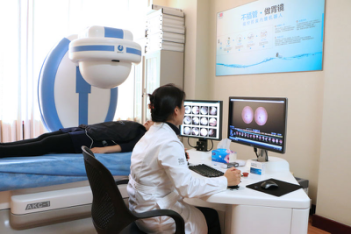
The world’s first capsule endoscope dates back to the 1980s, inspired by the remote-controlled camera devices used on Israeli Ministry of Defense smart missiles. In 2001, Given Imaging, an Israeli company, produced a capsule endoscope named M2A and pioneered its clinical use, generating significant global impact. Meanwhile, China also launched research and development of “capsule endoscopes” in 2001 and finalized the design of its first-generation product in June 2004.
Unlike previous capsule endoscopes for small bowel examination, which relied solely on gravity and intestinal peristalsis, the Anhan Capsule Gastroscope achieves movement with a diameter measured in millimeters and angular adjustments calculated in three-degree increments. Controlled by magnetic fields, it enables comprehensive, blind-spot-free examination within the gastric "empty cavity." This precise control fundamentally addresses the technical limitations of traditional capsule small bowel endoscopy—namely, its randomness and inability to pause—thereby facilitating accurate gastric examination.
“We currently have no competitors, because devices capable of examining the small intestine cannot examine the stomach,” said Ji Pengsong with full confidence. At the project’s inception, he and his team recognized that upper gastrointestinal cancers account for 30% of overall cancer incidence. To address the primary challenge, they shifted their focus upward to tackle gastric cancer, which has the highest incidence among gastrointestinal cancers. Therefore, a major reason for Anhan’s success to date lies in its precise identification of unmet clinical needs, avoiding mere technological bandwagoning, and instead forging a distinctive technological path. This robust technology includes the ability of the Anhan capsule gastroscope to achieve millimeter-level control in three-dimensional space under a weak magnetic field—a capability widely acknowledged within the industry as the most technically challenging and serving as the core technology that major international medical device companies seek to analyze and replicate.
In addition, the optical system design of capsule endoscopes presents another significant challenge. Achieving high-resolution, distortion-free images at both far and near distances within a confined space is considerably more difficult than with small bowel endoscopy. Regarding power management, although minimizing power consumption has always been a goal pursued by the microelectronics industry, Anhan ultimately sacrificed profits for safety considerations by opting for oxide-based batteries. These batteries are more costly, technically challenging to implement, and require extended activation times prior to use. Recognized internationally as providing a high level of safety for in-body applications, they also impose stricter requirements on the low-power design of the capsule.

Safety, health, and scientific rigor are the most fundamental and critical prerequisites for operating in the medical and healthcare industry—a consensus reached by the Anhan team. To this end, even after launching their products to the market, they continued to allocate a substantial number of units for clinical trials at more than ten authoritative Grade-A tertiary hospitals specializing in gastroenterology across China, thereby accumulating robust clinical data. Among these efforts was the research published by Professor Liao Zhuan, Deputy Director of the Department of Gastroenterology at Changhai Hospital affiliated with the Second Military Medical University, in the journal Clinical Gastroenterology and Hepatology (CGH), based on these clinical trials. “This is likely indeed related to our background as researchers. It reflects a scientific spirit that is even more important than craftsmanship—a spirit of taking high responsibility for technology.” The scientific ethos championed by Ji Pengsong has enabled them to carve out a unique path, ultimately achieving rapid progress after an initial slow start.
Currently, the batteries, imaging, and sensing systems used in capsule endoscopes are custom-made in China; however, biocompatible raw materials must still be imported. Given the one-year shelf life of these capsules, it is particularly crucial to formulate reasonable production plans based on market forecasts. Through continuous exploration, mass production of 2.1 million units has demonstrated that Anhan possesses the capability to rapidly adjust production capacity in response to market demand and has made ample preparations in supply chain reserves.
Professor Zhang Qilian, former Chairman of the Chinese Society of Digestive Endocrinology, vividly likened the future of capsule endoscopy to an “intelligent capsule with hands and feet.” AnHan, however, chose a different path. Market experience taught them that while robots capable of both diagnosis and treatment may boast a cool concept, they inevitably come with a high price tag, representing a waste of resources for patients who only require diagnostic examination. Therefore, AnHan’s product strategy focuses on specialization and series development rather than multifunctionality. In the more than ten new products subsequently developed, the company has continuously pushed the boundaries of human imagination, introducing innovations such as vibratory capsule robots for constipation relief, targeted drug-delivery capsule robots for therapeutic purposes, and capsule robots for minimally invasive surgery.
A 40-Million-Yuan Cake Awaits Conquest
In China, approximately 10 million cardiovascular patients with stents suffer from gastrointestinal mucosal injury due to long-term use of anticoagulants, making them a key population for gastrointestinal screening. These special groups, along with individuals unwilling to undergo traditional electronic gastroscopy, those requiring follow-up examinations after traditional electronic gastroscopy, elderly and pediatric patients intolerant to anesthesia, as well as the broader health-checkup population, constitute the substantial market volume for capsule gastroscopy. For Anhan, capturing just a 40-million-person share of this market would be highly significant; among these, they have already secured a target audience of 10 million through channels in public hospitals and private health examination centers.
Anhan Medical is poised for explosive growth in 2017. Its coverage of medical institutions will double, reaching 1,000 facilities. Among these, approximately 300 will be Grade A tertiary public hospitals, thereby ensuring greater academic recognition. Through collaborations with professional channel agencies, Anhan expects to cover 200 to 300 county-level people’s hospitals (Grade II). During this process, Anhan will primarily be responsible for establishing business models, operational workflows, expert support, and a remote image-reading platform, while service delivery and sales models will be jointly implemented with partners through investment promotion initiatives.
However, Ji Pengsong’s vision has already shifted toward a more long-term direct-to-consumer (DTC) model. Taking special patient populations as an example, by undergoing necessary examinations, they can establish fixed relationships with physicians, which forms the foundation of the DTC approach. In the future, these special patient groups may bypass hospitals and purchase services directly, undergoing examinations at hospitals, health check-up centers, or independent imaging centers, and then deciding whether to pursue further medical care based on the results. This reduces intermediate links, allowing consumers to benefit directly. This is also what the Anhan team values more highly: the essence of service lies in standardization and quality control; where the examination is performed is not the most critical factor—what matters more is initiating the examination and accumulating data over time.
Meanwhile, screening for gastrointestinal diseases in rural areas at the county-level hospital tier is also a key focus for Anhan Medical this year. Although priced at only half that of imported capsule endoscopes, Anhan’s magnetic-controlled capsule gastroscopy currently carries a suggested retail price of approximately RMB 4,000 in public hospitals. How, then, can it be effectively implemented in vast county-level and rural regions? Ji Pengsong acknowledges that such concerns are understandable, but their practical experience has shown that implementation is not as difficult as imagined; the primary challenge lies in shifting public health perceptions. Ji Pengsong presented a cost-benefit analysis: China’s medical insurance expenditures reached RMB 4 trillion last year. Given that upper gastrointestinal cancers (esophageal and gastric) account for 30% of all human cancers, the per capita expenditure approaches nearly RMB 4,000. This figure represents treatment costs. Since ordinary individuals need only undergo gastric examination once every ten years, achieving over 30% benefit at one-tenth of the cost is highly cost-effective.
As healthcare reform deepens, optimizing the time and energy of chief physicians in large hospitals through tiered diagnosis and treatment has become an increasingly prominent agenda item, also creating new opportunities for businesses. In terms of business model, Anhan has adopted a approach for county-level secondary hospitals that is entirely different from that used in public tertiary Grade A hospitals, incorporating innovations such as operational training and remote image interpretation.
Unlike traditional intubation gastroscopy, which relies on physicians’ on-site operation, Anhan Medical has signed an agreement with the Chinese Medical Doctor Association (CMDA). Henceforth, professional training in capsule endoscopy will be conducted by the CMDA’s Training Academy. This means that even nurses are not required; any personnel who have completed job-specific training and passed certification can perform the procedure. For result interpretation, Anhan Medical can also facilitate remote image reading via telemedicine. With improved efficiency and expanded physician service coverage, a trend is expected to emerge on this platform whereby consumers proactively choose their physicians.
It may be bloodied and battered tomorrow, yet healed again the day after.
Born in Yangzhou, Jiangsu Province, in 1966, Ji Pengsong was admitted to Tsinghua University, where he majored in engineering physics and subsequently stayed on as a faculty member for ten years. Emphasizing the integration of teaching and scientific research, Tsinghua University guided Ji onto a path that combined academic research with industrial applications during his tenure, thereby bridging the gap between academia and enterprise. As the founder of Tsinghua Tongfang Nuclear Technology Company, he oversaw the technology behind core container inspection projects. In the late 1980s, driven by a personality inclined toward entrepreneurial ventures, he left academia to establish his own business, engaging in investment and incubation activities.
Prior to joining Anhan Medical, Ji Pengsong had participated in the incubation of 17 projects, eight of which successfully secured financing and went public. This experience enabled him to develop a unique methodology. For instance, he dedicated himself wholeheartedly to each project, completing it entirely before moving on to the next. In his collaborations with startups, the founding team of the technology project served as the core technical team, while he provided comprehensive incubation support outside of technical domains—including capital, resources, production, marketing, and operations—thereby allowing technical talent to focus exclusively on R&D. This background also attracted Anhan Capsule’s initial Silicon Valley-based technical team; upon returning to China, they contacted Ji Pengsong on the very same day, and the two parties quickly reached an agreement.
In Ji Pengsong’s view, the success or failure of many projects hinges on the team. “Where does the difficulty often lie? It lies in the fact that when problems arise, the prospects for the project and the likelihood of achieving its future goals diminish. Therefore, we place greater emphasis on the psychological well-being of team members during their collaboration.” As a result, the founding team members of Anhan Medical possess considerable experience, the technical team covers a comprehensive range of disciplines, ensuring high controllability and command over the project. Moreover, the mature incubation platform enables a more scientific arrangement of the project timeline compared to others.
Over the years, he has continuously invested RMB 400 million in the Anhan project through his own fund management company. As early as eight or nine years ago, while the concept of robotics was highly popular, securing actual financing remained a significant challenge. Today, with no shortage of funding, Anhan places greater emphasis on strategic partners capable of sharing market resources on a broader scale. This includes the strategic investment from SoftBank, which was finalized in February this year.
It is evident that leveraging internal funds rather than investor capital has been one of the secrets behind Anhan’s rapid growth. Much like Ji Pengsong’s consistently driven and forward-moving personality, Anhan is ultimately not his final destination. “I am not an ‘entrepreneur’ in the conventional sense; I simply have a passion for technology projects and enjoy the journey of building something from scratch with my team. We might face severe setbacks one day, only to recover and thrive the next,” Ji Pengsong said with a hearty, open laugh.