

April 1 Survey Report: "For the Forgotten Depression" Highlights Alarming Gaps in Public Awareness and Treatment Access in China
Depression is a severe mental disorder. On this day in 2003, Leslie Cheung, a renowned Chinese actor and Cantopop icon from Hong Kong, died by suicide after jumping from the Mandarin Oriental Hotel.According to previous survey data from the World Health Organization, approximately 350 million people worldwide suffer from depression. The prevalence rates are 6.16% in Sweden, 4.45% in the United States, and 3.02% in China, with a trend of year-on-year increase. In China, the number of patients with various mental disorders exceeds 100 million, including approximately 40 million individuals with depression, presenting a grim situation.
Therefore, we surveyed over 10,000 individuals through the “Quick Ask a Doctor” (Youwen Bida Network), the Xinmao Mental Health online platform, and the China Social Welfare Foundation platform. The aim was to assess the Chinese public’s understanding of depression and their perspectives on its treatment, thereby advocating for and promoting nationwide care for individuals with depression and greater emphasis on depression treatment.
Survey results indicate that the majority of people have only a superficial or general understanding of depression, with very few individuals possessing in-depth knowledge. There is little variation in the level of understanding across different educational backgrounds, age groups, or genders. Notably, approximately half of the respondents first learned about depression through celebrities or other high-profile events. Furthermore, around 90% of the public are aware that severe depression can lead to suicide. Regarding the sources of their knowledge, 28% reported becoming aware of depression due to personal experiences or those of people close to them, while only 24% gained understanding through courses, lectures, or books. This suggests that education and public awareness campaigns regarding depression in China remain relatively underdeveloped.
What Do You Do When You Are Depressed? Survey Results Are Alarming—Only 5% Seek Help from Professional Institutions or Individuals. The Remaining 95% Either Endure It Silently on Their Own or Confide in Family and Friends.
Another noteworthy statistic is that only about 10% of patients with depression receive systematic treatment, leaving the majority without such care. This indicates that the current state of depression treatment in China is far from ideal. An analysis of potential reasons reveals that 70%–80% of respondents report being unaware of any institutions or professionals available to provide psychotherapy.
Currently, the methods and costs of treating depression are also concerns for many people. Surveys show that over 60% of the public prefer face-to-face treatment, while 30% find WeChat voice or text consultations more acceptable. Additionally, 82% believe that the treatment of depression should be covered by medical insurance, just like other physical illnesses.
The design and analysis of the “2017 Survey Report on Depression among Chinese Internet Users” were jointly completed by Professor Mark D. Miller and Associate Professor Zheng Wanhong from the Department of Psychiatry and Behavioral Medicine at West Virginia University in the United States, and Dr. Sai Liyang, Associate Researcher at the Institute of Psychological Science, Hangzhou Normal University. The report was first published by VCBeat (WeChat ID: vcbeat). Below are the detailed contents of the survey report.
According to this survey, most people have only a basic or general understanding of depression. Very few individuals possess an in-depth knowledge of the condition.
1. Does a higher level of education necessarily mean greater knowledge about depression?
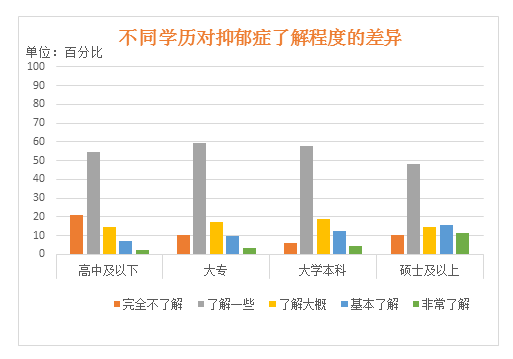
Surveys indicate that the proportion of individuals with a thorough understanding of depression is very low, regardless of educational attainment; approximately 50% of respondents possess only a basic awareness. However, the proportion of highly educated individuals with a comprehensive understanding of depression (over 10%) is higher than that of those with lower levels of education (around 3%). These findings suggest that public awareness of depression in China remains insufficient. Even among highly educated populations, knowledge about depression is limited.
2. Is there a difference in the level of understanding of depression between men and women?
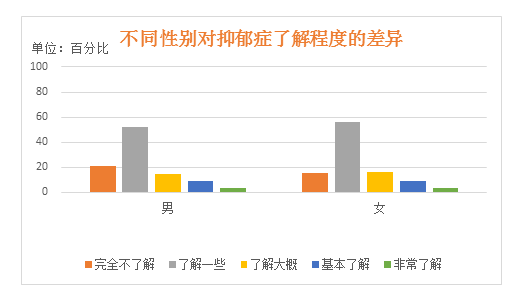
Our survey results indicate that the largest proportion of respondents, both male and female, had some knowledge of depression (approximately 40%), followed by those with no knowledge at all (approximately 20%). Overall, the differences between genders were not significant.
3. Are there differences in the level of understanding of depression among individuals of different ages?
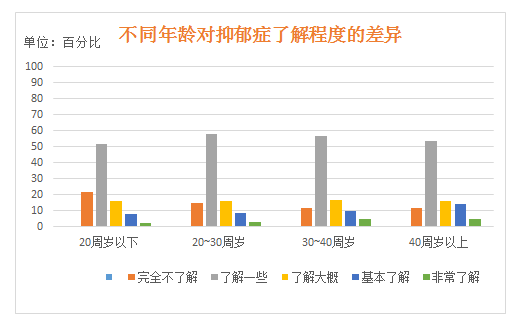
Our survey found that regardless of whether individuals are 20 or 40 years old, the majority (approximately 50%) still possess only a limited understanding of depression. There is no significant difference across age groups.
4. How can the public learn about or access information on depression?
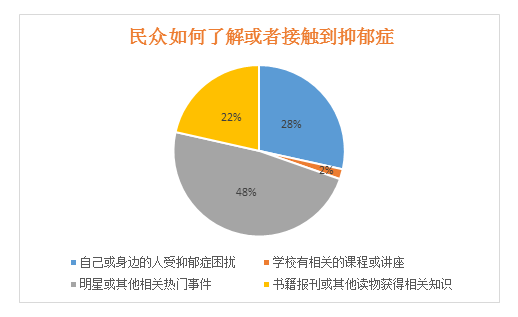
Survey results indicate that approximately 50% of individuals first learned about depression primarily through celebrities or other trending events. The second most common pathway was personal experience or witnessing the condition in close acquaintances (28%). Only a small proportion gained awareness through courses, lectures, or books (24%). This suggests that education and public awareness campaigns regarding depression in China remain relatively underdeveloped.
5. Are people aware that severe depression can lead to suicide?
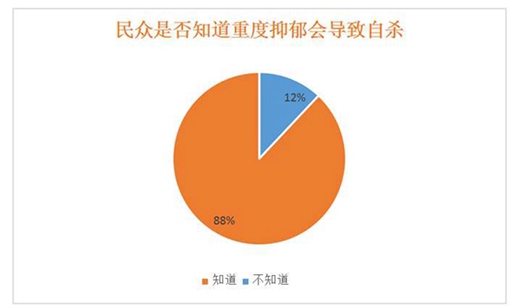
Survey results show that approximately 90% of the public, regardless of educational attainment, are aware that severe depression can lead to suicide.
6. Are all current patients with depression receiving systematic treatment?
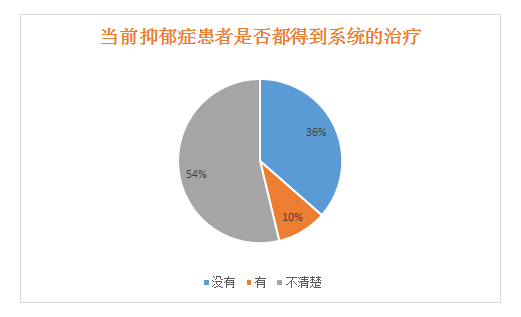
Our survey indicates that only about 10% of patients with depression receive systematic treatment, while the majority do not. This suggests that the current state of depression treatment in China is far from ideal. An analysis of potential reasons reveals that 70%–80% of respondents reported being unaware of any institutions or professionals available to provide psychotherapy.
7. Do people respond scientifically when they suffer from depression?
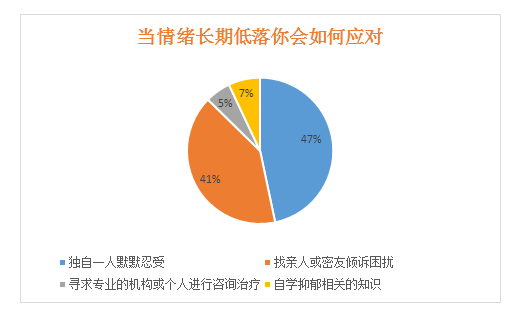
How do individuals with persistent low mood, potentially indicative of depression, typically cope? Survey results show that only 5% seek help from professional institutions or practitioners. The majority either endure their suffering silently and independently or confide in family members and friends. This indicates that most people are still unable to adopt appropriate strategies for coping with depression.
8、Acceptable Treatment Approaches for Depression Among the General Public
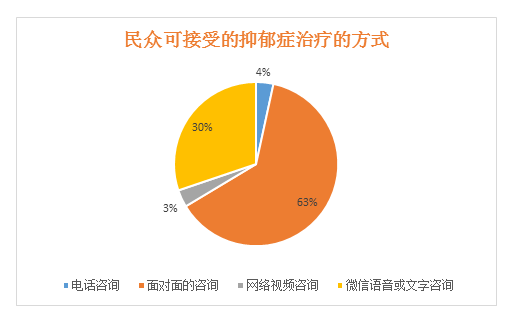
Regardless of age, educational background, or income level, more than 60% of the public prefer face-to-face treatment over online or telephone consultations, while 30% find WeChat voice or text consultations more acceptable. This survey result indicates that most people believe depression, as a mental disorder, is more suitably treated through face-to-face interactions with specialists.
9. Should the treatment of depression be covered by medical insurance?
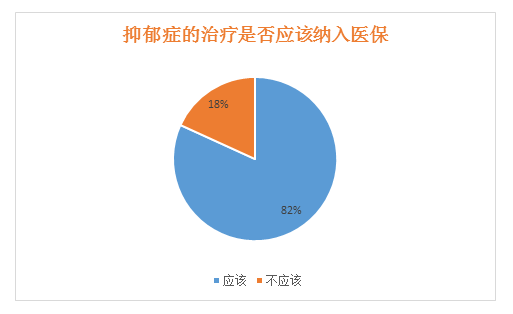
Approximately 82% of respondents believe that the treatment of depression should be covered by medical insurance, just like other physical illnesses.