

Han Demin's 'Hua Tuo Project' Launches in Dazu District, Chongqing, Aiming to Benefit Over 900 Million Rural Residents
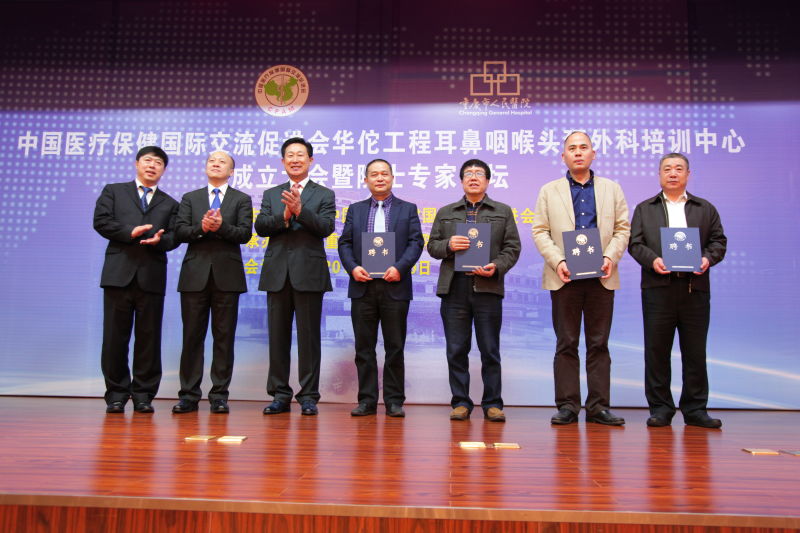
According to VCBeat, on March 30, the inaugural meeting of the Huatuo Project Otorhinolaryngology and Head and Neck Surgery Training Center under the China International Exchange and Promotion Association for Medical and Healthcare, along with an academic forum featuring academicians and experts, was held on the third floor of Building A at the Wudu Hotel in Chongqing.
Organized by the China International Exchange and Promotion Association for Medical Healthcare (CIEPAMH) and hosted by Chongqing General Hospital, the conference announced that the CIEPAMH Huatuo Project Otorhinolaryngology–Head and Neck Surgery Training Center would be established at Chongqing General Hospital. Leveraging this center as a hub, the initiative aims to extend its reach to hospitals at all levels across Southwest China, integrate high-quality medical resources, consolidate core industry strengths, select representative cities and counties, and enhance the mobility and accessibility of premium domestic medical resources.
At the conference, a series of thematic reports were delivered by Academician Han Demin, Member of the Chinese Academy of Engineering and President of the China International Exchange and Promotion Association for Medical and Healthcare; Professor Yin Jinshu from Beijing Shijitan Hospital, Capital Medical University; Professor Li Jinrang from the General Hospital of the Chinese People's Liberation Army Navy; Professor Wang Li from Peking University Third Hospital; Professor Chen Xiaowei from Peking Union Medical College Hospital, Chinese Academy of Medical Sciences; and Professor Wang Hongtian from the Chinese PLA General Hospital.
Professor Han Demin has dedicated nearly three decades to the field of otorhinolaryngology–head and neck surgery, receiving numerous national, provincial, and ministerial awards and honorary titles. In 2013, he was elected as an academician of the Chinese Academy of Engineering. A native of Dalian, he studied at China Medical University and subsequently remained on the faculty as a teacher...
Following the conference, VCBeat conducted an exclusive interview with Han Demin, who elaborated on the determination to launch the “Huatuo Project” in Chongqing—starting in Dazu District and aiming to cover all districts and counties across the municipality—to implement tiered diagnosis and treatment and strengthen grassroots healthcare.
The “Hua Tuo Project” is a specialized medical technology assistance initiative advocated by Han Demin and launched by the China International Exchange and Promotive Association for Medical and Health Care. Government-led and leveraging top-tier national medical talent, the project integrates high-quality national medical resources to extend major national medical innovation initiatives to grassroots medical institutions. It aims to strengthen the physician workforce at the primary care level, enhance tiered diagnosis and treatment capabilities, improve patient rehabilitation services, and promote the integration of urban and rural healthcare systems as a key livelihood initiative.
This is a special medical technology assistance project aimed at implementing the "Healthy China 2030" strategy issued by the Central Committee of the Communist Party of China and the State Council, shifting the focus of high-quality national medical resources to the grassroots level, supporting the development of primary healthcare services, promoting the establishment of a tiered diagnosis and treatment system, and advancing the urban-rural integration of health services.
Han Demin told VCBeat, “The name ‘Hua Tuo’ was chosen because Hua Tuo symbolizes a spirit of supporting grassroots-level healthcare; the term ‘Project’ is used because this support initiative is not merely a simple task but a systematic project that requires coordination across various sectors.”
As the Huatuo Project is government-led and academically guided, it unites academic societies, renowned hospitals, public welfare organizations, and other stakeholders to actively participate in grassroots assistance initiatives. Specialized technical service teams have been established to select a group of cities and counties that are both representative and in urgent need of development, with a particular focus on regions inhabited by ethnic minorities, border areas, and impoverished zones, thereby establishing cooperative assistance relationships. By means of health development planning, promotion of the health industry, standardization of clinical diagnosis and treatment, public welfare activities, and academic exchanges, the project facilitates the flow of high-quality medical resources to benefit local populations.
By integrating high-quality medical resources and consolidating core industry strengths, we have organized leading medical experts across China to establish “Specialized Technical Service Teams.” We have selected a group of cities and counties that are regionally representative and in urgent need of development, with a particular focus on areas inhabited by ethnic minorities, border regions, and impoverished zones, to establish assistance and cooperation partnerships. Through initiatives such as health development planning, promotion of the health industry, standardization of clinical diagnosis and treatment, public welfare activities, and academic exchanges, we facilitate the flow of high-quality medical resources to benefit local populations.
By chance, Han Demin attended a government meeting in Dazu District, Chongqing, to discuss how to transform the district into a specialized hub for wellness and elderly care. Having previously conducted research in this field, he introduced the concept of the “Hua Tuo Project.” This drew significant attention from local government leaders in Dazu District, who have since been eager for him to bring high-quality medical resources and robust specialized expertise to the area.
After several rounds of engagement, Han Demin observed that the government leaders in Dazu District, Chongqing, were open-minded and highly efficient. They promptly convened a meeting with hospital directors from various regions to discuss how to introduce and implement the project, as well as which hospital should be selected as the sample base.
Finally, after research and deliberation, it has been decided to establish the training base for the “Hua Tuo Project” at Dazu District People’s Hospital. According to publicly available statistics, by the end of 2015, Dazu District comprised 6 subdistricts and 21 towns, with a resident population of 760,000 and a total population of 1.05 million.
Dazu District People's Hospital, established on July 1, 1941, is a non-profit, Grade II Class A general hospital integrating medical care, teaching, scientific research, preventive healthcare, emergency services, and rehabilitation. It also serves as a standardized training base for general practitioners in Chongqing Municipality.
“Hua Tuo Project” will not only establish its training base at the hospital, but Han Demin will also personally lead a team to perform a demonstrative surgery.
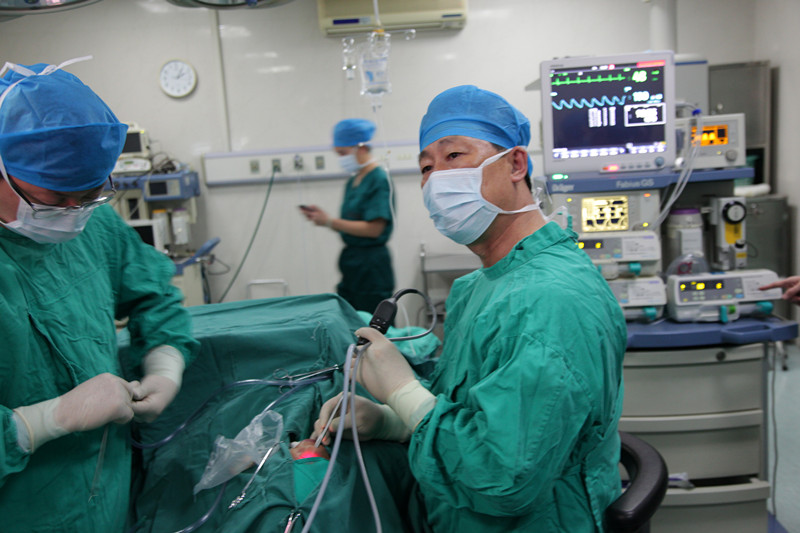
At 15:00 today, he arrived at Dazu District People's Hospital to perform functional endoscopic sinus surgery (FESS) combined with nasal mass resection for a patient.
In addition, the “Hua Tuo Project” will also establish a telemedicine consultation center at the hospital, connecting Dazu District People’s Hospital with multiple Grade 3A hospitals in Chongqing. By leveraging internet-based solutions, it aims to reduce patients’ medical costs and improve physicians’ diagnostic and treatment efficiency. Currently, a partnership has been signed with WeDoctor, with the shared goal of supporting grassroots physicians.
In fact, the “Hua Tuo Project” has also established telemedicine consultation centers in provinces and municipalities such as Guizhou Province and Hubei Province.
According to Han Demin’s recollection, during a remote consultation in Guizhou Province, Hua Wei, a renowned expert from Fuwai Hospital and a member of the China Association for Promoting Democracy based in Beijing, was on one end of the internet connection, while Duan Xuefen, Director of the Internal Medicine Department at Anlong County Hospital, was on the other. They simultaneously conducted remote consultations for two complex and critical cases of cardiac arrhythmia.
“It is gratifying to see your medical expertise transcend thousands of miles via the internet to serve the people of Guizhou. Thank you.”
“Remote consultation is a highly effective model worth exploring. Should any issues arise during this process, we encourage you to raise them.”
In Han Demin’s view, teleconsultation enables patients in remote areas to receive care from medical experts without the burden of travel, and this initiative to decentralize high-quality expert resources should be sustained. Healthcare coverage remains a global challenge; we must chart our own course, make full use of medical resources, and accumulate more experience.
When discussing his impressions of Chongqing, he, despite having visited the city multiple times, still cannot acclimate to Chongqing hot pot. His strongest impression is that the hot pot is excessively numbing; after just one bite, his lips would begin to tingle and go numb.
However, he highly recognizes Chongqing’s medical resources, which are abundant compared to other cities in western China. How can these ample medical resources benefit more people?
From the perspective of the goals of the new healthcare reform, by 2017, the policy system for tiered diagnosis and treatment had been gradually improved; a basic mechanism for division of labor and collaboration among medical and health institutions had been established; high-quality medical resources had been systematically and effectively decentralized to lower levels; the construction of primary healthcare workforce, with a focus on general practitioners, had been strengthened; the efficiency of medical resource utilization and overall benefits had been further enhanced; the proportion of consultations at primary medical and health institutions in the total number of consultations had increased significantly; and the order of medical care had become more rational and standardized.
By 2020, the service capacity for tiered diagnosis and treatment had been comprehensively enhanced, with support mechanisms gradually improved. A healthcare service system featuring rational layout, appropriate scale, optimized hierarchy, clear responsibilities, comprehensive functions, and high efficiency was basically established. A tiered diagnosis and treatment model characterized by initial consultation at primary care institutions, two-way referral, separate management of acute and chronic conditions, and coordination between different levels of care had taken shape, thereby establishing a tiered diagnosis and treatment system suited to China’s national conditions.
“Our generation has shouldered the responsibility of driving two major transitions: from a society focused on basic subsistence to one of moderate prosperity, and from a healthcare model centered on medical treatment to one centered on health. We bear a significant responsibility in building a health management service model that covers the entire life cycle. The ‘Hua Tuo Project’ is a special technical support initiative aimed at strengthening the national healthcare system. Guided by the strategic principle of shifting focus toward the grassroots level in the health service industry, it promotes the decentralization of mature medical technologies to facilitate the implementation of tiered diagnosis and treatment, thereby benefiting people at the community level,” said Han Demin.