

Guangdong to Invest RMB 50 Billion in Grassroots Hospitals: How Will the Funds Be Allocated?
According to VCBeat,Recently, the Guangdong Provincial Health and Family Planning Commission held the 2017 Guangdong Provincial Health and Family Planning Work Conference in Guangzhou. At the conference, it was announced that by the end of the year, Guangdong Province will invest 50 billion yuan to strengthen projects aimed at enhancing grassroots medical and health service capabilities, thereby promoting a fundamental improvement in primary care services.Thus, it is evident that primary healthcare was the top priority for development in Guangdong Province in 2017, and the allocation of funds has drawn widespread public attention. By 2019, Guangdong aims to fully accomplish the “Strengthening Primary Care” initiative, driving a fundamental improvement in primary healthcare capabilities.
On March 24, the Health and Family Planning Commission of Guangdong Province released the “Public Notice on the Allocation Plan for the 2017 Provincial Special Funds for Health and Family Planning Development (Including Upgrading and Construction of Central Township Health Centers, Among Other Areas).”

The specific allocation of funds is as follows:
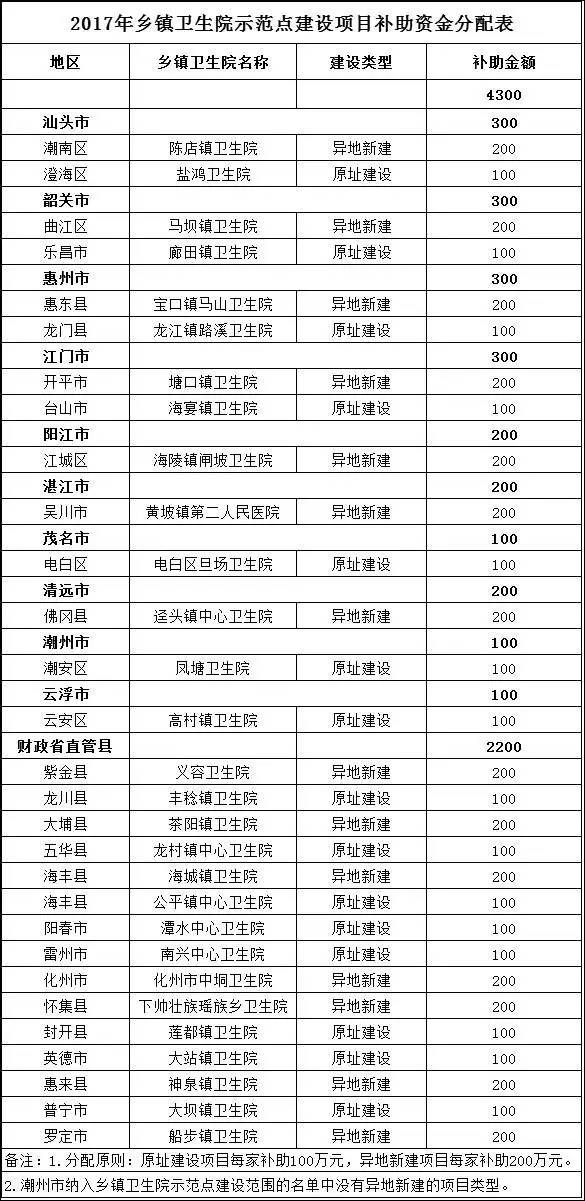
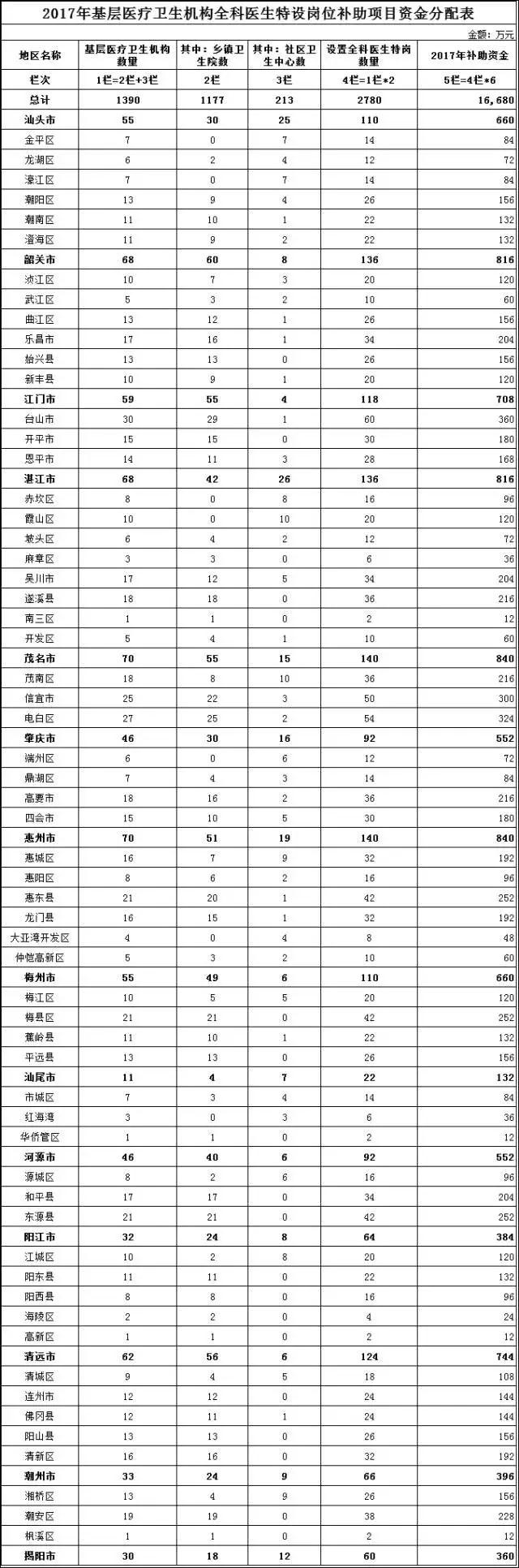
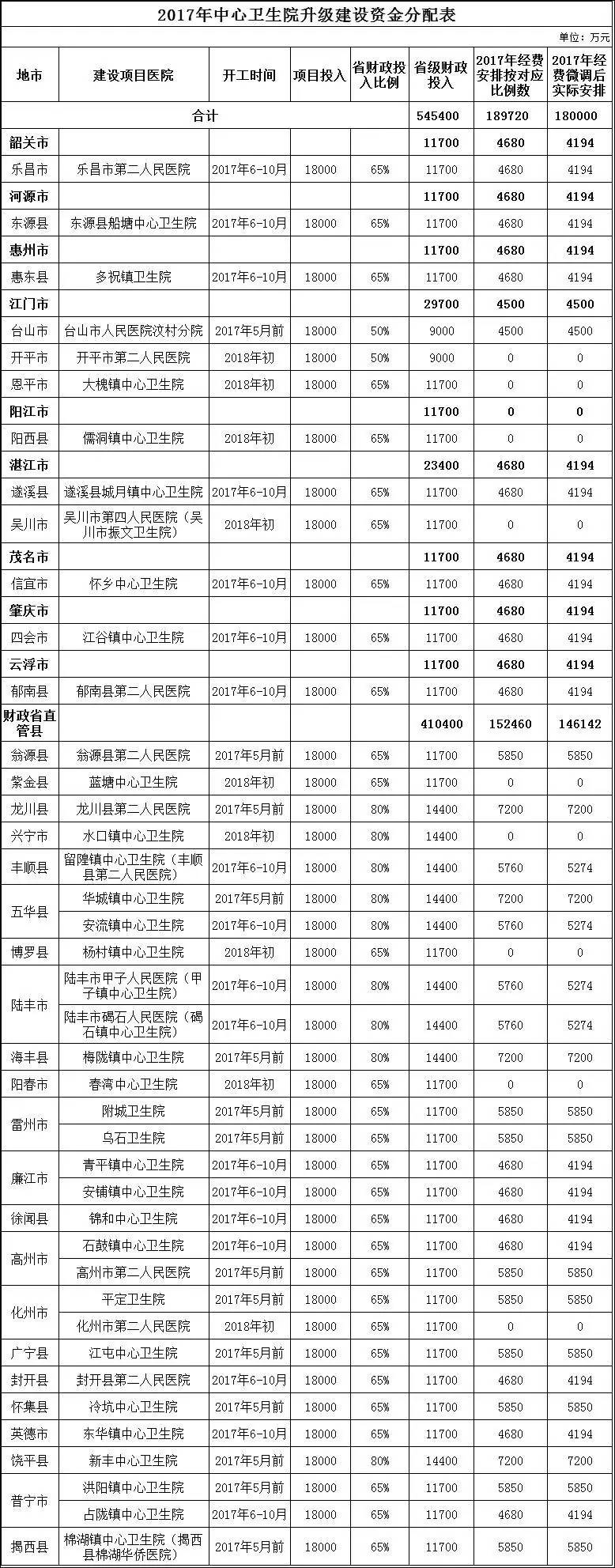
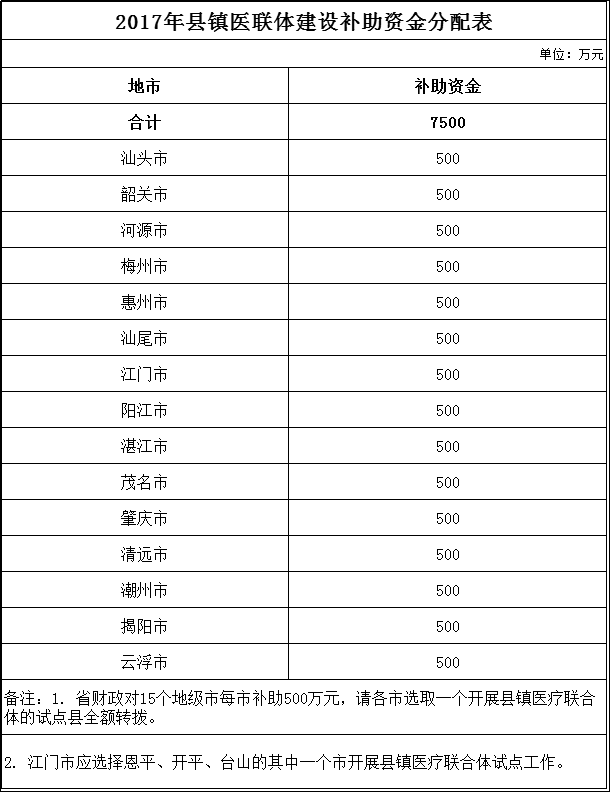
How Will the 50 Billion Yuan for Strengthening Primary Healthcare Be Spent?
The Provincial Health and Family Planning Commission and the Provincial Department of Finance have designated 45 central township health centers or second people’s hospitals in the eastern, western, and northern regions of Guangdong Province—those located relatively far from county seats, serving large populations, and possessing a certain foundational capacity—as key priorities for development. The goal is to elevate these facilities to the standard of medium-level county hospitals through several years of focused efforts.
Among these, counties (or county-level cities) with populations of 400,000 to 1 million will select one central township health center, while those with populations exceeding 1 million will select two, to serve as secondary medical and healthcare service centers within the county. This initiative aims to spare urban and rural residents living far from county seats the burden of traveling long distances for medical care. It is reported that among the 45 county-level hospitals designated for construction, 15 will commence construction before the May Day holiday in 2017, with the remainder starting by the end of the year. The goal is to establish full medical service capacity by 2020, achieving standards comparable to mid-tier county-level hospitals. In addition, fiscal authorities at all levels will allocate funds to upgrade and expand 18 county-level traditional Chinese medicine (TCM) hospitals, and carry out a three-year program to upgrade county-level public hospitals, thereby addressing the shortfall of 37,000 hospital beds in county-level hospitals in the eastern, western, and northern regions of Guangdong Province.
Since 2017, the Provincial Department of Finance and the Provincial Health and Family Planning Commission have increased funding allocations to expand the annual enrollment for standardized residency training of general practitioners from 750 to 1,080 trainees, while providing job-transfer and on-the-job training for 4,000 general practitioners annually. The annual enrollment of undergraduate and junior college medical students under directed-order programs has been increased from 400 to 1,000, with subsidy standards appropriately raised. Additionally, 1,000 obstetricians and midwives are trained each year for the eastern, western, and northern regions of Guangdong Province, along with job-transfer training for 360 pediatricians.
The “Opinions” propose to establish channels for the tiered downward flow of high-quality urban resources, achieving full coverage of paired assistance from urban tertiary hospitals to county-level public hospitals. Urban Grade A tertiary hospitals shall provide paired assistance to county-level hospitals; in principle, the number of health technical personnel dispatched annually shall be no less than 5% of the total number of professional and technical staff at intermediate level or above in the hospital, and among the dispatched personnel, those holding intermediate or higher professional and technical qualifications shall account for no less than 80%. Management and medical personnel dispatched by urban Grade A tertiary hospitals shall be uniformly incorporated into the management system of the county-level hospitals.
Primary healthcare institutions may independently adjust the ratio between basic and performance-based incentive wages, increase the proportion of performance-based incentive wages, reasonably widen income disparities, and prioritize allocations to frontline clinical staff, key positions, and core professional personnel. Primary healthcare institutions may independently allocate no less than 60% of the previous year’s surplus revenue and expenditure balance to supplement performance-based incentive wages, which shall not be included in the total cap for performance-based wages.
The provincial finance department has increased funding allocations to raise operational expenses for primary healthcare institutions. Starting from 2017, operational subsidies are allocated based on the approved staffing quotas of township health centers (community health service centers), at a standard rate of RMB 10,000–12,000 per person per year.
To attract general practitioners to establish long-term careers at the grassroots level, starting from 2017, two specially designated posts for general practitioners have been established in each township health center and community health service center. In addition to receiving performance-based salaries and various allowances and subsidies provided by their respective institutions, each post is granted an annual subsidy of RMB 60,000 from the provincial finance department.
This news is truly heartening. Since the launch of the new healthcare reform in 2009, numerous detailed rules and measures have been introduced; however, they have often amounted to much ado about nothing, with insufficient funding emerging as a critical weakness in the reform process. Primary health centers suffer from outdated facilities and poor working conditions, leading to a dwindling workforce willing to serve in these roles. Nevertheless, the functions they perform are fundamental and irreplaceable; therefore, investment in primary health centers must never be neglected. Guangdong Province’s pioneering commitment represents a wise decision. While we admire the advancements in Guangdong’s grassroots healthcare sector, we also recognize the nation’s determination to promote progress in primary medical and health services. Whether this investment will truly benefit grassroots institutions, better align healthcare workers’ income with their actual labor contributions, and deliver greater convenience and affordability to the public remains to be seen.