

A Natural Match: How Health Insurance and Health Management Are Sparking Innovation
We have heard many industry insiders express this view:Health Management and Health Insurance Have Natural Synergy。
Indeed, both share very similar objectives: the purpose of purchasing medical and health insurance is to mitigate disease risks, particularly to avoid “medical bankruptcy” caused by critical illnesses and to address chronic diseases, which are increasingly becoming a burden on modern families; similarly, health management practices aim to mitigate disease risks by fundamentally reducing the likelihood of illness onset, thereby improving people’s quality of life.
A Detailed Analysis of the Commercial Health Insurance Industry’s Demands: First, it is necessary to collect extensive user health data for pricing and risk control; second, measures must be taken to reduce the incidence of critical illnesses among policyholders, thereby lowering service costs. Consequently, various forms of health management tools and approaches have become effective instruments for accumulating data and improving user health. VCBeat (WeChat ID: vcbeat) hereby reviews the historical connection between medical health insurance and health management, and examines the new synergies emerging between these two sectors in the current environment.
Historical Background: The Origins of Health Management and Insurance
The insurance industry defines health management as the provision of health guidance and clinical intervention management to policyholders, by leveraging medical resources or collaborating with healthcare service providers, in the course of delivering medical service coverage and medical expense reimbursement. In this process, insurers and healthcare service providers are closely integrated.The healthcare insurance industry is also one of the earliest sectors to introduce the concept of health management to the general public.。
· The ACO model, which originated in the United States, is a classic example of risk and benefit sharing between insurance companies and healthcare service providers.Case.This model was first proposed during a 2006 discussion by the Medicare Payment Advisory Commission. It is an upgraded version of the HMO “capitation” payment system introduced in 1973, aiming to reduce patients’ medical costs without compromising care quality, while enabling insurers and healthcare providers to share profits or liabilities based on the achievement of patients’ health goals.The key to achieving this lies in the implementation of preventive health management.
· In China, the relationship between health insurance and health management can be traced back nearly 15 years.: In December 2002, the China Insurance Regulatory Commission (CIRC) issued the "Guiding Opinions on Accelerating the Development of Health Insurance," encouraging insurance companies to collaborate with medical and healthcare service institutions on research initiatives. In September 2006, the CIRC promulgated the "Administrative Measures for Health Insurance," explicitly stipulating that insurance companies should strengthen cooperation with medical service providers and health management organizations, enhance the management of medical service costs, and oversee the reasonableness and necessity of medical expense expenditures.
In November 2016, the Health Management and Health Insurance Branch of the China Non-Public Medical Institutions Association was established. Its primary missions are twofold: first, to build a platform for collaboration between health management and health insurance; second, to organically integrate medical insurance with the health industry and health services sector, and to conduct targeted research on the bottlenecks and challenges hindering the development of health management and health insurance.
A Contemporary Case Study: The Diverse Transformations Brought by the Internet
The advent of mobile health applications, smart hardware, and the Internet of Things (IoT) has ushered in a digital boom in health management. Through various electronic medical records, vital signs measurement tools, and medical health apps, data is becoming increasingly abundant, yielding two major categories of insights: individual health status and population health trends. These two types of insights have introduced new models for the integration of health management and the medical health insurance industry, while also establishing a robust and dynamic reference framework.
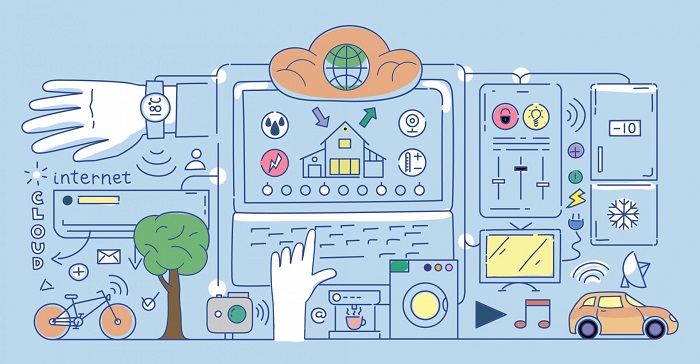
Image source:HealthITAnalytics
· Insights into Personal Health Status, on the one hand, it canExert a supervisory role in user health management, to enhance their health awareness and well-being through a variety of engaging online and offline interactive formats, thereby achieving the long-term goals of preventing severe diseases and reducing claims payouts. On the other hand, possessing insured individuals’ personal health data is equivalent to having access to their disease risk information,Facilitates the classified management of insured individuals based on different risk levels。
· Insights into Population Health, it provides decision support across multiple dimensions of medical and health insurance, including benefit design, actuarial pricing, claims operations management, and marketing and sales promotion.
Below, we present some typical examples of the integration of insurance and health management that have emerged both domestically and internationally.
Domestic: The Healthcare Service Industry Joins Hands with the Insurance Industry
China’s ACO Model—WeDoctor
Equipped with three foundational pillars—“data channels,” a “controllable healthcare service system,” and a “large-scale user base”—WeDoctor has strengthened the health insurance segment through its “WeDoctor ACO” model. Recently, WeDoctor announced the launch of “Family Guardian,” an outpatient insurance product for internet hospitals, which is the first ACO-based insurance product in China jointly developed with ZhongAn Insurance.
In terms of the most critical health management resources within the ACO system, WeDoctor’s “Three-Coach Management” model includes health coaches as one of the three roles, enabling interventions for members in health management and lifestyle. Additionally, through collaborations with companies such as Meinian Onehealth, it promotes the concept of precision health management.
As an internet-based medical service platform, WeDoctor has leveraged its healthcare data to strengthen information integration between the insurance and mobile health sectors, enabling insurers and clients to access more transparent and controllable information.
The Data Gateway for Medical and Health Insurance: Ping An Good Doctor
Ping An Good Doctor, which integrates a range of health management services—including dietary regulation, Traditional Chinese Medicine (TCM) wellness, and exercise fitness—as well as medical consultation registration and pharmaceutical e-commerce, serves as a major gateway for healthcare and medical data. The platform also provides access to insurance purchases; the overlap between its app users and insured populations helps policyholders mitigate health risks.
By leveraging data to track users’ health-related behaviors, medical consultation activities, and medication purchases, a comprehensive user health profile can be established, thereby providing rich medical and health data insights for insurance operations.
Smart Wearables and Big Data Risk Management—Miao Health
Miao Health’s “Miao+” platform features a wide range of smart hardware products that integrate with Internet of Things (IoT) technology to capture health data across multiple dimensions, covering areas such as medical healthcare, fitness and wellness, medical rehabilitation, and behavioral analysis. In terms of data analytics, the platform leverages big data computing and artificial intelligence technologies to provide insurance companies with detailed user health insights.
In the health management segment, which helps enhance the competitiveness of health insurance, Miao Health employs a Health Behavior Index and gamified approaches to guide users in forming healthy habits, thereby reducing the incidence of chronic diseases and insurance expenditures.
Currently, Miao Health has established “health management + health insurance” collaborations with Sunshine Insurance, ZhongAn Insurance, Taikang Life, and Happiness Life.
The Medical Care + Insurance Model — Taikang Insurance
In 2009, Taikang became the first insurer in China’s insurance industry to qualify for a pilot program on retirement community investment. Subsequently, Taikang Life Insurance established Taikang Home, which is responsible for the operation and management of retirement communities, thereby integrating healthcare, health management, elderly care, and insurance.
Elderly health management primarily involves addressing chronic diseases, which account for 80% of cases; therefore, there is the greatest demand for medical check-ups, treatment and nursing care for chronic conditions, and rehabilitation. In response, Taikang Community has established a closed-loop, end-to-end health management system encompassing preventive healthcare, disease treatment, chronic disease management, rehabilitation, and elderly care nursing, with the aim of preventing illnesses before they occur. This approach reduces both medical healthcare costs and insurance costs.
International: Health Management Programs of Large Insurance Companies
Aetna International
Aetna offers multiple health management apps, including Aetna Mobile, a medical and health tool available for Android and iOS; the iTriage app, which enables users to seek medical consultations and connect with physicians; the Aetna Personal Health Records app, designed to track detailed personal medical history and health status; and the Healthwise app, which provides comprehensive information on medical procedures and medications.
Since the winter of 2016, Aetna has partnered with Apple to implement health management programs, providing Apple Watches to its major corporate clients. Aetna was also the first insurer to make a significant investment in purchasing Apple Watches, deeply integrating iOS applications to improve user health and help them better understand health management.
Anthem Health Insurance
In 2015, Anthem partnered with Script Adviser, a company dedicated to infectious disease prevention and control, to leverage telemedicine in providing rural insured members with access to specialist consultations, thereby preventing emergency situations.
UnitedHealth Group
The following health management programs are available:
1.Baby Blocks
Encourage pregnant women to undergo prenatal check-ups and urge parents to ensure newborn healthcare. During pregnancy and the first 15 weeks after birth, expectant mothers or parents can complete check-up information through gamified methods to receive rewards such as baby clothing gift cards and diaper packages. This initiative aims to improve maternal and child healthcare and control medical costs.
2.HouseCalls
Provide in-home medical services to members of Medicare Advantage plans, primarily targeting the elderly population. The project utilizes a specialized technical support system to capture participants' clinical data and effectively transmit information via handheld tablet devices. Additionally, comprehensive in-home assessments of participants' personal medical histories are conducted, including health examinations, cognitive function testing, evaluation of overall health behaviors, review of prescription medication usage, and provision of health education.
3. Type 2 Diabetes Prevention and Control Program
As early as 2010, UnitedHealth Group joined forces with Walgreens and the YMCA to controlThe Most Severe and Costly Medical Issue in the United States—Type 2 Diabetes. This project is based on a study byUnited StatesSurveys funded by the National Institutes of Health and the Centers for Disease Control and Prevention show that a 5% reduction in body weight is associated with a 58% lower risk of developing diabetes and of disease progression. Participants firstParticipants underwent assessment and then managed their condition through medication and lifestyle adjustments, with individuals from seven cities working under the guidance of lifestyle coaches to prevent diabetes.
Three Challenges: Popularization, Accumulation, and Practice
· The Strength and Penetration of Commercial Medical Insurance
As the country with the most developed commercial health insurance system in the world, U.S. health insurance companies hold a very important position. AndCommercial Health Insurance in China Has Not Become Dominant in the Healthcare Market, but rather has long occupied a supplementary position to social medical insurance.
From the issuance of the “Several Opinions on Accelerating the Development of Commercial Health Insurance” by the General Office of the State Council, to the implementation of pilot policies offering individual income tax incentives for purchasing commercial health insurance, the market space for commercial health insurance is expanding. However, it will still take time to cultivate public awareness and willingness to purchase commercial medical and health insurance. On March 22, the Insurance Association of China officially released the “2017 China Commercial Health Insurance Development Index” for the first time, indicating that China’s Commercial Health Insurance Development Index stood at 60.6, placing it in the lower range of the basic level.There is still significant room for improvement.。
· Insufficient data accumulation
The insurance industry will still have a long period of exploration ahead as it leverages mobile health management tools to acquire data.
Data accumulation is a long-term process. For example, Europe and the United States once had complete industrial chains for chronic disease data collection and cross-industry collaboration, but eventually gave up. The reason is that it takes more than five years of data collection to reflect the impact on claims and business operations, but few companies can conduct such long-term preliminary data research. For China,The commercial medical and health insurance market itself lacks mature data accumulation, resulting in significant claims risk.。
· Challenges in Health Management Interventions for Insured Individuals
In China, health management has likewise not received sufficient attention. Among the currently prevalent health management models, health check-ups are the most mainstream and heavily emphasized; however, a large portion of the population still fails to undergo check-ups at the recommended frequency. Mobile health apps, which are gradually gaining visibility, often see high usage rates for only a subset of their features. Consequently, comprehensively changing people’s health habits remains challenging.
Therefore, in the course of specific implementation, health management companies or mobile healthcare platforms need to launch more creative features and activities to raise public awareness of health; health insurance companies need to make greater efforts in healthcare-related activities and publicity.Prepared for long-term market education and cultivation。