

Professor Ma Duan of Fudan University Submits IPO Prospectus Following Appearance on 'Health Leaders Talk' Season 2
Source: GeneInsight PPT
【Previous Issues】
Season 2, Episode 01: Professor Huang Shangzhi
Season 2, Episode 02: Dr. Gu Weihong
Season 2, Episode 3: Professor Yao Hong
Season 2, Episode 4: Professor Zhao Haitao
Season 2, Episode 5: Vice President Wang Yi
Season 2, Episode 6: Professor Qi Ming
Season 2, Episode 07: Dr. Wang Wei
Season 2, Episode 8: Professor Ding Jie
Season 2, Episode 9: Dr. Dai Junbiao
Season 2, Episode 10: Dr. Shen Yue
Season 2, Episode 11: Professor Huang Taosheng
Season 2, Episode 14: Professor Shen Yiping
Season 2, Episode 15: Dr. Liang Zhiqing
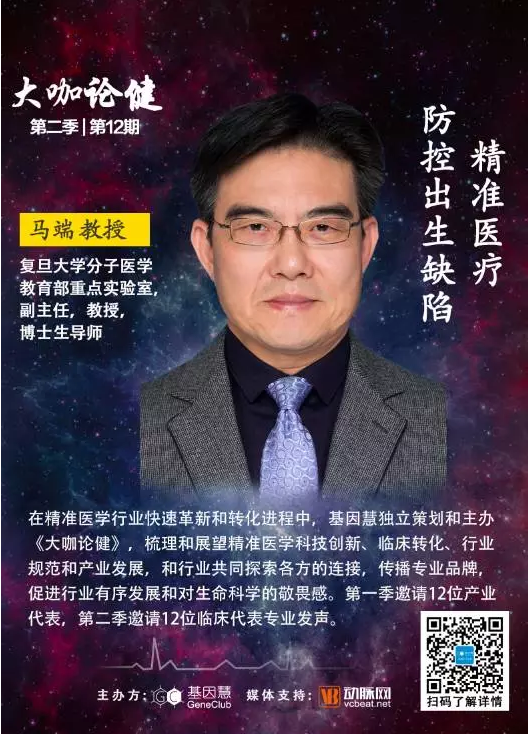
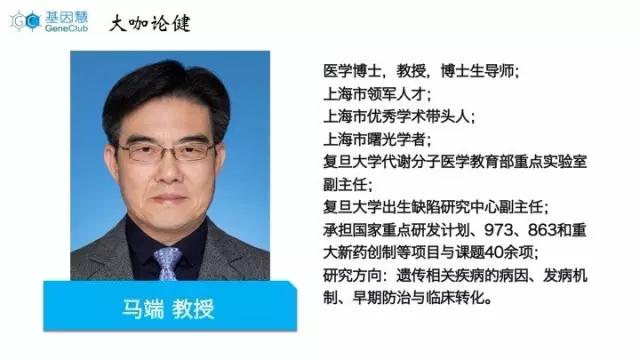
Author: Professor Ma Duan
Deputy Director, Key Laboratory of Molecular Medicine, Ministry of Education, Fudan University
Editor: GeneWisdom
(Note: Professor Duan Ma, published with the author's authorization)
GenePlus:Professor Ma Duan, hello! Thank you for accepting this exclusive interview with GeneHui. You have made significant contributions to the fields of birth defects and medical genetics, with an extensive research background. First, could you please introduce yourself, your research areas, and your professional experience to GeneHui’s readers? Thank you!
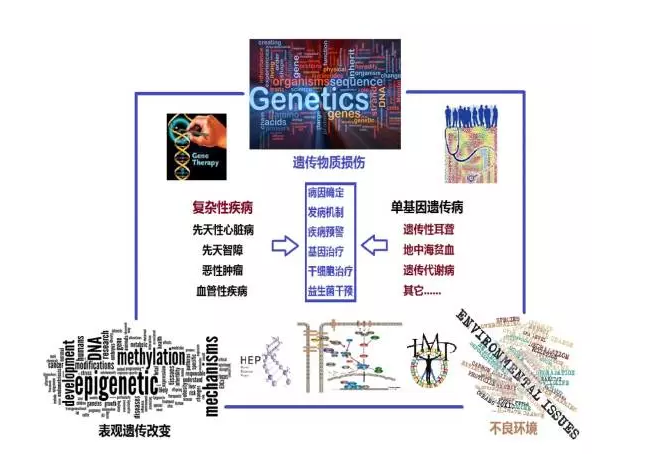
Prof. Duan Ma:Hello everyone! I am from Shanghai Medical College, Fudan University. I have established research groups at the “Key Laboratory of Metabolic Molecular Medicine of the Ministry of Education, Fudan University,” the “Center for Birth Defects Research, Fudan University,” and the “Shanghai Key Laboratory of Birth Defect Prevention and Control, Children’s Hospital of Fudan University.” My work primarily focuses on the etiology, pathogenesis, early prevention and treatment, and genetic counseling of genetically related diseases, as well as their clinical translation. I currently serve as Vice Chairperson of the Medical Genetics Branch of the Chinese Medical Association, Vice Chairperson of the Clinical Genetics Committee under the Medical Genetics Branch of the Chinese Medical Doctor Association, Advisor to the Genetic Counseling Branch of the Genetics Society of China, Chairperson of the Medical Genetics Committee of the Shanghai Medical Association, Vice Chairperson of the Rare Diseases Committee of the Shanghai Medical Association, and Chairperson of the Gene Health Committee of the Shanghai Health Science and Technology Association.
After graduating from university in 1982, I served as a clinician for nearly two decades, during which I earned a Master’s degree in Hematology, a Ph.D. in Molecular Genetics, and completed postdoctoral training in Cardiovascular Diseases and Pathology. Since being recruited by Fudan University from the United States in 2002, I have focused my research on the genetics and epigenetics of diseases, specifically investigating the relationship between genes and disease. Currently, my primary interest lies in efficiently translating genetic research findings into clinical practice to benefit the health of more people.
(Note: Published with the author's authorization)
GeneWell:When discussing birth defects, two figures are often cited: a national birth defect rate of 5.6% in China, and an estimate by the Birth Defects Research Center at Fudan University in 2011 that there were 16.8 million patients with rare diseases in China, based on a prevalence rate of 1 in 500,000 (source: Chinese Center for Disease Control and Prevention). Six years have passed. From technological and application perspectives, what specific improvements have been made in the prevention and control of birth defects driven by precision medicine, and what areas still require further refinement?
Prof. Duan Ma:Birth defects encompass a wide range of diseases. Genetically related birth defects include chromosomal disorders, Mendelian genetic diseases, mitochondrial diseases, polygenic diseases, and epigenetic diseases. The vast majority of rare diseases can be classified as birth defects; although the prevalence of each individual disease is low, the total affected population is substantial. 16.8 millionThis is an inferred figure I have provided based on the types of rare diseases and their incidence rates both domestically and internationally; the exact numbers remain unknown. However,What is certain is that the number of patients with birth defects is undoubtedly higher than this figure. The social pressure, family distress, and personal suffering caused by birth defects have compelled us to take this issue seriously!
Precision medicine has entered the public eye alongside advances in genetic testing technology and has become an effective means for the prevention and control of birth defects. However, at the current stage, precision medicine can only play a role in the prevention and treatment of certain diseases, such as chromosomal disorders, Mendelian genetic diseases, and mitochondrial diseases with clearly identified pathogenic factors; personalized drug selection for conditions with well-defined metabolic pathways and therapeutic targets; and risk prediction for a few polygenic diseases with clearly identified susceptibility genes. Relative to the total number of diseases, those amenable to precise prevention and control remain exceedingly rare, particularly in the realm of precision therapy.
Compared with six years ago, the state has invested more funds in the prevention and control of birth defects. In 2016, a batch of precision medicine research projects were approved. More precision medicine projects will receive funding in 2017. However, the approval and funding of these projects only indicate that many issues in the fields of birth defects and precision medicine remain unresolved; it is only through intensified collaborative efforts that these challenges can be addressed in the near future.
China’s urgent priorities are as follows: First, we must comprehensively assess the current landscape by clarifying the prevalence and incidence rates of each type of birth defect, thereby establishing a solid evidence base for targeted interventions. Second, we should rapidly establish and refine the spectrum of pathogenic gene mutations associated with birth defects in China, laying the foundation for precise diagnosis. Third, we need to increase investment in the research and development of therapeutic drugs for birth defects and streamline regulatory approval processes, equipping clinicians with precise tools to combat these conditions. Finally, hospitals, research institutes, and third-party medical laboratories must collaborate closely, breaking down existing silos and fostering interoperability. Only through such coordinated efforts can we enhance the efficiency of prevention and control measures for birth defects and mitigate their associated harms.
GeneWisdom:As clinical molecular genetics and gene technologies are increasingly applied to clinical diagnosis, prevention, and treatment, genetic counseling—encompassing data interpretation and patient education—has become a critical node in the clinical genetic testing pathway. Having repeatedly participated in and advanced genetic counseling training initiatives in China, please provide readers with a focused and systematic overview of the core principles of genetic counseling, the establishment of China’s genetic counseling training system, and its role in promoting the development of precision medicine.
Prof. Duan Ma:Genetic counseling is a process that helps individuals understand and adapt to the role of genetic factors in disease, as well as their medical, psychological, and familial implications. As early as the late 1950s, the United States introduced the concept and fundamental methods of genetic counseling, followed by the initiation of training programs for genetic counselors in the late 1960s. To date, more than 4,000 individuals in the U.S. have obtained certification as genetic counselors, making highly professional contributions to the prevention and management of genetically related disorders. Europe and other developed countries have undergone similar developments and achieved comparable outcomes.
Regrettably, the profession of “genetic counselor” does not yet exist in mainland China. From a legal perspective, physicians and medical genetics professionals who provide genetic counseling guidance to patients are technically engaging in “illegal practice of medicine.” Furthermore, due to the long-standing neglect of the development and establishment of medical genetics as a discipline, the vast majority of hospitals lack dedicated “genetic counseling clinics,” and most physicians are unfamiliar with medical genetics, finding genetic test reports as incomprehensible as an alien script. How can such a lamentable status quo possibly address the growing incidence of birth defects?
Although the profession of “genetic counselor” has not been officially established at the national level, substantial health needs are continuously driving the development of genetic counseling in China. In early 2015, the Genetics Society of China approved the establishment of the “Genetic Counseling Branch of the Genetics Society of China,” with renowned genetician Academician He Lin serving as its chairman. Under the initiative and leadership of Academician He Lin, genetic counseling training programs were structured into introductory, intermediate, and advanced levels, adopting a combined model of intensive on-site training and remote education. These programs emphasize not only theoretical instruction but also practical demonstrations through case-based counseling consultations. Due to their high starting standards and close integration with clinical practice, each training session has been oversubscribed, exceeding capacity. Furthermore, numerous other domestic institutions are offering various genetic counseling training courses under different titles. This momentum and widespread interest have laid the personnel foundation for the formal establishment of the “genetic counselor” profession.
A qualified “genetic counselor” must master knowledge from multiple disciplines, communication methods and techniques with consultands, as well as relevant ethics and laws and regulations. In addition to specialized knowledge of diseases, the disciplines involved in genetic counseling include genetics, medical genetics, genomics, genetic testing, bioinformatics, and psychology. Only by mastering this knowledge and flexibly applying it to clinical practice can “genetic counselors” help drive precision medicine forward. Precision medicine without the support of “genetic counselors” is merely an illusion—a castle in the air or the moon’s reflection in water—worthy only of its name!
GeneWisdom:Precision medicine technologies and applications in China are developing rapidly, entering an era of intense competition akin to a race on a winding track. Clinical practices such as prenatal diagnosis, assisted reproduction, pre-conception carrier screening, and newborn screening widely employ technologies like genetic testing. According to statistics from GeneInsight, fewer than 50 higher education institutions in China offer majors in bioinformatics, resulting in a severe shortage of talent in gene data analysis. How do you propose addressing this issue? Meanwhile, media outlets frequently report on the high efficiency of AI (artificial intelligence) systems developed by companies such as IBM and Google. What is your perspective on this phenomenon?
Prof. Duan Ma:Let’s begin with bioinformatics analysis. Genetic testing generates vast, even massive, amounts of data. To extract the most valuable information regarding health or disease from this data, bioinformatics analysis is an indispensable step. Accurate and thorough bioinformatics analysis requires two essential components: a bioinformatics analysis platform and qualified bioinformatics analysts. The former can be acquired and set up with sufficient funding, whereas the latter depends on having a reserve of skilled talent. Indeed, compared to the substantial market demand, there is a shortage of bioinformatics analysts, which has significantly slowed the adoption of genetic testing.
The insufficient training capacity of universities can only be addressed through major adjustments by the Ministry of Education, a solution that is too distant to meet immediate needs. Currently, many institutions are offering bioinformatics training courses, which serves as a viable stopgap measure. However, the limited effectiveness of such short-term training programs, often lasting only a few days, is self-evident. In most cases, addressing the shortage of bioinformatics professionals requires individuals with computer and software operational skills to undergo initial training, followed by continuous self-study and practical application, ultimately growing through hands-on experience. Only in this way can the shortage of bioinformatics personnel be gradually alleviated. It is believed that market forces will encourage more people to enter the burgeoning field of bioinformatics.
Let us turn to artificial intelligence. At its core, AI is a branch of computer science that has already demonstrated the potential to surpass human capabilities in computing, memory, analysis, and judgment. The fact that AlphaGo defeated Lee Sedol, a world-class Go master, with such astonishing speed was truly shocking. Based on current R&D trends, AI is poised to exhibit exceptional proficiency in areas such as new drug development, assisted disease diagnosis, therapeutic support, health management, rehabilitation medicine, portable devices, and hospital administration. However, I believe it is impossible for AI to replace physicians. At best, AI can serve as a valuable assistant to doctors, enhancing the efficiency of disease prevention and treatment. Artificial intelligence is a highly competitive field globally, and it is hoped that our country will remain competitive in this arena.
GeneHui:You completed your undergraduate, master’s, doctoral, and postdoctoral training at medical universities. As a fellow medical student, I still vividly recall the Medical Student Oath: “Health entrusted to us, lives committed to our care.” Having seen you deliver public-interest lectures on gene science popularization, and in light of the practical experience and disciplinary advances accumulated over the years, we would like to invite you once again to provide a lay-friendly, systematic, and concise explanation for readers who are not genetics specialists: What exactly are genes? In the current stage, what can and cannot be done with respect to genes in the healthcare industry, which is bound by the oath “Health entrusted to us, lives committed to our care”?
Professor Ma Duan:Simply put, a gene is a functional segment of DNA or RNA. Genes can malfunction in two ways: errors in their sequence or abnormalities in their modifications. Either issue can result in gene products that are deficient in quality or quantity, failing to meet the requirements for maintaining health and ultimately leading to disease. It is currently known that mutations in approximately 3,300 genes can cause disease. In other words, we have identified these 3,300 genes.
With regard to these 3,300 genes, we can make definitive assessments through genetic testing. Furthermore, by testing the patient’s relatives, we can determine whether other family members carry the same pathogenic variants, thereby enabling early warning for disease risk. If the patient is a child, we can assist the family in having a healthy subsequent child through genetic counseling and assisted reproductive technologies.
Furthermore, genetic testing has other applications:
(1) Assisting physicians in selecting the appropriate medications to avoid poor efficacy or excessive adverse reactions resulting from empirical treatment, which constitutes the core component of precision medicine;
(2) Dying or apoptotic tumor cells release DNA into the bloodstream; detecting oncogenes in circulating blood can facilitate the early detection of malignant tumors, a procedure also known as liquid biopsy;
(3) If the fetus has a chromosomal disorder, the cell-free fetal DNA entering the maternal peripheral blood via the placenta will exhibit alterations. Detecting these alterations can assist in diagnosing fetal chromosomal disorders. Currently, the chromosomal disorders that can be detected with relatively high accuracy are primarily Trisomy 21 (Down syndrome), Trisomy 18, and Trisomy 13.
(4) Infertile couples hoping to have healthy offspring need to rely on assisted reproductive technologies. After artificial insemination, a single cell can be extracted from the fertilized egg to test for genetic abnormalities, thereby determining whether to implant this fertilized egg into the uterus;
(5) Genetic testing can provide early warnings for certain diseases. For example, a woman carrying BRCA gene mutations has up to a 65% lifetime risk of developing breast cancer and up to a 55% risk of developing ovarian cancer after the age of 30. Early detection of these genetic abnormalities allows for timely interventions that can reduce or delay the risk of developing cancer.
While genetic testing has numerous applications, it is important to note that only a small fraction of diseases can currently be precisely prevented or treated based on genetic test results; the relationship between genes and many other diseases remains to be clarified. With the proliferation of genetic testing companies in society today, some unscrupulous firms engage in fraudulent practices under the guise of genetic testing for profit. Therefore, when genetic testing is necessary, two key precautions should be taken: first, ensure the testing is conducted at hospitals or medical laboratories with proper clinical laboratory qualifications; second, seek advice from relevant experts, particularly those specializing in medical genetics or genetic counseling.