

Infervision's AI Imaging Solution Deployed at Shanghai Changzheng Hospital, Radiologists Highlight Reduced Missed Diagnoses as Key Benefit
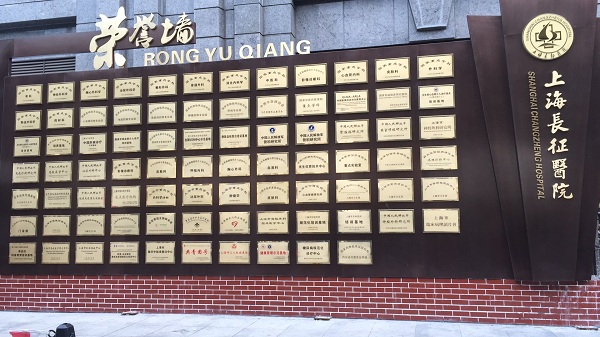
In the medical field, artificial intelligence (AI) can provide frontline clinicians with new diagnostic and therapeutic options, reduce missed diagnoses, assist in training medical students, and support scientific research. But what role does AI play for radiologists? As a collaborative partner in the development of Infervision’s AI products and an early adopter, VCBeat (WeChat ID: vcbeat) conducted an exclusive interview with Dr. Liu Kai, a radiologist at Shanghai Changzheng Hospital, to explore how AI is assisting radiologists in their practice.
What Do Radiologists Do?
Dr. Liu Kai’s office does not resemble the typical clinical setting one might expect. It is not even located in the outpatient building, but rather in the radiology department of a separate office building. Consequently, few patients consult with him face-to-face, making the environment more akin to a conventional office space. Radiologists spend their days seated, interpreting medical images.
VCBeat has learned that medical schools previously did not offer a major in medical imaging; medical education was limited to general clinical medicine, with graduates assigned to various departments based on hospital needs. As times have progressed, medical specialization has become increasingly refined, and the rapid iteration of imaging equipment has led to a shortage of professional radiologists. In response, some medical schools have subsequently established undergraduate programs in medical imaging to cultivate specialized talent and meet societal development needs.
Typically, the patient’s clinical workflow proceeds as follows: frontline clinicians determine the appropriate imaging modalities and anatomical regions based on the patient’s condition. Technologists operate the imaging equipment to perform the examinations, after which images are automatically transmitted to the workstations of radiologists. Radiologists interpret the transmitted images in conjunction with the patient’s clinical presentation, physical examination findings, and other laboratory test results. After comprehensive analysis, they issue a diagnostic conclusion, which then guides subsequent treatment by the relevant clinical specialists.
Therefore, the daily work of radiologists primarily involves handling medical images, and image interpretation happens to be a specialty of deep learning-based artificial intelligence.
Rejecting False Premises
Through an exclusive interview with Dr. Liu Kai, it was learned that Professor Liu Shiyuan (Director of the Department of Diagnostic Radiology and Nuclear Medicine at Shanghai Changzheng Hospital, Vice Chairman of the Chinese Society of Radiology, and Vice President of the Radiologists Branch of the Chinese Medical Doctor Association) has a strong interest in the application of artificial intelligence in medical imaging. With the rise of the AI wave in recent years, Professor Liu recognized the significant potential of AI in medical imaging and began seeking partners from March to April 2016. In October 2016, he encountered Infervision (Beijing Infervision Technology Co., Ltd.). After gaining an in-depth understanding of Infervision’s products, philosophy, and applied technologies, both parties initiated a collaboration to refine their solutions, marking Infervision’s entry into Shanghai Changzheng Hospital.
Faced with the rapid rise of artificial intelligence, some have jokingly asked, “Are doctors about to lose their jobs? Will AI replace physicians?” Dr. Liu told VCBeat that many such concerns are based on false premises. According to him and his colleagues, there is essentially no resistance among physicians toward AI; rather, it is media outlets and investors who tend to raise these questions.
The medical community believes that it is currently impossible for AI to replace doctors, whereas its role in assisting physicians is tangible and real. To take an extreme view, even if replacement were feasible, it would simply reflect societal progress, akin to electric lights replacing kerosene lamps or automobiles supplanting horse-drawn carriages. After automobiles replaced horse-drawn carriages, coachmen could transition to driving cars. Similarly, should doctors ever be replaced by AI, they could still work hand in hand with artificial intelligence.
Dr. Liu stated that many current reports can be described as based on false premises; professionals in relevant industries, such as enterprises and media, should engage more in conversations with users and doctors rather than making unfounded assumptions.
Read a Patient's Scan in 5 Seconds
In fact, Computer-Aided Diagnosis (CAD) was developed as early as the 1960s as a research outcome of the Massachusetts Institute of Technology (MIT) in the United States, and it can also be used to detect nodules. However, Dr. Liu told VCBeat that the time required for CAD to interpret images is sufficient for physicians to review them several times. Furthermore, CAD generally can only identify solid nodules, while it struggles to assess ground-glass nodules; in contrast, current artificial intelligence demonstrates significant advantages in recognizing ground-glass nodules.
Initially, Liu Kai did not have high expectations for artificial intelligence, but the performance of Infervision’s products greatly impressed them. Typically, a patient undergoes a lung CT scan consisting of 200 slices with a slice thickness of 1 or 2 millimeters. Physicians analyze these images to determine the location, size, and benign or malignant nature of pulmonary nodules, a process that usually takes over 10 minutes. With Infervision’s AI solution, results are generated within five seconds, with the locations of nodules automatically annotated.Although AI can rapidly identify nodules, it cannot currently determine whether they are benign or malignant; their specific nature still requires assessment by a physician.。
Reducing missed diagnoses is the most significant benefit.
Infervision's products are inSensitivityIt basically meets the requirements for entering clinical trials, and Changzheng Hospital has also made tremendous efforts during the product development process. According to Dr. Liu,This system is being integrated into the hospital’s core clinical workflow. Physicians perform diagnoses while leveraging Infervision’s products to assist in diagnostic evaluation.。
According to VCBeat, Infervision’s products have been integrated into the routine clinical workflow at Wuhan Tongji Hospital.
The actual workflow involves physicians entering patient data into Infervision’s system and comparing the AI-generated results with their own clinical judgments. If significant discrepancies are identified, a further review is conducted to confirm the findings. This approach enhances the accuracy of diagnostic reports while saving physicians’ valuable time.
When addressing the issue of artificial intelligence enhancing physicians’ efficiency, Liu Kai told VCBeat that AI can indeed assist radiologists in improving diagnostic efficiency, while also requiring coordinated collaboration across multiple facets, including medical equipment and technical personnel.
Liu Kai has also repeatedly emphasized to VCBeat that the doctors he has interacted with do not oppose the introduction of artificial intelligence into hospitals; rather, they hope to see more AI products that meet their needs adopted in clinical settings, ultimately serving as valuable assistants to physicians.
Furthermore, he believes that China has the largest number of patients, outpatient visits, and medical data globally, so he is firmly convinced that China can perform better in this field.