

Medical Investment Opportunities in China's Free Trade Zones: Biopharma, Cross-border Healthcare, and Digital Health Emerge as Key Focus Areas
VCBeat (WeChat: vcbeat), April 5.Recently, the State Council simultaneously issued the overall plans for the pilot free trade zones (FTZs) in Liaoning, Chongqing, Hubei, and other regions. With this move, China’s state-approved FTZs have formed a “1+3+7” pattern, bringing the total number of provincial- and municipal-level FTZs approved by the State Council to 11.
On the same day, the State Council further approved the plan for the Xiong'an New Area, a state-level new area, sparking heated discussions in the capital and industrial sectors.
In fact, in recent years, concepts such as free trade zones, independent innovation pilot zones, national-level new areas, and pioneering demonstration zones have been expanded across China in a “patchwork” manner, with every major province and region having its own “testing ground” that benefits from preferential policies and industrial support. So, how does such policy favoritism promote industrial development? For the healthcare industry, what preferential conditions can be enjoyed, what developmental conveniences are available, and what potential investment opportunities exist?
VCBeat, withChongqing Free Trade ZoneandHainan International Medical Tourism Pilot ZoneTaking it as a case study, this article interprets the value of similar pilot zones to the pharmaceutical industry.
Chongqing Free Trade Zone: Emerging Industrial Cluster of Biopharmaceuticals
According to the “Overall Plan for the China (Chongqing) Pilot Free Trade Zone” (hereinafter referred to as the “Plan”), the Chongqing Pilot Free Trade Zone covers a planned area of 120 square kilometers, encompassing three zones.
Among them, the Liangjiang Area covers 66.29 square kilometers (including the 8.37-square-kilometer Chongqing Lianglu Cuntan Bonded Port Area), the Xiyong Area covers 22.81 square kilometers (including the 8.8-square-kilometer Chongqing Xiyong Comprehensive Bonded Zone and the 0.15-square-kilometer Chongqing Railway Bonded Logistics Center [Type B]), and the Guoyuan Port Area covers 30.88 square kilometers.
The Plan requires that the three zones have distinct development focuses, with the Liangjiang Zone primarily shouldering the function of industrial cluster development. According to the plan, this area will focus on building an emerging biomedical industry to form an industrial cluster.
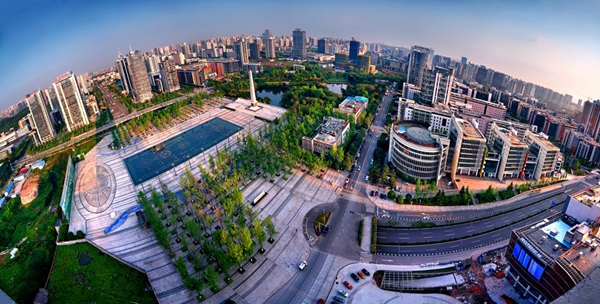
Aerial View of Chongqing Liangjiang New Area
The reason why biomedicine has become a focal point of Chongqing’s industrial planning is closely tied to the city’s industrial continuity. It is understood that, in terms of its foundational strengths, Chongqing is first one of China’s top ten cities for the production and export of chemical active pharmaceutical ingredients (APIs), boasting a wide variety and large volume of such products, along with robust R&D capabilities for improving chemical synthesis processes. Second, Chongqing is home to several leading listed pharmaceutical companies, including Taiji Group, Laimi Pharmaceutical, and Huapont Life Sciences. Furthermore, Chongqing possesses high-level research teams at institutions such as the Third Military Medical University, Chongqing Medical University, and the Chongqing Institute of Pharmaceutical Industry.
With a solid industrial foundation, leading enterprises, and a robust talent pool, Chongqing has established a “timeline and roadmap” for the development of its biopharmaceutical sector, prioritizing it as one of the ten strategic emerging industries. The goal is to achieve citywide biopharmaceutical sales exceeding RMB 100 billion by 2017, forming a competitive industry cluster at the hundred-billion-yuan level; and to reach RMB 150 billion by 2020, establishing Chongqing as a major national base for the biopharmaceutical industry.
This is the broader context. Against this backdrop, the Free Trade Zone has inherited this historical trajectory while simultaneously paving the way for industrial translation and facilitating the rational localization of foreign-invested pharmaceutical and healthcare enterprises.
According to VCBeat, the Chongqing Free Trade Zone will enjoy the following preferential policies in the fields of healthcare and pharmaceuticals:
1. Application for permission to establish a wholly foreign-owned hospital.
2. The trial period for the practice of foreign physicians is extended to 3 years.
3. The required period of nursing practice for overseas nurses is tentatively relaxed to three years.
4. Expedite the import registration and approval process for medical devices and pharmaceuticals. When approving non-public healthcare institutions and their offered diagnostic and treatment services, health authorities may concurrently approve large-scale medical equipment required within the institution’s scope of practice that meets configuration standards, and appropriately reduce import tariffs on certain medical devices and pharmaceuticals.
5. Pilot the establishment of foreign-funded specialized health and medical insurance institutions.
As indicated above, the pharmaceutical, medical, and insurance sectors are all involved. The first three points can be interpreted as enabling residents within the region to access overseas medical services without leaving their homes. However, for overseas medical providers to enter the local market, they require assistance from professionals familiar with market dynamics and policy implementation. This implies that local enterprises can collaborate with overseas medical resources to facilitate their market entry and operational localization.
Next are the approvals for drug and medical device imports, along with preferential import tax policies. Which enterprises stand to benefit? Analysis suggests that internet healthcare platforms and pharmaceutical e-commerce companies may see development opportunities.
A viable approach is to register a physical hospital locally and introduce overseas medical and pharmaceutical resources, thereby enabling “cross-border healthcare” within the country. Customer acquisition in the domestic market can be expanded through internet hospitals and mobile health services, which would offer strong competitiveness in terms of cost and labor expenditures. Additionally, as pharmaceutical e-commerce platforms significantly strengthen their supply chain capabilities (in areas such as SKU availability, pricing, and timely, stable delivery), innovative overseas drugs and generic drugs (which have significant price advantages) may become key targets for introduction.
With the biopharmaceutical industry incorporated into Chongqing’s municipal industrial planning framework, the relevant policies of the Free Trade Zone serve as “icing on the cake,” potentially attracting follow-on investments from domestic and international pharmaceutical and healthcare investors.
Hainan International Medical Tourism Pilot Zone: Rational Utilization of Natural Endowments
According to VCBeat (WeChat ID: vcbeat), the Boao Lecheng International Medical Tourism Pilot Zone (hereinafter referred to as the “Pilot Zone”) was established quite some time ago, having received official approval from the State Council as early as 2013 and benefiting from relevant policy support.
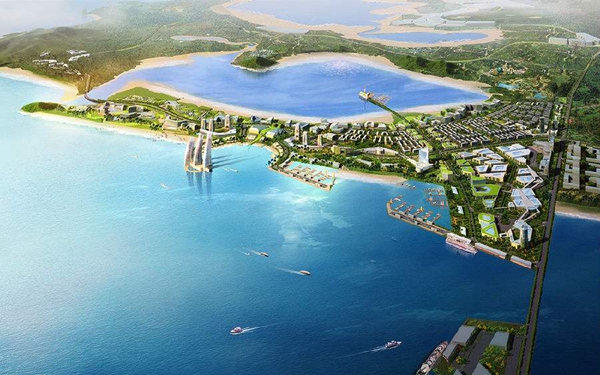
Master Plan for the Development of an International Tourism Island (Conceptual)
The pilot zone is located between the urban area of Jiaji Town in Qionghai City and the core area of the Boao Forum for Asia, with a planned area of approximately 20 square kilometers, including 10 square kilometers designated for construction land. Its primary objective is to leverage local natural resource endowments to focus on developing industries such as healthcare, elderly care, and scientific research.
According to VCBeat, the preferential policies enjoyed by this pilot zone include market access for medical technologies used in clinical applications and research, approval procedures for large-scale medical equipment, relaxed restrictions on the practice duration of foreign physicians, permission for foreign capital to establish medical institutions, and appropriate reductions in import tariffs on certain medical devices and pharmaceuticals. These measures are largely similar to the preferential policies recently approved for the Chongqing Free Trade Zone (or it can be said that the Chongqing Free Trade Zone has drawn lessons from this region’s practices).
Since the collective commencement of construction on the first batch of seven projects in late December 2015, the Pilot Zone has engaged with 92 projects, including 60 that have been formally accepted. The total investment for the 20 projects already under construction amounts to RMB 19.8 billion, and seven projects are scheduled to commence operations or trial operations by the end of March.
Implemented projects span licensed healthcare, reproductive medicine, health management, medical aesthetics, and anti-aging, with collaborations established with medical and research institutions in the United States, Japan, Germany, Switzerland, and other countries. Among these, the Boao Evergrande International Medical Center, the China Regenerative Medicine Group project, and the Children’s Hospital of Philadelphia are already operational.
Based on projects that have already been implemented or are about to be launched, the planning focus leans toward research-oriented and cross-border medical services, given the local absence of an industrial foundation in healthcare and pharmaceuticals. In terms of policy continuity, the Pilot Zone falls under the Hainan International Tourism Island initiative (launched in 2010 with a focus on developing tourism, vacationing, and modern service industries). Medical services were incorporated in 2013 as part of the overall tourism-related services, accompanied by extensions into scientific research, elderly care, and other related fields.
From an investment perspective, Hainan’s geographical location is not well-suited for developing manufacturing operations in pharmaceuticals and medical devices (due to factors such as raw material sourcing and finished product transportation), making industrial investment inadvisable. However, leveraging the Marketing Authorization Holder (MAH) system and preferential policies for introducing overseas resources, contract research organization (CRO) services may hold significant potential.
In addition, based on analyses related to the Chongqing Free Trade Zone, sectors such as internet healthcare and pharmaceutical e-commerce may offer sound investment rationales.
In summary, the preferential policies related to healthcare and pharmaceuticals in free trade zones have a certain agglomeration effect on medical investment. However, it is also necessary to consider local conditions such as industrial foundation, talent reserves, and resource endowments, so as to tailor strategies and implement differentiated layouts.