

NGS Innovation Developer Conference 2017 Highlights: Cancer Screening Gains Momentum and Third-Generation Sequencing Emerges
On March 31, 2017, a lingering chill permeated the air, and pedestrians were few and far between. In contrast, Hangzhou’s Dream Town bustled with activity. The 4th NGS Innovation Developers Conference was held in Dream Town, bringing warmth to the West Lake area despite the late spring cold snap.

As one of the most influential industry conferences in the field of gene sequencing in China, the event aims to provide a platform for developers of gene sequencing technologies to share technical solutions and success stories, as well as to engage in exchanges with leading experts in the field.
More than 400 renowned experts and scholars, successful entrepreneurs, and innovative developers in the field of gene sequencing—both domestic and international—along with leading media outlets focusing on technological innovations in gene sequencing, top-tier investors, and representative end users, convened to share cutting-edge industry insights and discuss strategies for technological innovation, translational applications, and sector development. VCBeat has compiled a report on the novel applications of next-generation sequencing (NGS) technologies presented at the conference.
Non-Invasive Prenatal Testing: Prenatal Screening Technology Without High-Throughput Sequencing
With the cancellation of the pilot program for non-invasive prenatal testing in 2016, cell-free DNA-based non-invasive prenatal testing officially entered clinical practice—NIPT was undoubtedly one of the most prominent medical buzzwords of 2016.
At the conference, Dr. Liu Chao, Chief Scientist at Tianhao Biopharmaceuticals, introduced a novel, independently developed non-invasive prenatal screening technology: NiPS Non-Invasive Prenatal Screening Technology.
This technology is based on a fluorescence capillary electrophoresis platform, utilizing designed targeted probes for copy number quantification. By calculating standardized Z-scores to determine the deviation from normal copy numbers, it achieves the detection of minute changes in fetal copy number within maternal blood.
In simple terms, compared with current NIPT technologies, NiPS offers advantages such as low cost (<¥100), short turnaround time (~24 hours), targeted detection, and the ability to detect microdeletions/microduplications in fetal genomic regions smaller than 50 kb. However, due to its relatively short development history, large-scale clinical validation has not yet been conducted, and the design and optimization process for DNA probes remains cumbersome.
In addition, Dr. Jiang Peiyong from The Chinese University of Hong Kong presented the latest findings from the laboratory of Professor Dennis Lo, known as the “Father of Non-Invasive Prenatal Testing,” bringing the conference to a minor climax.
While sharing general methods for the non-invasive diagnosis of monogenic diseases, he briefly introduced the development of non-invasive prenatal testing (NIPT) for monogenic disorders, from the discovery of fetus-specific Y-chromosome sequences in 1997, to the study of relative mutation dosage (RMD) in 2008, and further to relative haplotype dosage (RHDO) in recent years. Haplotype phasing strategies include family-based haplotype analysis and microfluidics-based linked-read sequencing.
Non-invasive Diagnosis of Monogenic Diseases: Characterized by High Accuracy and Versatility, It Eliminates the Need for Mutation-Specific Assays and Is Suitable for the Diagnosis and Screening of Monogenic Disorders.
Early Cancer Screening: The Blue Ocean Market for NGS
In addition to non-invasive prenatal testing, NGS technology also has substantial market demand in the field of cancer screening.
The United States sees several hundred thousand to just under one million new cancer cases annually, whereas China records 3 million. In 2015, the number of new cancer cases in China even reached 4.3 million, four times that of the United States. Moreover, while 50% of cancer cases in the United States are diagnosed at middle or late stages, this figure stands at 80% in China. However, current methods for early cancer screening are extremely limited, creating an urgent need for precise early cancer screening technologies.
Professor Shi Qihui from Shanghai Jiao Tong University, Professor Huashan Yang from the Sidney Kimmel Cancer Center at Thomas Jefferson University in Philadelphia, Dr. Rui Liu, CTO of Genetron Health, and Dr. Chaoyu Liu, CEO of Shenzhen Yinhe Biotechnology, presented the latest advances in next-generation sequencing (NGS) for cancer screening.
Professor Shi Qihui believes that single-cell sequencing may be a promising approach for cancer screening. The identification of circulating tumor cells (CTCs) relies on methods such as protein biomarkers, morphological analysis, fluorescence in situ hybridization (FISH), and single-cell sequencing. Among these, single-cell sequencing is a relatively simple and reliable method. The purpose of single-cell sequencing is to accurately identify CTCs and recognize drug targets. Single-cell sequencing is primarily employed because these rare cells can be as few as one in number, necessitating single-cell resolution to help determine the true count of CTCs in blood samples.
The technical challenges of single-cell sequencing for rare cells in complex samples are primarily reflected in how to reliably obtain single or extremely small numbers of target cells, and how to simply and accurately identify/screen target cells while maintaining cell viability for subsequent sequencing.
Professor Yang Hushan has applied intelligent data analysis to early cancer screening. He pointed out that the application of liquid biopsy technology for early screening of liver cancer holds significant clinical and commercial prospects in China. Currently, tumor liquid biopsy is mainly used for prognostic assessment, treatment guidance, and disease monitoring in mid-to-late stage cancers, as well as for screening and diagnosing early-stage cancers. More efforts have been devoted to the former direction, primarily because the concentration of ctDNA is higher in patients with mid-to-late stage cancer than in those with early-stage cancer, resulting in greater detection accuracy.
Dr. Liu Chaoyu believes that to achieve mature and comprehensive early cancer screening, technological breakthroughs must be made on three levels. First, how to detect mutations from blood; second, how to establish the relationship between these ctDNA mutations and tumors; and third, how to achieve organ-of-origin tracing based on ctDNA detection. He revealed that Yinhe Biology has already taken the lead in completing cfDNA testing for 1,000 cases.
Dr. Liu Rui shared the collaborative achievement of Professor Gao Yuan and Professor Zhang Kun in developing the first large-scale targeted DNA methylation sequencing technology. The pathogenic mechanisms of cancer include somatic genetic and epigenetic abnormalities, which complement each other. Due to the complexity of tumors, many challenging cases are difficult to trace back to their origin and diagnose at an early stage. Currently, DNA methylation detection technology has been applied to tumor classification, differential diagnosis, prognosis, and guidance for medication, thereby facilitating precision oncology.
Single-Molecule Sequencing: The Rise of Third-Generation Technologies
Since the launch of the first 454 GS FLX sequencing platform in 2006, next-generation sequencing (NGS) high-throughput technologies based on non-Sanger principles have gradually become the mainstream in genomics research.
Another class of DNA sequencing technologies not based on the Sanger principle emerged in 2008. These technologies, which rely on single-molecule signal detection, are referred to as single-molecule sequencing (SMS) or third-generation sequencing (TGS).
Due to its advantages, including higher throughput, relatively lower costs for instruments and reagents, and simpler operation, single-molecule sequencing has broader application prospects than second-generation sequencing technologies.
Professor Jingyue Ju from Columbia University presented a single-molecule sequencing technology based on nanopore detection and nucleotide labeling. Currently, widely used high-throughput sequencing instruments rely on optical components to detect the four DNA building blocks: A, C, G, and T. In nanopore sequencing, single-stranded DNA passes through a nanoscale pore under an applied voltage, generating electronic signals for sequence determination at the single-molecule level; however, due to the highly similar chemical structures of the four nucleotides, they cannot be distinguished using this method alone.
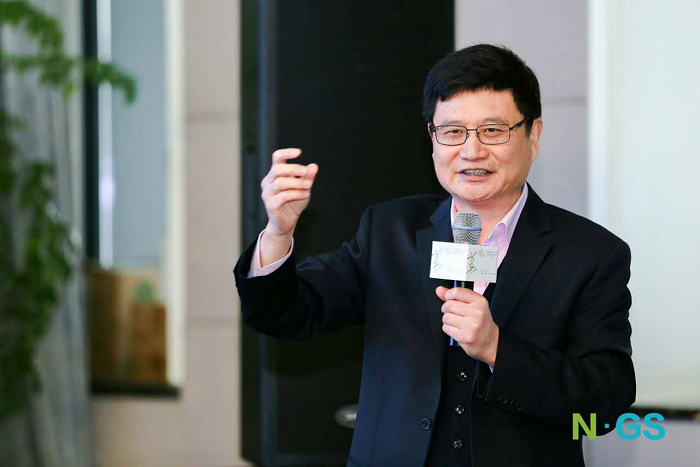
Columbia University’s Jingyue Ju, “Single Molecule Electronic DNA Sequencing by Synthesis Using Tagged Nucleotides and Nanopore Detection”
Professor Ju Jingyue stated, “Sequencing using polymer-labeled nucleotides on nanopore arrays allows for better discrimination, which is of great significance for improving sequencing accuracy and facilitating the miniaturization of future sequencing devices.”
Dr. Han Cao, Founder and Chief Scientist at Bionano, shared insights on Saphyr, an intelligent, high-throughput, single-molecule platform for detecting genomic structural variants, which enables genome assemblies 100 times longer than those achieved with short-read technologies.
In human genomics research, the primary role of Saphyr is the detection of structural variants, which can be applied to translational and clinical studies of genetic disorders and cancer. In non-human genomics research, it can be utilized for selective breeding, evolutionary biology, and reference genome assembly.
Bionano’s next-generation mapping (NGM) technology integrates proprietary NanoChannel chips with optical genome mapping. Dr. Cao Han stated, “Saphyr performs NGM at a certain speed and throughput, making the study of complex genomes feasible while significantly reducing time and costs compared to previous generations, thus offering an efficient and cost-effective NGM solution.”
In addition to developers, industry luminaries such as Cai Daqing from Legend Capital, Yu Fengjia from Beike Angel Fund, Zheng Jie from Shulan Medical Industry Fund, and Ji Xuwu from Orient Securities also delivered keynote speeches. Wang Liang, Founder and CEO of GeneInsight, provided a comprehensive overview of the strategic landscape for domestic and international genetic companies during the “Golden Decade,” covering topics ranging from the essence of precision medicine, policy regulation, upstream and downstream industries, and cross-sector integration, to the global market map. The NGS Conference brought together all key stakeholders in the industry, including technology providers, institutions, investors, and clinical practitioners.
With the concluding remarks by Hao Xiangwen, the initiator of the conference, the 4th NGS Innovation Developers Association came to a successful close. From 2014 to the present, the NGS Innovation Developers Association has completed four years of development.
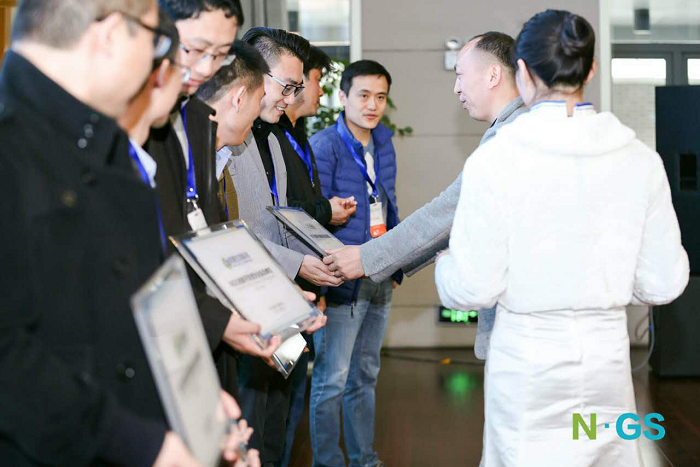
NGS Innovative Developer Association Accreditation Ceremony
Hao Xiangwen revealed, “The association is self-organized and holds an annual conference.” With new members continuously joining, the team is not only growing stronger. We believe that with this group of like-minded innovators and entrepreneurs, the quality of the NGS Innovation Developers Conference will continue to improve. By pooling our collective wisdom and efforts, we will usher in a new era for NGS in China.