

Yitu Technology: From Assisting Police Investigations to Achieving Over 90% Accuracy in AI-Powered Pulmonary Nodule Detection
In the artificial intelligence industry, when Yitu Technology is mentioned, people typically think of its role in helping public security authorities solve crimes through facial recognition, assisting China Merchants Bank with "face-scanning" cash withdrawals, and powering Hangzhou’s "City Data Brain." However, little is known about its breakthroughs and progress in the medical field.
On February 14, 2017, CCTV’s “Approaching Science” program aired a story about how the medical industry’s “AlphaGo” assisted radiologists. The documentary revealed that Yitu Technology had jointly developed an intelligent auxiliary platform for medical image diagnosis with Zhejiang Provincial People’s Hospital.
Driven by curiosity about this dark horse in medical AI, VCBeat conducted an on-site interview in Hangzhou.
AI Dark Horse Enters Healthcare
Zhu Long, founder of Yitu Technology, once accompanied a family member to the hospital. After a long wait in the consultation room queue, the doctor spent less than three minutes with them before concluding the visit, leaving Zhu unable to assess the validity of the medical advice provided. Despite holding a Ph.D. from MIT, Zhu felt like an “illiterate” in front of the physician. At that time, he had a vague sense that something was amiss and began to wonder whether there might be a way to change this situation.
In 2016, Yitu Technology entered the healthcare industry. By that time, Yitu had already provided facial recognition technology to public security departments in over a dozen provinces across China, assisting in the resolution of more than 1,000 criminal cases, and had also deployed its facial recognition solutions for financial institutions, including China Merchants Bank.
Through collaboration and iterative refinement of applications in these industries, Yitu’s underlying algorithms and engineering capabilities have become increasingly mature, forming the foundation that enables Yitu to “run” fast and steadily in the healthcare sector.
VCBeat has learned that Yitu Technology’s founder, Zhu Long, holds a Ph.D. in Statistics from the University of California, Los Angeles (UCLA), where he studied under Professor Alan Yuille, one of the pioneers in the field of computer vision. His research focused on statistical modeling and computation in computer vision. He subsequently served as a postdoctoral researcher at the MIT Computer Science and Artificial Intelligence Laboratory (CSAIL) and conducted research at New York University in the laboratory of Yann LeCun, who currently heads Facebook’s AI Research lab.
Zhu Long’s partner, Lin Chenxi, co-founder of Yitu Technology, is an expert in the field of cloud computing. He previously built Apsara, China’s largest distributed cloud operating system with independent intellectual property rights, at Alibaba Cloud.
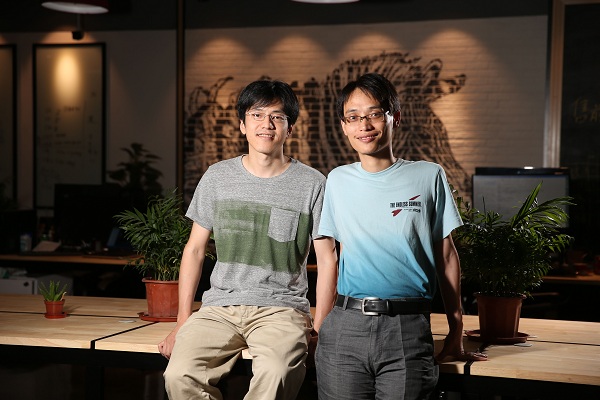
Founders Zhu Long (left) and Lin Chenxi (right)
Yitu entered the healthcare sector and, within just a few months, successively developed an intelligent imaging diagnosis assistance system and an intelligent diagnosis assistance system based on medical record data. In September 2016, Yitu collaborated with the Guangzhou Women and Children’s Medical Center to develop “Mimu Bear,” a virtual doctor designed to assist in the diagnosis of fever in young children.
According to public information obtained by VCBeat, “Mimu Bear” is a diagnostic model for more than ten common pediatric diseases, built using deep learning technology by training on hospital medical record data. The system automatically optimizes its algorithmic models through continuous evaluation and feedback from physicians, thereby rapidly enhancing diagnostic accuracy. It has been dubbed “Dr. Bear” by doctors at the Guangzhou Women and Children’s Medical Center.
Six months later, Yitu rose to prominence in the healthcare industry with the launch of its AI-powered imaging assistance platform for pulmonary nodules, built on the Yitu technology platform, at Zhejiang Provincial People’s Hospital.
“The Era of ‘Weak AI’: Letting Doctors Delegate Repetitive Tasks to AI”
At a symposium for directors of radiology departments in hospitals across Zhejiang Province, experts noted that we are still in an era of “weak artificial intelligence.” Nevertheless, within certain scopes, AI can fully assist physicians in improving work efficiency and help mitigate issues such as low diagnostic efficiency and insufficient accuracy resulting from work fatigue or lack of experience.
In fact, as an empirical science, radiology is constrained in high-density work settings byPhysician Fatigue and EmotionsSuch issues are indeed one of the key pain points that can be addressed with the assistance of new artificial intelligence technologies. For this reason, radiology departments, which possess vast amounts of data, have become one of the earliest areas in healthcare where AI has achieved breakthroughs.
Taking a tertiary hospital in a second-tier city as an example, specialist physicians review an average of approximately 200 patients’ CT scans per day. Each patient examination generates around 200 image files, resulting in a total of 40,000 images to be reviewed daily. Such a workload poses a significant challenge even for expert clinicians.
If artificial intelligence can first perform initial screening to detect and characterize lesions, the AI-generated results can then be compared with those of physicians, with any discrepancies reviewed by experts., thereby effectively reducing the workload of experts.
Zheng Yongsheng, an expert at Yitu Healthcare, believes that medical AI products are designed to serve physicians, and only by integrating into their workflow can one truly understand their actual needs.Initially, the industry believed that artificial intelligence involved machines learning from experts’ experience to assist primary-care physicians in making diagnoses; however, in reality, even specialists at tertiary hospitals have a strong need for it.。
Yitu AI Image Reading: Lung Nodule Detection Rate Exceeds 90%
In the process of going from “0” to “1” in the medical field, Yitu Technology, as with its previous entries into new sectors, must not only contend with the inherent uncertainties of “AI + Healthcare,” but also grapple with the extraordinary complexity of healthcare itself.
Taking pulmonary nodule detection as an example, there are clinically cases where patients present with multiple lesions, which inherently goes beyond simple pulmonary nodule detection.
“In the medical field, there are numerous scenarios such as pulmonary nodule detection. Leveraging Yitu’s currently established end-to-end R&D platform for medical AI, and with the participation of medical experts, we can rapidly deploy and implement our products across various specialized healthcare scenarios. Empowering medical experts to stand on the shoulders of AI and jointly advance the development of medicine is the core mission of Yitu Medical,” Zheng Yongsheng told VCBeat.
After five months of practical use, the computer-aided intelligent detection system for pulmonary nodules, jointly developed by the Department of Radiology at Zhejiang Provincial People’s Hospital and Yitu Technology, achieved a recognition rate of over 90% and an accuracy rate of 95% for small pulmonary nodules. This has improved the precision of pulmonary nodule examinations and significantly reduced the workload of radiologists.
Currently, Yitu Technology has completed a Series B financing round worth tens of millions of U.S. dollars, with Yunfeng Capital as the investor.