

2017 Internet Hospital Industry Report: Models and Profitability Behind the Boom

On March 19, 2017, the Yinchuan Municipal People’s Government and 15 enterprises held a centralized signing ceremony in Yinchuan for a new batch of internet hospitals. With the addition of these entities to previously established platforms such as Haodf Online and WeDoctor Group, the total number of internet hospitals in Yinchuan reached 17. This development sent shockwaves throughout the entire digital healthcare industry. Following the publication of VCBeat’s special report on the centralized signing of internet hospitals in Yinchuan, we received numerous inquiries from parties eager to explore remaining opportunities to “get on board” with Yinchuan’s initiative.
As of March 20, 2017, the number of internet hospitals in China had increased to 79.Since the launch of the Wuzhen Internet Hospital, VCBeat has been present at the opening ceremonies of nearly every internet hospital. We have had the privilege of witnessing the emergence and evolution of internet hospitals, from their inception to their growth.The industry is widely pondering a key question: Are internet hospitals a new monetization model for digital healthcare?
VCBeat’s editorial team published its first article on the theme of internet hospitals, titled “Will the Ultimate Destination of Mobile Healthcare Be Internet Hospitals?”, following the launch press conference of the Wuzhen Internet Hospital in December 2015. To date, VCBeat has published more than 60 reports on internet hospitals and has interviewed the founders of the vast majority of these platforms. On the occasion of the Third Annual Conference in 2016, VCBeat Eggshell Research Institute, in collaboration with Tencent Research Institute, released the “2016 White Paper on China’s Internet Hospitals,” providing the first comprehensive overview of internet hospitals in China.
In less than six months, internet hospitals have undergone significant changes in both quantity and form. Therefore, we believe it is necessary to re-examine this industry during its early explosive growth phase, based on VCBeat’s observations and insights. To this end, we have produced a second report: “Analysis of Business Models in the Internet Hospital Industry.” Building on our ongoing attention to and understanding of internet hospitals, four analysts from VCBeat spent another month conducting an in-depth analysis of the operational, pricing, and profitability models of 79 internet hospitals to identify shifts in their business models.
This report is primarily divided into six sections, covering dimensional analysis of internet hospitals; policies and trends in the internet hospital sector; the two mainstream models of internet hospitals; and revenue models for internet hospitals. The overall discussion centers on the industry, with analyses conducted from the perspectives of policy, industry landscape, and revenue models.
Meanwhile, in this report, VCBeat, in collaboration with the Mobile Healthcare Professional Committee of the Chinese Research Hospital Association (MMC-CRHA) and DXY, conducted a survey among hospital administrators to gauge their interest in internet hospitals. A total of 55 valid questionnaires were collected. We aim to clarify: What is the actual attitude of hospital administrators toward internet hospitals?
Finally, VCBeat and Eggshell Research Institute also conducted a multi-dimensional evaluation of the internet hospitals that have already been built and launched online, scoring them on aspects such as service process, service content, breadth of connectivity, and depth of connectivity, to assess the maturity level of these internet hospitals.
VCBeat has always firmly believed that we are both companions and learners in the internet healthcare industry. We aspire to provide the most comprehensive coverage of the internet hospital sector, yet our ambitions have sometimes outpaced our capabilities. The information in this report is derived from publicly available materials and interviews, and it lacks more extensive and in-depth data. If you have better ideas or suggestions, we welcome you to contact us for further discussion.
VCBeat has selected excerpts and data from the “2016 White Paper on China’s Internet Hospitals” and “Analysis of Industrial Models for Internet Hospitals” for the analysis below, to examine how the internet hospital industry has changed over the past few months.Purchase a VCBeat membership to view the full report。
Internet Hospitals Transition from Exploration Phase to Explosive Growth Phase
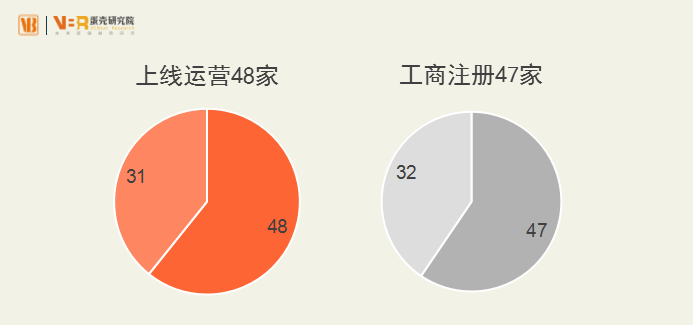
As of March 20, 2017, the number of internet hospitals in China reached 79.Among them, 48 are in operation and 31 are under construction; the number of internet hospitals is expected to exceed 100 by the end of 2017. In contrast, VCBeat’s “Internet Hospital Report” released last November recorded a total of 36 internet hospitals.That is to say, the number of internet hospitals doubled in just four months.
Although the internet healthcare industry has experienced booming growth since 2014, how to break down hospital walls and reshape diagnosis and treatment processes online remains a challenge that every internet healthcare company is exploring. However, the industry has yet to solve the problem of monetizing traffic, and the commercialization potential in the era of lightweight consultations is limited. Only when internet healthcare can penetrate into online diagnosis and treatment, effectively addressing patients' real needs, can its commercial value be realized on a scalable level.
However, it is far from easy for internet healthcare companies to achieve diagnosis and treatment. The transition from offline to online is not as straightforward as in other industries, because medicine is a serious field governed by stringent regulations. Each step—from initial online appointment scheduling, to subsequent lightweight online consultations, and now to comprehensive internet-based diagnosis and treatment—represents a significant leap forward.
It was not until the establishment of internet hospitals that digital health companies found a way to leverage the internet for clinical diagnosis and treatment. However, whether in terms of regulations, policies, or processes, internet-based diagnosis and treatment remained largely uncharted territory, requiring a trial-and-error approach.
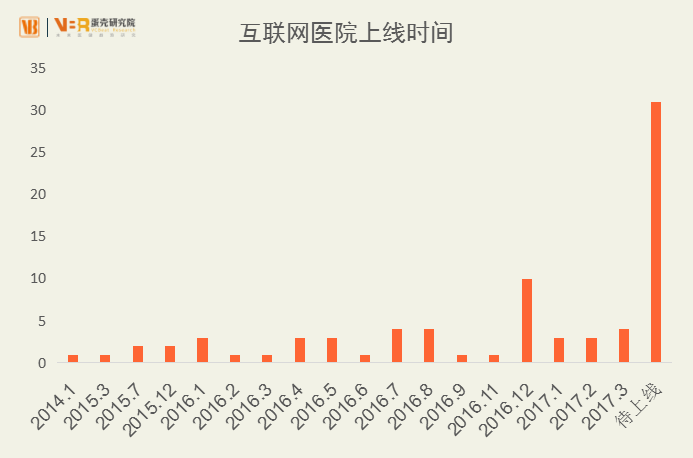
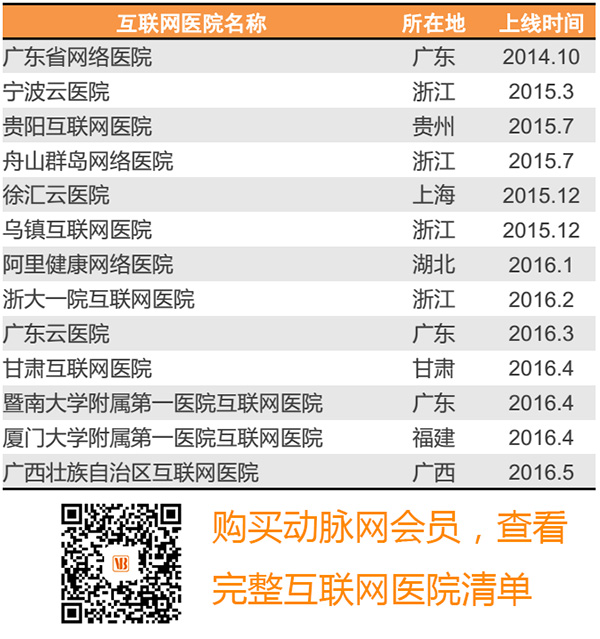
In October 2014, the Guangdong Provincial Internet Hospital, jointly established by the Second People's Hospital of Guangdong Province, Shenzhen Youdeyi Technology Co., Ltd., and dozens of chain pharmacies across Guangdong Province, began its exploration of the “Internet + Healthcare” model. The concept of internet hospitals gained significant prominence with the unveiling of the Wuzhen Internet Hospital at the World Internet Conference in December 2015.Since the inception of internet hospitals in 2014, the sector underwent a two-year exploratory phase during 2014 and 2015, during which a total of six internet hospitals were established.
In addition to exploring reforms in systems, policies, and regulations, they have also been working on how to achieve secure diagnosis and treatment services over the internet. In 2016, internet hospitals entered a growth phase, with 41 such facilities commencing construction in a concentrated effort. In 2017, the sector experienced an explosive surge: within less than three months, 31 internet hospitals had signed agreements and were preparing for construction.
Highest Enthusiasm in Medically Underserved Regions
Regions with the highest enthusiasm and leading numbers in the establishment of internet hospitals are often those with underdeveloped medical resources; therefore, provinces with relatively weaker medical resources, such as Ningxia, Guizhou, Henan, and Guangxi, appear on the list.
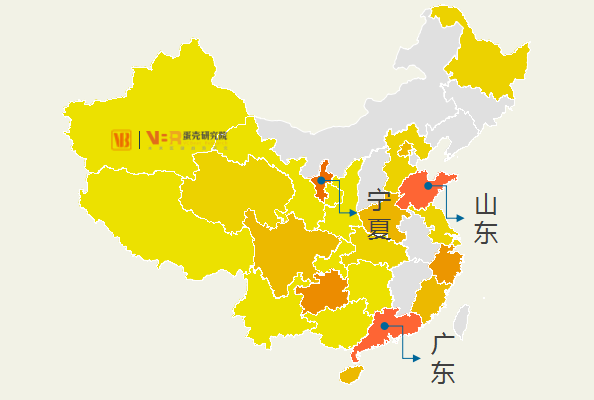
The Internet hospital covers a total of 25 provinces (municipalities).In terms of the number of registered internet hospitals, Ningxia leads with 17. Guangdong and Shandong follow closely, each having onboarded 8. Additionally, Guizhou, Zhejiang, and Henan have registered 6, 5, and 4 internet hospitals, respectively.
From a temporal perspective,Most of the internet hospitals established in the early phase were primarily located in Guangdong, Zhejiang, and Shanghai—three regions characterized by robust economic development, a high concentration of IT enterprises, strong digital awareness, and relatively abundant medical resources., initiating pilot programs. After achieving certain results, regions with an urgent need for high-end medical resources, such as Guizhou, Ningxia, and Guangxi, began to follow suit on a large scale.
In March of this year, Yinchuan, Ningxia, signed contracts with 15 internet hospitals at once, becoming the region with the largest and most concentrated number of internet hospitals, thereby creating an industrial cluster for internet hospitals.Yinchuan, located in northwest China—a less developed region with relatively scarce medical resources—has pioneered the “Yinchuan Model” of internet-based healthcare. As one of the second batch of national pilot cities for healthcare reform in China, Yinchuan has leveraged big data and “Internet Plus” emerging technologies, supported by policy innovation, legislative safeguards, and systemic reforms.
Yinchuan has issued six related policies to safeguard the operation of internet hospitals.In December 2016, Yinchuan City took the lead in China by issuing policy documents such as the "Yinchuan Internet Hospital Management System (Trial)," the "Yinchuan Internet Medical Institution Supervision and Management System (Trial)," and the "Yinchuan Internet Hospital Management Measures (Trial)," which played a key role in promoting the development of internet hospitals. In March 2017, Yinchuan City introduced three additional policies: the "Internet Hospital Licensed Physician Access and Rating System," the "Detailed Rules for the Implementation of the Yinchuan Internet Hospital Management Measures (Trial)," and the "Yinchuan Internet Hospital Medical Insurance Personal Account and Outpatient Pooling Management Measures (Trial)," achieving a breakthrough in the pooled reimbursement of medical insurance for internet hospitals.
The Types of Internet Hospitals Are Increasing
Internet hospitals require a preparatory phase from contract signing and construction to actual launch. According to statistics from VCBeat, the Guangdong Provincial Network Hospital went online in October 2014. In 2015, five internet hospitals were identified through public searches as having launched. In 2016, an average of nearly three internet hospitals were established per month, and in 2017, an average of three began operations each month. Additionally, news reports indicate that 31 internet hospitals have completed contract signing and are awaiting launch.
The number of internet hospitals has increased, and their business models have evolved. The landscape has shifted from a dual trajectory—where internet healthcare companies expanded offline and public Grade A tertiary hospitals moved online—to a multi-stakeholder model led by internet healthcare enterprises, public hospitals, government bodies, and industry associations. Meanwhile, hospital specialties have diversified from general practice to specialized fields such as chronic disease management, cardiology, and orthopedics.
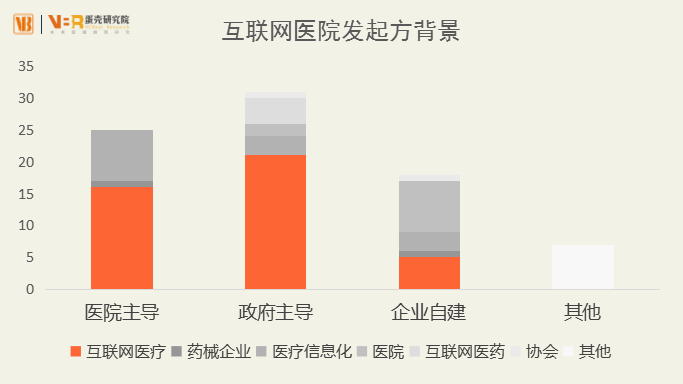
Table of Contents for the Report “Analysis of Industrial Models of Internet Hospitals”:
Internet Hospital Dimensional Analysis;
Policies and Trends of Internet Hospitals;
The Two Mainstream Models of Internet Hospitals;
Profit Model of Internet Hospitals;
Survey on Hospital Administrators' Attention to Internet Hospitals;
Maturity Assessment of Internet Hospitals.
To read the detailed report and case studies, please click “Member Exclusive Circle"Purchase. Entrepreneurs, investors, and industry professionals are welcome to contact us for discussion and exchange."