

Stanford University's One-Shot Learning Algorithm Enables Drug Discovery with Minimal Data, Challenges Big Data Paradigm in AI
The capabilities of deep learning algorithms are astonishing. From identifying cats and dogs to detecting nodules in medical images, algorithmic performance has surpassed that of humans. However, these algorithmic models require vast amounts of data for training, leading people to believe that big data is the foundation of artificial intelligence. But recentlyA Stanford research team in the United States has developed a new algorithm—One-Shot Learning—and applied it to the field of new drug development.. VCBeat learned thatThese research findings were published in the journal ACS Central Science on April 3.
In the first experiment, the algorithm predicted the toxicity of three additional compounds after learning from six compounds. In the second experiment, it predicted the side effects of six other drugs after learning from 21 drugs. In both experiments, the algorithm’s predictive accuracy outperformed random guessing.
Vijay Pande, a chemistry professor at Stanford University and member of the team, stated, “We are attempting to apply machine learning, particularly deep learning, to the early stages of drug design. The key point is that if you already have thousands of drug design candidates, you may already have a successful drug.”
However, the team acknowledged that applying one-shot learning to drug development is not yet mature due to the limited amount of data. Fortunately, they have previously succeeded in applying machine learning algorithms to drug development, where only hundreds of data points were needed to test the accuracy of an algorithm.
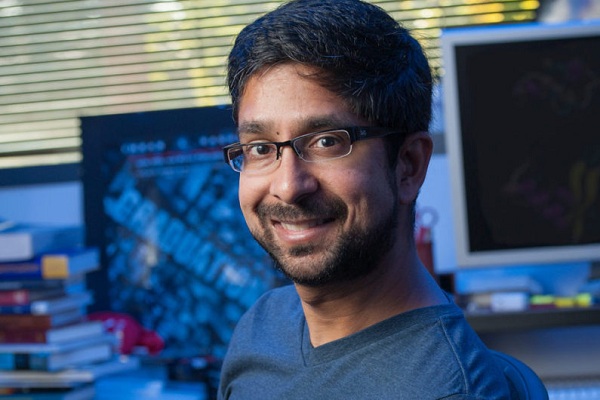
Stanford Chemistry Professor Vijay Pande (Image credit: LA Cicero)
From Images to Molecules
To facilitate more effective data analysis, researchers represented the molecular structures of drugs using atom-based geometric graphs, thereby converting drug molecules into information recognizable by algorithms. Experiments conducted using this approach yielded the aforementioned results, with the algorithm’s predictive accuracy surpassing that of random guessing.
Bharath Ramsundar, a graduate student in the Pande Lab, and researcher Bharath Ramsundar stated, “We examined several prototype algorithms and found that they were able to make highly accurate predictions given a set of data points.”
However, Ramsundar warned that this is not a technology that can be called “magic.” The experimental data is based on several recent advances in one-shot learning under specific conditions, and its mechanism relies on the structural proximity and similarity of different molecules. For example,When researchers trained the algorithm on toxicity data and then tested it on side effect data, the algorithm completely collapsed. In other words, the algorithm could only test for either toxicity or side effects, but not both.
The team also emphasized a key point: artificial intelligence will not replace humans. Instead, this algorithm will ultimately serve as a tool for chemists. By leveraging machine learning, the algorithm can provide more reliable recommendations when chemists select candidate drug design proposals, a process that currently relies heavily on intuition.
VCBeat has learned that, in addition to its application in drug R&D, the tool is also suitable for molecular chemistry.The Pande lab has tested various chemical compositions in solar cells to obtain different results. They have also made all the code used for the experiments open source as part of the DeepChem library.
Finally, Pande stated that this technology has not yet reached the stage of final application and is merely a beginning, but it has opened up a new field!
Original article link: http://news.stanford.edu/2017/04/03/deep-learning-algorithm-aid-drug-development/
Paper link: https://arxiv.org/abs/1611.03199