

UEG Launches World's First Spectral CBCT Device and Secures Tens of Millions in Series A Funding from Huayi Capital
Recently, VCBeat learned that Shanghai UEG Medical Imaging Equipment Co., Ltd. (hereinafter referred to as “UEG”) has secured an exclusive multi-million RMB investment from Huayi Capital, thereby completing its Series A financing. UEG is a medical device R&D company integrating scientific research and manufacturing, dedicated to the development of medical imaging equipment. Its globally first spectral cone-beam CT (hereinafter referred to as “spectral CBCT”) device, with independent intellectual property rights, made its global debut at the International Dental Show in Cologne, Germany, from March 21 to 25, 2017.
Hao Xiaojing of Huayi Capital told VCBeat, “UEG is a leader in the dental CT sector, an area that Huayi Capital closely monitors and views as having strong growth prospects.”
On March 20, 2017, KU Leuven and the UEG held an inauguration and signing ceremony for the UEG Chair. KU Leuven was ranked eighth globally and first in Europe in the 2016 Global Research University Rankings. Professor Jacobs from the university serves as Co-Chair of the UEG and as the European President of the International Association of Dentomaxillofacial Radiology, making him one of the most authoritative experts in the field. This collaboration between the UEG and KU Leuven is based on spectral oral CBCT technology, aiming to further enhance the advantages of this innovative technique and explore its in-depth applications in the field of dentistry.
After returning to China from the United States, Dr. Xi, the company’s Chief Scientist, led his team in developing the world’s first spectral CBCT with independent intellectual property rights.
The World's First Spectral Dental Cone Beam CT System
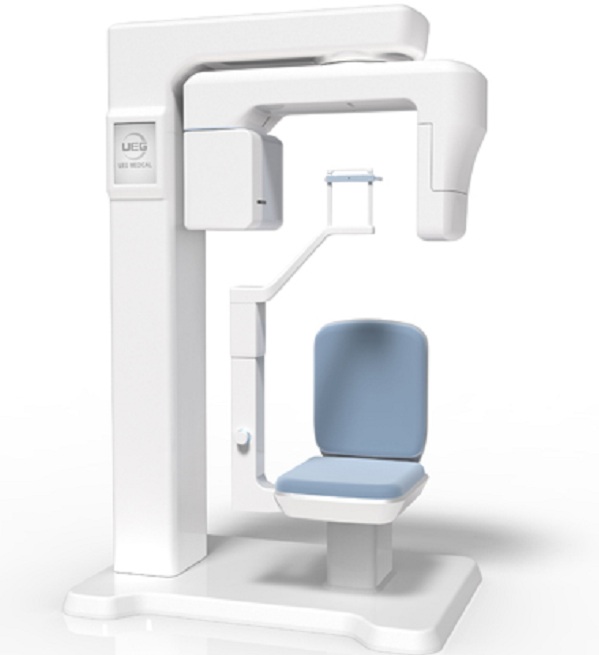
Currently, CT has become an important tool for disease diagnosis and screening. Compared with conventional CT, the most significant feature of spectral CT is that it provides a comprehensive diagnostic model based on various quantitative analysis methods and multi-parameter imaging, such as base material images, monoenergetic images, and spectral curves. Its unique multi-parameter imaging mode differs from common CT diagnostic modes. It utilizes highly sensitive instruments to measure the human body based on the varying absorption and transmission rates of X-rays by different tissues. The acquired data are then input into a computer for processing, enabling the CT scanner to capture cross-sectional or three-dimensional images of the examined areas, thereby detecting minute lesions in any part of the body.
Image quality in oral CT is critical in practical applications, as high-quality images provide more precise diagnostic information. Additionally, surgical planning requires clear images to accurately delineate target regions. Compared with traditional oral imaging modalities, such as panoramic radiographs and periapical radiographs,Dental CBCT devices can provide precise three-dimensional structural information and are increasingly widely used in the diagnosis of dental diseases and surgical planning.。
On the other hand, to address the issue of metal artifacts, most dental CT systems currently on the market rely on software algorithms; however, a more effective solution requires returning to the underlying physical principles responsible for their generation.The fundamental cause of metal artifacts lies in the broad-spectrum distribution characteristics of X-rays and the nonlinear attenuation of X-rays by materials as energy increases; therefore, it is virtually impossible to completely eliminate them solely through software algorithms.
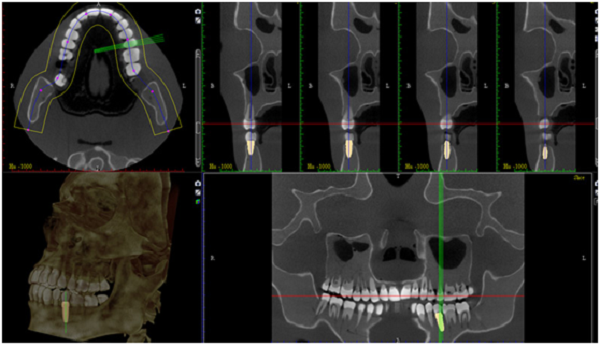
In recent years, spectral CT imaging equipment has been gaining widespread adoption in hospitals.One of its advantages is the ability to eliminate metal artifacts in CT images by generating monoenergetic images, thereby addressing the problem at its root.. However, this technology is currently limited to large-scale spiral CT scanners. In the domestic and international markets, UEG has developed the world’s first spectral dental CBCT device and launched it globally, holding immense potential for future development.