

Wanda's $12.7 Billion Bet on Premium Healthcare in Chengdu: Wang Jianlin's Strategic Vision
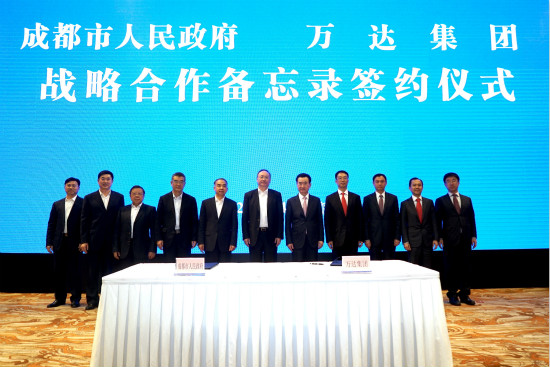
Signing Ceremony
VCBeat has learned that on April 6, Wanda Group and the Chengdu Municipal People’s Government officially signed a strategic cooperation memorandum. The two parties have agreed to invest RMB 70 billion to build a world-class medical industry hub.
The medical industry center will be planned into two zones: Zone A, the General Hospital Zone, where Wanda Group will be responsible for introducing two world-class general hospitals and eight internationally leading specialized hospitals; and Zone B, the Medical Industry Park, which will attract 30 healthcare-related enterprises.
To date, Wanda Group’s total investment in Sichuan Province has reached RMB 220 billion, making it one of the provinces with the largest investments by Wanda. In Chengdu alone, there are as many as 13 projects either under construction or already in operation. Wang Jianlin, Chairman of Wanda Group, once stated to the media, “As the Honorary President of the Sichuan Entrepreneurs Association, I hope to bring the best back to my hometown.”
High-end healthcare has long struggled with profitability. Why, then, is the astute Wanda Group still investing heavily in this sector? What is the logic behind Wang Jianlin’s strategy?
This is the third time Wang Jianlin has mentioned building a world-class medical industry hub in Chengdu.
In fact, Wang Jianlin’s passion for high-end healthcare can be traced back to January 2016. At that time, he had just signed a cooperation agreement with International Hospitals Group Limited (hereinafter referred to as IHG) in Beijing. It was immediately announced that Wanda would invest a total of RMB 15 billion to build three comprehensive international hospitals in Shanghai, Chengdu, and Qingdao. These hospitals would be operated and managed by IHG under the IHG brand (known in Chinese as “Yinci Wanda International Hospital”). This marked the largest investment by a Chinese enterprise in the healthcare industry and represented IHG’s first hospital operation and management project in China.
According to VCBeat, the three comprehensive international hospitals invested in by Wanda Group have achieved world-class standards in hardware, medical care, and operational management. Shanghai Yingci Wanda International Hospital has 1,000 beds and an investment of RMB 8 billion.Chengdu Yingci Wanda International Hospital has 500 beds and an investment of RMB 5 billion.; Qingdao Yingci Wanda International Hospital has 200 beds and an investment of RMB 2 billion.
On August 1 of the same year, the Wanda Reign Center, located at the intersection of Renmin South Road and Binjiang Middle Road in Chengdu, will be developed into a world-class medical and health platform. Industry insiders have described the Wanda Reign International Medical and Health Center as highly distinctive, as it is not any conventional type of medical institution but rather a premier medical and health platform that brings together top-tier organizations, including IHG from the United Kingdom.
Its positioning has also attracted many high-end medical institutions to settle in. This leveraged approach—using limited physical space to mobilize infinite resources—is not only prudent but also ensures substantial cash flow and profits, while enhancing brand image. This is Wanda’s strength.
As early as April 2015, Wanda Group signed an investment cooperation agreement with Chengdu Municipality, covering areas such as cultural tourism, healthcare, e-commerce, and urban complexes. Among these, the Dujiangyan Wanda Cultural Tourism City project, the Tianfu New Area Wanda International Medical Center project, and the Shuangliu County Wanda E-Commerce Cloud Base project will become landmark initiatives for Chengdu’s transformative development at the new starting point of “New Normal, Trillion-Yuan Scale, and Renewed Momentum.”
Among them, the Wanda International Medical Center project has a total investment of approximately RMB 10 billion.Wanda Group will partner with world-renowned medical institutions to create a comprehensive healthcare service complex centered around a top-tier international hospital.
Since last year, Wang Jianlin has repeatedly expressed his intentions to “de-emphasize real estate” and “pivot.” Backed by Wanda’s substantial financial strength and extensive resources, the company was once the dominant player in commercial real estate. In recent years, it has also achieved smooth and successful expansion in tourism, culture, film and television, and entertainment.
In 2016, Wanda Group’s operating revenue reached RMB 254.98 billion, a year-on-year increase of 3.4%. Among this, Wanda Commercial generated RMB 143.02 billion in revenue, a year-on-year decrease of 25%; Wanda Culture Group recorded RMB 64.11 billion, up 25% year on year; the film industry contributed RMB 39.19 billion, up 31.4%; the tourism industry brought in RMB 17.43 billion, up 37.1%; and the sports industry generated RMB 6.4 billion, up 9%. Meanwhile, Wanda Network Group reported RMB 4.19 billion in revenue, Wanda Financial Group RMB 21.35 billion, and Wanda Department Store RMB 17.82 billion. In 2016, the cultural industry accounted for more than one-quarter of Wanda Group’s total revenue, firmly establishing itself as a pillar industry of the group.
In fact, it is not only IHG; in the past two years, U.S. institutions such as the Mayo Clinic and Massachusetts General Hospital have also made strategic moves into China’s high-end private hospital sector, attempting to bring foreign healthcare “luxury” services to the Chinese market.
However, a problem that cannot be overlooked amidst the fervent investment is that most large-scale, high-end hospital projects are currently suffering from severe losses, with some even shutting down within three years. Take the Shanghai International Medical Center, which opened in May 2014 with a total investment exceeding RMB 10 billion, as an example. Although its facilities rival those of five-star hotels and it has signed cooperation agreements with more than eight Grade III hospitals in Shanghai, the hospital’s bed occupancy rate has remained at only around 10% since its opening over a year ago. With annual operating costs exceeding RMB 100 million, the institution is struggling to survive.
Industry insiders believe that high-end hospitals face a limited target audience and must contend with competition from the international departments and special-needs units of Grade 3A hospitals, as well as high-end specialized hospitals. The latter are more widely recognized by patients; notably, in the high-end special-needs departments of Grade 3A hospitals, while registration fees are not covered, reimbursement for certain medications can still be processed through the national medical insurance system. Furthermore, as multi-site practice privileges for physicians have not been fully liberalized, these high-end hospitals struggle to achieve their desired profitability.
Moreover, investment in private hospitals is fraught with complexity. The typical pre-operational investment period spans approximately four to five years, with more high-end facilities requiring even longer construction timelines. Furthermore, establishing a strong reputation demands prolonged accumulation, thereby imposing higher requirements on capital.
Nowadays, Wang Jianlin has begun to invest substantial capital in high-end healthcare, with investments in Chengdu alone exceeding RMB 85 billion. This raises inevitable questions: Why is Wanda entering the high-end healthcare sector? Is this industry viable? Given the significant disparity between the healthcare and real estate industries, what underpins Wanda’s confidence? Can it generate profits?
Wang Jianlin has never engaged in battles without a high degree of certainty; each strategic transformation has yielded substantial returns for him. Dalian Wanda, founded in 1988, initially focused on residential housing, giving rise to the saying, “Wanda in the North, Vanke in the South.” In 2000, when the residential real estate market was booming, Wanda took the lead in pivoting toward commercial real estate. Ten years later, it gradually emerged as China’s leading real estate brand and pioneered the innovative “order-based commercial real estate” model.
By partnering with joint development allies such as Walmart and OBI, Wanda selected prime locations in core areas of major cities across China. From the initial design phase, construction was planned and executed according to tenants’ specific requirements, with international giants leasing the retail spaces upon completion. This model of pre-committing tenants and adopting a “lease-only, no-sale” strategy has generated long-term, stable cash flows for Wanda, bolstering its resilience against macroeconomic regulatory adjustments.
In 2008, the real estate sector faced the “Two Preventions” policy—preventing overheating and curbing inflation—making life difficult for all enterprises. Thanks to Wang Jianlin’s early strategic pivot, while other companies were scrambling in every direction to find a way out, he reassured his employees: “Don’t panic. Even if the entire real estate industry collapses, Wanda will be the last one standing. Our efforts over the past few years have given us the resilience to withstand market turbulence. We have over one million square meters of income-generating properties and hundreds of millions in cash flow from rental income. What is there to fear? At worst, we can simply use these funds to pay everyone’s salaries and keep the company afloat until we weather the storm.”
Similarly, Wanda’s high-profile entry into the high-end healthcare sector is backed by even greater confidence, as its previous successful transformations have laid a solid foundation. Moreover, the market demand for high-end medical services is truly staggering.
As early as 2011, survey reports indicated that only 21% of consumers were satisfied with the healthcare system. The latest "Survey Report on China's Affluent Population" further reveals that 86% of high-net-worth individuals express dissatisfaction with existing medical services. They urgently require treatment by specialists and desire comprehensive postoperative rehabilitation and professional home care. For this demographic, cost is not a primary concern compared to hospital facilities, physician competence, and the speed of consultation and treatment.
On the other hand, the number of middle-class and affluent individuals is surging. According to the "2015 China Private Wealth Report," the number of "high-net-worth individuals" with personal investable assets exceeding RMB 10 million nationwide surpassed one million last year, with Chengdu alone accounting for 15,000 such individuals, including 1,950 "billionaires." Rupert Hoogewerf, Chairman and Chief Researcher of Hurun Report, stated that high-net-worth individuals in Southwest China are most interested in health and wellness, with their level of interest significantly higher than the national average. This demonstrates that demand for premium medical services is equally robust in second-tier cities like Chengdu.
The Outline of the 13th Five-Year Plan, released not long ago, proposed the “Healthy China” strategy, aiming to expand the health and medical industry to a scale of RMB 10 trillion. In the coming years, the share of domestic private healthcare service providers is expected to reach 25%–30%. Furthermore, factors such as the new healthcare reform, the universal two-child policy, and population aging have all brought favorable conditions to the medical industry. With substantial market demand and a supportive policy environment, the “golden age” of high-end healthcare is imminent.
Relevant reports indicate that high-end healthcare will become one of the four major development opportunities in the future. While other companies are competing fiercely in a saturated market, Wanda has targeted high-end healthcare, seizing the strategic advantage of timing.
As early as 2012, Chengdu invested RMB 30 billion to lay out its medical industry, becoming a major hub in western China and the second most important city for healthcare nationwide. Director Liu of the Science, Education, Medical, Health, and Sports Committee of the Chengdu Municipal Committee of the Chinese People's Political Consultative Conference pointed out, “Building ‘Healthy Chengdu’ will be one of the key tasks for Chengdu to achieve its goal of establishing itself as an international regional central city during the 13th Five-Year Plan period.”
It is evident that the healthcare services market in Chengdu is vast, with coexisting demands across diverse population segments and service tiers, revealing a substantial gap in the high-end market!
Globally, it is not uncommon to see examples of healthcare services integrated with commercial complexes: Tokyo Midtown in Japan, Dubai Healthcare City in the UAE, and Novena Square in Singapore, among others. Experts suggest that other business formats within these complexes can “nourish” the healthcare sector. In particular, premium office buildings can not only attract targeted clients for high-end medical institutions but also provide them with one-stop supporting services. Conversely, high-end medical institutions can feed patient traffic back into the complex and enhance the overall quality of the project.
Among the numerous Chinese real estate developers venturing into the healthcare sector, why has Wanda Group taken the lead in pursuing asset-heavy, high-end medical services? In terms of market entry strategy, why do property developers like Wanda predominantly opt for greenfield investments rather than seemingly faster acquisitions? Meanwhile, smaller property firms such as Yihua Real Estate (now renamed Yihua Health), Yunsheng Industrial (now renamed Yunsheng Medical), and Nanjing Gaoke have largely chosen to focus on areas like medical devices and pharmaceuticals.
According to VCBeat’s analysis, the reasons behind Wanda’s construction of new hospitals may be explained from the following aspects.
Because real estate developers are unwilling to forgo the substantial profits from the development phase, the key lies in securing low-cost medical and health (medical, health, and charitable) land, which allows them to obtain more favorable terms from the government.
August 2014,ShenzhenThe Municipal Land and Real Estate Trading Center issued the "Pre-announcement on the Grant of Land Use Rights for the Minzhi Tertiary Hospital Project in Longhua New District,"This marks the first public listing and transfer of medical-use land in China. The starting average floor price for the 50-year land use right is approximately RMB 750 per square meter. Based on the planned construction area of 115,550 square meters, the total land premium amounts to less than RMB 87 million, with the option for whole-property transfer after 10 years.Please note that this is in Shenzhen, where land is at a premium. For real estate developers eager to enter the Shenzhen market, this represents a complete “indirect approach” strategy.
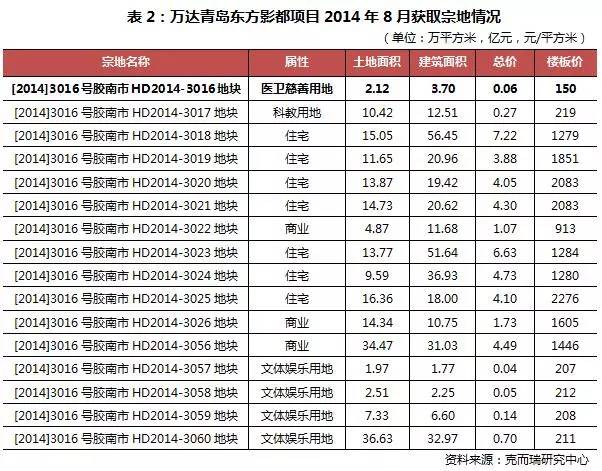
Refer to the table below,In the Wanda Qingdao Oriental Movie Metropolis project, the floor price for land designated for medical and health charity purposes was RMB 150 per square meter, while that for scientific and educational land was RMB 219 per square meter. In stark contrast, the floor price for residential land reached RMB 2,083 per square meter, highlighting a substantial disparity.
Financial strength is naturally not an issue for real estate developers. However, Wanda has no prior specialization in the healthcare sector; despite its extensive experience in commercial real estate, its core competency lies in platform operations.
Even Shenzhen requires bidders for this plot to possess substantial financial strength, with project capital of no less than RMB 500 million, and they must have the management capability for a tertiary hospital.
In light of the above two reasons, Wanda Group entered into a partnership with International Hospital Group (IHG), stipulating in the cooperation agreement that IHG would be responsible for hospital management.
UK Foreign Secretary Philip Hammond stated, “It is a great honor for me to witness the signing of this cooperation agreement. This once again underscores the United Kingdom’s leading position in the healthcare sector. The UK’s professional strengths are well-positioned to meet China’s needs for collaboration in healthcare and to serve as China’s preferred partner across various fields. On the path toward building a global comprehensive strategic partnership between our two nations, the close bilateral relationship between the UK and China has laid a solid foundation for cooperation in all areas.”
Chester King, Chairman of IHG Hotels & Resorts in Asia, stated, “The collaboration between IHG and Wanda Group on the development and operational management of hospital projects is another testament to the close ties between our two countries, particularly in the healthcare sector, which is of such critical importance to China and the world at large. This partnership also demonstrates the complementary strengths and global service capabilities of British and Chinese companies working together.”
Wang Jianlin, Chairman of Wanda Group, stated: “IHG possesses extensive hospital management expertise worldwide, and we are honored to partner with them. We aim to leverage the UK’s professional strengths in healthcare to create more opportunities for China and other countries. By introducing top-tier comprehensive international hospitals, Wanda not only meets the growing demand for premium health and medical services but also drives the advancement of high-end healthcare standards in China.”
“Collaboration with IHG is just the beginning; we have a series of major initiatives planned for the future,” revealed a Wanda spokesperson.
Once the high-end project is completed, Wanda can generate revenue through its hotels and supporting residential properties, with the high-end hospital serving as a means to attract foot traffic. Therefore, in essence, Wanda’s foray into the healthcare sector remains firmly within the broader framework of real estate development.
Meanwhile, Wanda Commercial is responsible for project investment and development, while IHG handles hospital management, with each party fulfilling its respective duties in joint operations. For instance, the Qingdao Yingci Wanda International Hospital, planned with an investment of RMB 2 billion, is located within the Qingdao Oriental Movie Metropolis. The medical and charitable land use rights for this project were acquired in August 2014 at a floor price of only RMB 150 per square meter. Notably, Qingdao Wanda Oriental Movie Metropolis Investment Co., Ltd., which was responsible for land acquisition and overall development, is a wholly-owned subsidiary of Wanda Commercial.
From a certain perspective, Qingdao Hospital serves merely as a supporting facility for the Oriental Movie Metropolis. It is worth noting that the Oriental Movie Metropolis is a “mega-project” with a total investment of approximately RMB 50 billion and a total gross floor area of 5.4 million square meters. It comprises eight functional zones, including a film and television industrial park, convention center, performance venue, Wanda Mall, resort hotel complex, yacht trading center, international hospital, and coastal bar street, covering the entire industry chain with integrated functions in film shooting, production, exhibitions, and tourism.
The plot of land for the Chengdu Yingci Wanda International Hospital, which is planned to be built with an investment of 5 billion yuan, is also held by Wanda Commercial (an 800,000-square-meter mixed-use residential and commercial plot).
A more plausible reason lies in the inherent “cash flow” advantage of hospitals. The third-quarter reports of 2015 showed that nearly 50% of listed retail companies experienced a decline in revenue, with an intensifying wave of store closures. This trend posed a risk to Wanda’s previously strong cash flow position, which had been anchored by its retail-focused commercial real estate segment. At this juncture, the completion of hospital projects served to offset this vulnerability.
More importantly, the capital is not injected all at once; in fact, the annualized cost of investing in hospitals is relatively low. Furthermore, among all segments of the healthcare system, hospitals are the closest to real estate, making Wanda’s choice a logical one.
As the real estate industry enters its “Silver Age,” developers are increasingly diversifying their businesses or even shifting industries entirely. Meanwhile, the broader healthcare sector has seen a sudden surge in interest, with real estate companies’ forays into medicine becoming a widespread trend. For instance, Evergrande has ventured into medical aesthetics, while Vanke has developed children’s hospitals. Smaller and mid-sized real estate firms, constrained by limited capital and risk aversion, have adopted more strategic approaches to enter the healthcare sector, such as acquiring hospitals or partnering with clinics.
From the perspective of the entire Wanda commercial complex, the only missing component is healthcare. There is a classic example: Many years ago, Parkway Holdings was merely a small real estate company in Singapore. It transformed into the healthcare sector by leasing rooms to physicians for establishing individual clinics. These physicians could share the facilities and services provided by the hospital, while the hospital supported the clinics in purchasing expensive equipment through equity participation. The clinics frequently interacted, collaborated, and conducted joint consultations, creating far greater value than a simple physical aggregation. This flexible and mutually beneficial “Parkway Model” propelled Parkway to become the leading private healthcare provider in Southeast Asia.
Take the Chengdu Wanda Reign International Medical and Health Center as an example. In terms of platform architecture, it shares similarities with the Parkway model. The project features seven major “premium business formats,” including West China Health Services, a Postpartum Recovery Center, high-end health management, medical aesthetics institutions, overseas medical services, offices for medical institutions, and traditional Chinese medicine (TCM) wellness clubs. Wanda will provide tenant institutions with space, property management services, and business support, including access to high-end clubs such as the “Elite Club.”
In terms of business diversity, Wanda Reign International Medical and Health Center is clearly superior to the “Parkway Model.” Furthermore, its tenants are not individual physicians or small- to medium-sized clinics, but rather world-class institutions such as IHG.
A Wanda manager described it this way: “Our seven core business formats do not operate in isolation; rather, they are closely interconnected. Health check-up services and health management can be ‘bundled’ with Traditional Chinese Medicine (TCM) wellness programs, and their clients can also enjoy overseas medical services. Medical aesthetic institutions can share customers with postpartum recovery centers… All of these can drive patient traffic to the medical institution offices. Just as a comprehensive physical examination center can achieve a circulation of patient flow, our various business formats will form a resource ecosystem and a closed-loop industry chain, delivering substantial benefits to every tenant.”
Amidst the coexistence of opportunities and challenges in the healthcare industry, Wanda, with its strategic focus on premium healthcare, is poised to write a significant and impactful chapter in this era.