

Beijing Launches Comprehensive Medical Reform: Eight Key Points to Know
Effective from 0:00 a.m. today, the “Implementation Plan for Beijing’s Comprehensive Reform on Separating Drug Sales from Medical Services” has officially come into effect, ushering in a new chapter in Beijing’s healthcare reform! More than 3,600 medical institutions across Beijing—from tertiary Grade A hospitals to grassroots community health centers, as well as non-public medical institutions—have simultaneously switched their systems and begun implementing the new pricing structure.
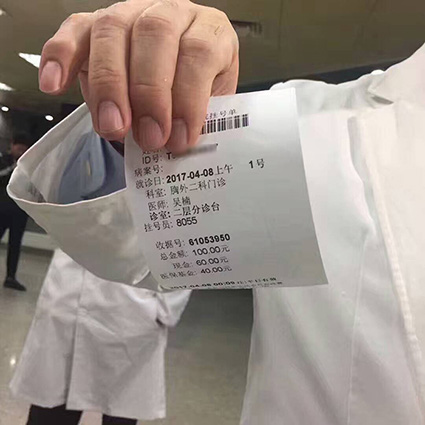
No. 1 Beijing Healthcare Reform After Adjusting to Medical Service Fees
First, registration and consultation fees have been eliminated.
Starting today, patients will personally experience a different healthcare pricing model following the healthcare reform, which isRegistration fees and consultation fees have been abolished, replaced by medical service fees.
As part of this healthcare reform, all more than 3,600 hospitals in Beijing will eliminate the 15% drug markup (excluding traditional Chinese medicine decoction pieces), with all medications sold at zero markup. Meanwhile, registration and consultation fees will be abolished, and a medical service fee will be introduced, marking a transition from “funding healthcare through drug sales” to “supporting pharmaceutical services through medical care.”
Second, how are medical service fees charged?
Compared with the registration fees of RMB 5 for general outpatient visits and RMB 7 for associate chief physicians before the reform, the medical service fee has increased significantly.Used to offset a portion of the operational costs of medical institutions, reflecting the value of technical labor provided by healthcare professionals.
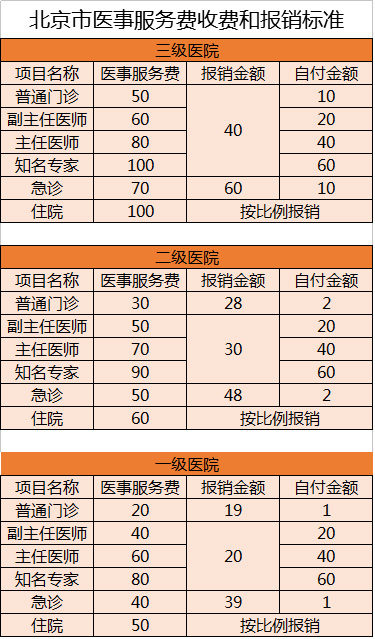
Patients should be aware that medical service fees charged by hospitals and physicians vary by institution level, as do reimbursement rates, resulting in significant differences in out-of-pocket expenses. For example, at tertiary Grade A hospitals, the medical service fee for a general outpatient visit is RMB 50, while for a renowned specialist it is RMB 100; however, the reimbursable amount is RMB 40 in both cases, leaving patients to pay RMB 10 and RMB 60 out of pocket, respectively. At primary care institutions (Grade I and below), the medical service fee for a general outpatient visit is RMB 20, with RMB 19 reimbursable, resulting in an out-of-pocket payment of only RMB 1.
The medical service fees and reimbursement rates for hospitals and physicians at different levels are shown in the table below:
Third, the out-of-pocket medical service fee is lowest when seeking care at primary-level hospitals.
Although Beijing’s basic medical insurance fund has incorporated medical service fees into the reimbursement scope of the Basic Medical Insurance for Urban Employees, the Basic Medical Insurance for Urban and Rural Residents, Maternity Insurance, and Work-Related Injury Insurance, the medical service fees and reimbursable amounts vary depending on the hospital tier and physician level.
The medical service fee for general outpatient visits at tertiary hospitals is 50 yuan, with an out-of-pocket cost of 10 yuan after reimbursement; the fee at primary and lower-level medical institutions is 20 yuan, with an out-of-pocket cost of 1 yuan after reimbursement, representing a tenfold difference.The widening gap in out-of-pocket expenses between tertiary hospitals and primary care facilities has helped promote the tiered diagnosis and treatment system.However, regardless of the hospital tier, the out-of-pocket costs for consultations with associate chief physicians, chief physicians, and renowned experts are RMB 20, RMB 40, and RMB 60, respectively.
4. The registration process for medical consultations remains unchanged
Although registration fees have been abolished, in addition to changes in fee standards,The hospital registration process and the appointment scheduling cycle have not been affected.Patients may still schedule appointments or register on-site in accordance with the existing procedures of each hospital.
Fifth, drug prices will decline
As part of this healthcare reform, Beijing has incorporated medical institutions of all levels and types across the city into the Sunshine Procurement Platform. Drug varieties and prices are determined through competitive negotiation, with procurement conducted based on actual needs. Prices are dynamically linked to the lowest prices from provincial-level centralized procurement nationwide and remain open and transparent. It is reported thatFollowing the implementation of Sunshine Procurement, the average price of pharmaceuticals dropped by 8%, enabling public medical institutions across the city to save approximately RMB 2.8 billion annually in drug procurement costs. Coupled with the elimination of the 15% drug markup, drug prices are expected to decline by approximately 20%.
Sixth, fee adjustments were made for a total of 435 items related to hospitalization and diagnostic examinations.
This round of healthcare reform in Beijing also standardized and adjusted the prices of 435 medical service items, implementing the “one increase, two decreases” policy.Among the 435 items, comprehensive medical services (beds, nursing, etc.) accounted for 125 items (28.7%); imaging diagnosis services (CT, MRI, etc.) accounted for 185 items (42.5%); traditional Chinese medicine (TCM) services (acupuncture, tuina, etc.) accounted for 96 items (22.1%); and clinical surgical procedures (e.g., appendectomy) and clinical physical therapies (e.g., radiotherapy) accounted for 26 and 3 items, respectively, totaling 6.7%.
Prices for items reflecting the technical and labor value of medical personnel, including bed fees, nursing care, general treatment, surgical procedures, and traditional Chinese medicine (TCM) services, have been increased. For instance, the fee for a standard hospital bed has been adjusted from RMB 28 to RMB 50; Level II nursing care from RMB 7 to RMB 26; appendectomy from RMB 234 to RMB 560; and acupuncture from RMB 4 to RMB 26. Meanwhile, prices for major diagnostic imaging examinations using large-scale equipment, such as CT and MRI scans, have been reduced. Specifically, the cost of a head CT scan has decreased from RMB 180 to RMB 135; MRI scans from RMB 850 to RMB 400–600; and PET/CT scans from RMB 10,000 to RMB 7,000. Additionally, drug prices have been lowered through the concurrent elimination of drug markups and the implementation of transparent drug procurement policies, resulting in an average price reduction of approximately 20%.
Seventh, the medical insurance reimbursement process remains unchanged.
The implementation of this healthcare reform plan will not affect the reimbursement process for insured individuals seeking medical care.Beijing insured individuals shall continue to comply with the relevant regulations on real-time settlement using their medical insurance cards when seeking medical treatment at designated medical institutions.
In terms of healthcare insurance measures benefiting the public, to support the reform separating medical services from pharmaceutical sales, and particularly to further facilitate access to diagnosis and medication for common diseases, chronic conditions, and geriatric patients within their local communities—thereby eliminating the hassle of traveling to and queuing at large hospitals solely for prescription refills—the Beijing Municipal Health and Family Planning Commission has introduced a series of supporting measures. These include increasing the number of designated community medical institutions to make healthcare more accessible to residents, and aligning the reimbursement scope for medical insurance drugs between community facilities and large hospitals, so that any medication reimbursable at large hospitals is also reimbursable at community-level institutions.
8. What to Do If Problems Arise?
To facilitate public inquiries and reporting, the government has established four dedicated hotline services.
For issues regarding medical service fees and the standardization of medical practices, please call the 12320 Health Service Hotline.
Issues of price violations can be reported or inquired about through the 12358 price violation hotline, online platforms, and other channels; please ensure that relevant evidence is properly preserved.
For inquiries regarding medical insurance reimbursement, please call the 12333 Medical Insurance Service Hotline;
Comprehensive issues can be reported via the 12345 Citizen Hotline.
Additionally, citizens can access the Beijing Municipal Pharmaceutical Sunshine Procurement Integrated Management Platform and use the “Public Inquiry” feature to look up the categories and prices of drugs procured by hospitals.