

Diabetes Forum Highlights Sino-Western Precision Medicine Breakthroughs; PuHua Medical Submits IPO Prospectus
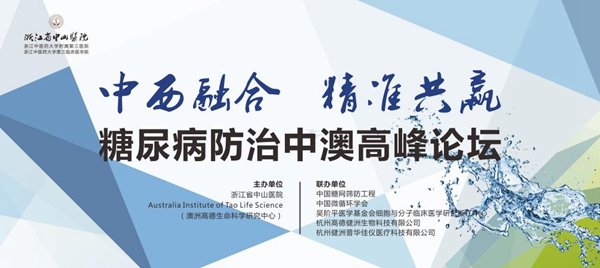
According to Puhua Medical: On April 7, 2017, the “China-Australia Summit Forum on Diabetes Prevention and Control,” hosted by Zhejiang Provincial Hospital of Traditional Chinese Medicine and co-organized by Hangzhou Puhua Jianzhou Jiayi Medical Technology Co., Ltd. and Hangzhou Gaode Jianzhou Biotechnology Co., Ltd., was held as scheduled in the beautiful city of Hangzhou. The forum focused on integrating traditional Chinese and Western medicine, aiming to provide more precise, efficient, and comprehensive strategies for the prevention and control of diabetes.
Yao Xinmiao, President of Zhejiang Provincial Zhongshan Hospital; Qiu Yunqing, Vice President of the First Affiliated Hospital, Zhejiang University School of Medicine; Professor Wang Deyuan, President of the Oceania Traditional Chinese Medicine Alliance; Professor Li Qingsheng, a renowned traditional Chinese medicine (TCM) practitioner in Yunnan Province and former President of Yunnan University of Traditional Chinese Medicine; Professor Zhang Hua from Peking Union Medical College Hospital; Professor Xia Weibo, Executive Deputy Director of the Department of Endocrinology at Peking Union Medical College Hospital; Professor Yao Kuiwu, Deputy Director of Education at Guang’anmen Hospital, China Academy of Chinese Medical Sciences; Professor Shen Jianguo, Director of the Department of Endocrinology at the First Affiliated Hospital, Zhejiang University School of Medicine; and Dr. Russell Shaw, Director of Education and Training at the Gaode Life Science Research Center in Australia, among other experts, attended this forum.
Professor Wang Deyuan, President of the Oceania Alliance for Traditional Chinese Medicine, delivered an academic report titled “The Role of the Social-Behavioral Biomedical Model in the Prevention and Treatment of Type 2 Diabetes.” He pointed out that type 2 diabetes is a social pathological product of industrialization, urbanization, and the “evolution” of science and technology. It is not merely a problem involving pancreatic beta cells; rather, the pathogenesis of diabetes must be viewed from a higher perspective of social medicine. He emphasized that diabetes is a chronic metabolic disease involving multiple organs and targets, including social development, lifestyle, and the digestive system, thereby opening up new avenues for future prevention and treatment of diabetes.
Professor Li Qingsheng, a renowned traditional Chinese medicine (TCM) practitioner in Yunnan Province, pointed out that clinical practice should place high importance on the mutual binding of phlegm and blood stasis, with medication determined by differentiating the severity and primary versus secondary aspects. It is essential to distinguish the etiological and pathogenic connections between phlegm-dampness and blood stasis, address the root causes of preceding conditions, and pay attention to the pathological location characteristics of phlegm-stasis complications, tailoring treatment accordingly. Furthermore, given the fundamental pathogenesis of diabetes mellitus, one must avoid the excessive use of bitter-cold substances that damage Yin or cloying, greasy herbs.
Professor Zhang Hua from Peking Union Medical College Hospital delivered an academic report on precision medicine focusing on diabetic retinopathy, delving into the connotations of precision medicine and pointing out that diabetes prevention and control face significant challenges. He provided a detailed introduction to China’s system and strategies for preventing and controlling diabetic retinopathy, emphasizing the need to intensify screening and prevention efforts, adopt scientific screening methods, and achieve early detection and early treatment.
Professor Shen Jianguo, Deputy Director of the Department of Endocrinology at The First Affiliated Hospital, Zhejiang University School of Medicine, delivered a presentation titled “Updates to the 2017 ADA Standards of Medical Care in Diabetes.” He provided a detailed explanation of the diagnostic criteria for diabetes and offered insightful commentary on updates to pharmacotherapy and glucose-lowering treatments. Professor Shen pointed out that the 2017 standards have updated and refined guidelines for screening, staging, prevention, hypoglycemia management, and obesity management. He affirmed the clinical value of premixed insulin and emphasized the importance of considering the impact of glucose-lowering drugs on cardiovascular events.
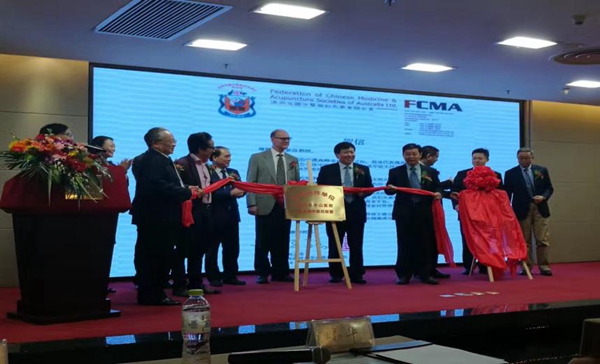
This forum witnessed the establishment of Zhejiang Provincial Hospital of Traditional Chinese Medicine and the Oceania Alliance of Traditional Chinese Medicine as “Friendly Collaborative Units,” the inauguration of the “Professor and Expert Workstation,” and its unveiling ceremony. It is believed that future collaboration will bring new breakthroughs and contributions to the precise integrated traditional Chinese and Western medicine treatment of diabetes.