

Boao Jingdian Completes Precision Medicine Portfolio with Launch of Multi-Functional Bioinformatics Cloud Platform 'Jingdian Cloud'
In 2014, the cost of human whole-genome sequencing dropped to $1,000, ushering in the first boom for the global genetic testing industry, with China’s market experiencing explosive growth. In 2017, Illumina further reduced the cost of whole-genome sequencing to $800. As sequencing costs declined, genomic data worldwide continued to accumulate at a rate exceeding Moore’s Law. Computational analysis and interpretation of genetic data have always been critical components of genetic testing. Amid this surge in data, how to perform faster and more accurate data analysis and interpretation will be the next key challenge facing the genetic testing field. Seizing this opportunity, VCBeat is launching its “Genes & Data” series of reports; stay tuned for details.
In 2012, BioCapital’s subsidiary, BioCapital Jingdian, was established. As the primary industrialization platform under BioCapital, BioCapital Jingdian is tasked with driving the Group’s rapid commercialization.
Centered on its proprietary biochip technology platform and supplemented by the introduction, adaptation, and assimilation of various internationally leading technological platforms, CapitalBio Jingdian has established a new-generation biological detection technology system centered on biochips, sequencing, multiplex PCR, mass spectrometry, and cell sorting. The company provides equipment, supporting reagents and consumables, software, and comprehensive solutions to fields such as life sciences research, clinical medicine, agriculture, and new drug development both domestically and internationally. It is reported that CapitalBio Jingdian’s series of products and services have been exported to more than 30 countries and regions across North America, Europe, Asia, and beyond.
In 2015, the China Food and Drug Administration (CFDA) granted medical device registration approval for the BioelectronSeq 4000 gene sequencer developed by CapitalBio Corporation, marking the formal completion of BioCrystal Diagnostics’ comprehensive end-to-end industrial layout as the largest subsidiary of the CapitalBio Group.
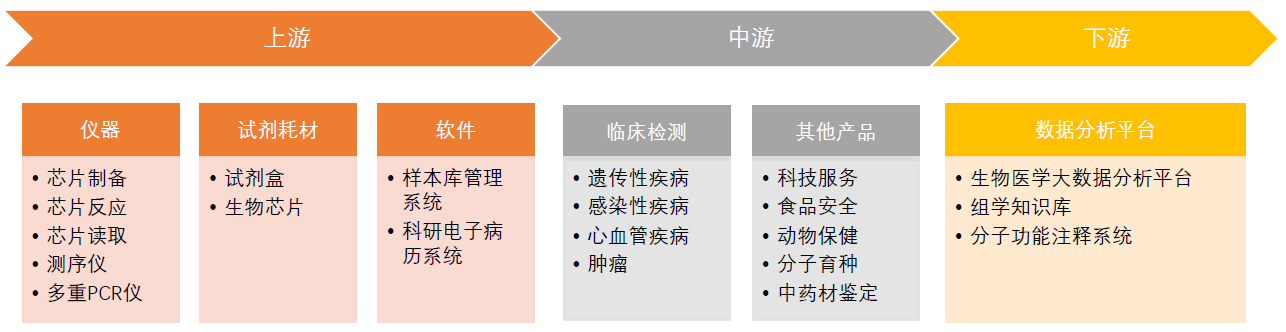
Boao Jingdian's Industrial Layout
Jingdian Cloud: The Final Link in Boao Jingdian’s Precision Medicine Product Line
This year marks Wang Lei’s fifth year at CapitalBio Corporation. Since 2014, he has been with CapitalBio Jingdian, where he leads the entire bioinformatics team.

Wang Lei, Head of Bioinformatics at Boao Jingdian
With a background in bioinformatics and years of hands-on industry experience, Wang Lei recognized that as individual health status and disease diagnosis become increasingly predictable and personalized,In-depth mining of omics and clinical data may revolutionize modern medicine。
How can deep data mining be achieved? Although there are numerous data-generating institutions worldwide, if these data are not shared and each entity relies solely on its own data, the utility of the data will be highly limited, and the reproducibility of data analysis remains to be improved. On the other hand, as the cost of DNA sequencing continues to decline, the integration of clinical and omics data is facing unprecedented challenges.
In Wang Lei’s view, BGI Genomics is a highly distinctive company with a full industrial chain in precision medicine and strategic layouts across various fields. He believes that developing a user-friendly tool that supports shared and collaborative analysis to help omics researchers overcome the challenges of big data analysis in biomedicine is both necessary and promising.
In recent years, bioinformatics cloud technology has rapidly evolved, emerging as a new force in unlocking the potential of biomedical big data. Despite their years of experience with traditional bioinformatics solutions, this time they have completely abandoned conventional hardware infrastructures such as high-performance computing clusters. “By leveraging cloud-based virtual storage systems and computing resources that are both scalable and cost-effective, we can not only reduce the time and cost of data analysis but, more importantly, enable global collaborative analysis,” Wang Lei explained to VCBeat.
This vision has also garnered the support of Xu Junquan, President of the company. “He not only analyzed the value and prospects of the cloud platform from an industrial perspective but also provided us with substantial support in terms of resources and morale. I believe this is why Boao Jingdian was able to rapidly complete its full-industry layout and continuously generate new value,” Wang Lei told VCBeat.
In November 2016, the biomedical big data analytics platform “Jingdian Cloud” was officially launched. As the final component of BGI Jingdian’s precision medicine product portfolio, Jingdian Cloud completed the company’s comprehensive layout across all domains.
Wang Lei introduced to VCBeat that BioCapital’s bioinformatics team includes an innovative group known as “ABC,” which stands for A-AI, B-Big Data, and C-Cloud Computing. The Jingdian Cloud was developed by this “ABC” team.
Diversified Functionality: Public Cloud and Private Cloud
By ensuring the reproducibility, shareability, and collaborativeness of data analysis, Jingdian Cloud provides users with a secure, cost-effective, and efficient data analysis environment. Wang Lei believes that such aCloud platforms that meet the requirements for open-source data and data sharing will provide robust foundational support for clinical and omics research, unlocking the potential of precision medicine.。
Jingdian Cloud is a multifunctional product,In addition to providing a basic PaaS cloud environment, enabling users to independently develop and write analysis software within this environment,Can also provide SaaS services to usersDuring product development, the team placed greater emphasis on interpreting analytical results and extracting in-depth insights. In addition to providing the foundational infrastructure, we offer users BioCapital Jingdian’s proprietary analysis modules, knowledge bases, and visualization tools—accumulated through independent R&D—to facilitate rapid and convenient data analysis and interpretation.
Another significant feature is that the product offers both public cloud and private cloud services. Wang Lei told VCBeat that although most public clouds currently provide a high level of security, clinical institutions remain reluctant to adopt public cloud platforms due to their unique nature.
Based on this, Jingdian Cloud has proposed two sets of solutions, offering public cloud and private cloud services according to different user needs.. This greatly expands the product's range of applications and usage scenarios.
On public clouds, customers can utilize analytical software for computation and analysis; on private clouds, deploying Jingdian Cloud to local systems enables customers to migrate their accumulated algorithms and workflows to the Jingdian Cloud platform for use within their own data centers.
Diverse User Base: Research, Clinical Practice, and Pharmaceutical Industries
Such diversified attributes also mean that Jingdian Cloud’s user base is not limited to research institutions and sequencing centers, but also includes clinical organizations and pharmaceutical companies with bioinformatics analysis needs.
For omics researchers, such a platform with customizable data analysis workflows can meet the personalized needs of scientific research. On-demand resource scaling and pay-as-you-go billing help them reasonably estimate and control research costs. Real-time sharing of large-scale datasets facilitates global collaboration and accelerates research progress. Both progress and cost are critical considerations for research institutions.
For clinical diagnostic institutions, a privately deployable cloud service can alleviate many of their concerns. Meanwhile, this platform enables rapid translation from research and development to testing, integrating test items with laboratory management and diagnostic reporting into a single system. This bridges the gap between experimental data and result reports, significantly reducing diagnostic turnaround time.
Similarly, cloud platforms can help biopharmaceutical companies seamlessly integrate omics and clinical data, with granular access controls for data, workflows, and analytical reports. This ensures data security while fostering cross-departmental collaboration, enabling researchers to rapidly identify drug targets and accelerate drug development.
Diversified Layout: Building Comprehensive Solutions
Of course, BioCapital’s layout in this segment is by no means limited to the cloud platform. As early as 2006, its parent company, CapitalBio Corporation, pioneered the launch of the Molecular Annotation System (MAS) in China.This system is one of the earliest molecular functional network analysis databases in China.. To date, it has accumulated over 10,000 users, becoming an indispensable online tool for professionals in molecular biology and genetics.
In terms of software products, BioCrystal has developed SVD, a software tool for mutation analysis and annotation of first-generation sequencing data. It is not only applicable to the field of genetic testing but also to areas such as efficacy validation of gene-editing tools like CRISPR.
Wang Lei stated, “We believe it is more important to empower customers with the ability to truly solve problems. Boao Jingdian not only provides comprehensive solutions but also offers simple and easy-to-use tools to help customers confidently perform professional bioinformatics analyses.”
After biological data is generated, it must undergo a complex and cumbersome process to extract the required information. Wang Lei told VCBeat that in 2016, the market size for bioinformatics analysis had already reached $6 billion, and was projected to reach $16 billion by 2020.
Management, storage, transmission, computation, and interpretation—each step of optimization is fraught with challenges yet brimming with opportunities. Such a multifaceted cloud platform, coupled with a diverse, interdisciplinary team integrating genetics, molecular biology, bioinformatics, statistics, and physics, promises to usher in an era of unprecedented diversity in the years to come.