

Innovative Private Healthcare on the Fringes: How Edge Players Are Paving a Sustainable Path Forward
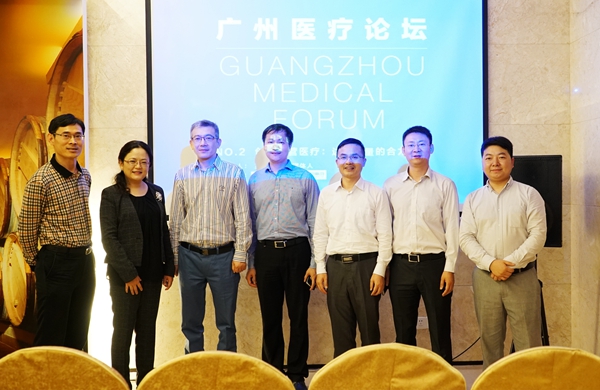
Since the second half of 2016, after encountering bottlenecks in their transformation, many pure-play internet healthcare companies—whether backed by capital or startups with cash reserves—have increasingly shifted their focus to establishing offline medical institutions.
However, after a period of time, it became evident that the situation was far from ideal. Some participants even withdrew quickly. Chief specialists from many top-tier tertiary hospitals who opened their own clinics were unexpectedly short of patients; their lack of marketing expertise and insufficient capital support left them ill-adapted to the new environment. Meanwhile, newly established healthcare institutions with capital backing faced extreme difficulties in recruiting expert physicians.
Moreover, as healthcare institutions operate within a highly regulated sector, the positive stimulus and negative constraints imposed by policies are often amplified twofold, causing practitioners’ sentiments to oscillate frequently between excitement and disillusionment.
In short, innovating in healthcare is already challenging under the shadow of public hospitals, and it is even more difficult to carve out a differentiated position vis-à-vis the currently dominant private healthcare sector.
As Yu Jiwu, General Manager of Shenzhen Du’anquan Health Industry Investment Co., Ltd. and the executive who saved Guangzhou Sanjiu Brain Hospital from the brink of collapse, stated at the event: “Given the more than 10,000 private medical institutions already in existence, our current foray into innovative healthcare is truly on the outermost fringes.”
Does Multi-Site Practice for Physicians Mean Self-Marginalization Under the Current System?
Professor Xia Kaili is a Chief Physician in Pediatrics. She previously served as a Professor and Chief Physician in the Department of Pediatrics at the Second Affiliated Hospital of Sun Yat-sen University. After joining United Family Healthcare, she assumed dual roles as a practicing clinician and an administrator. On that day, she discussed the prospects and challenges of physicians’ multi-site practice from the dual perspectives of a manager in private healthcare and a former public-hospital physician who transitioned to the private sector.
In Professor Xia Kaili’s view, multi-site practice for physicians remains, to some extent, more appealing in theory than in reality. She cited a set of data: Guangdong Province became a pilot region permitting multi-site practice in 2009, yet as of 2016, incomplete statistics showed that only over 4,000 physicians had registered for multi-site practice. Most of these doctors still provided services within medical consortia or designated assistance institutions, with relatively few engaging in what could be considered genuine registered multi-site practice. Many physicians who do practice at multiple sites choose not to register, so as to avoid unnecessary complications.
Moving from “moonlighting” to multi-site practice represents significant progress, but these are merely transitional steps; what physicians truly aspire to is genuine independent practice. However, it remains difficult to predict exactly when this day will arrive.
For instance, physicians who engage in "flying knife" practices—traveling to perform surgeries at other hospitals—will often speak candidly when given the opportunity to interact closely with leading surgical experts. They admit to feeling somewhat uneasy. This apprehension stems not from a reluctance to perform the surgery itself, but rather from the inability of local hospitals to provide professional and continuous postoperative care, thereby posing potential medical risks.
Furthermore, there is considerable confusion regarding the management philosophy of primary practice sites, labor contracts, and the definition of core job responsibilities. Key issues include the quantitative allocation of research and teaching duties, defining physicians’ private time, preventing disguised overtime, and ensuring a balance with adequate health protections for doctors.
Professor Xia Kaili also specifically highlighted issues related to promotion and implicit barriers. While promotional opportunities are more commonly restricted for younger physicians, many doctors who are currently capable and considering multi-site practice have already achieved a certain level of accomplishment in their specialized fields. These accomplishments encompass not only professional medical expertise but also standing within the industry—for instance, one’s seating arrangement at conferences, or whether one serves as a keynote speaker or an invited guest. Furthermore, positions held within academic societies are often supported by the physician’s affiliated hospital. How, then, should these relationships be managed and streamlined if a physician leaves or publicly announces their intention to leave their current hospital?
These relationships, in fact, serve as a crucial determinant of social status beyond salary, and also provide access to clinical and research platforms, as everyone is well aware of the overwhelming pressure exerted by funding constraints on a daily basis.
Professor Xia Kaili specifically shared her personal experience, recounting how she found herself marginalized after leaving the public hospital system. Former colleagues and friends distanced themselves from her, effectively “kicking” her out of their circle. On one occasion, during a seminar led by a deputy director of the Provincial Health Department, she stood up and directly stated that she had been marginalized. She questioned why the government, while advocating support for private healthcare, failed to extend such support to physicians working in private medical institutions like hers. She argued that when doctors transitioned from public hospitals to private ones, the government effectively closed the door behind them.
At that time, the Deputy Director-General stood up and directly told Professor Xia that he would open the door for her. However, while it is easy to open this door for a single expert, it is much more difficult to do so for all physicians working in private hospitals.
For the presidents and vice presidents of some public Grade 3A hospitals, while they outwardly resolutely support multi-site practice, they actually try to prevent their own doctors from engaging in it whenever possible; if prevention is not feasible, they turn a blind eye. Why? Because they are uncertain about how to manage these doctors who are going out for multi-site practice. As for whether the hospital directors would feel regret if these doctors truly left, the answer is not really. This is because, once these doctors leave this platform, their situations generally do not turn out as favorably as they might have imagined.
This is precisely what Professor Xia referred to when he described Western medicine as “recognizing the temple but not the Bodhisattva.” Under current circumstances, the personal value of physicians practicing at multiple sites, including chief specialists and experts, is not fully realized.
“When you put on the white coat of a physician at The First Affiliated Hospital of Sun Yat-sen University and sit there, patients will naturally come to you. This is because their trust lies not in you as an individual, but in the hospital. Therefore, whether for our hospital or for individual physicians, brand positioning remains quite ambiguous at present. If we truly wish to step out independently, we must carefully consider what our brand positioning should be and what scope of services we can deliver. This issue is not limited to young physicians; we have observed that even many highly senior professors face similar branding challenges when they practice outside the institution,” said Professor Xia Kaili.
A physician’s personal brand is crucial for attracting patients at additional practice locations. Many physicians are overly confident, believing that their status as internet celebrities guarantees a built-in patient base. However, online fame does not necessarily translate into a loyal following at other practice sites. Once detached from the original platform, a physician’s existing patient flow will gradually diminish at a new practice location. If the physician fails to establish their own brand during this transition period, the patient volume will inevitably decline naturally—or may not even reflect a natural decline, as the initial estimates of self-generated patient traffic are often severely inflated. For instance, a physician who expects to bring in 20 patients per day may find that fewer than two actually follow them, highlighting a significant overestimation of their inherent patient-drawing capability.
Innovation Is Driven by Necessity; Quality Healthcare Will Surely Have Its Day
In February 2017, the first clinic under “Du Anquan” officially opened for business. Meanwhile, clinics in Beijing, Shenzhen, Nanjing, Qingdao, and Xi’an were being established concurrently and would subsequently open one after another, following the launch of the Guangzhou clinic.
Yu Jiwu, General Manager of Shenzhen Du’anquan Medical Health Investment Co., Ltd., is a seasoned industry veteran. A graduate of China Pharmaceutical University, he previously served as General Manager of Sanjiu Pharmaceutical Co., Ltd., Chairman of China Resources Sanjiu Medical Chain Co., Ltd., and Chairman of Sanjiu Brain Hospital.
Yu Jiwu stated that among the more than 15,000 private hospitals, even by optimistic estimates, only a small fraction can truly be considered providers of high-quality medical services. He further noted that the industrial background in high-tech and advanced manufacturing, along with the financial strength of Han’s Holding Group, the controlling shareholder of Du’Anquan, has given doctors and experts greater confidence that the investor is genuinely committed to long-term development rather than seeking quick profits. This constitutes a unique competitive advantage in attracting top-tier medical experts.
Du Anquan’s Long-Term Incentive Instrument Grants 50% of the Clinic’s Equity to Core Management Teams and Medical Experts in Tranches Based on Predefined Performance Metrics. Key features include stipulated vesting periods and performance thresholds; recipients obtain stock options at zero cash cost upon meeting exercise conditions, with internal trading permitted prior to IPO.
Cao Shuangquan, General Manager of Du Anquan Guangzhou Clinic, also expressed his pursuit of “quality healthcare.” For instance, the company strictly avoids being described as “high-end healthcare” or “high-end clinic” in external communications. Instead, it emphasizes providing innovative medical services that are more convenient, precise, and private for the middle class, while ensuring medical efficacy and safety.
Cao Shuangquan also specifically highlighted innovations in service models and alignment with international standards. For instance, to provide patients with more convenient and private services, Du Anquan supports product delivery and home sample collection by nurses. The entire process utilizes unique barcode identification for patient recognition, with stringent privacy protections implemented throughout the medical consultation workflow. Its independently designed sampling and treatment spaces ensure a warm and comfortable clinic environment, while strict one-on-one consultation services are enforced.
Given the unique nature of the reproductive health sector, Cao Shuangquan specifically highlighted that they are inclined toward and actively pursuing collaborations with expert teams. For instance, in the treatment of infertility, they aim to assemble a multidisciplinary team comprising specialists from andrology, gynecology, and obstetrics to serve patients. Such a team structure tends to have stronger market appeal, thereby facilitating patient acquisition for the clinic.
This internet hospital’s revenue has surpassed 50 million yuan!
Kan, Deputy General Manager of 7Lekang, presented the latest updates on the internet hospital business under his purview at the event. Currently, attitudes toward this new business model of internet hospitals are mixed, with some offering endorsement while others remain watchful and skeptical.
Lin Kan candidly acknowledged that some of Qilekang’s initiatives have drawn questions from industry insiders regarding their compliance with industry standards. However, the company’s perspective is that, viewed through the lens of internet thinking, Qilekang, as a young enterprise, may not be able to cover every aspect comprehensively. Instead, it aims to achieve maximum scale in a specific niche within a particular scenario or focus area, and then layer on additional services.
Regarding how to evaluate internet hospitals, Lin Kan stated that for this emerging concept, there is currently no standardized definition or regulatory framework. WeDoctor had previously proposed a definition for internet hospitals and submitted it to the National Health and Family Planning Commission, but it was never finalized.
Qilekang has been operating its internet hospital for over a year. Its initial vision was to establish a new healthcare ecosystem that would eventually encompass hospitals, physicians, patients, pharmaceuticals, and payers. By connecting these stakeholders, the platform aims to leverage its role to maximize the activation and utilization of physician resources.
Lin Kan stated that Qilekang has established China's first closed-loop platform integrating patients, physicians, and pharmaceuticals. The Qilekang Doctor Platform currently covers 300 cities across 34 provinces in China, with a network of 400,000 physicians.
Internet healthcare primarily serves patients with chronic diseases and those requiring follow-up visits, with medication being the core demand. Qilekang offers over 30,000 SKUs, boasting one of the most comprehensive pharmaceutical product portfolios in China, and its pharmaceutical e-commerce business has ranked as the top seller across all online platforms for consecutive years.
Qilekang has fully digitized the entire process of appointment scheduling, health record management, examination report inquiries, and pharmaceutical services via the internet. This system is also being provided free of charge to private hospitals for their use.
Qilekang Internet Hospital’s current monthly gross merchandise value (GMV) has reached RMB 50 million, with pharmaceuticals accounting for over 60% of this figure. The platform also offers partial online consultation services. With the entry of strategic investors such as JD.com and Meinian Onehealth, Qilekang has begun to intensify its integration of additional services this year, thereby optimizing and enhancing its revenue structure.
For instance, for certain follow-up patients, test results from county-level hospitals (Grade II and above) are recognized by physicians at internet hospitals. In the absence of significant issues, this enables remote follow-up consultations and e-prescribing. Beyond diagnostic testing, key targets for cross-sector collaboration include commercial insurance, basic medical insurance, and medical-grade wearable devices.
The Interweaving of Online and Offline Networks: Seeking Integration
According to Lin Zihong, founder of United Doctors Group and Well Hospital, multi-site practice has made significant progress, and the trend toward more open policies will present a favorable opportunity for the development of physician groups and new types of medical institutions.
Regarding the positioning of new-type medical institutions, Lin Zihong stated that they must differentiate themselves from public hospitals, particularly tertiary Grade A hospitals, and ideally serve as a supplement to the public healthcare system. Furthermore, strategic trade-offs should be made in service offerings: while avoiding certain medical risks, these institutions should leverage their focus on specialized disciplines to provide services with greater competitive advantages than public hospitals in specific niche disease areas or patient needs.
As a physician and the manager of a physician group, Lin Zihong expressed optimism about the benefits that internet hospitals bring to innovative medical care. For instance, support for services such as online insurance reimbursement is quite appealing. However, regarding medical insurance, Lin Zihong noted that while relatively mature solutions already exist for medical liability insurance covering physicians’ multi-site practice, innovative private healthcare institutions should adopt a dual-track approach for long-term development by accelerating the expansion of patient-side insurance products.
However, questions remain as to the extent to which internet hospitals can truly integrate services across the entire diagnosis and treatment process, and whether they can effectively coordinate all stakeholders, including hospitals, pharmaceutical companies, and hardware and software providers.
Lin Kan also stated to Lin Zihong that while 7LeKang’s internet-based operations could be described as a “Sky Network,” the company is simultaneously and actively developing its “Ground Network.” This strategy aims to forge partnerships with more offline medical institutions, such as Du Anquan, United Family Healthcare, United Medical Group, and Will Hospital. Furthermore, 7LeKang is considering transitioning physicians from earning income solely through individual consultations to sharing in the broader revenue generated by derivative businesses across the entire 7LeKang platform.
When it came to online services, Kelly Xia stated that United Family Healthcare (UFH) is also experimenting with them this year, but with great caution. She even humbly remarked that she feels behind the times. However, her peers in attendance interpreted this stance as a case of “the well-fed not understanding the hunger of the poor,” given that UFH’s offline operations have already reached a considerable scale, potentially leaving it with insufficient incentive to drive patient traffic through offline channels.
Nevertheless, overall, the potential for collaboration between internet healthcare platforms with online traffic advantages and offline medical institutions is still viewed quite favorably.
Recommended reading: VCBeat’s previous coverage ofDuanquan ClinicandUnited Healthcare GroupReport.