

Meiwei Oral Healthcare Gains DNV GL Accreditation, Poised to Become a Dark Horse in China's Dental Industry
2016 marked a turning point for China’s private oral health sector. In that year, the number of dental implants performed by private dental hospitals in China surpassed those in public hospitals for the first time. Meanwhile, the shortage of full-time dentists in private hospitals began to ease, reaching a state of basic sufficiency. The market entered a new phase of brand competition at a higher level, ushering in unprecedented opportunities for the development of China’s oral healthcare industry.
Yet, in the fiercely contested “red ocean,” it is becoming increasingly difficult for a “dark horse” to emerge, unless it possesses distinctive capabilities capable of reshaping the industry landscape.
April 8 may well be a date long remembered in China’s private oral health sector, as it marks the first introduction of an internationally recognized accreditation into this field. Industry insiders widely believe that this development will have a profound impact, potentially driving a comprehensive upgrade and elevation of standards across the entire industry.
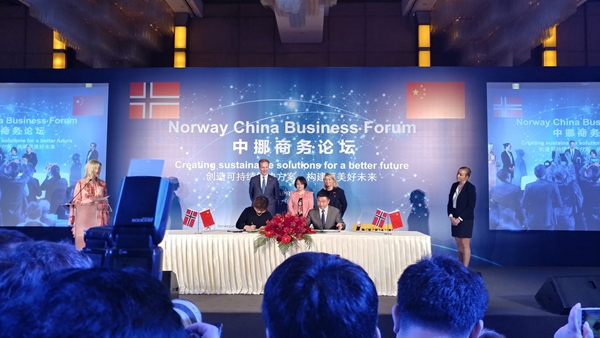
At the “China-Norway Business Forum” held that day, Norwegian Prime Minister Erna Solberg made a personal appearance. She brought not only fresh and delicious salmon but also the world’s most authoritative certification standards. DNV GL and Meiwei Dental Investment jointly announced that they would collaborate to establish an international-grade medical management system certification. This system will become a core asset of Meiwei Dental Investment, aimed at enhancing the quality of medical services and patient safety across all dental brands under the Meiwei umbrella.
With this approach, Meiwei Yi aimed to synchronize with global standards from the outset, leveraging the late-mover advantage of a high starting point, which has sparked keen interest within the oral health community.
Could it become the new “dark horse”?
DNV GL Certification Jointly Recognized by Chinese and U.S. Authorities
A seemingly ordinary certification partnership signing has unexpectedly become an official segment of the highest-level bilateral event between China and Norway. DNV GLWho on earth is this mysterious figure?
DNV GL (formerly Det Norske Veritas) was founded in 1864 and is headquartered in Oslo, the capital of Norway. It is the world’s most renowned professional risk management service provider, with business activities spanning certification, assessment, and training services across nearly all industries.
In the healthcare sector, the DNV GL USA Quality System Requirements for Healthcare Organizations are known as NIAHO®, which originated in the United States in 2008. This standard is used for recognition by the U.S. Centers for Medicare & Medicaid Services (CMS) regarding insurance approval for American healthcare institutions. In other words, CMS will provide subsidies to healthcare institutions only if they have obtained the Certificate of Compliance issued by DNV GL Healthcare.
To enhance the international applicability of the U.S. version of the NIAHO® standards, DNV GL experts adjusted the standard requirements that were specific to U.S. local laws, regulations, and practices. Consequently, it was internationally named DIAS (DNV GL International Accreditation Standard) and received accreditation from the International Society for Quality in Health Care (ISQua) in 2012, marking the beginning of its global implementation.
In China, it is currently the first and only international healthcare accreditation body successfully registered with the Certification and Accreditation Administration of the People’s Republic of China (CNCA). In contrast, several other healthcare accreditation organizations well-known in China have not been approved by the Chinese government, underscoring the uniqueness and authority of DNV GL.
Currently, more than 2,400 healthcare organizations worldwide have obtained DNV GL accreditation. It provides international hospital accreditation, infection risk management, management system certification, and training services to healthcare organizations, with the aim of improving healthcare quality and patient safety through systematic thinking and a proactive perspective on risk control.
DNV GL certification begins with a healthcare institution submitting an application for assessment to DNV GL. Following an on-site gap analysis conducted by a team of domestic and international experts, targeted training is provided based on the issues identified during the site visit. Upon completion of the training, the healthcare institution may apply for an initial audit. Successful passage of the initial audit results in the issuance of a DNV GL certification certificate. Subsequently, DNV GL conducts annual surveillance audits, and the certificate remains valid for three years.
In support of building sustainable hospitals, DNV GL also provides training and assessment services covering hospital risk management, hospital performance indicator management, hospital information systems, energy conservation and emissions reduction, safety culture development, and safe facility design.
Can Support from DNV GL Truly Trigger a Qualitative Leap Through Quantitative Change?
Meiwei Dental Investment has been established for only a short time, yet it has already drawn intense attention from the industry.
They boast a management team that can be described as the “Dream Team” of dentistry.
Founder and Chairman Yu Rong established Tianyi Group, which has issued multiple funds over the past decade and successfully incubated and invested in more than ten listed companies, forming an extensive layout in the big health industry. Under his leadership, Meinian Onehealth has become China’s largest professional health checkup and medical services group. It merged with Ciming Health Checkup, listed on the A-share market, fully acquired Taiwan’s Xinxin Health and Meizhao Health Checkup, took equity stakes in gene sequencing company Meinian Health and data management company Haozhuo Data, and entered into a strategic partnership with remote imaging diagnosis company Daxiang Medical.
Yu Rong is well known for his investment strategy of backing multiple contenders (“horse racing”) to dominate a given sector (“track”). The joint founding of Meiwei represents a strategic move in the oral health arena, aimed at securing future competitive advantage.
Taking Meinian Onehealth as an example, it is not only China’s largest health checkup service provider but has essentially become the country’s leading health portal. With over 300 checkup centers, it served an estimated 20 million individuals in 2017. The vast amount of precise health big data generated highlights significant research value and creates substantial demand. The resulting ecosystem effects and patient referral capabilities have become unique resource advantages and competitive strengths for Meiwei.
Zhu Liya, Co-founder and General Manager, is widely regarded as an exceptional managerial talent in the field of oral health. She holds a Master’s degree in Implantology from the University of California, an EMBA from Tongji University, and is a Fellow of the International Congress of Oral Implantologists (ICOI). With extensive experience serving as the Medical Director for foreign-owned dental chain groups and as General Manager of the Medical Department at a renowned domestic dental healthcare chain, she possesses unique insights into the industry. Driven by her deep understanding of key industry dynamics and patient pain points, she accepted Yu Rong’s invitation to co-found Meiwei.
“In China, the number of people requiring comprehensive oral examinations and dental implants is so vast that even if every dentist across the country worked at full capacity nonstop, it would take 100 years to complete all the procedures.” How large is China’s oral health market? This well-known remark by a former chairman of the Chinese Stomatological Association (CSA) has gained widespread recognition. Despite such a vast market and the rapid expansion of private dental chains, the industry faces numerous challenges, including a shortage of qualified professionals, lagging training programs, inconsistent service standards, and high costs for rent and customer acquisition.
“The model of self-funded investment and self-built clinics has seemingly become the standard approach in the dental industry, but this is precisely where the problem lies,” said Zhu Liya. “Professional dental chains still exhibit strong regional characteristics. Regional reputation and customer acquisition costs determine that the vast majority of low-cost patients for any successful dental clinic come from the local area, rather than from the synergistic effects of a national brand. This also means that when a successful chain from Location A replicates its model in Location B, it struggles to generate a profitable patient flow in the short term, often incurring losses and ultimately being forced to exit to cut its losses. Meanwhile, excellent regional dental brands are constrained by limited capital and technical reserves, facing challenges in talent acquisition, promotion of advanced technologies, and business succession. For regional dental brands operating under a single-entity model, both management practices and technology have become significantly outdated. Constrained by funding, geography, and founders, these brands not only lack adequate staff training and fail to lead industry technological trends, but their traditional family-style management often faces a succession crisis. In the absence of modern corporate governance mechanisms during family transitions, brands frequently disintegrate, becoming casualties of internal strife.”
Julia’s solution is that Meiwei does not follow the traditional path of expanding physical stores. Instead of positioning itself as a dental chain, it serves as an industry consolidation platform based on investment, standard output, and brand management.
As a result, Meiwei will fully engage in a strategic partnership with DNV GL to establish a management system that meets international standards while remaining applicable to the local market. This system will safeguard the quality of medical services and patient safety across all its brands, serving as a core asset that delivers comprehensive value addition to all partner brands. In the near future, dental clinics displaying Meiwei’s exclusive “M” logo will signify not only their inclusion in the Meiwei family but also their strict adherence to Meiwei’s standards and service requirements, thereby serving as a guarantee of brand integrity and reputation.
Julia envisions that the collaboration between Meiwei and DNV GL is both highly systematic and strategically significant. With the introduction of DNV GL, Meiwei will deepen its development of a digital and intelligent management system for dental care, encompassing cloud-based management software, intelligent operational data analytics, digital denture fabrication, and a professional and managerial training academy. This initiative aims to fully align with global standards in dental practice management, with the system expected to be established by the end of this year.
Meiwei Dental Investment, also affiliated with the Tianyi Group like Meinian Onehealth, has risen to the forefront of the industry within just one year of its establishment. By adopting a dual strategy of investment and acquisition alongside chain-building, and leveraging Tianyi Group’s substantial health industry capital and robust health data resources, it is advancing scalable brand development. The company currently owns five dental chain brands, including Weile Dental, Xinqiao Dental, Zhongshan Dental, Tongzhe Dental, and Meier Dental, operating 35 dental hospitals and clinics across 13 cities such as Beijing and Shanghai. With continuous growth, it has attracted a large number of highly skilled and experienced domestic and international dentists and oral healthcare operations professionals to join its team.
From cost-agnostic, pure scale expansion to capital-fueled, multi-tiered network development; from a one-sided reliance on brick-and-mortar customer acquisition to leveraging an ecosystem to drive traffic to its brands; from unregulated, organic growth to participating in the formulation of “future” standards, Meiwei is forging a unique path of development. A “dark horse” in the oral health industry is poised to emerge.