

How CureFun Achieved Leadership in China's Medical Education Niche Within 3 Years with Over 300,000 Users and RMB 30M+ Revenue
The TV series “In the Name of the People” has recently become a massive hit. People from all walks of life and diverse social strata have been enthusiastically discussing it, with WeChat Moments and public accounts offering thorough analyses from various perspectives.
Among the most sought-after figures, aside from Secretary Dakang, was Li Lu, the director and executive producer. He had produced over 3,000 episodes of television dramas and had never incurred a financial loss. However, facing a substantial funding shortfall of 20 million yuan for the production of *In the Name of the People*, he endured two years of severe insomnia and even considered selling his house to finance the project.
Like Li Lu, Zeng Cheng has always been passionate about entrepreneurship. Despite having failed three times, he remained convinced of the promising opportunities in medical education. In 2014, he founded an online virtual diagnosis and treatment platform named “Zhiqu.” At that time, as the company was continuously burning through cash and urgently needed financing to survive, he even used all the money intended for purchasing a home to keep the business operating.
Three years have passed,At the Overseas Student Pioneer Park in Wuhan Optics Valley Software Park,Zhiqu not only survived,Moreover, it has become China's first internet-based education platform centered on clinical reasoning training.and covers 500 medical institutions across China, with hundreds of thousands of physician users and tens of millions in revenue, making it the clinical reasoning training platform with the largest case volume in China.
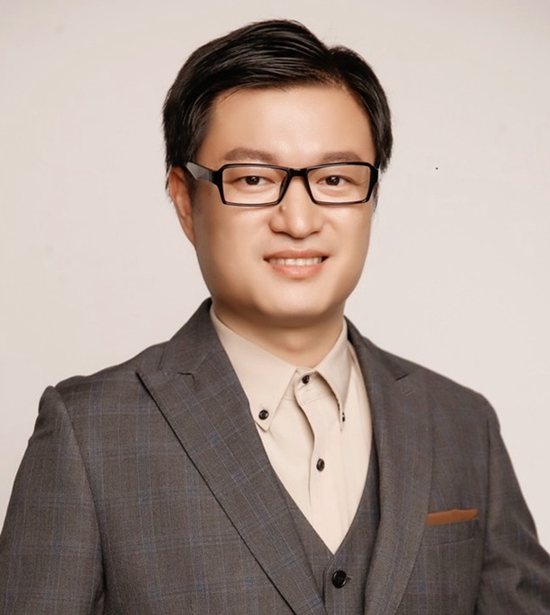
Zeng Cheng, Founder and CEO of Zhiqu
Recalling the hardships of his past entrepreneurial journeys, they have now become his most cherished memories. “This is my fourth venture,” Zeng Cheng told VCBeat. He conducted big data analysis on patents in 2005, worked on wearable devices in 2009, and engaged in indoor positioning technology in 2010. Although he embarked on these ventures as a co-founder, all the projects ultimately fizzled out for various reasons.
Regarding Zeng Cheng’s resume, he is a quintessential academic overachiever. During his master’s studies, he graduated one year early due to his outstanding academic performance. Later, owing to his exceptional scientific research achievements, he was exceptionally retained as a faculty member at Wuhan University in his second year of doctoral study, and he obtained his Ph.D. in 2006. To further accumulate expertise in cutting-edge technologies and broaden his horizons, Zeng Cheng went to Purdue University in the United States in 2009 for advanced studies. Upon returning to China, he conducted postdoctoral research at Tsinghua University. He has published more than 70 academic papers, received the Second Prize for Scientific and Technological Progress from the Ministry of Education twice, and participated in two National 973 Programs.
Although his career has followed a scientific trajectory, entrepreneurship has always been Zeng Cheng’s dream. He aspires to leverage his expertise and technical skills for greater social impact, rather than merely producing high-impact papers or winning awards. To accumulate entrepreneurial experience, Zeng Cheng served part-time as Vice President of Technology or Vice President of Marketing at three companies while working as a faculty member or postdoctoral researcher.
When the time was ripe, he founded Zhiqu in late 2013, inviting core team members from prestigious universities such as Peking University, Tsinghua University, and Wuhan University. These individuals are industry experts with cross-disciplinary expertise in both computer science and medicine. Under their leadership, the company currently holds 10 national invention patents, 1 international patent, 3 utility model patents, and 8 software copyrights.
It must be said that medical education is extremely capital-intensive. “The average R&D cost for each clinical case collected on our platform exceeds RMB 10,000. To date, we have developed more than 3,000 cases, covering over 300 disease entities across 19 specialties—including internal medicine, surgery, obstetrics and gynecology, and pediatrics. These cases encompass common clinical conditions and meet the learning and assessment needs of learners at various levels, such as medical students, residents in standardized training, specialists, and general practitioners.”
In the United States, the R&D cost for similar cases is $500,000 per case, equivalent to over 3 million RMB.
The greatest challenge Zeng Cheng faced was in 2015. “At that time, the project had not yet secured financing, and I knew nothing about fundraising.” Many entrepreneurs raise funds before starting their ventures, but he did the opposite—launching his business first and seeking investment later. A few friends pooled together some money, betting on medical education and preparing to go all in. Unexpectedly, after burning through cash for more than a year, the project still failed to turn a profit, while the company had over 30 employees to support...
In the end, with no other option and driven by the shared dream of more than 30 people, he was compelled to participate in a roadshow. To his surprise, he won first place in the Hubei Provincial Entrepreneurship Competition. “I suddenly felt as if bathed in a spring breeze; all the hardships and difficulties I had endured instantly turned sweet.”
Less than a month after the roadshow, he received investment offers from more than 30 institutions and quickly secured RMB 5 million in angel-round financing. As it was his first time engaging in fundraising and he lacked experience, he hesitated for over a month on whether to accept the investment. “This was because the financing agreement contained an exceptionally stringent clause: if operational targets were not met within the specified timeframe, he would be required to pay double compensation.”
Because of this clause, he suffered from poor sleep for an entire month. Each day, he was torn by anxiety and indecision: if he failed to meet the established targets, he would be saddled with a debt of 10 million yuan; if he relied on wages from employment to repay the debt, how long would it take? If he refused financing, the project would inevitably fail, shattering not only his own dreams but also those of his team of more than 30 members...
What should one do? What should one do? What should one do? Consider this: a person is on the verge of death from hunger and thirst in the desert, and someone offers you a bottle of poisoned wine. Would you drink it?
After much internal struggle, Zeng Cheng decided to sign the financing deal. He could not bear to give up on the life-saving funds; even if it were a cup of poison, he would drink it, at least to quench his thirst for survival. Even if it meant shouldering double the debt in the future, he was willing to take the risk. This unyielding character is quite similar to Li Lu’s: “Bearing all the pressure alone, telling no one, sharing with no one, and digesting it all by myself.”
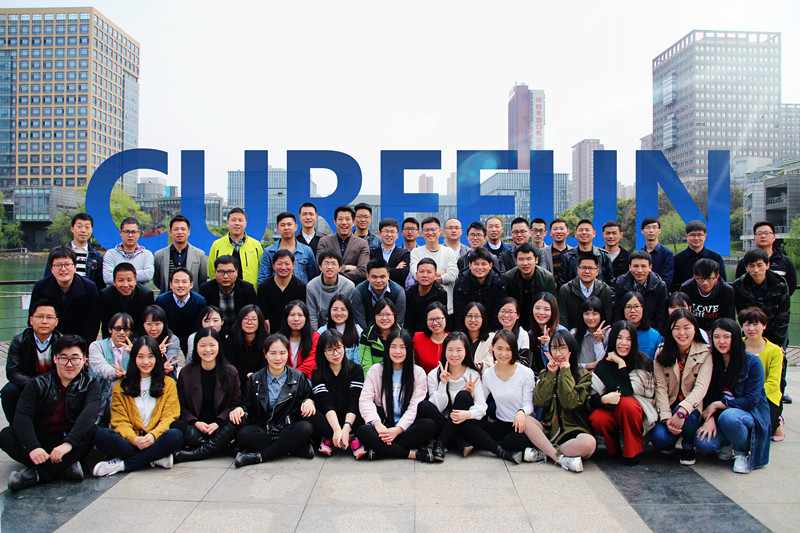
ZhiQu Team
After securing this round of financing, ZhiQu began to recruit talent and expand its scale.In less than a year, the financing agreement targets were finally achieved.Such an outcome left Zeng Cheng highly satisfied, and he felt fortunate to have signed the agreement at that time. Since then, the project’s financing has proceeded particularly smoothly, with financial statements, user data, and otherIt then raised an additional 40 million yuan in financing.
In his view, the virtual medical education provided by Zhiqu has a high industry competitive barrier compared to other medical education providers. Zhiqu is positioned to offer institutions a one-stop internet-based solution for training, assessing, and evaluating the clinical reasoning skills of their trainees. On one hand, users can conveniently access over 3,000 case studies and other teaching resources on the platform to support their institutional teaching activities. On the other hand, institutions can share their high-quality teaching resources on the platform to promote and disseminate their content and brand, thereby achieving integration of industry, academia, and research.
On the other hand, case co-construction initiatives have been launched in collaboration with medical institutions ranked among the top 100 hospitals and top 10 specialties nationwide. Nationally renowned medical education experts have conducted case reviews and researched student evaluation mechanisms. Through a process involving mutual review by leading medical schools, top-tier hospitals and departments, and medical education experts, as well as pilot implementation and student assessments, the program covers 19 specialties, over 300 disease types, and six levels of case complexity.
Initially, developing each clinical case required several months. For instance, given the similarity between symptoms of the common cold and SARS, identifying their differentiating features and critical thresholds to rapidly distinguish whether a patient has a cold or SARS helped cultivate users’ clinical reasoning skills. As the team accumulated experience and leveraged its big data technological advantages, the time required to develop a single clinical case has now been reduced by dozens of times.
“ZhiQu” did not yield satisfactory results during its initial trial phase. “In the beginning, the team consisted of only a few IT specialists. We were somewhat working in isolation, lacking medical logic, and the pedagogical methods, workflows, and interaction models for medical education were all unsatisfactory.” He decisively recruited medical graduates to form an interdisciplinary team, optimizing and upgrading the product, which gradually gained user recognition. Subsequently, Wang Yuwan was brought on board. This outstanding clinical medicine graduate joined the team to specifically address the integration between computer programming and medical practice, and was recognized as a Pioneer in College Student Entrepreneurship in 2015. Currently, the software is adopted by hundreds of hospitals and medical schools across more than 20 provinces in China for the teaching, learning, training, examination, and evaluation of medical students and physicians.
“Few patients are willing to consult intern doctors, yet medical students cannot become fully qualified physicians without completing their internships.” The scientific community has long sought solutions through technological advancements, with two currently recognized approaches: one involves cloud-based classrooms that aggregate diverse learning resources combined with online case discussions; the other entails developing high-fidelity human simulators or simulated organs for interns to practice on.
Both solutions avoid practicing treatments on actual patients, but their drawbacks are evident. Solution 1 is merely an online migration of the traditional offline model, making it difficult to assess learning outcomes. Solution 2 incurs higher costs and focuses on training specific individual skills, lacking instruction in holistic clinical reasoning. Many medical schools in China have promptly purchased relevant teaching equipment or platforms; however, due to high material costs or mediocre effectiveness, these resources cannot be provided to every medical student and are often left unused.
When he launched this mobile application, it was piloted at local medical institutions such as the Medical School of Wuhan University, receiving overwhelming positive feedback from users. Even established physicians who are already practicing independently have been eager to share their clinical cases through the platform. “This reflects the nature of internet-based sharing: the more users contribute, the larger our case database becomes, thereby making the AI-driven virtual patients—powered by self-learning algorithms—more scientific and intelligent,” said Zeng Cheng. From an entrepreneurial perspective, this model also boasts a strong foundation for sustainability, as “users can receive training in clinical reasoning at virtually no cost.”
Zeng Cheng explained that the diagnostic and treatment process for virtual patients is like a maze placed before a physician. Each entrance represents a clinical decision; different decisions lead to different exits. If a path proves impassable, it indicates a flaw in the diagnostic and therapeutic reasoning.
ZhiQu’s design philosophy is centered on “clinical competence.” Drawing on international research into Computer-based Case Simulations (CCS), ZhiQu has independently developed a competency assessment framework. By conducting comprehensive, stage-specific assessments of learners’ clinical competence, it generates personalized learning objectives and study plans.
The platform offers a wealth of learning resources to facilitate systematic study and self-directed improvement for learners, including structured clinical competency training courses, open-ended drills and group discussions, and scenario-based case diagnosis and treatment simulations. Leveraging the ZhiQu APP, it enables instructors and students to engage in “teaching, learning, practicing, testing, and evaluation” anytime and anywhere, truly achieving an organic integration of clinical reasoning with clinical practice. This ultimately enhances the “clinical competence” of medical graduates, residents, and other healthcare professionals, thereby promoting patient safety.
By simulating medical diagnosis and treatment environments through computer modeling, this approach realistically recreates the entire process of case management. Through engaging and interactive problem-solving experiences, users can master fundamental medical knowledge, develop clinical reasoning skills, and cultivate competent physicians.
Its core advantages are mainly reflected in the following aspects:
First, in terms of technology,ZhiQu integrates big data analytics with machine learning technologies to simulate the entire clinical process through intelligently constructed “virtual patients,” supporting simulations of complex scenarios such as medication feedback and disease progression outcomes.The system backend supports hundred-millisecond-level clustering of hundreds of millions of networked case records, featuring domestically leading technology and having secured over ten invention patents. Although the current “virtual patient” has limited intelligence, as the platform’s case database expands, it will be able to more realistically emulate a clinical “standardized patient.”
Second,Centered on “clinical reasoning,” the product targets junior healthcare professionals, helping medical students develop into qualified physicians and nursing students into competent nurses. It offers virtual patient cases with varying levels of difficulty and formats tailored to users at different stages of training.The company maintains a focused strategy and a dedicated team. While competitors treat clinical thinking training as just one product line, Zhiqu is committed to perfecting a single product with its full resources.
Third,Adopting an asset-light cloud server model, it does not occupy the institution’s already limited space, requires no hardware purchases, and incurs no local maintenance costs. With only a part-time administrator, clinical thinking training and assessment can be easily implemented across the entire hospital or university, significantly lowering the barrier to entry for the clinical thinking training market and providing a cost-effective solution for institutions with limited funding, space, and personnel.
Fourth,Actively align with national policies promoting the integration of medical education and industry-academia-research collaboration, gradually establish long-term partnerships with top-ranking medical schools and teaching hospitals in China, assemble a team of experts with extensive clinical and teaching experience, and compile and review case studies to achieve breakthroughs in both the quantity and quality of cases.The platform adopts an institutional cloud service and mobile app presentation scheme that represents future trends. Compared with the traditional local area network solutions commonly used by competitors, it liberates managers and learners from venue and time constraints, enabling them to "treat patients and save lives" anytime, anywhere.
Fifth,The culture of the ZhiQu team is open, and they take multiple routes, seeking diverse resources to expand marketing channels; a nationwide network of medical and educational equipment distributors, collaboration with People's Medical Publishing House, engagement with the Chinese Medical Doctor Association, partnerships with provincial health commissions, and cooperation with more than ten peer companies.
Currently, the ZhiQu platform is being used by hundreds of hospitals and medical schools across China, including Peking Union Medical College Hospital, West China Hospital of Sichuan University, Xiangya Hospital of Central South University, Shandong University, Nanjing General Hospital, and Wuhan University. The primary task for the future is to further enhance the platform’s intelligence level, more realistically simulate the cognitive processes involved in real-world clinical diagnosis and treatment, and provide “virtual patients” covering various diseases across all specialties, thereby further consolidating ZhiQu’s leading position in this niche sector within China.
To become a physician, passing the National Medical Licensing Examination and completing standardized residency training are “mandatory pathways.” Today, as China’s healthcare reform policies continue to deepen, the assessment of physicians’ practice qualifications and competencies has become increasingly standardized. This began with the comprehensive promotion of standardized residency training in 2015, followed by the implementation of the phased National Medical Licensing Examination starting in 2016. Furthermore, since 2020, the Certificate of Completion of Standardized Residency Training has been required as one of the eligibility criteria for taking the Intermediate Professional Qualification Examination in Clinical Medicine and for appointment to intermediate-level technical positions in clinical medicine. The implementation of these new policies not only helps cultivate more outstanding physicians for society but also raises higher professional competency requirements for physicians (including medical students).
Whether it is the standardized residency training assessment or the phased National Medical Licensing Examination, in addition to evaluating physicians’ (or medical students’) basic skills, such as physical examination and fundamental procedural skills, these assessments also encompass the evaluation of clinical diagnostic and therapeutic capabilities, as well as medical ethics and professional conduct. Notably, both of these national-level physician examinations explicitly emphasize the assessment of “clinical reasoning skills.”
ZhiQu aims to become China’s most authoritative virtual clinical education platform, cultivating users’ clinical reasoning skills and emerging as the leading enterprise in the niche of online medical education. ZhiQu has established a professional case review team that evaluates cases from multiple perspectives, including usability and feasibility. Meanwhile, the platform has engaged numerous senior physicians from top-tier (Grade 3A) hospitals to provide authoritative certification of classic cases, thereby safeguarding user learning through multi-dimensional quality assurance.
Furthermore, Zhiqu adopts a novel win-win model to collect case resources, engaging both institutions and users in a collective effort. This approach not only makes the tedious and labor-intensive task of uploading cases easier, more enjoyable, efficient, and feasible, but also enables users to gain a profound understanding of the various issues that may arise during disease progression and the diagnosis and treatment process documented in medical cases.
“Entrepreneurship requires a sense of mission and social responsibility. The social value of Zhiqu will far exceed its economic value. If I can help improve the clinical capabilities of healthcare professionals across China by even 1%, my life will have been well spent!” said Zeng Cheng.
The company is currently raising Series A+ funding, with a capital requirement of approximately RMB 100 million.