

Richard Liu Meets 13 Global Maternal & Infant Brand Executives, Unveils $3 Billion Procurement Deal — Is the Maternal & Infant Market on the Verge of Transformation?
On April 10, following the afternoon announcement at the JD Baby Party press conference that JD Supermarket’s maternal and infant category would open 5,000 “JD Maternal and Infant Experience Stores” across China within three years, Liu Qiangdong held a collective meeting with executives from 13 leading global maternal and infant brands—including Kao, Friso, Wyeth, Mead Johnson, Abbott, Danone, Nestlé, Huggies, Unicharm, Pampers, LEGO, Mattel, and Purcotton—to discuss cooperation in depth.
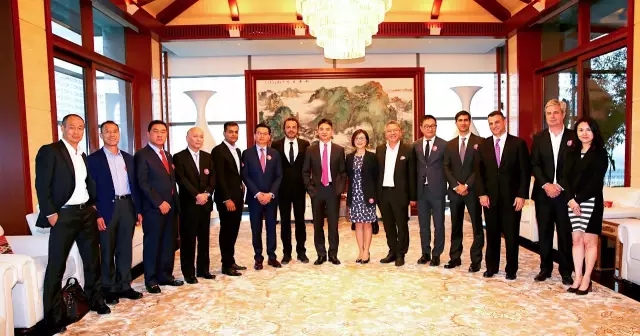
It is evident from the lineup that these brands are all top-tier players in the maternal and infant sector. The fact that so many industry leaders have gathered on JD.com for their first collective appearance is highly significant. Why have leading maternal and infant brands chosen to make a joint debut on JD.com? Why has JD.com suddenly set its sights on the maternal and infant market? What achievements has it made, and how will it continue to strive for further growth?
The Maternal and Infant Market Exceeds One Trillion Yuan Yet Lacks a Dominant Leader: JD.com Seeks to Capitalize on the Gap
Data indicates that the maternal and infant market is valued between RMB 2 trillion and RMB 5 trillion. However, the reality is that very few platforms in this sector achieve annual retail sales exceeding RMB 10 billion. This is particularly true for offline maternal and infant channels such as Wanda’s Kidswant, as well as online vertical e-commerce platforms specializing in maternal and infant products, whose sales figures are far from optimistic.
Facing the maternal and infant FMCG market, which is valued at over one trillion yuan yet lacks a dominant player, JD.com clearly harbors ambitions to capture the market.
Especially as JD.com continues to expand in scale, it increasingly needs to venture into new sectors to drive high-speed growth.
In early March this year, JD.com Inc. released its financial results for the fourth quarter and full year of 2016, revealing that the company’s net revenue for the full year of 2016 reached RMB 260.2 billion, a year-on-year increase of 44%, with Non-GAAP annual net profit amounting to RMB 1 billion. This marks the first time JD.com has achieved annual profitability since its U.S. listing in 2014, as well as its first-ever annual profit in the 13 years since its founding.
It is evident that JD.com’s profitability has been steadily improving since 2016. Achieving profitability while maintaining strategic investments in new businesses signifies that JD.com has reached a new inflection point for sustained and healthy development.
In this context, JD.com’s aggressive push into the maternal and infant fast-moving consumer goods (FMCG) market is a necessary and well-founded strategic choice. As Liu Qiangdong, Chairman and CEO of JD.com, stated following the release of the financial report: “We are pleased to see that JD.com has maintained strong growth momentum, further demonstrating that our vision of delivering high-quality e-commerce experiences to users continues to gain recognition in the Chinese market. Our robust growth reflects Chinese consumers’ acknowledgment of JD.com’s authentic products and unparalleled premium services. Looking ahead, we will focus on technological innovation to further consolidate our position as an industry leader.”
It can be said that JD.com, as the overall market leader, is well-positioned to capture the largest share of the maternal and infant FMCG market by leveraging the advantages of its direct-sales model.
Self-Operated E-commerce Holds a Natural Advantage in the Maternal and Infant Sector
Infant formula, diapers, and other maternal and infant products, as a special category of fast-moving consumer goods (FMCG), possess several distinct characteristics. First, they represent a relatively high-frequency consumption category. Second, the average transaction value per customer is comparatively high. Third, consumers exercise greater caution when selecting products in this category. For parents, particular emphasis is placed on brand reputation, product quality, and purchase channels. Especially in the era of e-commerce, the choice of purchase channel has become a paramount consideration for consumers.
In this context, it is only natural that self-operated e-commerce platforms have become the primary channel for consumers purchasing maternal and infant products, as this aligns directly with their inherent advantages. In the Chinese market, JD.com is the largest self-operated e-commerce platform. Specifically in the maternal and infant sector, JD.com adopts a self-operated model for nearly all top-tier leading brands, connecting brand owners directly with end consumers through official brand self-operated flagship stores. This self-operated model serves to reassure consumers.
This point is evident from the relevant data. According to the "2016 China Online Sales Report for Maternal, Infant, and Child FMCG Products" released by the China National Commercial Information Center at JD.com’s “Baby Party” launch event, JD.com accounted for 45% of China’s B2C online market for maternal, infant, and child fast-moving consumer goods (FMCG) in 2016, becoming the largest online retail platform for such products. Meanwhile, JD.com was also the largest retail channel for infant formula and diapers among both online and offline retailers or platforms in 2016.
It is evident that JD.com, as China’s largest self-operated e-commerce platform, has established unique advantages in the maternal and infant fast-moving consumer goods (FMCG) market, which have been widely recognized by consumers. This demonstrates that the self-operated model is the optimal retail approach for maternal and infant e-commerce, aligning with consumers’ channel preferences in the era of consumption upgrading. Given its long-standing commitment to the self-operated model, JD.com naturally holds a competitive advantage that is difficult for others to match.
Over RMB 20 Billion in Procurement Agreements: JD.com to Make a Major Move in the Maternal and Infant Retail Sector
Notably, at the JD.com “Baby Bash” launch event, JD.com also signed 2017 procurement agreements with 12 well-known maternal and infant brands, including Kao, Huggies, Pampers, GOO.N, Unicharm, Abbott, Danone, Nestlé, Friso, Wyeth, Mead Johnson, and Junlebao, with a total procurement value exceeding RMB 20 billion.
The RMB 20 billion bulk procurement agreement signed by JD.com with several leading brands is equivalent to nearly half of the total online transaction value of maternal and infant fast-moving consumer goods (FMCG) in China for the entire year of 2016. What drives such a substantial procurement commitment? Where does the confidence of manufacturers lie, and what underpins JD.com’s confidence? The answer lies in JD.com’s influence and appeal within the maternal and infant FMCG market.
Specifically, behind such a massive procurement agreement lies JD.com’s appeal, influence, and ability to mobilize leading maternal and infant product manufacturers as well as hundreds of millions of consumers. As the largest online and offline retail channel for fast-moving consumer goods (FMCG) in the maternal and infant sector, JD.com is pivotal for brands—so much so that winning JD.com’s partnership is akin to securing dominance in the market. The fact that JD.com has attracted numerous top-tier maternal and infant brands to jointly sign procurement agreements underscores its strong market influence.
As the largest online and offline retail channel for maternal and infant products, JD.com has long secured an ideal position in consumers’ minds through its unique self-operated model—a feat not easily replicated by just any e-commerce platform or offline retailer. In essence, JD.com serves as the optimal connector in the maternal and infant FMCG (Fast-Moving Consumer Goods) market, linking high-quality, loyal, and high-purchasing-power consumers on one end with premier, quality-assured maternal and infant brands on the other. This connection creates a positive cyclical effect, rapidly driving sustainable development and significant growth in the maternal and infant FMCG market. For JD.com, the signing of the RMB 20 billion deal marks the opening of a new chapter in the development of this market.
Connecting Brands and Users: Building JD’s Maternal and Infant Ecosystem as the Ultimate Goal
At the Baby Party launch event, JD.com also announced that its maternal and infant division would initiate the “4+” initiative in 2017, comprehensively upgrading four key areas—partnerships, business models, channels, and marketing—to create new growth drivers for the maternal and infant category. Meanwhile, leveraging the advantages of JD.com’s broader platform, the maternal and infant division will build a content ecosystem focused on vertical specialization, community engagement, and authoritative credibility, driving sales through content and fostering win-win outcomes through ecosystem collaboration. Notably, while maintaining close collaborations with numerous leading brands, JD.com’s maternal and infant division will further strengthen partnerships with several globally renowned maternal and infant brands in areas such as product customization, big data analytics, and open marketing, jointly promoting the development of the maternal and infant industry.
Viewed in light of the aforementioned initiatives and strategic deployments, JD.com’s maternal and infant division has effectively transcended the conventional model of sales-driven commerce, instead focusing on cultivating and constructing a holistic ecosystem from an elevated strategic perspective. Within this ecosystem, JD.com, maternal and infant brands, and consumers all stand to benefit. For instance, the establishment of a content ecosystem characterized by vertical specialization, community engagement, and authoritative expertise not only empowers maternal and infant brands but also facilitates “intimate engagement” with consumers. Last year, JD.com’s maternal and infant division undertook multifaceted explorations in content ecosystem development, such as forming a strategic partnership with Parents World, launching the “Mom’s Circle of Friends” video series to pioneer new models of video marketing, and collaborating closely with brands to establish over one hundred WeChat groups for mothers, enabling direct outreach and communication with consumers. Furthermore, JD.com’s maternal and infant division has partnered with numerous brand experts to provide users with comprehensive and professional Q&A and consulting services.
These seemingly routine efforts in content ecosystem building are, in fact, laying the foundational groundwork bit by bit, giving shape to the maternal and infant content ecosystem. This year, JD.com will continue to upgrade and intensify its efforts on this basis. For instance, to establish a specialized vertical platform for maternal and infant content, JD Baby will launch a Maternal and Infant Content Incubator Project. By continuously nurturing high-quality content, it aims to build trust with consumers. In terms of fostering active maternal and infant communities, JD Baby will segment users based on infants’ and toddlers’ age groups, precisely pushing expert guidance videos, practical parenting tips, and trial benefits tailored to each age group to parents. It will also create authoritative JD Baby micro-classes for children of various ages. Furthermore, JD Baby will forge deep collaborations with maternal and infant experts, key opinion leaders (KOLs), and influential content creators to build a highly authoritative content library, providing consumers with comprehensive, multi-perspective, and most authoritative information.
From this perspective, JD.com’s maternal and infant segment has evolved beyond being a mere sales channel; it now places greater emphasis on forging emotional connections with consumers and establishing virtuous links among consumers, brands, content, and the broader ecosystem. Initiatives of this nature will ultimately cultivate a super-community for maternal and infant products, characterized by heightened consumer loyalty to both JD.com and associated brands, as well as stronger user stickiness. Within this community, purchasing becomes a natural outcome, while the experience delivered through the content ecosystem takes center stage. The resulting win-win and multi-win outcomes reflect JD.com’s ultimate objective in strengthening its consumer-facing maternal and infant content ecosystem—empowering brands through product customization, big data analytics, and open marketing platforms. This also underscores the deeper significance behind Mr. Liu Qiangdong’s meetings with leading figures in the maternal and infant brand industry.
As JD.com makes a strong push into the maternal and infant FMCG market with significant investment, the sector is poised for a major reshuffle. Small and medium-sized vertical e-commerce platforms, as well as offline retail channels, face the potential loss of market share. With the entry of industry giants, intensifying competition in China’s maternal and infant market is inevitable.
By: Xin Haiguang, Columnist