

How PKU Healthcare IT Enabled Smooth Transition for 29 Beijing Public Hospitals Amid New Medical Reform
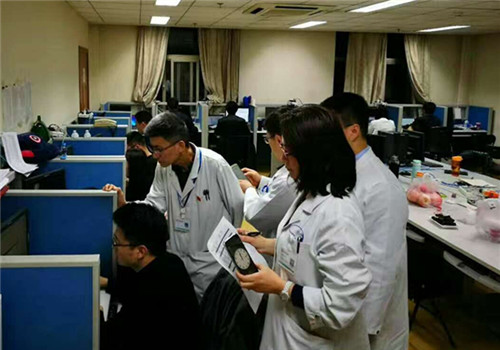
On-site Photo of a Hospital in Beijing
At midnight on April 8, Beijing officially launched the comprehensive reform to separate pharmaceutical sales from medical services, with multiple reform measures implemented simultaneously. Among these, over 3,600 medical institutions completely abolished the 15% drug markup, adopted transparent drug procurement practices, and reduced drug procurement prices. Additionally, registration fees and consultation fees were eliminated, a medical service fee was established, and the prices for 435 medical service items were adjusted accordingly.
This healthcare reform has tested not only hospitals but also the vendors providing hospital information technology services, such as companies specializing in healthcare informatics. Information technology construction has consistently played a crucial role in the healthcare reform process. It serves as one of the key pillars of healthcare reform and, later on, became a major task directly involved in healthcare reform initiatives.
In Zhang Jun’s words, the transition brought about by this healthcare reform truly tests the intellect of health IT professionals, the scalability of their products, and the competence of hospital administrators.

Zhang Jun, General Manager of the Key Account Management Department at PKU Healthcare IT
Zhang Jun, General Manager of the Key Account Management Department at Peking University Health Information Technology (PKU HIT), boasts 17 years of experience in the Health Information Technology (HIT) industry. He is a seasoned business expert and senior project management specialist. He possesses extensive practical experience in the overall strategic planning, consulting, and project management of comprehensive informatization initiatives for large tertiary A hospitals. Furthermore, he has in-depth expertise in the HIMSS framework and the Electronic Medical Record (EMR) Application Level Evaluation System. He spearheaded the HIMSS Stage 7 certification initiative at Peking University People’s Hospital and led the informatization construction project at Peking University International Hospital. Additionally, he has participated in the informatization planning and system implementation projects for numerous other hospitals.
Peking University Health Information Technology (PKU HIT) has always closely monitored new policies on healthcare reform. On December 6, 2016, the Beijing Municipal Development and Reform Commission, the Beijing Municipal Health and Family Planning Commission, and the Human Resources and Social Security Bureau jointly issued three notices concerning the pricing of medical service items. In response, PKU HIT immediately initiated the implementation plans and system modifications required for adjusting service prices, taking each medical service item as the unit of adjustment.
Following the Spring Festival, as healthcare reform policies became increasingly clear, Dr. Chen Zhongyang, CEO of PKU Healthcare IT, attached great importance to the matter and directed the R&D Center and Delivery Center to jointly establish a Healthcare Reform Command Center. Vice President Li Lanshen, who oversees the delivery division, personally took charge of supervision, while Zhang Jun, General Manager of the Key Account Management Department, served as the overall frontline leader. By pooling the company’s core technical resources, the team fully committed itself to the practical implementation of Beijing’s comprehensive reform on separating drug prescribing from dispensing services, translating various reform policies into proactive actions to ensure the smooth progress of this comprehensive reform in hospitals.
On March 22, 2017, the “Implementation Plan for the Comprehensive Reform of Separating Pharmaceutical Services from Medical Services” was officially released. To prepare for the critical healthcare reform initiatives scheduled for April 8 and in response to the call from the Beijing Municipal Health and Family Planning Commission, Peking University Healthcare Information Technology (PKU HIT) Healthcare Reform Command Center required all on-site hospital project personnel to immediately transition into dedicated healthcare reform task forces on that day. These teams were assigned specific roles and responsibilities to ensure the smooth switchover of information systems supporting the healthcare reform. Meanwhile, Vice President Li Lanshen directed the emergency deployment of 20 elite technical experts from the Technical Support Center and four regional delivery divisions. These experts were organized into three specialized teams: a technical support expert team, a database technology expert team, and a hardware and network technology team. Serving as rapid-response units, they provided flexible support for system transitions at various hospitals, ensuring immediate on-site response and resolution in the event of information system failures or emergencies.
The PKU Healthcare Information Special Team for Healthcare Reform has successively completed:
January: Interpretation of New Healthcare Reform Policies;
Formulate the healthcare reform transition plan in February;
System upgrades were completed in March, with hospital systems rolling out sequentially.
On April 8, the system migration began at 29 hospitals in the early morning.
Frequent good news from the front: At 0:00 a.m., the Capital Institute of Pediatrics successfully completed the system cutover; at 0:08, Peking University Third Hospital, Peking University People’s Hospital, and Peking University International Hospital successfully completed their cutovers; at 0:18, Xuanwu Hospital successfully completed its cutover…
2:00 AM, all successful; entering the 24-hour healthcare reform support period...
For hospitals, the core and focus of this healthcare reform is undoubtedly the comprehensive elimination of drug markups and the introduction of medical service fees, along with a comprehensive adjustment of prices for 435 medical service items and pharmaceuticals.
Hospital information systems are at the forefront of healthcare reform, serving on one hand as a technical support tool to lay the foundation, and on the other, driving the reform efforts as the central player.
The overhaul of the healthcare reform system must be comprehensive, detailed, and flawless. For instance, data organization should be complete with no omissions; information system upgrades must be thorough and meticulous to minimize, or even eliminate, any disruption to hospital operations.
As the first leading enterprise in China specializing in healthcare informatization, Peking University Healthcare Information Technology (PKU HIT) undertook the construction of information systems for 29 hospitals in Beijing. Due to differences in business processes and management practices across these hospitals, as well as varying priorities in their informatization development strategies, PKU HIT designed independent versions for each hospital to rapidly meet their specific needs. “Since the core business processes and database table designs of PKU HIT’s information systems are fundamentally the same, the technical implementation of the healthcare reform-related information system posed no significant challenges for PKU HIT, and the modification workload was relatively modest. However, the workload for system testing and business validation was substantial,” said Zhang Jun.
In addition to the information system’s support for the three adjustments related to healthcare reform, coordination with clinical departments is required to adapt to short-term, concentrated changes, thereby minimizing the impact of healthcare reform on clinical operations. During implementation, two primary issues must be addressed: First, the adjustment of medical service fees, along with the prices of 435 medical service items and pharmaceuticals, involves numerous scenarios and complex special cases, affecting nearly all modules of the Hospital Information System (HIS). Specifically, the configuration of apportionment ratios for medical service fees covers 11 appointment categories, 20 patient identity types, and adjustments to three major categories of reimbursement policies. The intricate interplay among these factors results in highly complex configurations, leading to substantial workloads for system testing and validation by clinical departments. Second, if the medical insurance system fails to provide a post-reform testing environment in a timely manner, it will prevent adequate testing and validation of medical insurance-related functionalities before the official system switchover at 00:00 on April 8.
Zhang Jun stated, “PKU Healthcare IT’s HIS product offers comprehensive functionality. In light of the centralized system cutover scheduled for 00:00 on April 8, most contracted hospitals tend to optimize and adjust their information systems to mitigate the burden of complex clinical workflows. Two primary approaches are generally adopted: adjusting healthcare reform-related items in the production database, with these changes hidden until the new prices are activated at midnight; or adjusting such items in the test database and importing them into the production database at 00:00 on April 8.”
Therefore, the dictionary maintenance for 435 medical service items and drug prices, along with adjustments to price publicization, was completed in March. Prior to April 1, all 29 hospitals under the system construction by Peking University Healthcare Information Technology (PKU HIT) completed their system upgrades.
This healthcare reform initiative spanned three months, during which Peking University Medical Information Technology (PKU HIT) deployed technical support resources totaling over 350 person-times, amounting to a cumulative 187 person-months. Notably, from April 7 to 8, PKU HIT engaged 119 person-times in the hospital’s system cutover operations.
To help hospitals navigate the transition smoothly, special task forces on healthcare reform at each hospital collaborated with their respective IT departments through extensive discussions to develop test workflows and drill scenarios for the reform. These included 51 outpatient testing and drill scenarios and 15 inpatient testing and drill scenarios. Joint efforts with clinical departments strengthened testing, while multi-departmental teams conducted repeated drills.
During the implementation, what left the deepest impression on Zhang Jun was the period from 8:00 a.m. on April 7 to 5:00 p.m. on April 8, when 100,000 staff members across Beijing’s medical institutions stayed awake all night, standing guard for the healthcare reform. All hospitals involved in the reform prioritized the greater good. Clinical, nursing, emergency, medical technology, finance, and information departments, along with IT service providers, worked together regardless of their roles as clients or vendors. Through collective effort and full-scale collaboration, they truly demonstrated a people-centered sense of responsibility and commitment, safeguarding the dignity and honor of the healthcare industry.
With the in-depth implementation of the “Implementation Plan for Beijing’s Comprehensive Reform on Separating Pharmaceutical Services from Medical Services” effective April 8, the policy orientation will profoundly impact the Health Information Technology (HIT) industry. Enhancing medical service quality and patient care experience, supporting tiered diagnosis and treatment, and promoting refined hospital operations and cost control will become the key priorities for hospital informatization in the next phase.