

How HuLianWang Achieved National Leadership in Just Three Years: Partnering with 1,000 Public Hospitals and Empowering 400,000 Nurses

In China, the career development of the nursing workforce is often overlooked.
High risk, excessive workload, night shifts, and low pay—these realities, which nurses consider all too commonplace, accompany the vast majority of them throughout their entire careers. Some hospital nurses attempt to secure transfers out of clinical roles by leveraging personal connections and calling in favors, hoping to escape the frontline. Within the hospital system, nurses lack a stable career advancement path. Unless they can become head nurses or directors of nursing departments, there are virtually no other opportunities for progression. For nurses in their thirties and forties, changing careers has become almost inevitable.
These experienced nurses often transition into careers entirely unrelated to their profession after leaving the healthcare system. For the nation, this undoubtedly represents a serious waste of educational resources. In recent years, the government has continuously increased enrollment quotas, with nursing vocational colleges expanding admissions year after year; yet, the nurse-to-physician ratio still barely reaches 1:1. The high attrition rate has become a microcosm of the career development challenges faced by nurses in China.
Zhang Xueli, Founder and CEO of Huliwang, is one of the initiators of the 919 Nurse Care Program, China’s first public welfare fund dedicated to nurse care. She formerly served as Director of the Training Center at the Talent Exchange Service Center of the National Health and Family Planning Commission, and as President of the Chinese Journal of Health Human Resources.
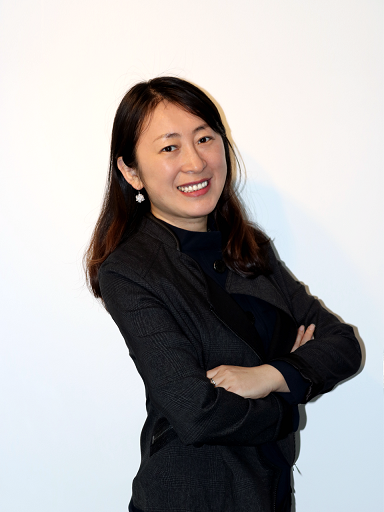
Zhang XueliFounder & CEO of HULianWang
Serving as the legal representative of a training center for three years, Zhang Xueli then spent another three years as the president of China Health Talent Magazine. Over the years, she has remained deeply committed to the career development of nurses. “These ‘angels in white,’ who wear nurse caps and pristine uniforms, alleviate burdens for physicians and provide compassionate care to patients, deserve a healthy and broad career prospect.”
With such determination, Zhang Xueli resigned from her job in July 2013 and embarked on an entrepreneurial journey.
Years of experience at the National Health and Family Planning Commission enabled Zhang Xueli to keenly recognize that geriatric nursing professionals and scarce rehabilitation specialists would undoubtedly be the focus of the new round of guidelines for nursing development. To reconstruct the nursing industry, the ultimate solution still lies in addressing the professionalism of the health service sector. Whether in elderly care or rehabilitation, what is currently most lacking is professional nursing talent. Providing career development opportunities for nurses who originally intended to leave the medical system is the foundational principle behind the establishment of HuLianWang.
Since its establishment, in just three years, there have already beenOver 1,000Hospitals at Grade II and above have partnered with HuLianWang. Among the approximately 2 million urban nurses in China, HuLianWang covers400,000, it is arguably the largest in China within its field. Among these more than 400,000 nurses, not only are they registered users, but the number of paid training users has also reached100,000 peopleas many as.
Reconstructing the Career Development Environment for Nurses: Starting with Recruitment
Achieving such results is closely tied to the three major services of HuLianWang:HuLian Assessment, HuLian Academy, HuLian Recruitment。
For Zhang Xueli, the most challenging of the three aspects was recruitment. Although she was fully aware of this, she still chose to start with this area. For nurses, recruitment continues to hold the greatest value.
Where Does the Difficulty in Nurse Recruitment Lie? On the Demand Side! Third-party institutions, such as elderly care and rehabilitation facilities, prioritize optimizing labor costs and skills when seeking nursing staff. This often places job seekers at a disadvantage, leading to a mismatch between supply and demand.
“HuLianWang employs a screening mechanism when selecting partners and does not collaborate with all institutions. It prioritizes the protection of nurses’ rights and interests; otherwise, high turnover rates would remain difficult to control,” Zhang Xueli told VCBeat.
Particularly, many of the recently popular “home-visit nurse” platforms operate primarily as intermediaries, bypassing numerous standardized training procedures. Due to the limited medical and health expertise of these employers, they are unable to accurately assess nurses’ true professional competence. Many such platforms require only a nursing practice license, and this excessively low entry threshold ultimately harms the nurses themselves.
Zhang Xueli believes: “A professional nursing platform must be capable of accurately assessing the job requirements of partnered third-party institutions and establishing a standardized competency model for nurses; otherwise, it will inevitably lead to vicious competition driven primarily by price.。”
Precision Matching: From Training to Recruitment
To conduct recruitment, Huliwang must accumulate certain data models to enable precise candidate matching. Addressing this through training is an excellent approach.
In terms of educational resources, HuLianWang has partnered with Peking University Health Science Center, Elsevier, and Med66 to jointly develop training courses. For its core paid tutorials, HuLianWang opts for in-house development in collaboration with industry experts. Supported by a part-time team of several hundred experts, including specialists in nursing and health, HuLianWang receives robust professional backing.From promotion-oriented training and standardized residency training to career transition coaching, the curriculum spans nearly the entire professional lifecycle of nurses.。
In addition to developing its own courses, Huliwang also possesses an electronic certification system. After completing training, nurses undergo remote assessments conducted by a team of experienced head nurses.Only after passing the assessment can nurses apply for recruitment at this enterprise.. This also serves as a guarantee of talent and skills for third-party enterprises.
Taking the partnership between Jiahu Yunyi and HuLianWang as an example, HuLianWang provides them with two types of part-time nursing positions. One is for senior nurses, who conduct health assessments for families via telephone in accordance with HuLianWang’s training protocols. The other is for junior nurses, who must undergo professional operational training—covering areas such as service terminology and service workflows—to be eligible for hire.
As a result, Jiahu Cloud Medicine no longer needs to worry about nurse matching issues and can focus wholeheartedly on delivering high-quality services to end clients.
“DiDi Chuxing incurred substantial costs to connect taxi drivers with users, whereas HuLianWang already possesses a pool of professional, highly matched nursing resources. This enables third-party enterprises to save a significant portion of their costs,” said Zhang Xueli.
Nurse Skill Tagging
Labeling is another innovation by VBLink.
Due to the subdivision of responsibilities across departments, working hours, and specialized skills, each nurse possesses their own unique professional identity. Taking injections and intravenous infusions as an example, patients in different departments undergo a nursing diagnosis prior to receiving injections. As patients often present with varying complications, nurses prepare different medication formulations accordingly.
In terms of the professional title system, there are significant differences between Junior Nurse Practitioners and Charge Nurses. For instance, emergency department nurses tend to have more comprehensive skills, whereas ICU nurses are more proficient in operating monitoring equipment and observing vital signs of critically ill patients.
Unlike traditional personal tags, the tags used by many websites are quite generic, making it difficult to create a precise profile of an individual.The NurseLink platform, through professional evaluation systems such as assessments and training, stratifies nursing skills and assigns personalized tags to each nurse, thereby maximizing the match between supply and demand.。
As of now,Hulianwang already has more than 100 professional tags, making it the only company in China currently offering this service.。
Zhang Xueli stated, “The alignment between labels and demands requires support from a professional system with clear stratification. Extensive operational models similar to that of Didi Chuxing can easily lead to mismatches between supply and demand in the healthcare sector, thereby triggering doctor-patient disputes. In contrast, HuLianWang adopts an agile approach, ensuring professionalism while precisely positioning itself to meet the specialized nursing needs of both doctors and patients.”
How do investors view it?
In July 2016, HuLianWang successfully secured tens of millions in Series A financing, led by Yuanyi Capital and Zhengbao Education. Why focus on the nursing industry at this particular juncture? Gao Yi, a partner at Yuanyi Capital, explained their selection criteria and investment rationale to VCBeat:
Since the first half of 2016, Yuanyi has been systematically mapping out various models across segmented fields of nursing care services. Yuanyi’s assessment is that China’s nursing care service industry will witness explosive demand growth within two to three years, further widening the gap between supply and demand.
The surge is driven by the convergence of three factors: demographic shifts, consumption upgrading, and changes in the industrial chain. First, demographic shifts are underway. China is approaching the peak of its aging population. In 2015, the number of people aged over 60 and over 80 reached 212 million and 23.39 million, respectively. With 212 million elderly individuals, China became the first country in the world to have an elderly population exceeding 200 million. Meanwhile, the relaxation of the national two-child policy has spurred rapid growth in demand for maternal and child healthcare services at the other end of the demographic spectrum.
Next is the multi-tiered demand for nursing care driven by consumption upgrades, which encompasses not only basic home-based care but also novel requirements such as hospice care and event medical support. Furthermore, as healthcare reforms deepen, non-public medical institutions are flourishing. The rapid development of private hospitals, specialized chain clinics, maternal and child health centers, physical examination centers, community service centers, elderly care facilities, and rehabilitation centers has generated substantial demand for professional nursing personnel.
The Outbreak Stems from Three Factors:
First, changes in demographic structure, consumption upgrading, and shifts in the industrial chain.. As China approaches the peak of its population aging, the number of individuals aged 60 and above and those aged 80 and above reached 212 million and 23.39 million, respectively, in 2015. With 212 million elderly individuals, China became the first country in the world to have an elderly population exceeding 200 million. Meanwhile, the relaxation of the national two-child policy has driven rapid growth in demand for maternal and child healthcare services at the other end of the demographic spectrum.
Second is the multi-tiered care demand driven by consumption upgrades.. It encompasses both the basic needs of home-based care and emerging care requirements such as hospice care.
With the deepening of healthcare reform, non-public medical institutions have flourished. The rapid development of private hospitals, specialized chain clinics, maternal and child health centers, physical examination centers, community service centers, elderly care centers, and rehabilitation centers has led to a growing demand for professional nursing staff.
From the perspective of the current skill structure of the nursing workforce in China,In the mid-tier sector, there is a widespread shortage of specialized nurse practitioners focused on specific clinical skills, such as PICC care and dialysis care.。
At the lower end, there is a shortage of entry-level nursing staff, such as U.S. nurse aides, who can receive relatively professional guidance.。
When discussing the future of market-oriented nursing services, Gao Yi believes that three core issues will determine its direction and pace: First, whether nurses can continue their professional development outside the public healthcare system. This refers not only to the retention of their nursing practice licenses but, more significantly, to whether they can be offered broader career options—namely, by expanding their professional qualifications into new specialized fields (such as single-disease specialties) through training and practical experience.
Secondly, market-oriented service quality standards must be established through industry-leading enterprises, enabling reasonable market pricing for nursing services of different levels and types to facilitate transactions. Nursing services possess both specialized medical attributes, emphasizing professionalism and safety, and follow the general principles of the service industry, where experience and convenience directly influence willingness to pay.
When discussing the rationale behind investing in Huliwang, Gao Yi told VCBeat that Yuanyi had previously scanned nearly one hundred companies across the industry, encompassing various commercialization attempts such as medical escort and caregiving services, home-based nursing care, online and offline professional training, nurse licensing examination preparation, high-end overseas training programs, and nurse-focused application tools.
Demand for nursing services has always been inelastic, yet the biggest bottleneck to commercialization today lies in achieving precise supply-demand matching following the marketization of the nursing workforce.In this regard, Yuanyi and the HuLianWang team share a high degree of alignment in their development strategy, values, and execution capabilities.
Policy Implementation Comes at an Opportune Time
While many organizations offer nurse training, few companies have built an entire industry chain like HuLianWang. In addition to working in hospitals, nurses, like doctors, will have many career paths in the future. For example, becoming a health manager or rehabilitation therapist will become new options for nurses' career transitions.
In November last year, the General Office of the National Health and Family Planning Commission issued the "National Nursing Development Plan (2016-2020)." The plan clarified that by 2020, the quantity, quality, and capabilities of the nursing workforce would basically meet the needs of health and family planning development as well as public health demands. It specifically highlighted the development of chronic disease management and geriatric care as two key areas. Additionally, it emphasized the importance of conducting training for newly hired nurses, specialized nurses, nursing managers, community nurses, midwives, and other personnel.
It is challenging to build a nurse platform, primarily because the field of elderly care and rehabilitation is exceedingly broad, with highly complex demands. All participating parties are still in the exploratory phase. The implementation of relevant policies undoubtedly validates the viability of this sector for Zhang Xueli.
In addition to collaborating with public hospitals, HuLianWang has also been actively seeking partnerships with numerous private healthcare service providers, including internet medical platforms such as United Family Healthcare, Amcare, Yiyang Health, iKang Guobin, Taikang Community, Aimujia, and Ping An Good Doctor. Leveraging its proprietary evaluation, training, and recruitment system, HuLianWang continuously supplies these institutions with precise, high-quality nursing talent.
“Earn warm respect through the professional value of nursing, make nurses’ lives better through future career development, and enable the general public to enjoy the most professional nursing services.” This motto is not only the founding principle of Huliwang but also the starting point of Zhang Xueli’s vision.
Data Notes:All data presented in this article were provided by interviewees or obtained through public searches.