

Philips Receives FDA Approval for IntelliSite Pathology Solution, the First Whole Slide Imaging System for Digital Pathology
April 12,Philips IntelliSite Pathology Solution (PIPS) Receives U.S. FDA Approval for Market Sale, Becoming the First Approved Whole Slide Imaging (WSI) System。
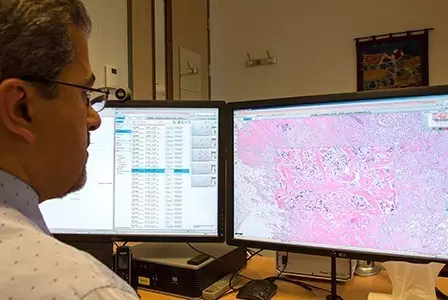
“This system enables pathologists to read tissue slides digitally for diagnostic purposes.“...rather than directly observing tissue samples on slides under a conventional microscope,” said Dr. Alberto Gutierrez, Director of the Office of In Vitro Diagnostics and Radiological Health at the FDA’s Center for Devices and Radiological Health, in a statement.
Furthermore,The benefit of digitization is that it facilitates document storage and provides retrieval capabilities.. Facilitates easy access to data for pathologists and other healthcare professionals.
Pathologists are physicians who specialize in understanding the etiology and progression of diseases or pathological conditions. They serve as the ultimate diagnosticians, with pathological diagnosis regarded as the “gold standard” for disease diagnosis. In pathology, pathologists mount biopsy tissue specimens onto glass slides and stain them for microscopic examination and evaluation. PIPS employs proprietary hardware and software to scan and digitize routine surgical pathology glass slides prepared from biopsy tissues, achieving a resolution equivalent to 400x magnification. These digital images can then be analyzed by pathologists.
The U.S. FDA reviewed PIPS data through a novel device classification pathway for low-to-moderate risk devices. FDA approval was granted based on clinical studies involving approximately 2,000 surgical pathology cases, which included evaluation of biopsy specimens from multiple anatomical sites. The study results demonstrated that clinical interpretations (diagnoses) made using PIPS images were comparable to those made using conventional glass slides.
In this authorization, the FDA is establishing special controls that must be met to ensure the accuracy, reliability, and clinical relevance of digital imaging systems, so that the risks associated with the use of this technology are similar to those of using conventional optical microscopes. These special controls are necessary to provide reasonable assurance of the safety and effectiveness of digital imaging systems.
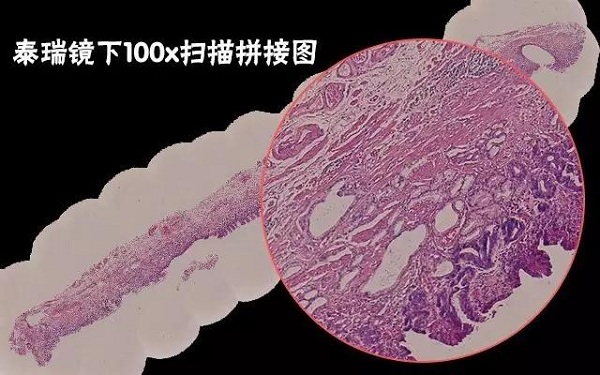
In fact, a Chinese company is also undertaking similar initiatives. Teliry’s whole-slide scanning system utilizes the Xianpai Assistant to connect microscopes with smartphones. By leveraging the high-resolution cameras of smartphones, it continuously captures microscopic fields of view. Using Teliry’s sEngine stitching algorithm, the system generates low-magnification (40x) and high-magnification (400–1000x) slide scan images, automatically embedding local high-magnification images into the whole-slide images generated during low-magnification scanning.
Additionally,Taili Rui leverages artificial intelligence to assist pathologists in diagnostic decision-making., the product has already been launched.
According to statistics, there are only slightly more than 9,000 licensed pathologists in China. Based on the staffing ratio of one to two pathologists per 100 hospital beds, the shortfall amounts to 40,000–90,000 professionals.
Consequently, in recent years, media outlets have frequently engaged in excessive interpretation, portraying the current state of pathology development in China as characterized by high risk, low income, labor shortages, and a lack of qualified professionals. In reality, however, as a hospital department that does not interact directly with patients and their families, the Pathology Department faces virtually zero risk compared to clinical, surgical, and nursing departments. The primary reason for the shortage of pathologists is their relatively low status within hospitals.
Therefore, the development of pathology demands our attention!
For more pathology-related articles, please read:
《Google Uses Deep Learning to Assist Pathologists in Detecting Cancer, with an Accuracy Rate of 89%》
《Dian Diagnostics’ Jiang Tang: Why Are We Building “Pathology Cloud”?》
《China’s First Pathologist Group Established, with Nationwide Rollout Achieved in 2017》