

Internet Hospitals as a Fast Track to Medical Consortiums: A Deep Dive into WeDoctor's Model and Product Ecosystem
On April 12, the State Council convened an executive meeting to specifically deploy the promotion of medical consortiums. This marks the first time the State Council has systematically arranged the development of national medical consortiums at an executive meeting, explicitly putting forward four construction requirements and implementation pathways. A series of supporting policies will be introduced to encourage all regions to comprehensively launch the development of medical consortiums in various forms.
By analyzing the four key construction requirements—first, breaking down administrative and other regional barriers; second, enabling mutual recognition of test results, prescription portability, and resource sharing; third, accelerating the enrollment in family doctor contract services; and fourth, allowing unrestricted physician mobility within medical consortia and incorporating primary care visit volumes into performance evaluations—it becomes evident that the essence of implementing medical consortia is to achieve optimized allocation of talent, equipment, information, and other resources through vertical resource integration and horizontal cross-regional collaboration.
Internet Hospitals Are a Fast Track to Building Medical Consortia
Compared with traditional medical consortiums, internet-based medical consortiums appear to have become a fast-track approach to their development. Broadly speaking, physicians in internet hospitals can engage in multi-site practice, team-based care, and telemedicine, while interoperability and sharing can be achieved for imaging, laboratory and diagnostic tests, electronic medical records, and health records.
However, the successful operation of internet-based medical consortia hinges primarily on their benefit mechanisms, including online and offline operations, coordination with medical insurance, and performance-based incentive systems. Only through these mechanisms can internet hospitals leverage their functions—such as joint discipline development, online collaboration, and training—to enhance the capabilities of primary care institutions, ultimately achieving the goal of tiered diagnosis and treatment.
By analyzing existing internet hospital models, VCBeat (WeChat ID: vcbeat) has found that WeDoctor, which has launched 19 internet hospitals, is a representative example of an internet-based medical consortium. This article uses WeDoctor as a case study for analysis.
A review of historical records reveals that WeDoctor proposed the “Internet Medical Consortium Assisting Tiered Diagnosis and Treatment: Thousand Counties Initiative” as early as April 2016. In October of the same year, Liao Jieyuan, Chairman of WeDoctor, articulated at the China Pharmacy Summit held in Kunming that “the evolution of internet hospitals into internet medical consortia represents the ultimate pathway for implementing tiered diagnosis and treatment.”
It was not until six months later that the nation comprehensively advanced the construction of Medical Alliances. During this period, WeDoctor transformed traditional hospitals into internet hospitals, enabling provincial internet hospitals to establish vertically integrated Medical Alliance platforms within their respective regions and cross-regional Medical Alliance platforms across provinces. This approach met the demand for Medical Alliance development among medical institutions at all levels and helped enhance primary healthcare service capabilities. From this perspective, WeDoctor’s platform has effectively become the largest Medical Alliance in China.
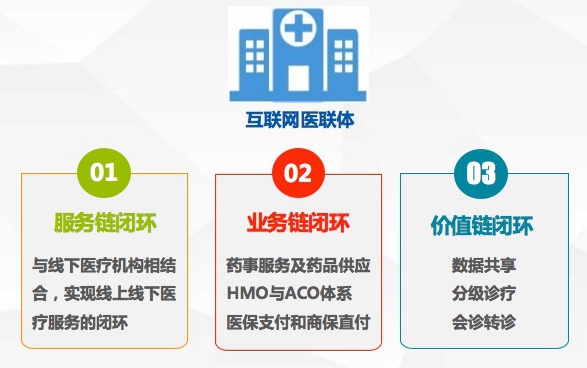
Through pattern analysis, we found that WeDoctor’s medical consortium has primarily achieved the integration and interoperability of three categories of online and offline medical resources.
The first layer involves aggregating resources from key hospitals, specialists, and expert teams across China, leveraging the Internet to facilitate the downward distribution of high-quality medical resources;
The second layer involved the establishment of internet hospitals across 19 provinces and municipalities in China. Each internet hospital has achieved vertical integration between higher- and lower-tier institutions.
The third layer involves deeply connecting county-level central hospitals with grassroots medical facilities across China, building upon the existing coverage of 12,000 primary care sites nationwide, to form a matrix of medical consortiums.
Covering various forms of medical alliances to form an organizational matrix
Not long ago, WeDoctor launched the “311 Initiative,” which aims to deeply connect 1,000 provincial, municipal, and county-level central hospitals and 100,000 grassroots healthcare sites across China, building on the 19 internet hospitals already operational in various provinces and municipalities. This initiative seeks to form a service matrix centered around three types of medical consortium organizational models: “Medical Consortiums,” “Medical Communities,” and “Specialty Alliances.”
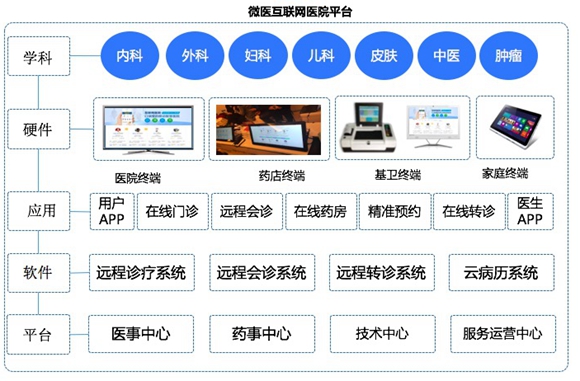
At provincial, municipal, and county-level central hospitals, the organizational model of internet hospitals leverages an integrated output of hardware, software, platforms, services, and medical internet applications to establish internet-based tiered diagnosis and treatment platforms across various provinces and cities.
Within medical consortia, tertiary hospitals serve as the lead entities, incorporating secondary hospitals and primary healthcare institutions to structurally facilitate the extension of high-quality resources to the grassroots level. Taking the Gansu Provincial Internet Hospital, jointly established by Wuzhen Internet Hospital and the Second People's Hospital of Gansu Province, as an example, this internet hospital primarily connects medical institutions and physicians at all levels—including provincial, municipal, county, township, and even village tiers. It enables resource sharing and operational collaboration among member institutions in areas such as examination and test results, electronic medical records, and remote ward rounds.
Establish medical consortiums within each county and city to provide remote diagnosis and treatment systems, remote consultation systems, remote referral systems, and cloud-based electronic medical record systems for county-level regions.
In response to the medical insurance settlement challenges arising from payment reforms, internet hospitals have already developed mature solutions. By establishing end-to-end management of patient treatment processes through referral systems and integrating with medical insurance payment platforms via digital infrastructure, these hospitals enable “synchronized treatment information and synchronized medical insurance review” across healthcare institutions and insurance payers.
With county-level hospitals as the lead, township health centers as the hub, and village clinics as the foundation, the healthcare system leverages the role of county-level hospitals as a bridge between urban and rural areas. Through online and offline integrated telemedicine, national resources are decentralized to the county level, closely aligning internet hospital services with grassroots healthcare.
Currently, this development model has been implemented in places such as Guangshan County, Henan Province, enabling the management of serious illnesses within the county through internet-based solutions.
The “Specialty Alliance” is a vertical internet hospital system built by WeDoctor around specialized disciplines. It takes medical specialties as the entry point, integrates expert resources within these disciplines, and carries out the establishment of internet hospital platforms, information technology support, provision of matching diagnostic and treatment equipment, and subsequent operational management.
Enable specialists within their respective fields to deliver internet-based medical services via online platforms, including inter-hospital and doctor-patient telemedicine, electronic medical record (EMR) sharing, online medical orders, e-prescriptions, remote medical education, and remote collaboration. Currently, WeDoctor has launched the operations of internet-specialized hospitals in specialties such as orthopedics, oncology, and otolaryngology.
In addition, with Wuzhen Internet Hospital as its core, WeDoctor has also built the largest remote medical collaboration network in China.
First, improve the traditional teleconsultation model. The operation of teleconsultation is based on medical experts, and its success or failure needs to be verified by whether the teleconsultation is efficient. Wuzhen Internet Hospital currently has 11 internet-based teleconsultation centers covering 28 clinical departments, including the Orthopedics Center led by Academician Dai Kerong, the Pancreas Center led by Professor Peng Shuyou and Professor Ni Quanxing, and the Colorectal Cancer Center led by Professor Cai Sanjun.
Building on this medical resource foundation, WeDoctor has optimized triage pathways by accurately routing a high volume of remote consultation requests from affiliated hospitals to expert teams through medically professional classification and matching. In addition to precise intra-specialty matching, WeDoctor has developed a multidisciplinary remote consultation model that invites specialists from relevant disciplines to conduct joint consultations for complex conditions, thereby effectively supporting local physicians in delivering diagnosis and treatment.
Secondly, in response to the current situation where primary healthcare institutions possess testing capabilities and equipment but lack diagnostic expertise, WeDoctor has provided a remote diagnosis solution. Although the interpretation of laboratory test results within medical institutions has become a highly standardized process, reconstructing this diagnostic step online still presents significant barriers that primary care facilities cannot overcome on their own.
WeDoctor’s solution focuses on streamlining information channels and establishing coordination mechanisms, effectively improving the utilization efficiency of local medical equipment and enhancing primary healthcare service capacity.
How to Address the Challenge of Information Mismatch in Medical Consortia?
Medical alliances are not a new concept. Based on past experience, the most immediate challenge lies in the fact that medical institutions within these alliances have implemented their information systems at different times, resulting in inconsistent data formats and standards, diverse software vendors and system architectures, numerous interfaces between systems, and significant disparities in informatization levels. These factors make it difficult to directly integrate business processes and share medical information, thereby hindering activities such as remote consultations, appointment registration, and mutual referrals, and ultimately impeding the overall effectiveness of the alliance. Rebuilding Hospital Information Systems (HIS) entails prohibitive costs and requires resolving multiple conflicts.
Excessively high internal coordination costs within medical consortia are a significant impediment to their development. Previous solutions typically sought to unify member entities into a single organization from an structural perspective. However, in practice, integration requires first resolving various conflicts of interest, which is a time-consuming and labor-intensive process. Furthermore, even when consolidated into a single institution, the individual member entities continue to exist separately, necessitating technical solutions to facilitate integrated operations.
Secondly, after achieving information interoperability, medical consortia still face the challenge of improving the efficiency of information utilization. Patient information within the consortium—including demographic data, medical history, diagnosis and treatment records, and laboratory test reports—can be shared seamlessly. This not only helps reduce the types and frequency of medical examinations but also enables accurate assessment and prediction of disease conditions and their progression based on historical patient data. Consequently, this enhances diagnostic and therapeutic efficiency, allowing patients to receive comprehensive, high-quality medical services.
To address these primary contradictions, WeDoctor leverages information technology to drive the allocation of medical resources and establishes an information coordination mechanism. The first step is to break through the current state of isolated "information silos" among healthcare institutions. By connecting the Hospital Information Systems (HIS) of various medical facilities, the Internet-based Medical Consortium has formed a collaborative model that combines bidirectional management with technical cooperation. This model features scalable construction, capable of vertically extending across five levels of the medical consortium hierarchy: provincial, municipal, county, township health centers, and village clinics. It evolves into a "1+X" medical consortium structure, led by a central hospital in partnership with multiple primary care institutions.
In the Minhang Medical Consortium model in Shanghai, "connectivity" is achieved through an embedded system. Within the Minhang community, to facilitate referrals by family doctors for their contracted residents, WeDoctor has integrated a referral page into the family doctors' workstations, thereby enabling the entire appointment and referral process within the hospital's intranet environment.
This solution is built upon WeDoctor’s flexible access technology, featuring a unified integration framework that ensures the overall stability and performance of the access modules while effectively adapting to diverse third-party interfaces.
The Internet-based Medical Consortium establishes a model that not only facilitates the effective allocation of medical resources within regional consortia but also enables precise cross-regional resource coordination for patients with complex and critical conditions requiring inter-consortium collaboration.
Leveraging the Wuzhen Internet Hospital, WeDoctor provides a suite of internet-based tools for physicians at both primary and tertiary levels within medical consortia. These tools encompass six major systems—remote diagnosis and treatment, remote consultation, remote referral, cloud-based electronic medical records (EMR), payment and settlement, and remote training—along with supporting hardware. This infrastructure facilitates physician-initiated telemedicine and referral requests, establishes mechanisms for regional sharing and vertical flow of medical resources, and integrates medical capabilities across healthcare institutions within each region.
Meanwhile, the implementation of cloud consultation rooms in physical institutions enables specialists from tertiary hospitals to provide on-site consultations at lower-tier facilities. This ensures that referred patients, even after returning to primary care settings, can receive continuous remote medical management from tertiary hospital physicians within a physical facility.
For municipal, county-level, and other healthcare institutions at various levels connected through referral networks, the establishment of a remote data center enables them to function as local medical resource monitoring platforms. These centers provide real-time oversight of collaborative data involving local hospitals, physicians, and patients; manage online follow-up consultations and remote specialist consultations; strengthen referral collaboration; and establish long-term mechanisms for coordinated development between lead institutions and member institutions within medical consortia.
When confronting certain complex and severe cases, WeDoctor can also serve as an open platform, building a bridge for necessary collaborative communication among various Medical Consortia. This facilitates the precise initiation of multidisciplinary remote consultations for difficult and complicated diseases between Medical Consortia, thereby achieving essential resource sharing and technical collaboration in medical capabilities.
How to Ensure the Smooth Operation of Medical Consortia?
Taking Wuzhen Internet Hospital as an example, its true value should lie in developing connectivity based on the interconnection of entities and the interoperability of information.
“Internet + Healthcare” requires big data and cloud computing technologies as its foundation. Wuzhen Internet Hospital relies on the world’s largest remote diagnosis and treatment platform and physician collaboration platform, and is also the world’s largest Internet healthcare IaaS platform.
Leveraging four proprietary, leading-edge technologies—including flexible access, big data-based MPI strategic algorithms, and core imaging algorithms—the WeDoctor Internet Medical Consortium Platform is capable of building a secure and efficient integrated information platform for medical consortiums, covering five tiers of healthcare organizations: provincial, municipal, county, township health centers, and village clinics.
The construction of medical consortiums imposes exceptionally high demands on multi-party coordination mechanisms, representing a systematic and large-scale collaborative endeavor involving numerous processes and complex coordination frameworks. It encompasses referrals between higher- and lower-tier medical institutions, as well as between physicians at different levels, including the confirmation and acceptance of referrals, clinical handoffs post-referral, inter-institutional financial settlement, and continuous collaborative quality management and monitoring of post-diagnosis care. These functions require operation through an integrated management platform.
The construction of an Internet-based Medical Consortium requires integrated access capabilities for multi-tier medical institution information systems. WeDoctor employs a unified access framework to ensure overall stability and performance of the access modules while effectively adapting to various differentiated third-party interfaces. Leveraging big data-driven Master Patient Index (MPI) strategy algorithms, it enables cross-referenced information generation and shared queries, allowing physicians at different levels within the consortium to share patients' electronic medical records in real time.
The development of internet-based medical consortiums necessitates support for remote video communication, including remote diagnosis and teleconsultation. WeDoctor possesses proprietary core imaging algorithms that facilitate the conversion, compression, and transmission of medical imaging data, enabling remote image interpretation even under low-bandwidth conditions. The successful implementation of WeDoctor’s polar connectivity project in Antarctica previously served as an effective validation of this capability.
The construction of Internet-based Medical Consortiums imposes stringent security requirements on personal medical data. The WeDoctor Medical Consortium Platform possesses robust security management capabilities for core medical data, including personal population health information, electronic medical records (EMRs), electronic physician orders, and electronic prescriptions. It has established rigorous data protection standards, and its information systems comply with the Level 3 Classified Protection of Cybersecurity standards. Furthermore, the platform maintains close collaboration with external security organizations and cyber police departments; notably, the Hangzhou Public Security Bureau’s Cyber Police Division has directly stationed a police office to provide on-site support.
Future-Oriented AI Solutions
According to VCBeat, in the future, the WeDoctor Internet Medical Consortium will further liberate physicians’ working hours through more efficient and intelligent approaches. By leveraging artificial intelligence to integrate regional medical data, it will automate cumbersome and repetitive tasks, assist physicians in diagnostic processes such as medical imaging, alleviate shortages in healthcare capacity, and optimize the allocation of high-quality medical resources.
There are roughly three scenarios for the application of artificial intelligence technology in medicine:
First, it liberates large hospitals and leading experts from repetitive tasks. Medical data such as electrocardiograms (ECGs), medical imaging, and pathology reports will be stored in the cloud, laying the foundation for artificial intelligence (AI) applications. In AI-driven medical scenarios, image data and patient cases are initially screened by machines and then reviewed by experts, improving efficiency by more than 70%. This significantly frees up experts’ time and energy.
Second, AI-assisted diagnosis and treatment for primary care physicians. With the support of mature artificial intelligence tools, approximately 80% of common diseases can be managed in accordance with standardized clinical pathways. The remaining 20% of complex cases can be addressed through remote consultations with specialists via internet-based platforms, aiding in diagnosis and the formulation of treatment plans. Through the full application of AI, 80% of clinical care is supported by AI for primary care physicians, while 20% is guided by specialists, thereby enhancing the overall quality of care at the primary level.
Third, it focuses on autonomous, continuous health management for the general public. By leveraging big data to deeply learn from medical expertise, the AI system functions as a portable personal physician and serves as a tool for self-managed healthcare. It collects users’ physiological data through smart wearable devices and other means. Based on this data, along with electronic medical records and health archives, it constructs comprehensive health profiles. The AI then performs continuous health monitoring, analyzes users’ health status, and provides personalized wellness recommendations.
Centered on connectivity and operational capabilities, WeDoctor’s existing business and technology have accumulated large-scale structured data for the in-depth learning and application of artificial intelligence. This includes the essential hardware and software for medical AI, such as big data platforms, electronic medical records, remote diagnosis and treatment systems, and integrated examination and testing devices, with data flowing seamlessly every day.
A Promising Internet-Based Medical Consortium
Over the past seven years, WeDoctor has accumulated substantial advantages in connecting resources both upstream and downstream. At the upper end, it partners with major hospitals and specialists; at the lower end, it links numerous primary healthcare institutions, effectively integrating them through an internet-based medical consortium. It is understood that each of WeDoctor’s medical consortia is operated by dedicated professionals: offline operations are managed by specialized medical institutions and organizations, while online operations focus on precise matching to refer patients with appropriate conditions to the offline hospitals.
Data from WeDoctor shows that, as of March 2017, the Wuzhen Internet Hospital had connected with more than 2,400 hospitals and over 280,000 physicians, handling up to 63,000 patient visits per day, including more than 9,400 remote consultations. Taking the Gansu Provincial Internet Hospital, established in Gansu Province, as an example, it connected with more than 200 township health centers within one year and achieved direct integration of its Hospital Information System (HIS) with seven municipal-level hospitals, including the Wuwei Cancer Hospital and the Jiuquan Steel Group Hospital. The platform conducts more than 300 remote consultation cases per month, exceeding the annual remote consultation volume of most remote consultation centers at tertiary hospitals.
Within WeDoctor’s strategic framework, the establishment of an internet-based medical consortium within a region must first involve the deployment of a physical medical institution—either self-built or co-built—as the central hub connecting healthcare facilities at all levels. This physical institution serves as the core for integrating regional medical resources. Supported by information technology hardware and software, as well as internet-based tools, coordination within the medical consortium shifts from “coordinating people” to “coordinating information,” thereby enhancing the utilization efficiency of medical resources.
Meanwhile, the Internet-based Medical Consortium needs to establish a cloud consultation center at primary care physical institutions, equipped with systems and devices for remote diagnosis and treatment, remote consultations, and other services. It should fulfill functions such as specialist clinics, cloud consultation rooms, cloud pharmacies, remote consultation centers, patient service centers, and remote data centers, thereby establishing a proactive and continuous management system based on community-level primary care.
Leveraging the technical advantages and leadership role of professional medical institutions, dedicated operational personnel are deployed to facilitate collaboration, channeling patients with specific conditions to offline medical institutions and organizations through precise online matching. WeDoctor’s Internet-based Medical Consortium has effectively established an integrated regional service model encompassing prevention, treatment, and rehabilitation, with complementary functions that realize the original vision of “initial diagnosis at the community level, treatment of serious illnesses at hospitals, and return to the community for follow-up care.” In the future, the development and application of medical artificial intelligence may offer even greater possibilities.